

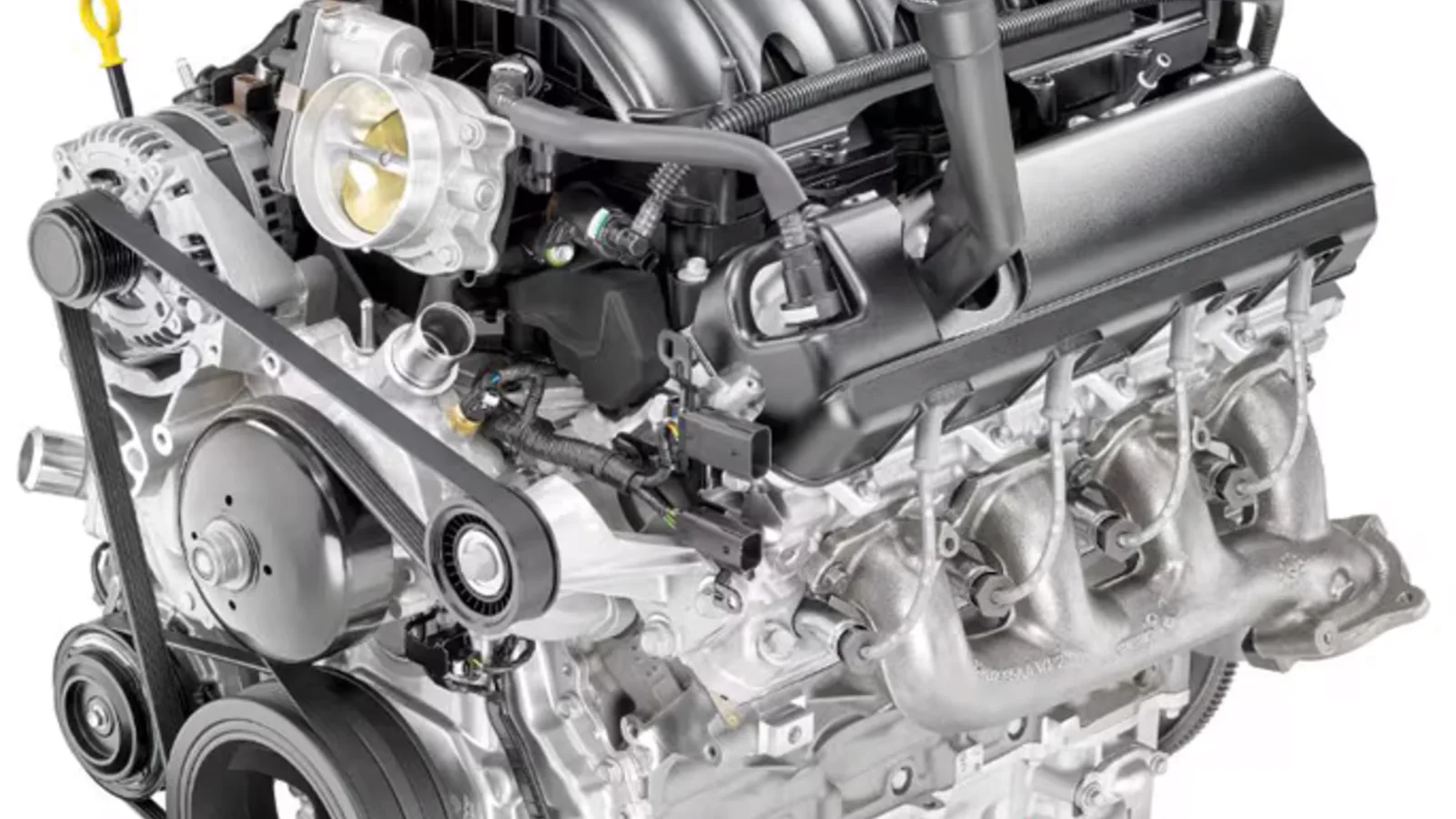
Nearly one million GM trucks and SUVs are now under the federal microscope. On August 20, 2026, the National Highway Traffic Safety Administration (NHTSA) opened Engineering Analysis EA26005, covering 997,743 vehicles from the 2021-2026 model years equipped with General Motors’ 6.2L V8, known internally as the L87. The subject line on the government paperwork says it plainly: “Loss of motive power due to engine failure post recall remedy.”
The news coverage of the investigation is everywhere. What nobody is telling you is what to actually do about it. This guide fixes that. If you own a Silverado, Sierra, Tahoe, Suburban, Yukon, or Escalade with the 6.2L, here is how to find out if your truck is included, the warning signs your engine may give you before it lets go, and how to protect yourself financially no matter what NHTSA decides next.
We broke down the investigation itself in our news story on NHTSA’s escalation to a full Engineering Analysis. This article is the owner’s playbook.
Step 1: Find Out If Your Truck Is Involved
EA26005 covers 2021-2026 model year GM vehicles with the L87 6.2L V8. That means these models:
Not sure which engine you have? Pop the glove box and check the RPO sticker for the code L87, or look at your window sticker for the “6.2L EcoTec3 V8” line. The 5.3L (L84) is a different engine and is not part of this investigation.
Run Your VIN in Two Places
Checking your VIN takes two minutes and costs nothing. Do both of these:
- NHTSA.gov/recalls: Enter your 17-digit VIN. This tells you whether your truck was included in Recall 25V-274 and whether the recall work is showing as incomplete.
- Your GM owner site or app (my.chevrolet.com, my.gmc.com, my.cadillac.com): This shows open recalls plus your vehicle’s service history at GM dealers, which matters later for documentation.
One important distinction: an open recall means there is work your dealer must do for free right now. An Engineering Analysis is an investigation, so a VIN caught up in EA26005 alone will not show anything to schedule. If 25V-274 applies to your truck and has not been completed, book it today. If your truck is a 2025 or 2026, or an L87 built after May 31, 2024, you are in the newly expanded investigation population even though no recall currently applies to you. That is exactly the group NHTSA just added, based on 191 reports of failures in engines built after the original recall window.
Step 2: Know the Warning Signs
The failures behind Recall 25V-274 trace to connecting rod and crankshaft defects, which GM attributed to a supplier manufacturing and quality issue. When a rod bearing starts to go, the engine usually talks to you first. Owners on our forum who have been through it report the same pattern again and again.
The hard truth in NHTSA’s own opening resume: some of these engines fail with little or no warning at all. That “loss of motive power” language exists because trucks have shut down in traffic. If your gut says something sounds wrong, trust it. A tow bill is cheaper than a crankshaft, and far cheaper than a crash. NHTSA’s records for this investigation already include one crash and one injury.
Step 3: Understand What the Recall Remedy Was (and Why It Matters Now)
GM’s fix under 25V-274 was a two-path remedy. Dealers inspected the engine. Engines that failed inspection received a complete engine replacement. Engines that passed received an oil viscosity change from 0W-20 to thicker 0W-40, a new oil fill cap, and an updated owner’s manual.
EA26005 exists because NHTSA has logged 499 complaints of engines failing after that remedy was completed. Of those, 473 had received the oil change and 26 had received a brand-new engine. GM itself reported 6,953 post-remedy failure complaints to the agency. In other words, the question on the table is no longer “did every affected truck get fixed.” It is “does the fix work at all.”

Two practical takeaways for owners:
- If your truck got the oil change remedy: stay religious about 0W-40 at every change, keep every receipt, and treat any new noise as urgent. The post-remedy failure complaints are overwhelmingly from this group.
- If your truck got a replacement engine: you are in better shape, but not bulletproof. 26 replacement engines are among the post-remedy failure complaints. Same advice: document, listen, act fast.
Step 4: Build Your Paper Trail (This Is Your Warranty Leverage)
Here is the part that separates owners who get taken care of from owners who get stuck arguing. Whatever NHTSA concludes, your outcome will ride on documentation.
What to Keep
- Every oil change receipt, with date, mileage, and the oil spec used. If you do your own changes, keep parts receipts and log the date and mileage. After the recall, 0W-40 on the receipt matters.
- Every repair order, even for a “no fault found” visit. If you brought it in for a noise and the dealer sent you home, that visit is evidence of when the problem started. Ask for the RO copy before you leave, every time.
- Your recall completion record showing which remedy your truck received and when.
- Photos and video of warning lights, oil debris, and anything the engine does. A 20-second phone video of a cold-start knock is worth more than a paragraph of description.
How the Leverage Works
Recall repairs are free at any GM dealer regardless of mileage or ownership history, so 25V-274 work costs you nothing. Beyond that, the factory powertrain warranty (5 years or 60,000 miles on Chevrolet and GMC, 6 years or 70,000 miles on Cadillac) covers an engine failure caused by a defect. Where owners run into friction is out-of-warranty failures and repeat problems. That is where your paper trail earns its keep:
- Goodwill assistance: GM regularly participates in out-of-warranty repairs for well-documented failures on vehicles with clean maintenance records, especially on engines under active federal investigation. Ask the dealer to open a case with GM Customer Assistance before you authorize any out-of-pocket teardown.
- Future reimbursement: if EA26005 leads to a new or expanded recall, federal rules generally require the manufacturer to offer reimbursement to owners who already paid for the same repair before the recall was issued. The owners who get those checks are the ones holding receipts.
- State lemon laws: if your truck is newer and has been back repeatedly for the same engine concern without a successful fix, your state’s lemon law may apply. Requirements vary by state, and this is general information rather than legal advice, but repeated documented repair attempts are the common thread in every state’s statute.
- File with NHTSA: if your L87 has failed, file a complaint at NHTSA.gov, especially if it failed after the recall remedy. The 690 ODI complaints on file are the entire reason this investigation escalated. The agency can only act on failures it knows about, and your report becomes part of the public record that pressures a real fix.
The Bottom Line
An Engineering Analysis is the last step before NHTSA can formally demand a recall, and this one openly questions whether GM’s existing remedy is adequate. Nobody, including GM, knows yet how it ends. What you control today: confirm your VIN status, complete the existing recall if it is open, learn the warning signs, and build a paper trail that protects you in every scenario. Our recall coverage archive has the full history of this engine saga, going back to the moment the government first started asking questions in January, and we will keep this guide updated as EA26005 develops.
Join the Discussion
Thousands of L87 owners are comparing notes right now: what their engines sounded like before failure, what dealers are saying, and how claims are being handled. Add your experience or ask a question in our 2019-2026 Silverado 1500 & Sierra 1500 forum or the 2021-2026 Tahoe, Suburban, Yukon & Escalade forum. Real owner reports are exactly what regulators, and fellow owners, need most.

Zane Merva is the Executive Editor of GM-Trucks.com and the President of the New England Motor Press Association (NEMPA). A veteran automotive journalist with over 26 years of experience, Zane is a designated ‘Car Talk’ Expert and has been a contributor to The Boston Globe. He possesses a unique evaluative perspective, having road-tested more than 2,000 vehicles across every major manufacturer. While he is a recognized authority on General Motors truck platforms—including the Silverado, Sierra, and Colorado—his expertise is grounded in decades of deep competitive analysis that few in the industry can match. His commentary has been featured by major OEMs and media outlets, including Hyundai and PR Newswire