
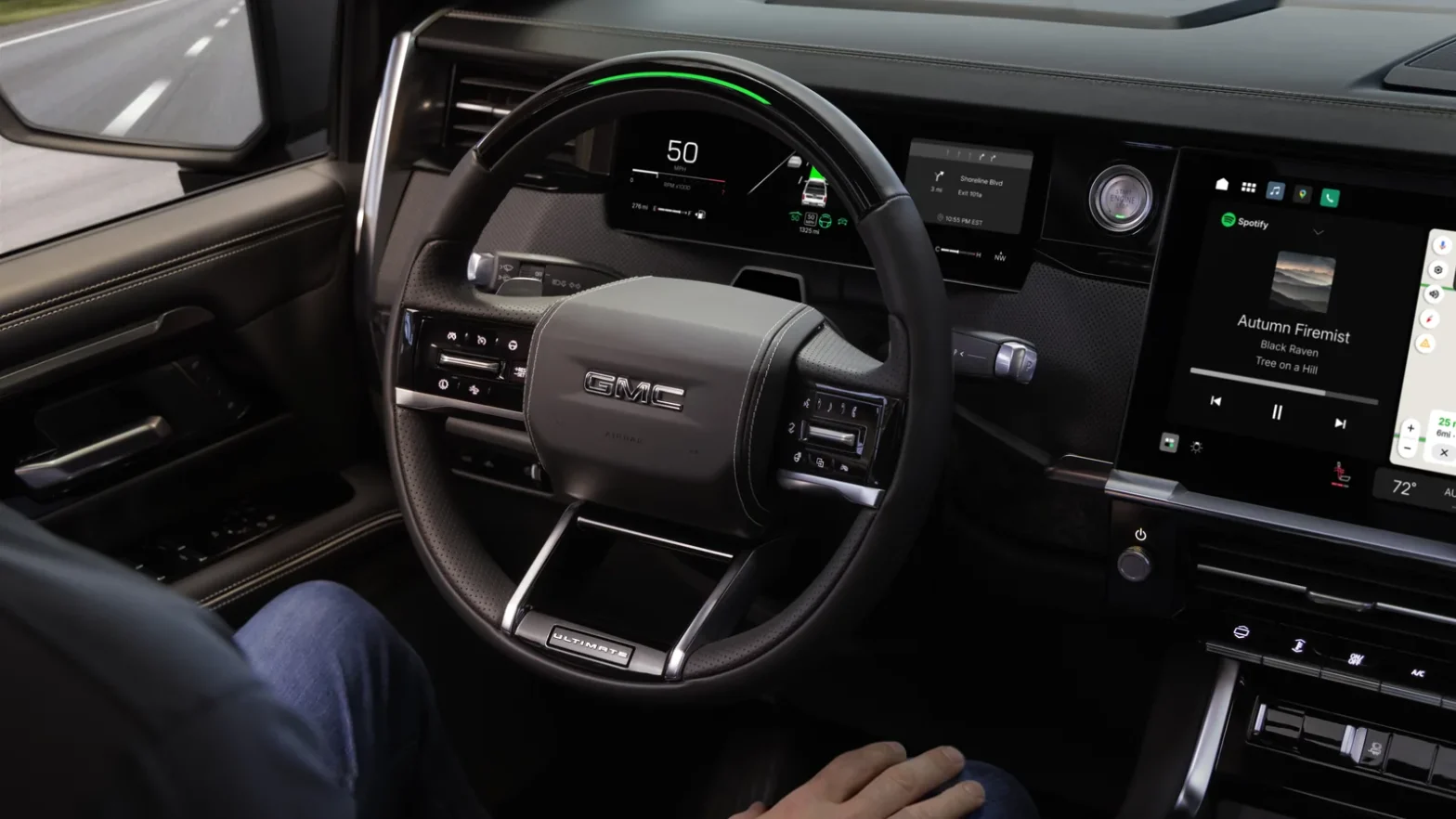
General Motors is about to put hands-free driving into a lot more pickups. But…the company’s own numbers say most of those future owners will stop paying for it when the free trial runs out.
In the second-quarter 2026 earnings materials GM released on July 21, the company told investors it expects an incremental 160,000 Super Cruise equipped full-size pickups next year, riding in on the next-generation 2027 Chevrolet Silverado 1500 and GMC Sierra 1500. That is a serious volume jump for a technology that until recently lived mostly on Cadillacs and top-trim SUVs.
Buried a few slides earlier is the part GM did not put in a press release. The attach rate once the prepaid subscription runs out is sitting in the 30 to 40 percent range.
Translated: somewhere between six and seven out of every ten owners let it lapse.
What GM actually told investors
Super Cruise is now a genuine line item for General Motors, not a halo feature. The Q2 deck lays out the trajectory in plain numbers.
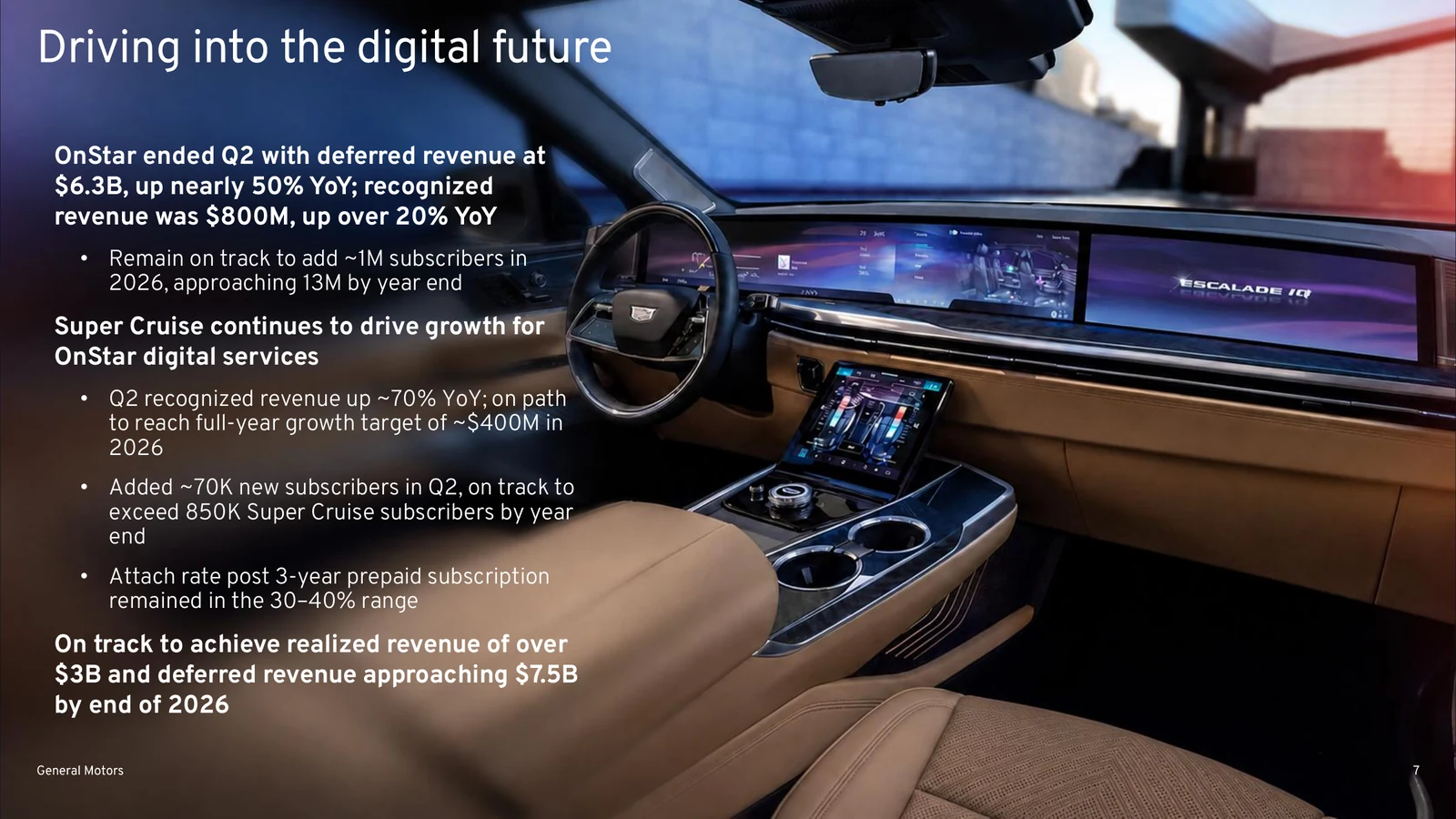
GM also called it the best quarter and best first half ever for Super Cruise equipped vehicles. Chair and CEO Mary Barra repeated that line in her letter to shareholders. The company is not being shy about where it thinks the growth is.
The three-year clock, and what it costs after
Here is the structure every next-gen Silverado and Sierra buyer needs to understand before they sign.
A new Super Cruise equipped vehicle includes three years of connectivity in the purchase price. When that runs out, the hands-free function does not degrade gracefully or drop to a limited mode. It stops. Chevrolet currently lists the OnStar Super Cruise plan at $39.99 per month in the United States, which works out to a little under $480 a year to keep using a feature you already paid to have installed.
That is the moment GM’s 30 to 40 percent figure describes. Not the trial. Year four.
Run the math on the 160,000 trucks GM is forecasting and you land somewhere around 48,000 to 64,000 renewals when those trucks hit their fourth birthday in late 2029 and 2030. Real money, and a real gap between the trucks sold and the trucks still subscribed.
Why trailering might be the thing that changes the math
Every previous Super Cruise renewal decision came down to a simple question: is hands-free highway driving worth forty bucks a month to me?
For a lot of half-ton owners, the honest answer was no. Adaptive cruise plus lane centering already does most of the work, and it does not send you a bill.
Towing is a different argument. GM specifically flagged segment exclusive hands-free trailering in the same breath as that 160,000 figure, and Chevrolet is blunt about the competitive position, stating that no other competitor offers hands-free driving technology with towing capability. When a properly equipped truck’s trailering system is active, Super Cruise recognizes the trailer and automatically stretches the following gap to the vehicle ahead.
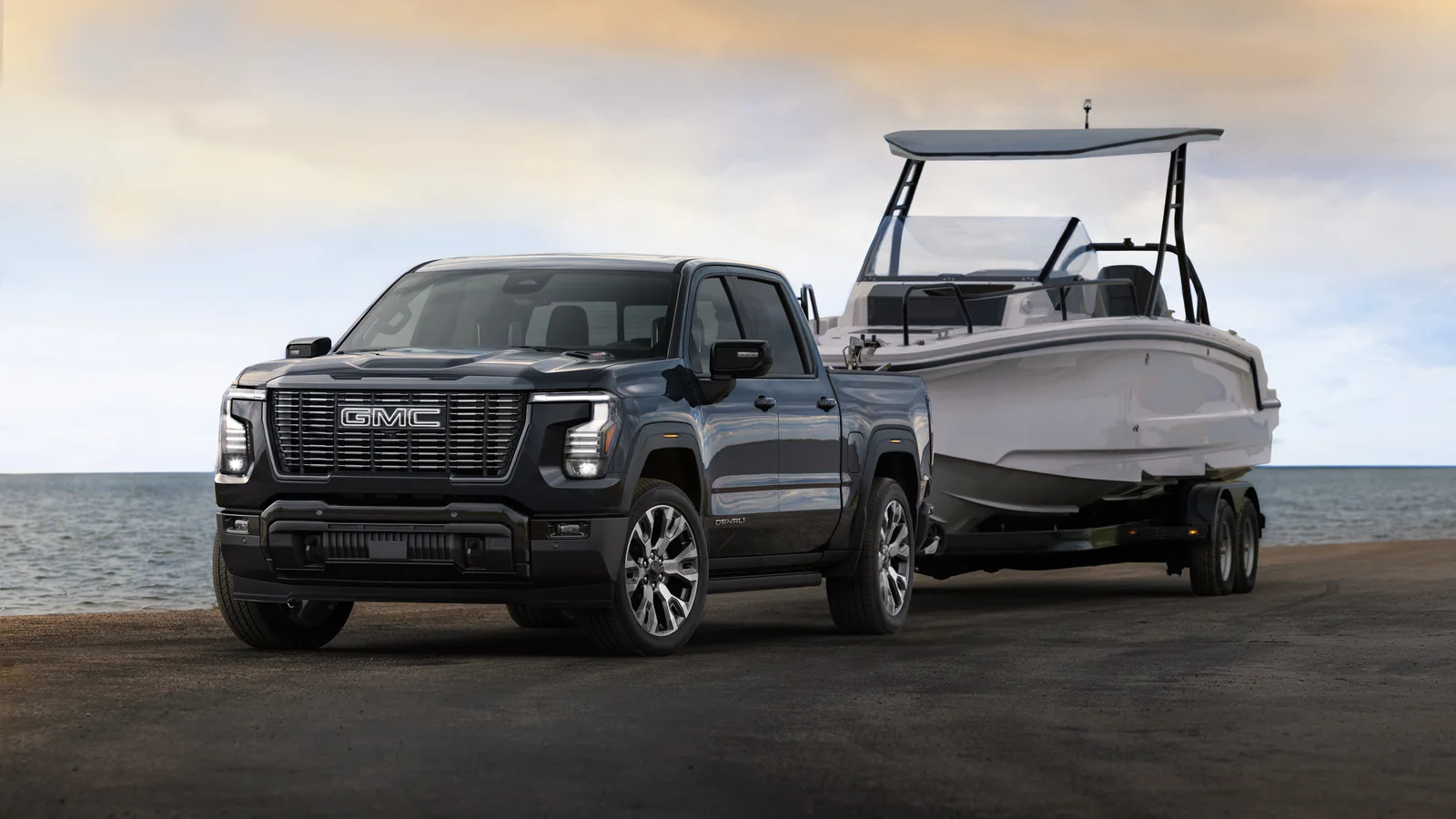
If you pull a camper to the same lake every summer or run a gooseneck across three states for work, that is a fundamentally different value proposition than hands-free commuting. Four hundred and eighty dollars against a season of long trailer hauls starts looking like cheap fatigue insurance.
That appears to be exactly the bet GM is making. Put the technology on 160,000 work-and-tow trucks instead of luxury sedans, and the population of people with a concrete reason to renew gets a lot bigger.
Coverage helps the case too. Super Cruise operates on more than 600,000 miles of compatible roads across the United States and Canada, which is no longer just interstate corridors.
Which trucks get it
On the next-generation Chevrolet Silverado 1500, Super Cruise is standard on High Country and ZR2, and available on the Silverado and Trail Boss trims. High-tier GMC Sierra 1500 models include the standard three-year subscription as well.
Both trucks reach dealers in the fourth quarter of this year, with GM telling investors that substantial volume does not arrive until 2027. If you are shopping the first wave in December, expect thin supply and very little room to negotiate.
What we would actually do
A few practical takeaways for anyone cross-shopping a 2027 Silverado or Sierra right now.
- Do not pay a premium for Super Cruise you will not renew. If you are a suburban driver with a 15-minute commute, be honest with yourself about year four before you trim-walk for it.
- Do weigh it seriously if you tow. Hands-free trailering is the one Super Cruise use case with no real competitor answer right now.
- Track your activation date, not your purchase date. The three years starts when the service does. Put a calendar reminder at month 33 so the renewal is a decision instead of a surprise.
- Watch the plan structure, not just the price. GM has restructured OnStar tiers more than once. What $39.99 buys in 2030 may not be what it buys today.
- Look and ask for discounts. OnStar rotates through plan discounts regularly and substantial discounts pop up from time to time. If you don’t see anything, ask an agent for a discount.
The larger story here is that GM has stopped treating Super Cruise as a feature and started treating it as revenue, with a target of more than $3 billion in realized OnStar revenue by the end of 2026 and deferred revenue approaching $7.5 billion. Trucks are the vehicle that gets them there. Whether truck owners agree is the open question, and GM’s own slide says the jury is still out.
For more on the next-generation trucks and the rest of GM’s product plans, keep an eye on our GM News coverage.
Join the conversation
Are you planning to keep paying for Super Cruise once the three years are up, or is it a nice-to-have you will let expire? Tell us how you would use it in the 2027+ Silverado 1500 & Sierra 1500 forum. We would especially like to hear from the towing crowd.

Zane Merva is the Executive Editor of GM-Trucks.com and the President of the New England Motor Press Association (NEMPA). A veteran automotive journalist with over 26 years of experience, Zane is a designated ‘Car Talk’ Expert and has been a contributor to The Boston Globe. He possesses a unique evaluative perspective, having road-tested more than 2,000 vehicles across every major manufacturer. While he is a recognized authority on General Motors truck platforms—including the Silverado, Sierra, and Colorado—his expertise is grounded in decades of deep competitive analysis that few in the industry can match. His commentary has been featured by major OEMs and media outlets, including Hyundai and PR Newswire