
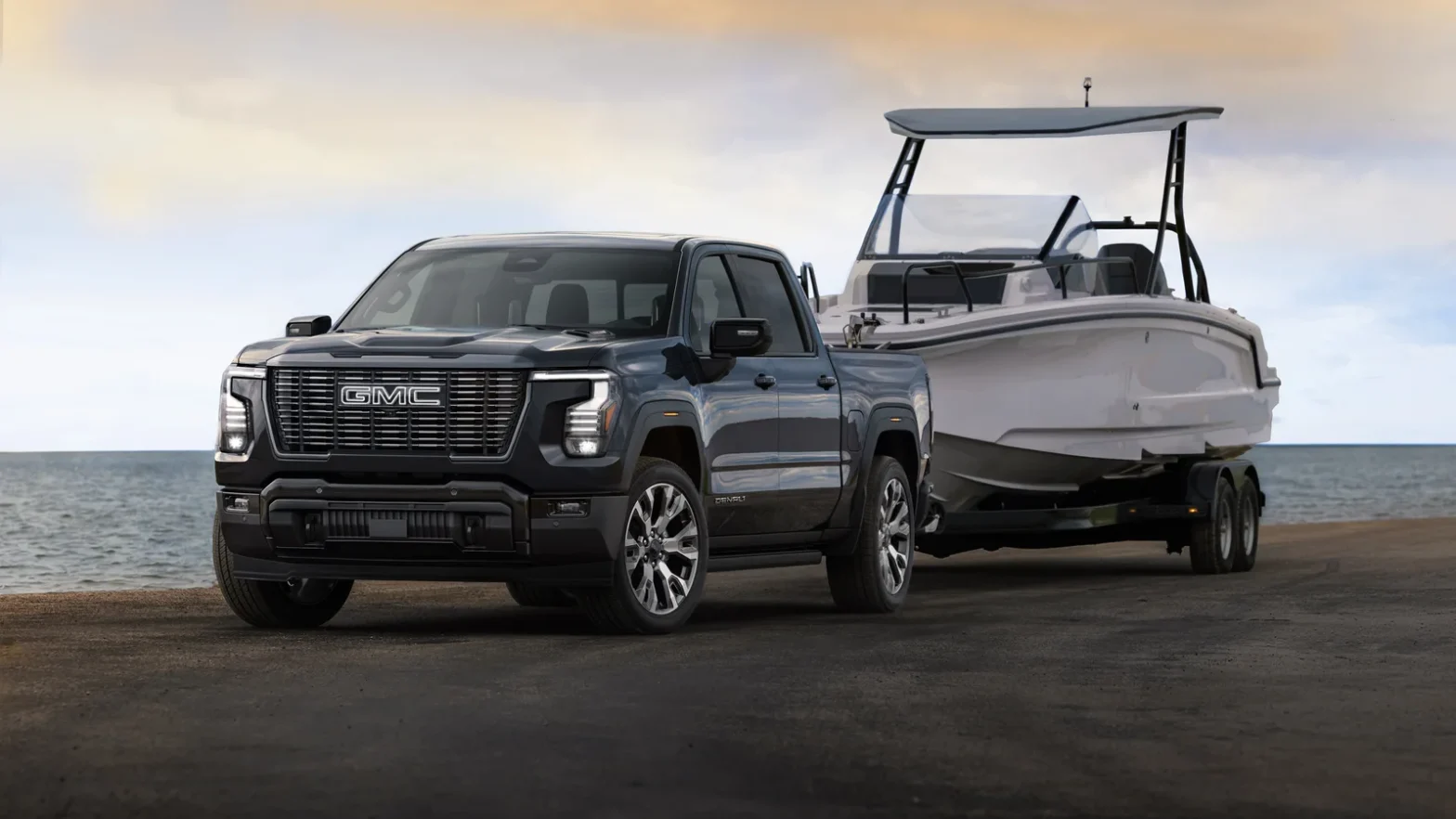
Yesterday we broke down the RPO codes and oil spec for the 2027 Silverado and Sierra’s new Gen 6 V8s, and one detail in that story deserves its own conversation. General Motors is filling the new 5.7L (RPO L76) and 6.6L (RPO L78) small blocks with 0W-30 oil certified to the dexos1 Gen 3 standard.
That spec is a half-step thicker than the 0W-20 that GM has poured into the Gen 5 5.3L and 6.2L V8s for over a decade. And given everything that has happened with the 6.2L L87 over the past year and a half, we do not think the timing is a coincidence.
To be clear up front: GM has not published an engineering explanation for the Gen 6 oil spec, and probably never will. What follows is informed speculation from people who have watched this saga closely. But the trail of evidence is hard to ignore.
How We Got Here: The Thin Oil Era
When the Gen 5 small block family launched for 2014, GM specified 0W-20 across the board. The logic was never a secret. Thinner oil means less pumping and drag loss inside the engine, and less internal friction means better numbers on the EPA test cycle. Multiply a fraction of a mile per gallon across millions of trucks and it matters enormously for corporate fuel economy compliance.
The bet was that modern full-synthetic base stocks, tighter machining tolerances, and better bearing materials could protect a 6.2L V8 with an oil film thinner than anything GM had ever specified in a truck engine. For a lot of engines, over a lot of miles, that bet paid off.
Then the L87 started throwing rods.
The L87 Wake-Up Call
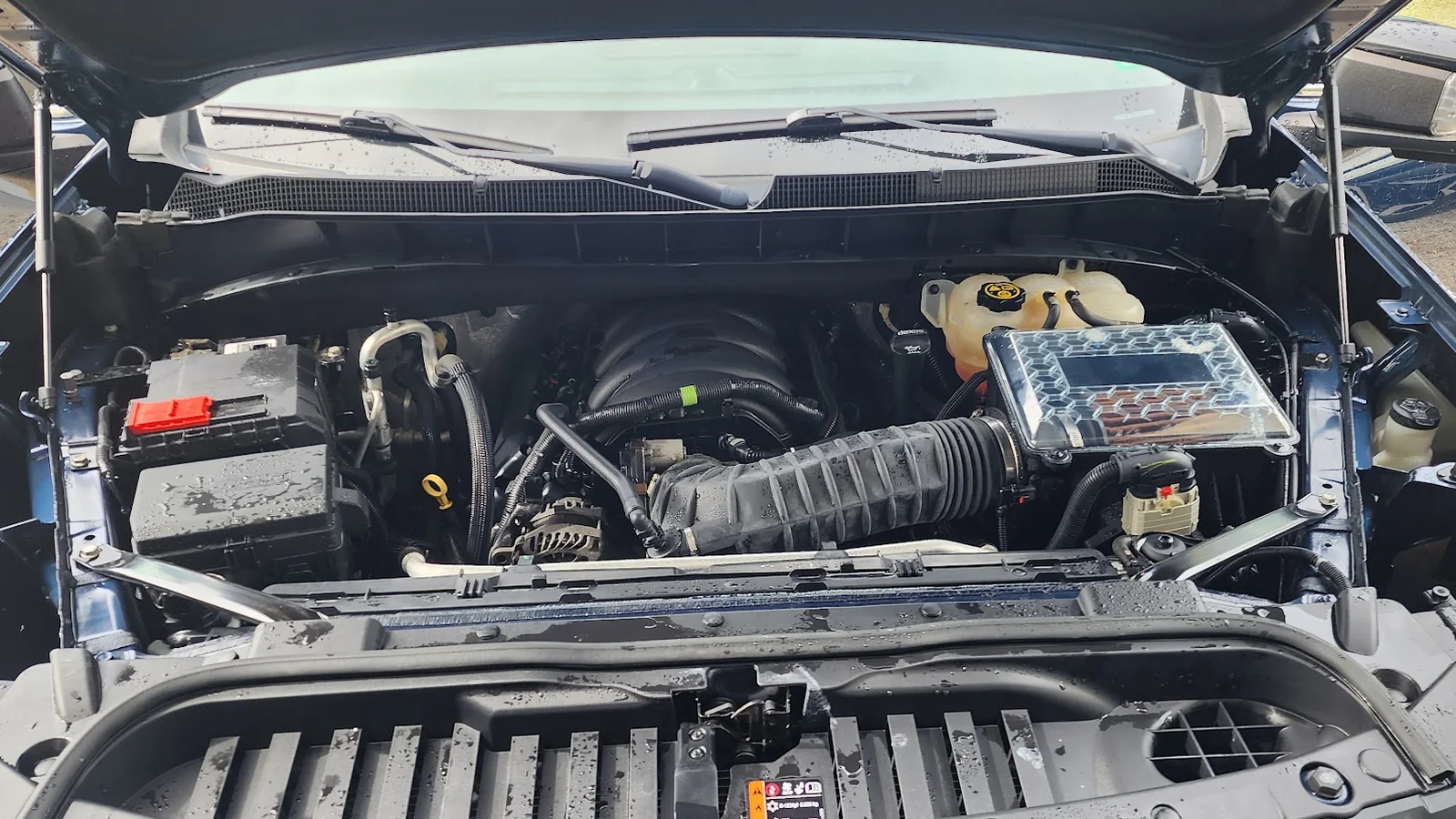
In April 2025, GM issued recall N252494000 (NHTSA campaign 25V274) covering roughly 598,000 vehicles from the 2021 through 2024 model years: Silverado 1500, Sierra 1500, Tahoe, Suburban, Yukon, Yukon XL, and Cadillac Escalade. The root cause was manufacturing defects in connecting rods and crankshafts that could lead to sudden engine failure.
Here is the part that matters for today’s discussion. For engines that passed the dealer inspection, GM’s remedy was not a mechanical repair. It was an oil change. Dealers drained the factory-spec 0W-20 and refilled with a 0W-40 full synthetic meeting GM’s dexos R standard, the same performance oil specification GM developed for the Corvette. A new oil filter, a new fill cap, and an owner’s manual insert completed the fix.
Read that again. GM’s official engineering answer to a bearing and crankshaft durability problem was two full viscosity grades of additional hot oil film. If the company believed 0W-20 provided comfortable protection margins in a hard-working 6.2L truck engine, that is not the remedy you would expect.
The story did not end there. In January 2026, NHTSA opened Recall Query RQ26001 after 36 owners reported engine failures on trucks that had already received the recall fix. GM has since revised its service bulletin, moving from Mobil 1 Supercar 0W-40 to the more widely available Mobil 1 FS 0W-40, citing availability, price, and performance criteria. Both oils carry the dexos R approval and the same 0W-40 grade, so the thicker-oil strategy itself has not changed.
Why We Think Gen 6 Landed on 0W-30
Against that backdrop, the Gen 6 spec starts to look like a very deliberate compromise. Here is our read on the reasoning.
1. Hot film strength is the lesson of the L87
A 0W-30 keeps the same winter rating as 0W-20, so cold starts in Minnesota in January are no worse. The difference shows up when the engine is fully warmed and working hard, where the 30-grade holds a thicker, more durable oil film between the crankshaft journals and the bearings. Those are exactly the components that failed in the L87. GM’s engineers watched a 600,000-vehicle recall unfold around bearing and crank durability. It would be surprising if that experience did not shape the lubrication targets for the next engine family.
2. These engines are built to be worked
GM has said the Gen 6 family will be the most powerful naturally aspirated V8 lineup in the class, and the 6.6L L78 in particular is aimed squarely at towing and hauling. Sustained high load at high oil temperature is the exact condition where a 20-grade film gets thin. Speccing a 30-grade from the factory gives the new engines protection headroom on a 90-degree day with 10,000 pounds behind the bumper, rather than treating that scenario as an edge case.
3. The fuel economy math still matters
This is why we believe GM did not go all the way to 0W-40 from the factory. Every step up in hot viscosity costs a little efficiency, and federal fuel economy compliance is calculated with the factory fill. A 0W-30 gives back most of the durability margin while sacrificing far less on the test cycle than a 40-grade would. It reads like the negotiated settlement between the durability engineers and the compliance team, and this time the durability side won ground.
4. The industry is quietly moving the same direction
GM is not alone in rethinking ultra-thin oil in hard-use applications. Ram specs 0W-40 in the high-output Hurricane, and Ford has kept 5W-30 in the 7.3L Godzilla V8 that lives its life in Super Duty trucks. The decade-long race to the thinnest possible factory fill appears to be over, at least for engines that tow.
Should Some Owners Just Run 0W-40?
Here is where we will editorialize, with the obvious caveat that we are not your warranty administrator and the owner’s manual is the final word.
GM itself has already established that a dexos R 0W-40 is an appropriate oil for a hard-worked small block V8. That is literally the company’s own recall remedy for the L87. So if you order a 2027 truck with the 6.6L and your life involves a heavy trailer, long grades, desert summers, or max-payload work weeks, the case for stepping up to a 0W-40 at your own oil changes is easy to make. Same 0W cold-start behavior, more film strength at the temperatures your engine will actually see, at the cost of a small fuel economy penalty you will never notice behind a trailer.
For owners still running a Gen 5 6.2L that is covered by the recall, this is not even speculation. The 0W-40 switch is GM’s official specification for your engine now. Get the recall service done.
The 5W-30 Question
Which brings us to the question we know the forum will ask: why not 5W-30? It is the most common oil grade in North America. Every gas station, every rural parts store, every Walmart shelf in the country has it. If GM wanted a 30-grade, the easy answer was sitting right there.
We see three reasons GM skipped it.
Cold starts are where engines wear. The 0W rating flows measurably faster than a 5W in the first seconds after a cold start, which is when a large share of total engine wear happens. For trucks sold from Texas to the Yukon Territory, GM specs for the worst morning, not the average one.
The factory fill sets the fuel economy number. A 0W-30 and a 5W-30 behave nearly identically at operating temperature, but the 0W gains a little efficiency during warm-up, and certification testing includes cold starts. Once you are paying for full-synthetic base stocks anyway, which dexos1 Gen 3 effectively requires, the 0W costs GM nothing extra and gives up nothing.
One spec, one supply chain. GM is consolidating its gasoline lineup around 0W-XX dexos oils, and yesterday’s document showed the new 0W-30 arriving in quarts, 55-gallon drums, and bulk delivery from day one. Dealers and fleet shops stock one product family. A 5W-30 spec would be a step backward into a fragmented pipeline for zero engineering benefit.
The honest answer to “why not 5W-30” is that its only real advantage is shelf ubiquity, and by the time 2027 trucks need their first owner-paid oil change, dexos1 Gen 3 0W-30 will be on those same shelves.
The Viscosity Scorecard
The Bottom Line
Oil specs are one of the few places where an automaker’s engineering priorities show up in plain text. For twelve years the priority was fuel economy, and the L87 recall is part of the bill for that era. The Gen 6 spec sheet suggests GM has recalibrated: keep the 0W cold-start advantage, buy back a full grade of hot protection, and build the towing margin in from the factory instead of adding it by recall later.
That is our read, anyway. GM will never confirm it. But 598,000 recalled trucks and a bulletin full of 0W-40 speak pretty loudly on their own.
Keep an eye on our recall coverage and RPO code resources as more 2027 documentation surfaces, and we will update this story if GM ever shows its math.
Join the Discussion
Think GM got the Gen 6 oil spec right, or would you run 0W-40 from day one? Jump into the conversation with fellow owners in our Gen VI Small Block V8 forum and the 2027 Silverado 1500 and Sierra 1500 forum.

Zane Merva is the Executive Editor of GM-Trucks.com and the President of the New England Motor Press Association (NEMPA). A veteran automotive journalist with over 26 years of experience, Zane is a designated ‘Car Talk’ Expert and has been a contributor to The Boston Globe. He possesses a unique evaluative perspective, having road-tested more than 2,000 vehicles across every major manufacturer. While he is a recognized authority on General Motors truck platforms—including the Silverado, Sierra, and Colorado—his expertise is grounded in decades of deep competitive analysis that few in the industry can match. His commentary has been featured by major OEMs and media outlets, including Hyundai and PR Newswire