

If you just took delivery of a new GM truck or sedan with the 2.7L Turbo engine (L3B or L2R) and already have a Check Engine Light with less than 5,000 miles on the odometer, you aren’t alone.
While a Malfunction Indicator Lamp (MIL) on a brand-new vehicle is frustrating, General Motors has identified a specific mechanical issue affecting the camshaft system early in the vehicle’s life.
Here is the breakdown of Service Bulletin PIP5865L and what it means for your new engine.
Had this issue with your 2.7? Let us know in the community discussion thread for this article.
Affected Vehicles and Engines
This issue spans the following lineup of vehicles using the 2.7L four-cylinder turbo engine (L3B or L2R) for the 2019-2026 model years:
-
Chevrolet Silverado 1500
-
GMC Sierra 1500
-
Chevrolet Colorado
-
GMC Canyon
-
Cadillac CT4-V
The Symptoms: DTC P30BF, P30C3, P30C7, or P30CB
The Check Engine Light is typically accompanied by one of several specific diagnostic trouble codes (DTCs) related to the camshaft profile. These codes often set as “Current” or “Failed in History” on vehicles with 5,000 miles or less.
The Cause: GM has determined that the potential cause is binding or sticking of the Intake or Exhaust camshaft sliding lobe packs.
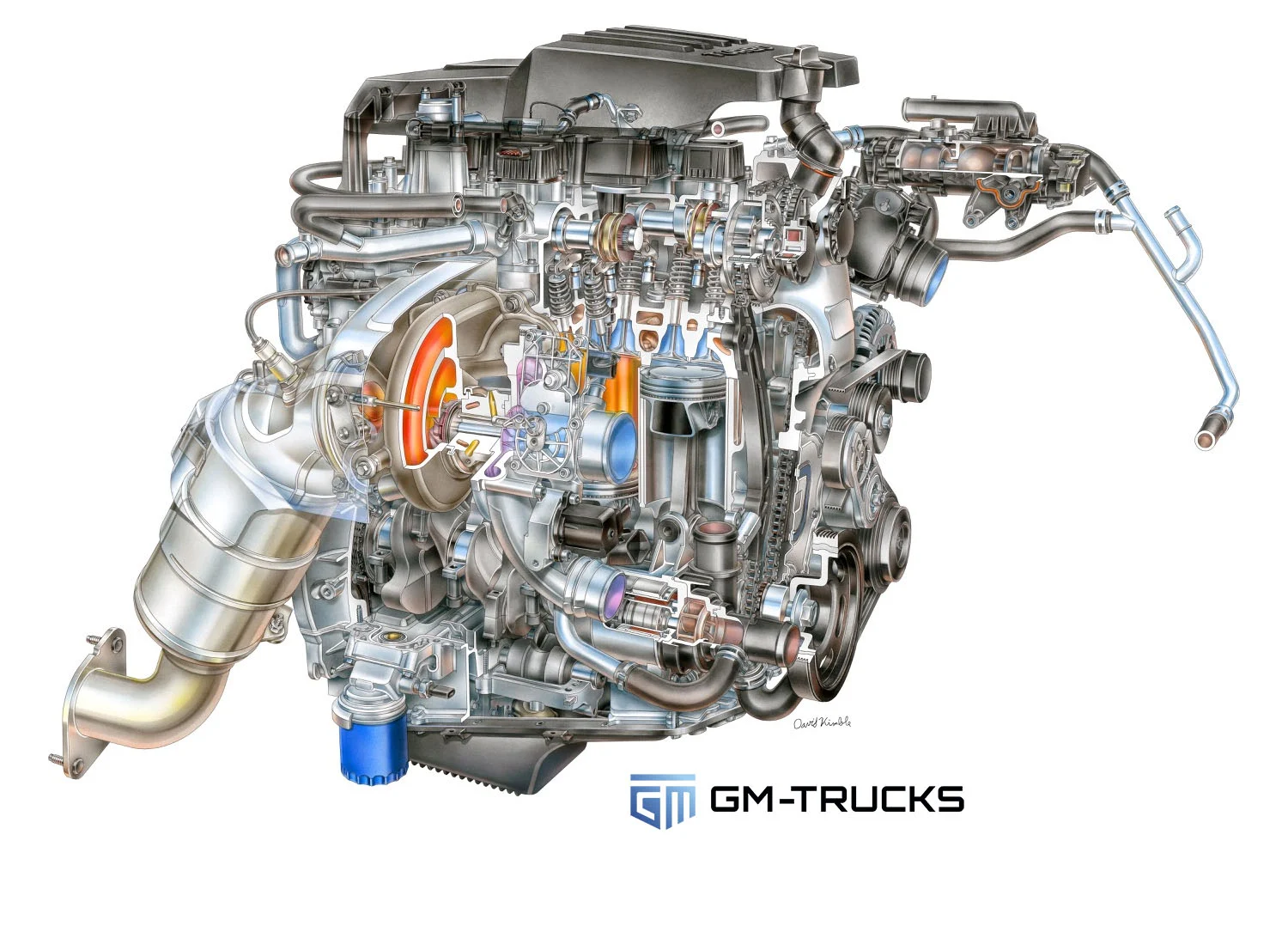
The Fix: From “Sleep Cycles” to Hardware
The service procedure for this issue is unique. Because the binding can sometimes be cleared without replacing parts, the bulletin instructs technicians to attempt a specific “reset” procedure first.
-
The Sleep Cycle: Technicians are instructed to clear the codes and allow the vehicle to enter a “full sleep cycle” by waiting for the OnStar light to turn off and listening for relays to click.
-
The 4,000 RPM Rev: If the MIL sets again upon moving, a secondary procedure involves clearing the codes again and performing a 15-second park rev to 4,000 RPM.
-
Hardware Replacement: If the MIL resets after repeating the process up to four times, the dealer will move on to replacing the profile actuator solenoids. If codes return after that, the entire Intake or Exhaust Camshaft and Roller Followers may need to be replaced.
What To Tell Your Dealer
If your new 2.7L truck has a Check Engine Light, don’t just ask them to clear the code. Reference Service Bulletin PIP5865L. This ensures the technician follows the specific multi-step diagnostic process designed for this camshaft binding issue rather than just guessing at parts.

Zane Merva is the Executive Editor of GM-Trucks.com and the President of the New England Motor Press Association (NEMPA). A veteran automotive journalist with over 26 years of experience, Zane is a designated ‘Car Talk’ Expert and has been a contributor to The Boston Globe. He possesses a unique evaluative perspective, having road-tested more than 2,000 vehicles across every major manufacturer. While he is a recognized authority on General Motors truck platforms—including the Silverado, Sierra, and Colorado—his expertise is grounded in decades of deep competitive analysis that few in the industry can match. His commentary has been featured by major OEMs and media outlets, including Hyundai and PR Newswire