


Ac3
-
Posts
4 -
Joined
-
Last visited
Ac3's Achievements

New Member (1/11)
0
Reputation
-
Great point. In my personal experience, I find aftermarket bushing don't last as long in comparison to the sealed OEM's. My use case is mild - my vehicle is 80% pavement with the other 20% being my father's farm or forest service roads. Rarely am I doing serious off-roading and when so, rarely at speed. The Bilstein 5100's came in today and the travel is only a 2" longer compared to the stock Ranchos, 1" shorter than the Eibachs. Based on the historical OEM Trail Boss UCA PN and the general online concessions, I should be okay with this setup. Cheers, Ac3 (Ace)
-
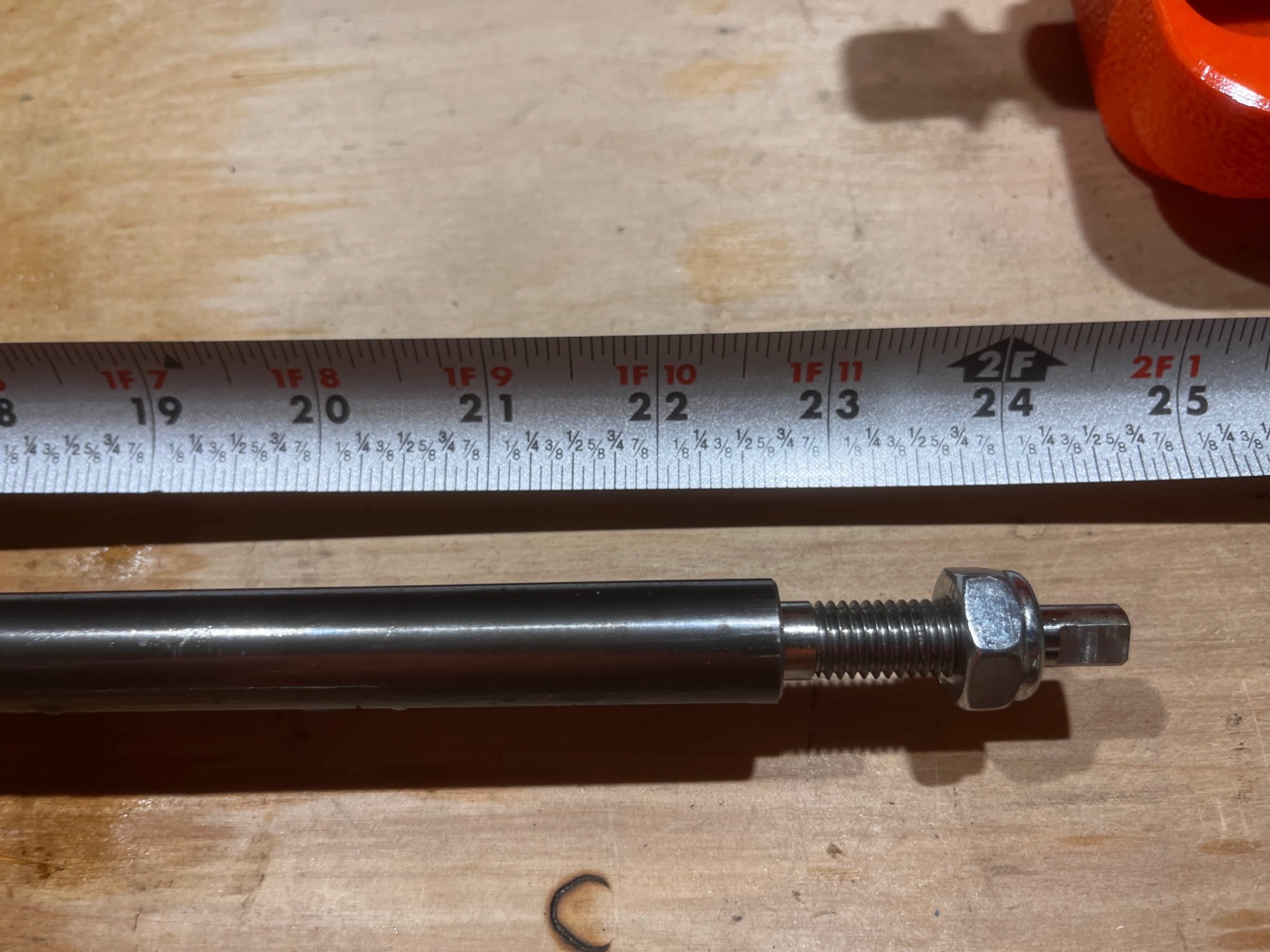
Hi all, This is a friendly warning regarding Eibach's PRO-TRUCK Sport Shock for the 2019+ Silverado 1500's (Part #: E60-23-032-01-10). In short, it increases suspension travel by ~3" which binds the upper ball joint. I had previously used Eibach's PRO-TRUCK line of shocks on a 2016 Colorado as a Bilstein 5100 alternative when looking to get rid of the stock rake. Eibach's product gains lift the same way as Bilstein by using an adjustable c-clip to increasing pre-load with the benefit of firmer valving. While Eibach's installation instructions are lacking compared to Bilstein, the Eibach struts performed well and I didn't have any issues . Today, I finished installing the Eibach onto my 2024, Silverado LT, Z71 which was straight forward. However, I've come to conclude the product could be dangerous by increasing travel by ~3", exceeding the safe angle of the upper ball joint at full extension. My findings were: The maximum extension of the stock Rancho strut was 19 5/8". This was measured from the lower mounting bracket to the bottom of the threads on the strut shaft as this is where the upper mount sits - first photo/ #9669 The maximum extension of the Eibach strut was 22 5/8" when measured in the same manner - second photo/ 9675. For a comparison between the stock Rancho and Eibach strut, look at third photo/ 9669. I've gathered from posts such as this one and this one, increasing the travel length more that 2" puts the upper ball joint past it's maximum angle. Eibach's design of increasing travel by 3" is the equivalent of installing a 3" spacer onto of the stock Rancho strut, stressing the stock upper ball joint at full extension. Nowhere on Eibach's product page or instructions does it indicate this product needs aftermarket upper control arms to be safe or that the travel length was increased by 3" over stock. In light of this, I've ordered the Bilstein 5100 to replace the Eibach's (PN: 24-293297). The data sheet shows the strut has a full extension length of 21.65". Since I do not have the strut yet, I do not know if this measurement includes the threads on the shaft or if this is to base where the upper mount sits. Regardless, this means Bilstein's strut is either the same length as the stock Ranch strut or, introduces 2" of suspension travel which falls within the ability of the stock UCA's. By no means do I claim to be an expert as I am new to the T1XX platform, but these principles were well documented when I owned a GMT360 and GMT 31XX. 'In strut' lifts are considered safe since you do not increase the maximum extension of the strut, meaning you do not increase the maximum angle of the upper ball joint. 'In strut' lifts increase the preload to gain lift. 'Outside strut' lifts are easier to install but become dangerous at a point since it will increase the maximum extension to a point where the upper ball joint becomes the downward limiting factor. After repeated instances of this, the upper ball joint can fail by sheering or popping out of the socket. I welcome any and all questions, comments, or feedback as I learn the T1XX platform. Kind regards, Ac3 (Ace)

-
"4WD Off" Message in 4LO - 2024 Silverado, LT, Z71
Ac3 replied to Ac3's topic in Troubleshooting, Warranty & Recalls
A Follow-Up, After being at the dealer for a week, they were not able to re-produce the issue and they did not see any stored codes. They also mentioned the software was up to date and there was nothing they could do at this point other than to look at it again should the issue reoccur. This weekend I was able to take the truck back to the farm to test it again. Lo and behold - 4LO worked just fine! I'm not sure what to think at this point in terms of root cause. I did pull the battery since I had this issue... Perhaps resetting the computer helped the TCCM relearn the proper transfer case clutch engagement? If any others have this issue, let me know as I'd be curious to hear of your symptoms and resolution if any. Kind Regards, Ac3 (Ace). -
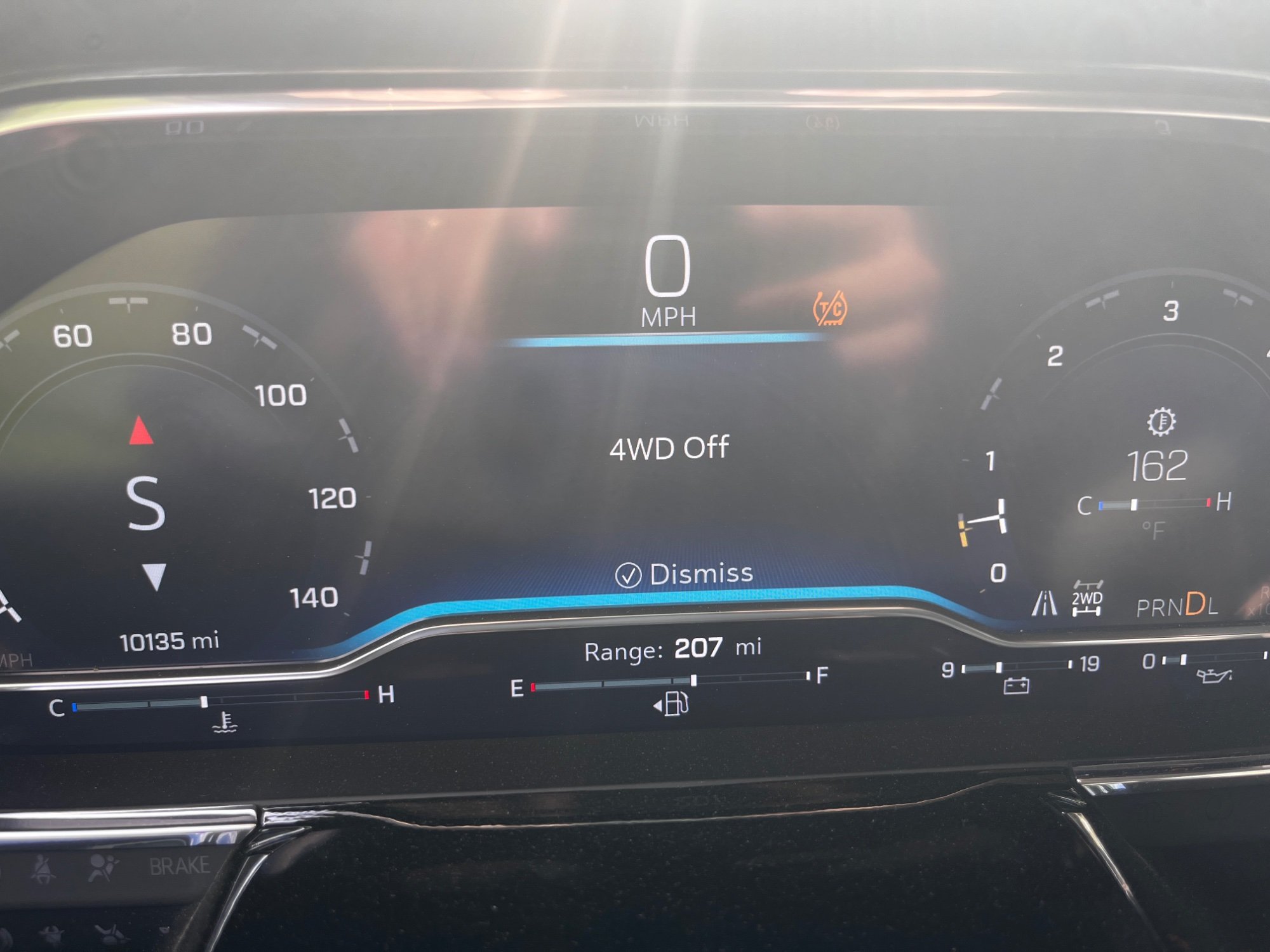
Truck: 2024, Silverado LT, Z71, ~12,000 miles Issue: No power being sent to the front wheels in 4LO with the message "4WD Off" appearing on the dash after rear wheel spin. 4HI and Auto 4WD work as expected. Background: On my father's farm there is a ~20% grade, grass covered hill which leads to a great view of his property. In my previous vehicles I shifted into 4LO as the gravel road approached the hill and continued my climb without issue. I did the same in my current Silverado, coasting to ~3mph, moving the column shifter to "N", and selecting the "4LO" button. The truck successfully shifted into 4LO as indicated by the dash, the physical sound/ bump of the 4LO planetary engaging, and the increased RPM's associated with LO range. Note that I had not used 4WD of any kind that day prior to this point. I moved the column shifter to "D" and as I started to apply power to go up the grass covered hill, the rear wheels broke loose and I could hear the G80 locker engaging. I stopped and slowly applied power again with the same result. On the 3rd attempt of slowly applying power, the rear wheels broke loose again and the message "4WD OFF" appeared on the dash with the indication it was now back in 2HI. I moved the column shifter to "N", coasted back to the level gravel road, and then put the column shifter to "D" to drive around and see what was up. It was clear the transfer case was in "4LO" as the RPM's were still higher from yet the dash indicated 2HI. I shifted back into 2HI correctly then into 4HI and attempted the hill climb without issue. I went back down to the gravel road in 4HI and gave it some gas to see if I could break the rear end free. I could not, further confirming I was in 4HI. I then shifted back into 4LO successfully and again on the gravel road gave it some gas to see if I could break the rear end free. This time I could, further indicating that power was not being sent to the front wheels despite being in LO range and 4LO as indicated on the dash. Self Diagnosis: I suspect there is an issue in my transfer case, specifically with the actuator. Since 4HI works, I know my front disconnect is properly engaging, the front differential can transfer power correctly, and that the clutches in the Transfer Case can engage correctly. Since I can shift into 4LO range, I know the planetary gears are working correctly as confirmed by the increased RPM's. I suspect the actuator is failing to properly engage the clutches while in 4LO. There seems to be limited documentation online over my specific scenario. What I could find relates to trucks where their 4WD drive systems are overheating or improperly serviced. As my truck is very new and I had not used 4WD that day, I am ruling out overheating and lack of owner maintenance issues I have a warranty appointment scheduled with the dealer in two weeks where they will give it a full run down. I will post what their findings are here to hopefully help others in the future but in the mean time, I would enjoy hearing from others who may have experienced this or have their own insight into my suspected Transfer Case/ actuator failure. Kind regards, Ac3 (Ace)


-
Forum Statistics
250.5k
Total Topics2.7m
Total Posts -
Member Statistics
342,974
Total Members8,960
Most Online
-
Who's Online 2 Members, 0 Anonymous, 569 Guests (See full list)