
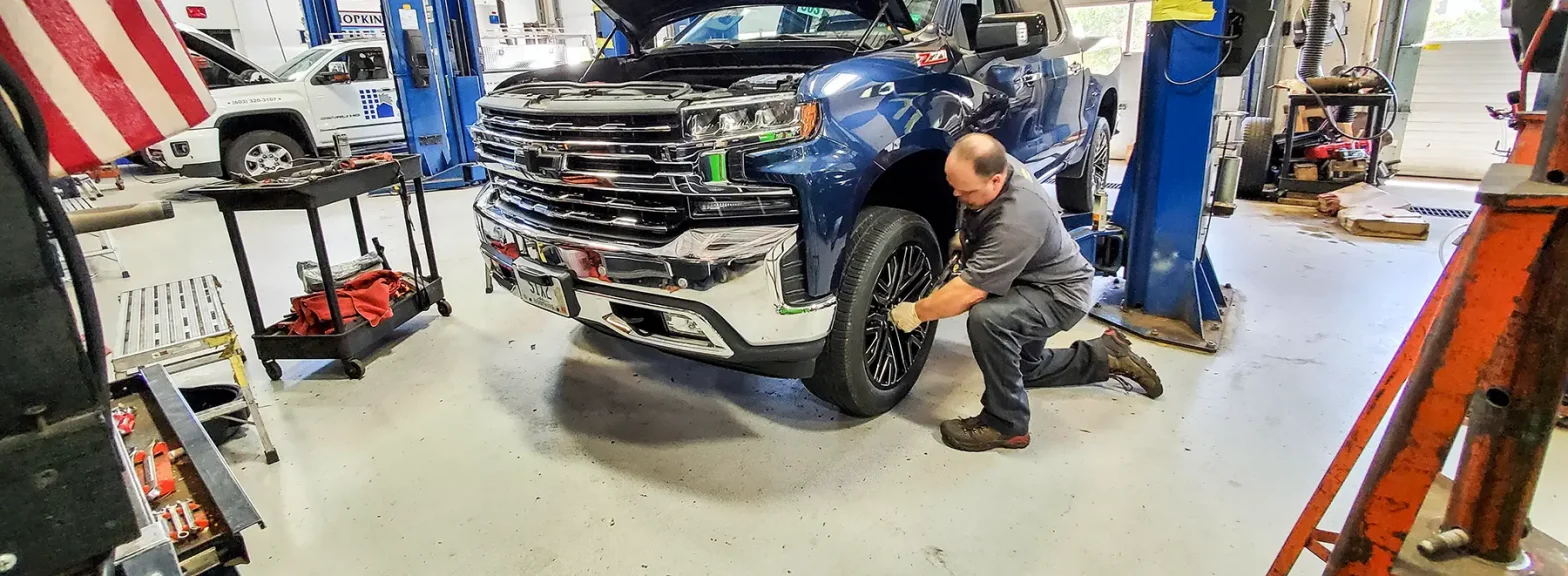
You came here because you need to torque your wheels, and the answer should be one number. For most of you, it is: 140 lb-ft. That spec covers the Chevrolet Silverado 1500, GMC Sierra 1500, Tahoe, Suburban, Yukon, Yukon XL, Escalade, and Silverado HD / Sierra HD 2500 single-rear-wheel models from roughly 1999 through 2026. Stop here if that is what you needed.
If you have a dually, a HUMMER EV, Silverado EV, or Escalade IQ on the EV platform, a Colorado or Canyon, or you want to know about the right way to torque (sequence, lubrication, re-torque, and why a tire shop’s impact gun keeps shearing your studs), read on.
The full breakdown is below.
Quick Answer by Truck
- Silverado 1500 / Sierra 1500 (1999–2026): 140 lb-ft
- Silverado HD / Sierra HD 2500 & 3500, single rear wheel (1999–2026): 140 lb-ft
- Silverado HD / Sierra HD 3500 dually (DRW, 1999–2026): 165 lb-ft
- Tahoe / Suburban / Yukon / Yukon XL (1999–2026): 140 lb-ft
- Cadillac Escalade / Escalade ESV (1999–2026): 140 lb-ft
- Colorado / Canyon (2004–2026): 140 lb-ft
- Silverado EV / Sierra EV: 140 lb-ft (verify against your owner’s manual, the EV trucks use the same M14×1.5 hardware as the gas trucks)
The stud thread for every full-size GM truck and SUV in this list, going back to 1999, is M14×1.5. The OEM lug nut takes a 22 mm socket. Aftermarket conical-seat acorn lug nuts often use 21 mm or 19 mm, so check what is actually on your truck before reaching for the wrench.
Table of Contents
- Silverado 1500 / Sierra 1500 by year
- Silverado HD / Sierra HD by year and configuration
- Tahoe / Suburban / Yukon / Yukon XL / Escalade
- Colorado / Canyon
- Bolt patterns and stud sizes
- Why 140 lb-ft on a half-ton, and why people argue about it
- The correct torque procedure (sequence, lube, re-torque)
- Aftermarket wheels: same spec, different lug nut
- Why tire shops keep snapping wheel studs
- Frequently asked questions
Silverado 1500 / Sierra 1500
| Years | Platform | Torque | Bolt pattern | Stud | Lug nut socket |
|---|---|---|---|---|---|
| 1999–2006 | GMT800 | 140 lb-ft (190 Nm) | 6×139.7mm (6×5.5″) | M14×1.5 | 22 mm |
| 2007–2013 | GMT900 | 140 lb-ft (190 Nm) | 6×139.7mm | M14×1.5 | 22 mm |
| 2014–2018 | K2XX | 140 lb-ft (190 Nm) | 6×139.7mm | M14×1.5 | 22 mm |
| 2019–2024 | T1XX | 140 lb-ft (190 Nm) | 6×139.7mm | M14×1.5 | 22 mm |
| 2025–2026 | T1XX (refreshed) | 140 lb-ft (190 Nm) | 6×139.7mm | M14×1.5 | 22 mm |
General Motors set the lug nut torque for the half-ton at 140 lb-ft continuously since at least 1999. Older trucks built before the late 1990s used 100 or 125 lb-ft, and you will still find owners and dealers who default to the older number. Every printed Silverado 1500 and Sierra 1500 owner’s manual from 1999 through 2026 specifies 140 lb-ft. If yours says something else, recheck—you may be looking at a Tahoe or HD manual. You can always confirm your specs with other owners in our Silverado & Sierra 1500 community forums.
Silverado HD / Sierra HD 2500 & 3500
Heavy-duty trucks split the spec by rear configuration. Single rear wheel (SRW) trucks share the half-ton’s 140 lb-ft number. Dual rear wheel (DRW, “dually”) 3500 trucks call for 165 lb-ft on the rear axles because the inner-and-outer wheel stack-up needs additional clamping force. The fronts on a dually still take 140 lb-ft.
| Years | Configuration | Torque | Bolt pattern | Stud | Lug nut socket |
|---|---|---|---|---|---|
| 1999–2010 | 2500HD / 3500 SRW | 140 lb-ft | 8×165.1mm (8×6.5″) | M14×1.5 | 22 mm |
| 1999–2010 | 3500 DRW (rear) | 140 lb-ft (some manuals 175 — see note) | 8×165.1mm | M14×1.5 | 22 mm |
| 2011–2019 | 2500HD / 3500 SRW | 140 lb-ft | 8×180mm | M14×1.5 | 22 mm |
| 2011–2019 | 3500 DRW (rear) | 165 lb-ft | 8×210mm (rear), 8×180mm (front) | M14×1.5 | 22 mm |
| 2020–2026 | 2500HD / 3500 SRW | 140 lb-ft | 8×180mm | M14×1.5 | 22 mm |
| 2020–2026 | 3500 DRW (rear) | 165 lb-ft | 8×210mm (rear), 8×180mm (front) | M14×1.5 | 22 mm |
The 1999–2010 HD service manual specified 175 lb-ft for some dually configurations. GM revised this down to 165 lb-ft in the modern era. If your manual says 175 and your truck is older, that is the original printed spec, not a typo. Many GM master techs today still torque older duallies to 165 in current practice. Trust your service manual for your specific year, or check in with the Silverado HD & Sierra HD forums.
Chassis cab and 4500/5500/6500 medium-duty trucks have their own torque specs that vary by wheel material and configuration. Consult the body builder manual or service bulletin for those numbers.
Tahoe / Suburban / Yukon / Yukon XL / Escalade
| Years | Model | Torque | Bolt pattern | Stud | Lug nut socket |
|---|---|---|---|---|---|
| 1999–2014 | Tahoe, Suburban 1500, Yukon, Yukon XL 1500 | 140 lb-ft | 6×139.7mm | M14×1.5 | 22 mm |
| 2015–2020 | Tahoe, Suburban, Yukon, Yukon XL | 140 lb-ft | 6×139.7mm | M14×1.5 | 22 mm |
| 2021–2026 | Tahoe, Suburban, Yukon, Yukon XL (T1XX) | 140 lb-ft | 6×139.7mm | M14×1.5 | 22 mm |
| 2000–2014 | Suburban 2500 / Yukon XL 2500 | 140 lb-ft | 8×165.1mm | M14×1.5 | 22 mm |
| 1999–2026 | Cadillac Escalade / ESV (1500-based) | 140 lb-ft | 6×139.7mm | M14×1.5 | 22 mm |
Have questions about your full-size SUV? Join the discussion in our Tahoe, Suburban, Yukon & Escalade forum.
Colorado / Canyon
| Years | Generation | Torque | Bolt pattern | Stud | Lug nut socket |
|---|---|---|---|---|---|
| 2004–2012 | First-gen | 140 lb-ft | 6×139.7mm (6×5.5″) | M14×1.5 | 22 mm |
| 2015–2022 | Second-gen | 140 lb-ft | 6×120mm | M12×1.5 | 19 mm |
| 2023–2026 | Third-gen | 140 lb-ft | 6×120mm | M12×1.5 | 19 mm |
The midsize trucks are where the bolt pattern history gets messy. The 2004–2012 first-gen Colorado / Canyon shares the full-size 6×5.5″ pattern. First-gen Colorado wheels will physically bolt onto a Silverado 1500 hub, though the center bore differs (Colorado is 100.3mm, Silverado is 78.1mm). Without hub-centric rings, the wheel sits on the studs instead of the hub face. Avoid doing this.
The 2015-and-newer models abandoned the 6×5.5″ pattern for a smaller 6×120mm and switched to a thinner M12×1.5 stud. Wheels will not interchange between the first-gen and second/third-gen midsize trucks. Connect with other midsize owners in our 3rd-Gen Colorado & Canyon forum.
Bolt Patterns and Stud Sizes
For half-tons and SUVs, GM used a single 6×139.7mm (6×5.5″) pattern with M14×1.5 studs continuously since the late 1980s. For heavy-duty trucks, GM moved from 8×165.1mm (8×6.5″) to 8×180mm starting with the 2011 model year. Dually rears use a larger 8×210mm pattern to accommodate the inner wheel mounting.
Hub bore sizes vary and matter significantly for aftermarket wheels:
- Silverado 1500 / Sierra 1500 / Tahoe / Suburban / Yukon / Yukon XL / Escalade: 78.1mm
- Silverado HD 2500/3500 (2011+): 121.3mm
- Colorado / Canyon (1st gen, 2004–2012): 100.3mm
- Colorado / Canyon (2nd/3rd gen, 2015+): 67.1mm
A wheel with a smaller hub bore than your truck’s hub will not seat properly. A wheel with a larger hub bore needs a hub-centric ring. Without it, the wheel rides on the studs (not the hub face) and produces a vibration that worsens as the studs progressively bend.
Why 140 lb-ft on a Half-Ton, and Why People Argue About It
GM specifies 140 lb-ft based on the M14×1.5 stud’s required preload—the clamping force needed to keep the wheel firmly seated against the hub face under all driving conditions. The number is not conservative; it is the exact engineered preload for that fastener and wheel design.
Two arguments surface regularly on the forums:
“140 is too high, my dealer torqued mine to 110.” Some tire shops default to 100 or 110 lb-ft across all vehicles to reduce stud breakage risk and warranty exposure. They manage their own liability rather than following GM’s spec. Under-torqued lug nuts easily loosen with thermal cycling and road vibration. If a shop torques your truck to 110, the nuts will not feel different to you, but they hold the wheel with about 78% of the designed clamping force.
“The manual says 190 Nm — that’s only 103 ft-lbs, not 140.” This is a unit-conversion error. 190 Newton-meters converts directly to 140 foot-pounds, not 103. The 103 figure comes from mistakenly converting Nm to inch-pounds first, then dividing by 12. The correct conversion: 190 Nm ÷ 1.356 = 140.1 lb-ft. If your wrench reads in Newton-meters, use 190.
The Correct Torque Procedure
- Clean both contact surfaces. Wipe the wheel hub face and the back of the wheel. Rust, mud, or paint flakes between the hub and the wheel compress under torque, leaving the lug nuts loose within the first 50 miles of driving.
- Hand-thread every lug nut. Spin each nut onto the stud by hand until it’s snug. This catches cross-threading before you apply a wrench.
- Tighten in a star pattern, not in a circle. For a 6-lug wheel, the sequence is opposite-side-to-opposite-side. Going around the circle one nut at a time pulls the wheel against the hub face unevenly and warps brake rotors over time.
- Step up to final torque in two passes. First pass to roughly 70 lb-ft. Second pass to the final 140 lb-ft. This prevents stretching one stud before the wheel fully seats.
- Do not lubricate the threads. GM torque specs rely on dry-thread values. Lubricated threads at the same torque produce significantly more clamping force, which stretches and snaps studs. Antiseize on a wheel stud is a contested practice. It works for people who reduce torque accordingly, but the safe default is dry threads. If you want corrosion protection, apply a light film of antiseize to the seat (the conical or rounded face the lug nut rides on) only.
- Re-torque after 50–100 miles. This is mandatory on aluminum wheels. They compress slightly under initial load, causing the lug nuts to read low when you check them. Steel wheels are more forgiving but still benefit from a re-check.
Aftermarket Wheels: Same Torque Spec, Different Lug Nut
If you switch from factory wheels to aftermarket alloys, the torque spec remains 140 lb-ft, but you must change the lug nut. Factory GM lug nuts feature a flat washer flange that seats against the wheel face. Most aftermarket alloy wheels use a 60-degree conical seat requiring a completely different lug nut—typically a “bulge acorn” or “tuner” style.
You cannot reuse factory lug nuts on aftermarket wheels with conical seats. The seat geometry fails to match, the clamping force will not develop correctly, and the lug nuts will loosen even at the correct torque. Buy lug nuts that match your wheel’s seat type. This simple $30 purchase prevents a $300 repair.
Why Tire Shops Keep Snapping Wheel Studs
If you lose a stud during a routine tire rotation, blame the air impact gun. Modern half-ton wheel studs easily handle 140 lb-ft of properly applied torque indefinitely, but they cannot handle the 400+ lb-ft an unrestricted impact gun delivers in a half-second burst.
What to ask the shop:
- “Are you using a calibrated torque wrench for final tightening, or just a torque stick on an impact?” Shops can use torque sticks for removal, but never for the final torque.
- “What torque value are you using for a Silverado 1500?” They must answer 140 lb-ft. If they say 100 or 110, they under-torque your wheels.
- “Will you re-torque after 50 miles if I bring it back?” Keep going to a shop that answers yes.
Heavy-duty trucks carry a particular history with this issue. Silverado 2500HD and 3500 owners lose studs to tire shops constantly. The 2500HD service manual calls for 140 lb-ft on the front and SRW rears; the issue isn’t the specification, it is how the shop applies it.
Frequently Asked Questions
Is 140 lb-ft the same for steel wheels and aluminum wheels?
Yes, on factory wheels. GM specifies 140 lb-ft regardless of wheel material. The difference is that aluminum wheels require a re-torque after 50–100 miles because they compress slightly under initial load. Steel wheels resist this, but a re-check always helps.
My manual says 190 Nm. Is that the same as 140 lb-ft?
Yes. 190 Newton-meters equals 140 foot-pounds. They are the exact same specification in different units. Set your wrench to whichever scale your tool reads.
What about a steel spare wheel on an aluminum-wheel truck?
Apply the same 140 lb-ft, then re-torque within 50 miles. If you rotate a spare to the ground, you use factory lug nuts on a steel wheel that normally rides on aluminum. The specification does not change.
Why does my Silverado 1500 say 140 lb-ft but my crossover says 100?
Different stud sizes. The full-size trucks and SUVs utilize M14×1.5 studs designed for higher torque. GM passenger cars and crossovers use smaller M12×1.5 studs and lower torque values to match. Stud diameter determines the spec, not just vehicle weight.
I have a 2012 Silverado 2500HD and one of my rear lug nuts came off. Is 140 too much?
No, but the way a shop applied that 140 lb-ft caused the problem. Stripped or sheared studs almost always trace back to an over-torqued impact gun installation, prior cross-threading, or running with already-loose nuts that fatigued the stud over thousands of miles. Replace the stud (or all studs on that wheel as a set), follow the proper torque procedure, and re-torque at 50 miles.
Should I torque the nuts again every tire rotation, or just on the install?
Every install and rotation requires a full torque sequence plus a re-torque at 50–100 miles. After that, the nuts hold their torque indefinitely until the wheel comes off again. Do not constantly re-torque a wheel that remains installed.
What torque does my Silverado EV / Sierra EV need?
The Silverado EV and Sierra EV utilize the same M14×1.5 stud hardware as the gas trucks and follow the same 140 lb-ft spec. The GMC HUMMER EV and other heavy EV products use larger fasteners and call for higher torque. The Escalade IQ uses a different hub assembly entirely. Always verify your specific EV’s manual.
Where do I find the spec for my exact truck?
Look in the Owner’s Manual under the Service section, “Wheel Replacement” or “Tire and Wheel Specifications.” The GM service manual provides the same number alongside sequence diagrams. If you lost your manual or simply want to confirm exactly how your specific truck rolled off the assembly line, run your VIN through our Window Sticker Generator.
Related Guides
If you are already under your truck for a tire rotation, you likely need your oil specifications while you have the tools out. Check our newly updated master list: GM Truck & SUV Engine Oil Capacity Specs: The Ultimate Master Guide.

Zane Merva is the Executive Editor of GM-Trucks.com and the President of the New England Motor Press Association (NEMPA). A veteran automotive journalist with over 26 years of experience, Zane is a designated ‘Car Talk’ Expert and has been a contributor to The Boston Globe. He possesses a unique evaluative perspective, having road-tested more than 2,000 vehicles across every major manufacturer. While he is a recognized authority on General Motors truck platforms—including the Silverado, Sierra, and Colorado—his expertise is grounded in decades of deep competitive analysis that few in the industry can match. His commentary has been featured by major OEMs and media outlets, including Hyundai and PR Newswire