
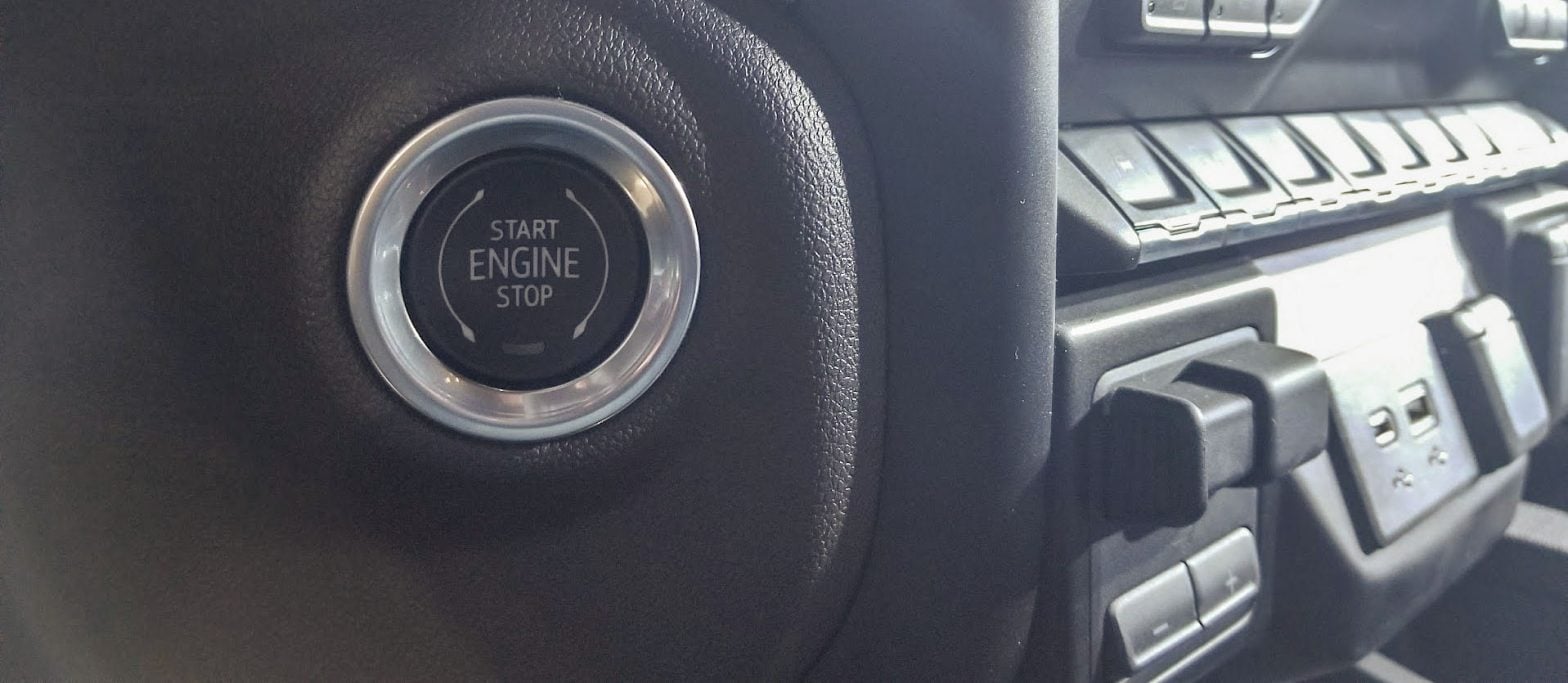
Imagine pulling into your driveway, putting your truck in park, and hitting the ignition button to turn it off.
Instead of peace and quiet, the engine just keeps running.
It sounds like an electrical nightmare, but for certain Chevrolet and GMC owners, it is a very real, documented problem.
General Motors has officially acknowledged a bizarre condition where the engine continues to run even with the ignition switch fully in the OFF position.
Before you panic, call a tow truck, or attempt to pull your battery cables, here is the official explanation.
Why is the Engine Still Running?
According to GM Service Bulletin PIT6489, which was released in February 2026, the issue actually traces back to the fuel system.
The root cause of this “run-on” condition may be a voltage back feed originating directly from the Fuel Pump Driver Module.
Essentially, this module is feeding electrical voltage backward through the truck’s wiring harness.
This rogue voltage keeps the engine’s critical systems awake and running long after you command it to shut down.
It is a highly specific hardware failure, not just a random software glitch.
How to Diagnose the Running Engine (Step-by-Step)
If your truck refuses to turn off, dealership technicians are instructed to perform a very specific, simple physical test. Here is the exact official diagnostic procedure to pinpoint the failure:
-
Leave the ignition in the OFF position while the engine is still unexpectedly running.
-
Locate and disconnect the K111 Fuel Pump Drive Control Module.
-
Observe the engine. With the module disconnected, the engine should shut off immediately with absolutely no delay.
-
Replace the module. If disconnecting the module successfully kills the engine, you will need to replace the K111 Fuel Pump Drive Control Module.
Which GM Trucks Are Affected?
This voltage back feed issue covers a specific window of modern, gas-powered pickups across the GM lineup.
If you drive one of the following trucks equipped with these specific gas engines, this bulletin applies to you:
-
2019-2021 Chevrolet Silverado 1500 equipped with the L82, L84, L87, LV3, or L3B engines.
-
2022 Chevrolet Silverado 1500 LTD (RPO J21) equipped with the L82, L84, L87, LV3, or L3B engines.
-
2020-2023 Chevrolet Silverado HD (2500 & 3500) equipped with the heavy-duty L8T gas engine.
-
2019-2021 GMC Sierra 1500 equipped with the L82, L84, L87, LV3, or L3B engines.
-
2022 GMC Sierra 1500 Limited (RPO J21) equipped with the L82, L84, L87, LV3, or L3B engines.
-
2020-2023 GMC Sierra HD (2500 & 3500) equipped with the heavy-duty L8T gas engine.
Where to Discuss Your Truck’s Electrical Issues
Dealing with bizarre electrical bugs can be incredibly frustrating, especially when it prevents you from simply parking your vehicle.
Fortunately, you don’t have to figure it out alone.
Head over to the GM-Trucks.com forums to connect with other owners who are dealing with this exact fuel pump module failure.
You can read through real-world experiences and solutions in this specific thread: 2020 Silverado 1500 won’t shut off after removing key.
For the half-ton crowd, join the broader conversation in the 2019-2026 Silverado 1500 & Sierra 1500 Forum.
If you drive a heavy-duty rig, check out the 2020-2026 Silverado HD & Sierra HD Forum.
We also have dedicated sections for 1500 Troubleshooting, Warranty, & Recalls as well as the HD Troubleshooting, Warranty, & Recalls boards so you can find exactly the help you need.
Frequently Asked Questions (FAQ)
Is this covered under warranty?
Yes, if your truck is still within its coverage window. Repairs for this Fuel Pump Power Control Module Replacement (Labor Operation 4022020) fall under the vehicle’s Emission coverage.
Does this affect the Duramax diesel trucks?
No. The official bulletin explicitly lists the gas engine codes (L82, L84, L87, LV3, L3B, and L8T) and does not include the 3.0L or 6.6L Duramax diesel engines.
Is this a safety recall?
No, this is currently a Technical Service Bulletin (TSB), specifically PIT6489. It is designed to help technicians diagnose a known condition, but it is not a mandatory safety recall.

Zane Merva is the Executive Editor of GM-Trucks.com and the President of the New England Motor Press Association (NEMPA). A veteran automotive journalist with over 26 years of experience, Zane is a designated ‘Car Talk’ Expert and has been a contributor to The Boston Globe. He possesses a unique evaluative perspective, having road-tested more than 2,000 vehicles across every major manufacturer. While he is a recognized authority on General Motors truck platforms—including the Silverado, Sierra, and Colorado—his expertise is grounded in decades of deep competitive analysis that few in the industry can match. His commentary has been featured by major OEMs and media outlets, including Hyundai and PR Newswire