
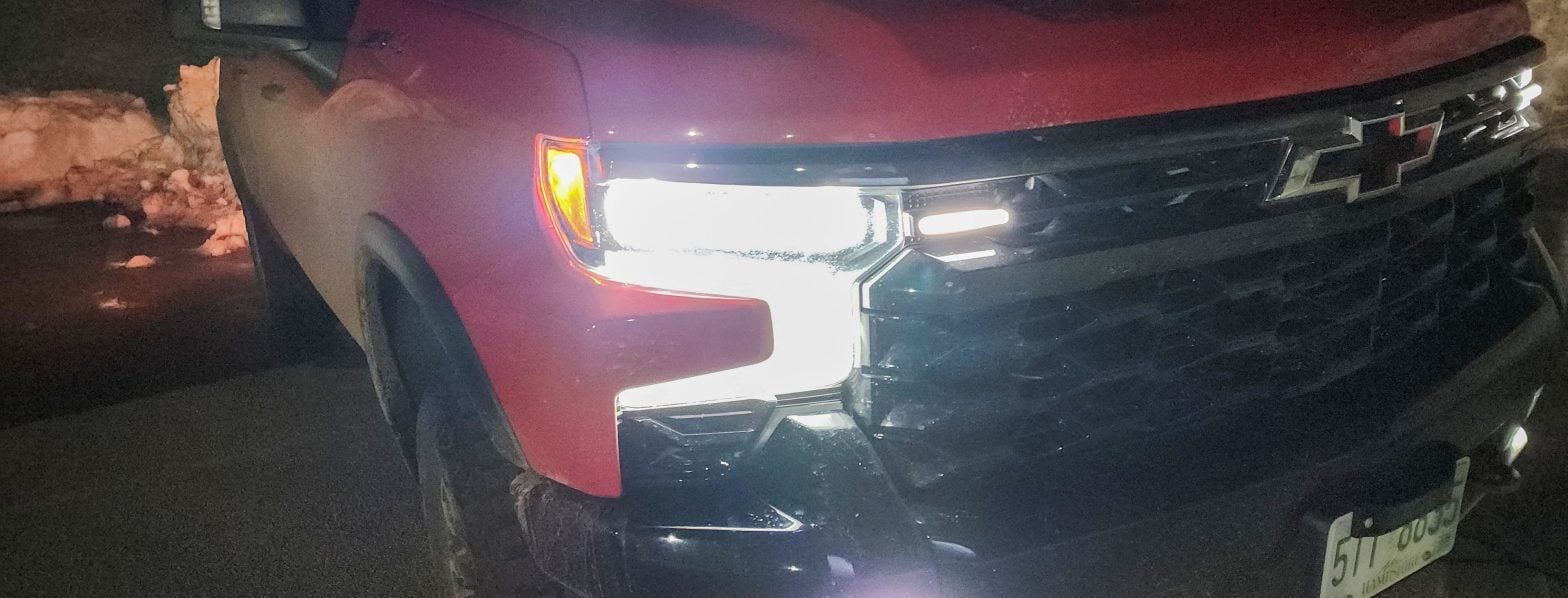
If you’ve ever walked up to your Chevrolet Silverado or GMC Sierra and noticed the headlights or taillights quickly flashing at you, it can certainly be a bit confusing.
While it might feel like an electrical glitch, your truck is actually using a built-in feature to give you a helpful “heads up” regarding your Tire Pressure Monitoring System (TPMS).
This handy diagnostic feature isn’t just for the half-tons, either.
You will find it working hard across the lineup, from the mid-size Colorado and Canyon all the way up to the heavy-duty Silverado HD and Sierra HD workhorses.
What Your Truck Is Trying to Tell You
According to the owner’s manual, your truck uses radio and sensor technology to keep a constant eye on your air pressure.
While the most common warning is the light on your dashboard, the exterior lights are often part of the communication process to help you out before you even open the door:
-
The “Look at Me” Flash: When a tire is significantly under-inflated, the truck may flash its exterior lights as you approach. This is designed to grab your attention so you can address the pressure before you start your drive.
-
The System Check: If there is a malfunction with the system itself—perhaps due to a new set of wheels or a sensor that has lost its connection—the low tire pressure light on your dash will flash for about a minute before staying on solid.
-
Tire Fill Alert (The Hidden Feature): If you’re already at the air pump, the truck will flash the turn signals to let you know the system is actively monitoring the change as you add air. It will then give you a friendly horn chirp once you’ve reached the exact recommended pressure!
Why Maintaining Proper PSI Matters
It’s easy to overlook a low tire, but keeping them at the right PSI is about more than just turning off a flashing light.
GM notes that proper inflation helps with three critical areas of your truck’s performance:
-
Safety: Under-inflated tires can overheat, which can lead to rapid tire failure.
-
Handling: Correct pressure ensures your truck handles, corners, and stops exactly the way it was engineered to.
-
Efficiency: Properly inflated tires reduce rolling resistance, which helps you get the best possible fuel economy and extends the life of your tread.
How to Resolve the Flashing TPMS Light (Step-by-Step)
The fix is usually a quick bit of basic driveway maintenance. Here is exactly what you need to do to satisfy the TPMS system and stop the flashing:
-
Check your tires when they are “cold” (meaning before you’ve driven a long distance).
-
Locate the tire information placard on the inside of your driver’s side door jamb.
-
Identify the factory-recommended PSI for your specific truck.
-
Add air to the under-inflated tires until you reach that exact number.
-
Listen for the horn chirp if your truck is equipped with the Tire Fill Alert system.
Once the pressures are correct, the TPMS should recognize the update and the extra flashing will stop.
What to Do if the Light Won’t Turn Off
Still dealing with a flashing light or a stubborn TPMS sensor after topping off your air?
Head over to the GM-Trucks.com Forums to tap into the knowledge of our community.
We have dedicated discussion boards for every modern rig, so you can find exactly what you need:
Frequently Asked Questions (FAQ)
Why does my tire pressure light flash for a minute and then stay on?
If the TPMS light flashes for about 60 seconds and then remains solid, your truck is indicating a malfunction with the system itself. This usually means a sensor has lost its connection or the battery inside the sensor has died, rather than just a low tire.
Does the Tire Fill Alert work on all GM trucks?
This feature is widely available across modern GM trucks, including the Colorado, Silverado 1500, and Silverado HD. However, you should check your specific owner’s manual to confirm your trim level includes this exact functionality.

Zane Merva is the Executive Editor of GM-Trucks.com and the President of the New England Motor Press Association (NEMPA). A veteran automotive journalist with over 26 years of experience, Zane is a designated ‘Car Talk’ Expert and has been a contributor to The Boston Globe. He possesses a unique evaluative perspective, having road-tested more than 2,000 vehicles across every major manufacturer. While he is a recognized authority on General Motors truck platforms—including the Silverado, Sierra, and Colorado—his expertise is grounded in decades of deep competitive analysis that few in the industry can match. His commentary has been featured by major OEMs and media outlets, including Hyundai and PR Newswire