
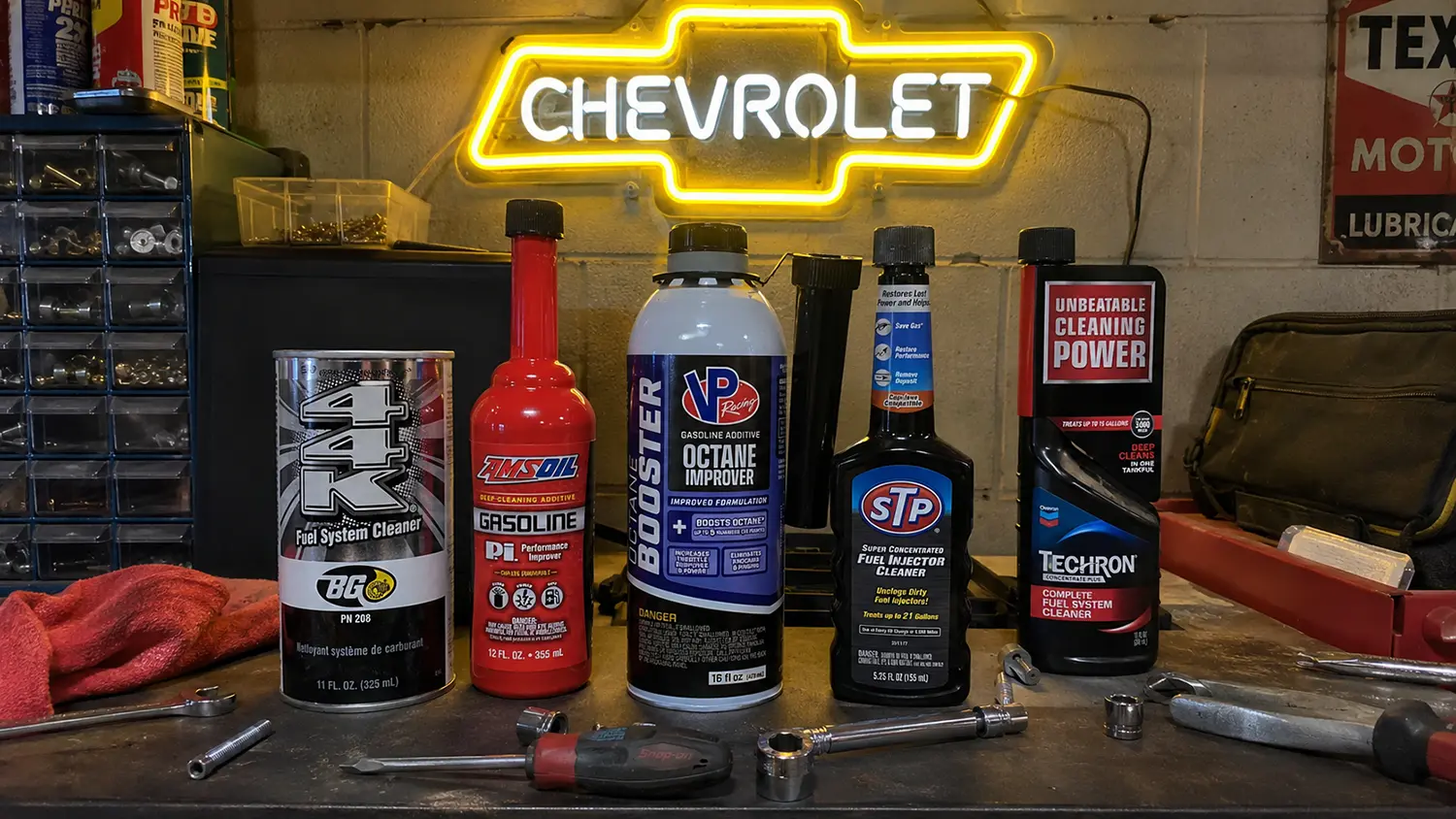
If you have ever stood in the auto parts store staring at a wall of “tune-ups in a bottle” promising better fuel economy and instant horsepower, General Motors has a message for you.
According to official GM guidance released in May 2026, fuel additives are not routine maintenance items. In fact, GM explicitly states that additives should only be used to address a verified vehicle condition or a known fuel-quality issue. Pouring a generic “cleaning package” into your tank every few thousand miles is not required to maintain your warranty, and GM actively advises against it.
Here is the official breakdown of when you actually need a fuel additive for your Chevrolet or GMC truck, and what you should avoid at all costs.
It Starts with TOP TIER Fuel
Before you reach for a bottle of cleaner to fix a rough idle or a loss of power, GM suggests you look at the pump you are using. The first step in preventing deposit-related issues is running high-quality fuel.
For gas-powered Silverado and Sierra models, GM recommends using TOP TIER Detergent Gasoline at the octane level specified in your owner’s manual. For Duramax owners, TOP TIER Approved Diesel Fuel meeting Ultra-Low Sulfur Diesel (ULSD) requirements is the required baseline. If you consistently run quality fuel and your truck drives perfectly fine, GM says an additive is completely unnecessary.
When to Use Additives in Gasoline Engines
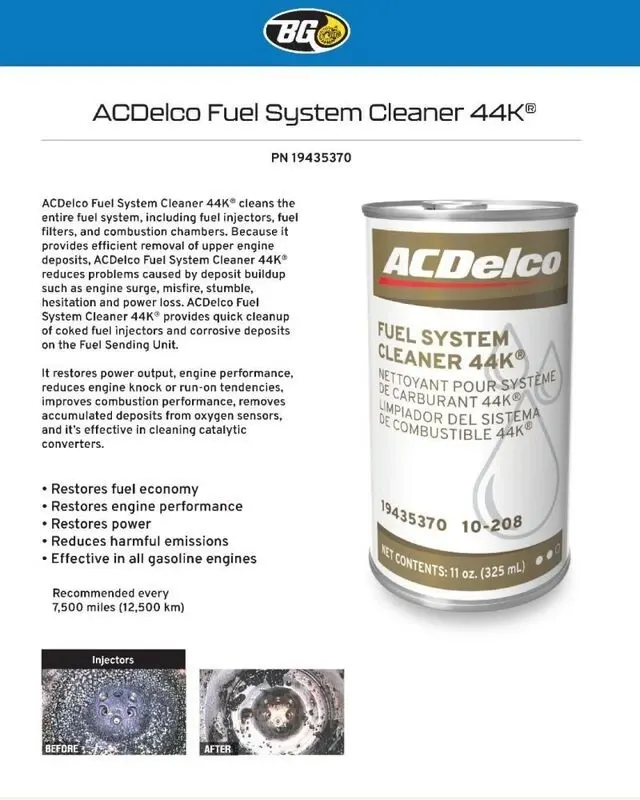
If you are experiencing actual drivability symptoms, like loss of power, stalling, hard starting, or a sudden drop in fuel economy—and normal diagnostics point to carbon buildup or deposit issues, official GM guidance approves the use of a specific product: ACDelco Fuel System Cleaner 44K.
This product provides detergent deposit control for intake valves, fuel injectors, and combustion chambers. It is recommended for use when TOP TIER gasoline is not consistently available in your area or when a drivability issue is verified. However, GM is quick to note that additives are meant to support a mechanical repair process, not replace it. (For technicians, GM outlines upper-engine cleaning procedures in Bulletin #16-NA-383).
When to Use Additives in Duramax Diesels
Diesel engines are notoriously sensitive to fuel quality, and GM has specific ACDelco approved additives depending on the exact issue you are facing:
- Fuel System Treatment Plus – Diesel: This is a highly concentrated detergent designed to remove deposits from injectors and combustion chambers. GM recommends this if you are experiencing black smoke, no-start conditions, or poor performance due to bad fuel. It is not for every-tank use.
- Diesel Basic Maintenance Additive: Recommended when you know local fuel quality is marginal, providing extra lubricity, corrosion protection, and keeping injectors clean.
- Diesel Fuel Conditioner: Adds fuel stability, detergency, and lubricity. This is specifically recommended for trucks running biodiesel blends or sitting with aged fuel.
- Diesel Cold Flow Additive: Used for extreme winter operation to prevent fuel gelling, though GM notes its effectiveness drops if you are running higher biodiesel blends.
What GM Says to Avoid
Knowing what not to pour into your tank is just as important as knowing what works. General Motors does not support routine aftermarket engine or fuel-system additives outside of their approved ACDelco products.
According to the latest official guidance (and Bulletin #05-00-89-072), you should completely avoid:
- Solvent-based aftermarket additives
- Unapproved organometallic compounds
- Water emulsifiers
GM warns that these generic products can actually cause corrosion, degrade rubber fuel system seals, and ironically, contribute to the formation of new deposits.
Finally, if you do need to use an approved ACDelco additive, do not fall into the “if a little is good, a lot is better” trap. Never overdose the tank and never mix multiple additives together. Exceeding the recommended treatment rate will create entirely new drivability issues instead of fixing your original problem.
Join the Conversation
Do you use Seafoam, Lucas, or other aftermarket additives in your truck, or do you stick strictly to TOP TIER fuel? Let us know what you think of GM’s official guidelines in the forums!

Zane Merva is the Executive Editor of GM-Trucks.com and the President of the New England Motor Press Association (NEMPA). A veteran automotive journalist with over 26 years of experience, Zane is a designated ‘Car Talk’ Expert and has been a contributor to The Boston Globe. He possesses a unique evaluative perspective, having road-tested more than 2,000 vehicles across every major manufacturer. While he is a recognized authority on General Motors truck platforms—including the Silverado, Sierra, and Colorado—his expertise is grounded in decades of deep competitive analysis that few in the industry can match. His commentary has been featured by major OEMs and media outlets, including Hyundai and PR Newswire