

It’s a classic automotive mismatch: a stationary wire and a rapidly spinning drivetrain component. When the two meet, the spinning metal usually wins, and the resulting mess can cause a lot of grief.
If you’re inspecting the rear suspension of a late-model GM full-size SUV and spot a torn, leaking half shaft boot, the culprit might not be trail hazards or typical road wear. Instead, it could be a much smaller, seemingly harmless component,a brake pad wear sensor harness, that has drifted too close for comfort.
If you own or service one of these SUVs, here is a heads-up on what this clearance issue is, what to watch out for, and how the factory fix is handled.
Affected Vehicles
This issue is isolated to GM’s full-size SUV lineup built on the T1 platform:
-
2021-2025 Chevrolet Tahoe
-
2021-2025 Chevrolet Suburban
-
2021-2025 GMC Yukon & Yukon XL
-
2021-2025 Cadillac Escalade & Escalade ESV
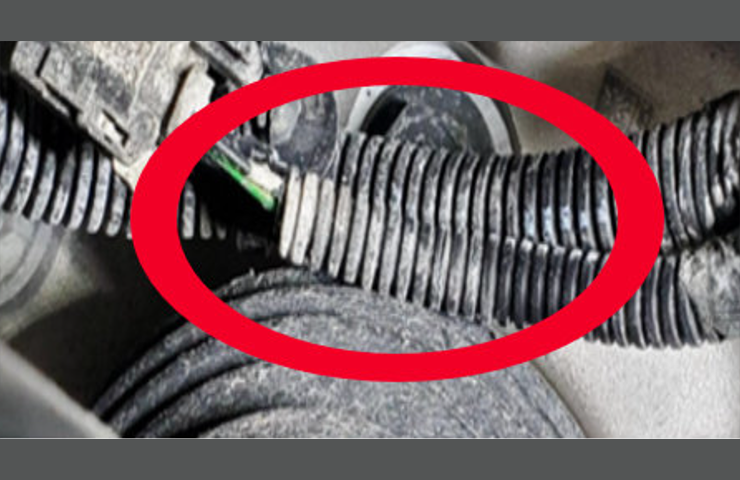
Symptoms: What to Watch Out For
The primary indicator of this issue is localized entirely to the driver’s side of the rear suspension.
-
Visible grease splattered or leaking from the left rear half shaft boot.
-
Physical damage, tearing, or chafing marks on the left rear half shaft outboard joint boot.
Diagnostic Note: You only need to keep an eye on the driver’s side for this specific interference. On these vehicles, only the left rear brake caliper is equipped with a disc brake pad wear sensor.
The Cause
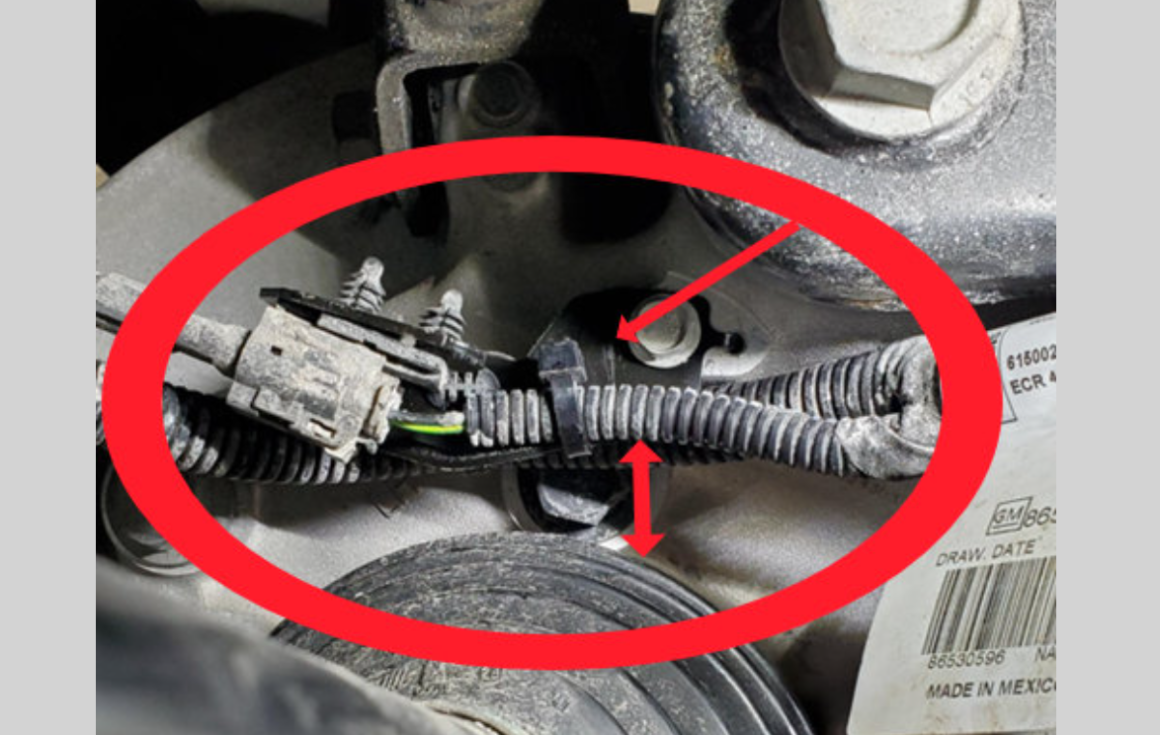
The damage is caused by the factory routing of the brake pad wear sensor wiring harness. Excess slack or incorrect positioning allows the wiring harness to physically contact the half shaft outboard joint boot. As the half shaft spins, the constant friction from the harness eventually chafes through the rubber boot, leading to grease loss and potential joint failure.
To determine if a vehicle is at risk, technicians check the clearance between the half shaft outboard joint and the wiring harness. If the gap is strictly greater than 10mm, it passes. If the clearance is under 10mm, the vehicle requires an updated routing bracket.
The Fix (And the Good News)
For vehicles still within their bumper-to-bumper warranty period, this corrective action is fully covered by GM under Bulletin #25-NA-109.
If your SUV is outside the warranty window, there is no need to panic about a massive repair bill for the routing fix itself. Correcting the clearance issue is highly straightforward and doesn’t require a major teardown. The fix simply involves swapping in a relatively inexpensive, newly designed metal bracket and using a tie strap to secure and reposition the wiring safely away from the axle.
Have you had this issue in your Chevy/GMC or Cadillac Full-size SUV? Let us know in the official Community forum topic for this half shaft rubbing problem.

Zane Merva is the Executive Editor of GM-Trucks.com and the President of the New England Motor Press Association (NEMPA). A veteran automotive journalist with over 26 years of experience, Zane is a designated ‘Car Talk’ Expert and has been a contributor to The Boston Globe. He possesses a unique evaluative perspective, having road-tested more than 2,000 vehicles across every major manufacturer. While he is a recognized authority on General Motors truck platforms—including the Silverado, Sierra, and Colorado—his expertise is grounded in decades of deep competitive analysis that few in the industry can match. His commentary has been featured by major OEMs and media outlets, including Hyundai and PR Newswire