

You have probably heard old-school truck fans claim that older vehicles are safer because they are “built like tanks” with heavy steel frames. To put that myth to a definitive, violent end, the Insurance Institute for Highway Safety (IIHS) just released an unbelievable video staging a head-to-head offset crash between a 1996 Chevrolet Blazer and a brand-new 2026 Chevrolet Blazer.
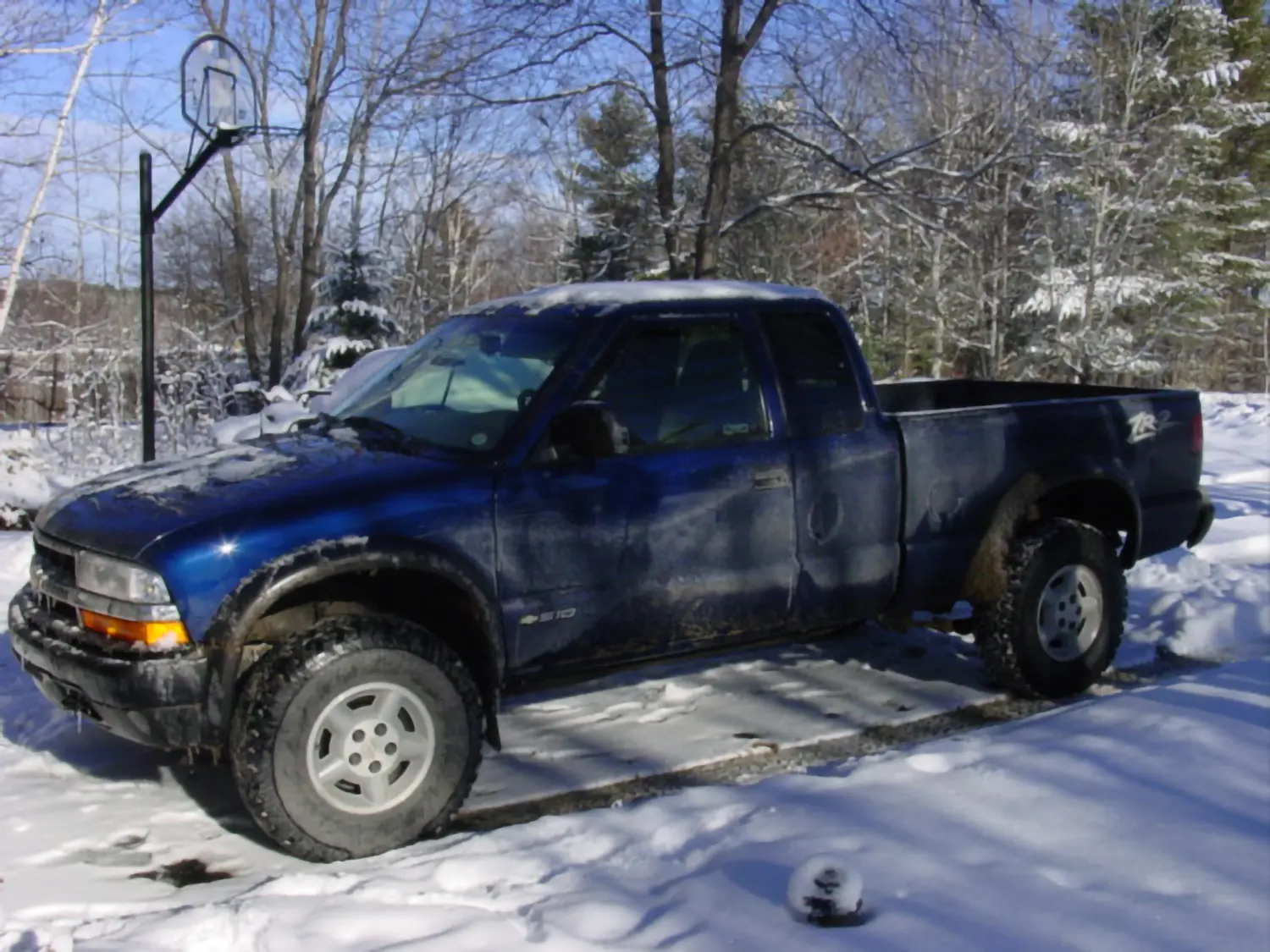
As it just so happens…my first truck was a 1999 Chevrolet S-10. Since the classic S-10 and the 1996 Blazer share the exact same platform and are nearly identical under the sheet metal, watching this new footage is absolutely eye-opening, and frankly, a little terrifying. I…could…have…died…so…much.
The results are a brutal wake-up call. While the 2026 Blazer’s driver cabin remained perfectly intact, protecting its occupant, the 1996 Blazer suffered a catastrophic structural collapse that literally snapped the crash test dummy’s head completely off its body. I put 130k miles on that S-10 with no idea.
To fully understand this mind-boggling demonstration, we have broken down exactly why this crash happened, when this safety evolution took place, and how the physics of modern engineering completely overpowers old-school steel.
Why Did the IIHS Stage This Head-to-Head Crash?
The IIHS put this demonstration together to celebrate the 30th anniversary of its crash-testing program and to visually prove a massive point: tougher safety standards save lives. For decades, buyers looked at older vehicles through rose-colored glasses, assuming heavy sheet metal equaled safety. The IIHS wanted to visually shatter that assumption.
Alongside the video, the IIHS released a comprehensive study revealing the staggering real-world impact of their three decades of smashed cars:
- 48,352 Lives Saved: Vehicle structural improvements directly driven by IIHS evaluations prevented nearly 50,000 fatalities between 1999 and 2024.
- $538 Billion Saved: By preventing these catastrophic injuries and fatalities, the program has saved society more than half a trillion dollars in economic impact.
- A 900-Fold Return on Investment: The insurance member companies funded the IIHS with $600 million over these years, meaning the program delivered an unbelievable return on every dollar spent saving lives.
When Did Vehicle Safety Change So Drastically?
The chasm in safety performance didn’t happen overnight; it is the result of a steady timeline of increasingly difficult tests introduced by the IIHS that forced automakers to adapt or fail. When the 1996 Blazer was originally built, it earned a “Poor” rating in the newly introduced 1995 front crash test—a flaw that plagued Blazers built all the way through 2004. It wasn’t until Chevrolet reintroduced the Blazer platform in 2019 that it began earning top-tier “Good” marks.
| IIHS Crash Evaluation Program | Year Introduced | Total Lives Saved (1999-2024) |
|---|---|---|
| Moderate Overlap Front Test (Used in the Blazer crash) | 1995 | 28,697 lives |
| Side Crash Test (Simulating T-bone SUV impacts) | 2003 | 18,224 lives |
| Roof-Strength Evaluation (Designed to mitigate rollovers) | 2009 | 1,432 lives |
| Small Overlap Front Tests (Simulating tree/pole clipping) | 2012 / 2017 | Included in overall frontal totals |
How Did the Two Eras of Engineering Actually Compare?
The test was conducted as a special 40% moderate overlap front crash test, meaning the two SUVs traveled directly toward each other at just under 40 mph, striking each other offset on the driver’s side. This perfectly simulates what happens when a distracted driver drifts over a two-lane highway center line.
The physics of how the two vehicles managed that energy reveals the true triumph of modern engineering:
The 1996 Blazer Transferred Energy to the Occupant: Because 90s trucks relied on rigid, unyielding frames, the force of the crash wasn’t absorbed by the front end. Instead, the energy bypassed the engine bay and violently crushed the passenger compartment. It pushed the dashboard and steering column directly into the dummy’s lap. To make matters worse, the early-generation airbag fired so rigidly that it slammed the dummy under the chin, snapping its upper neck joint and detaching its head.
The 2026 Blazer Diverted Energy Around the Occupant: Modern vehicles are engineered with sacrificial “crumple zones” and ultra-high-strength steel passenger cages. As the front end of the 2026 Blazer folded up like an accordion to swallow the kinetic energy, the internal cabin stayed completely rigid. The advanced steering column and smart airbags deployed in tandem to cushion the driver dummy smoothly. Internal instruments confirmed that while the old truck would have inflicted fatal head, neck, and leg trauma, the 2026 driver would likely walk away with little more than a bruised ego and minor scratches.
Join the Discussion in Our Forums
Does seeing this head-to-head collision change your mind about driving or buying older 90s-era project trucks? As someone whose first vehicle was a 1999 S-10, it definitely completely changed how I look at my old truck. Let’s talk about it in our community forums:
- Talk modern crossover technology in the Silverado 1500 & Sierra 1500 Forum
- Discuss heavy-duty frame design in the Silverado HD & Sierra HD Forum
- Connect with thousands of GM enthusiasts on the main GM-Trucks.com Forums

Zane Merva is the Executive Editor of GM-Trucks.com and the President of the New England Motor Press Association (NEMPA). A veteran automotive journalist with over 26 years of experience, Zane is a designated ‘Car Talk’ Expert and has been a contributor to The Boston Globe. He possesses a unique evaluative perspective, having road-tested more than 2,000 vehicles across every major manufacturer. While he is a recognized authority on General Motors truck platforms—including the Silverado, Sierra, and Colorado—his expertise is grounded in decades of deep competitive analysis that few in the industry can match. His commentary has been featured by major OEMs and media outlets, including Hyundai and PR Newswire