Search the Community
Showing results for tags '2019 chevrolet silverado'.
Found 2 results
-
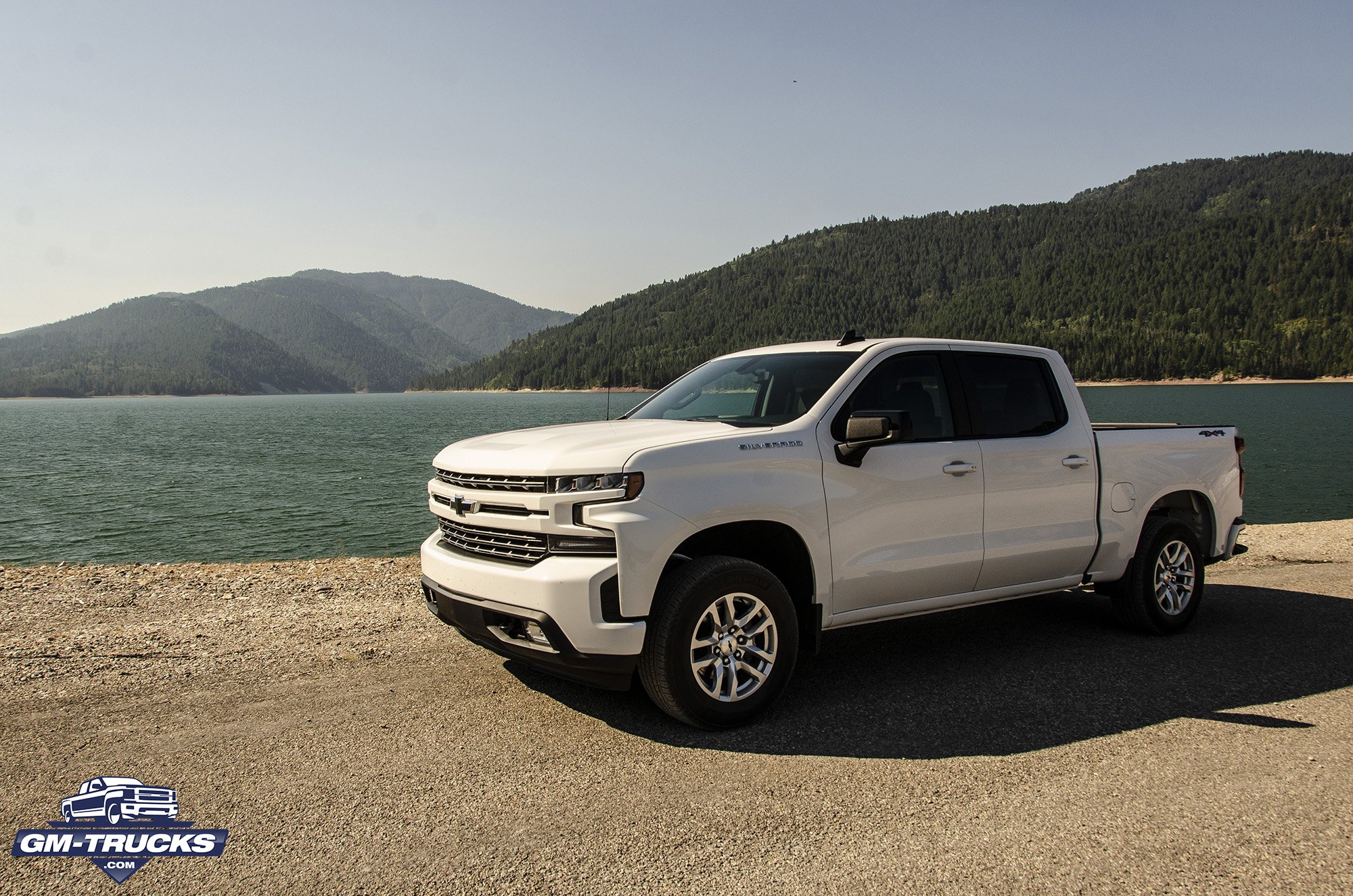
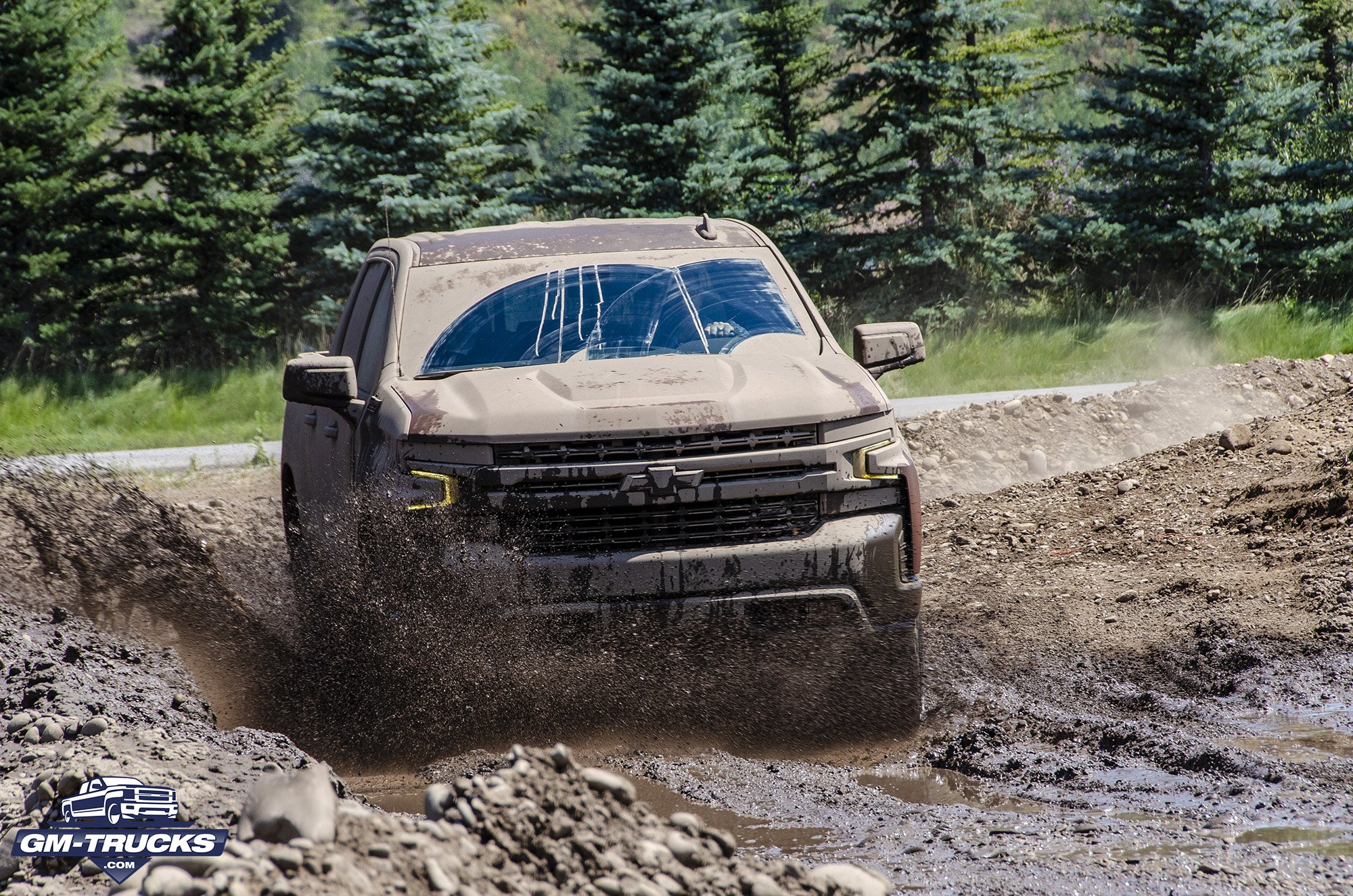
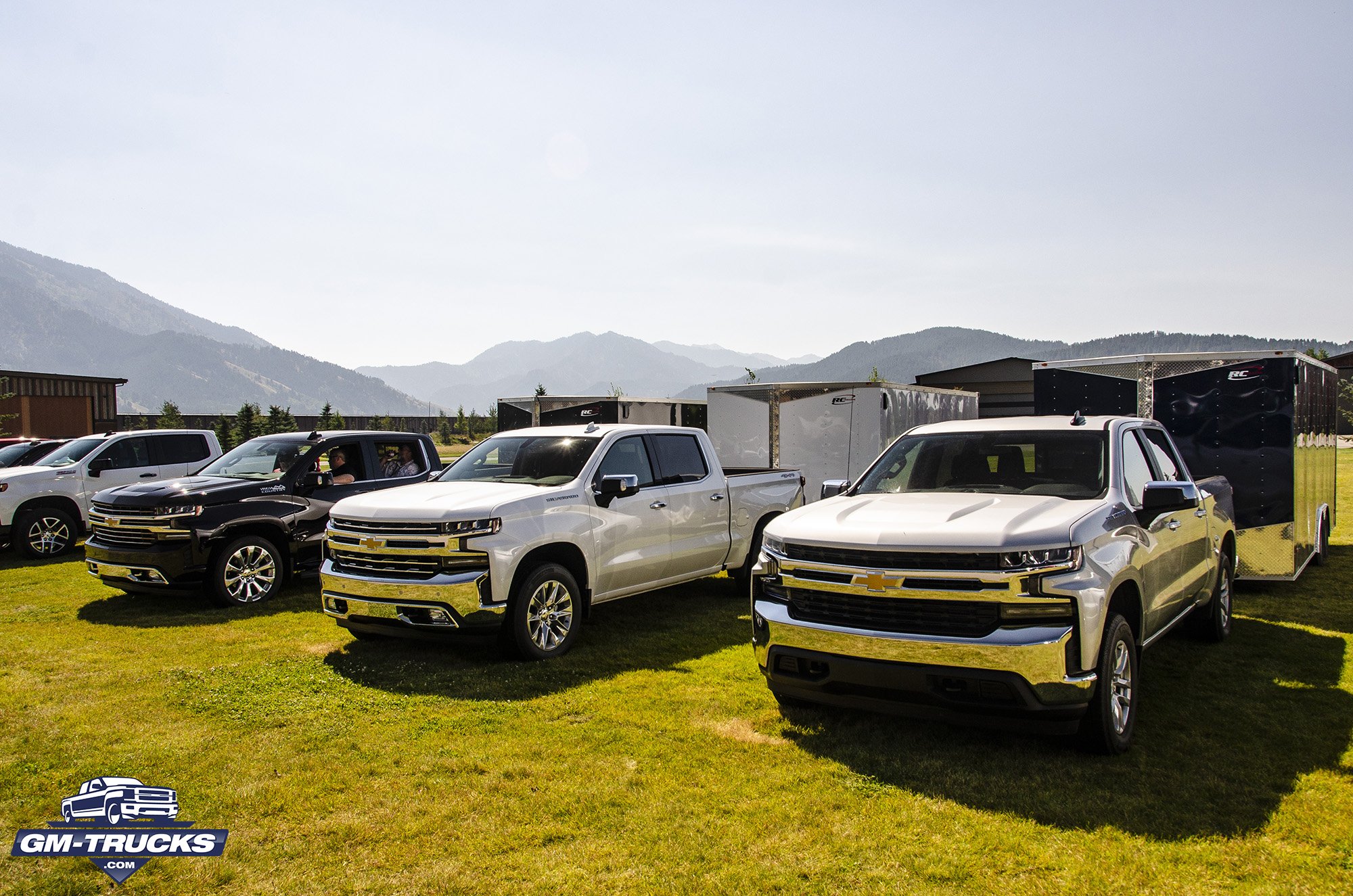
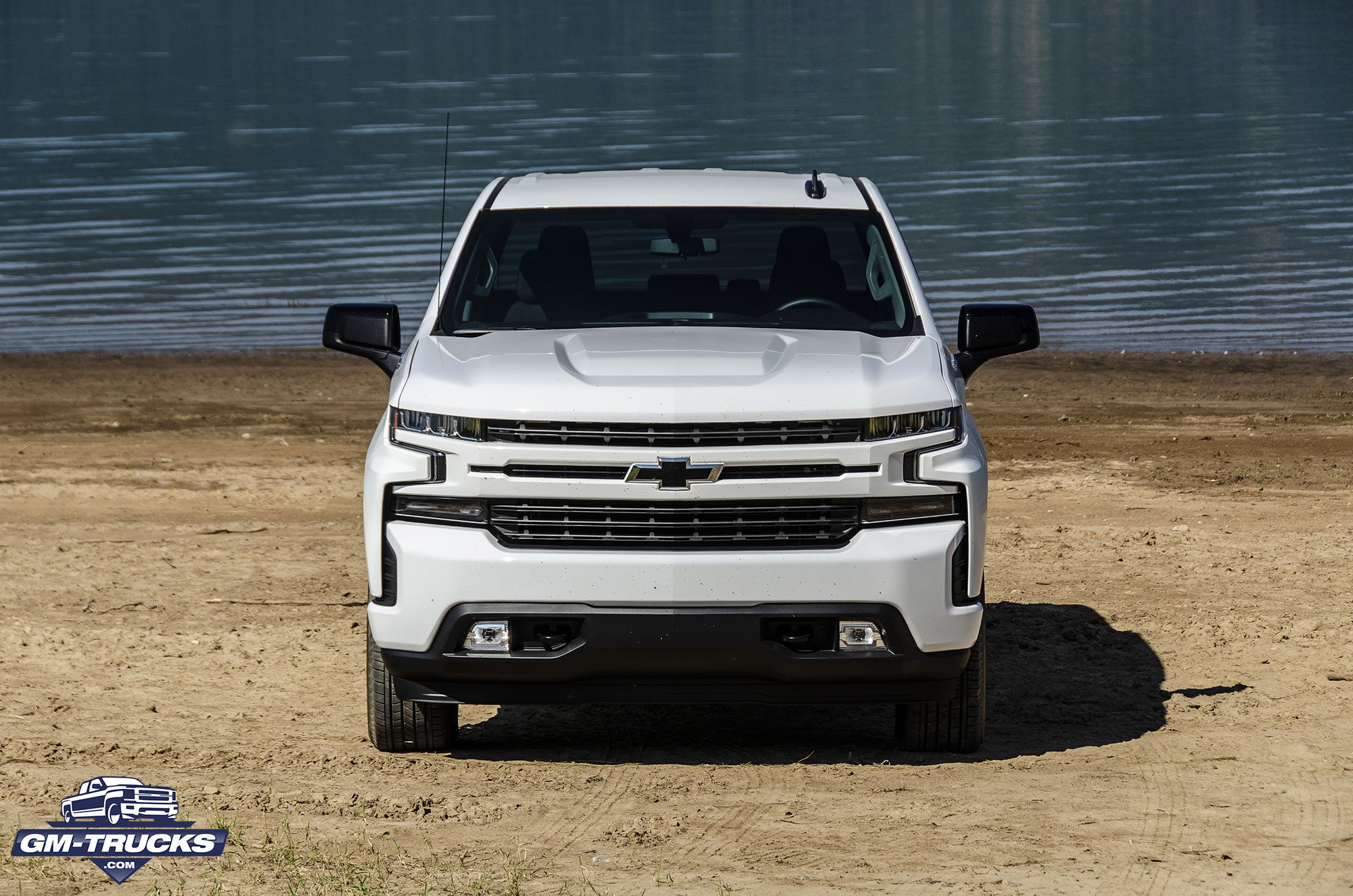
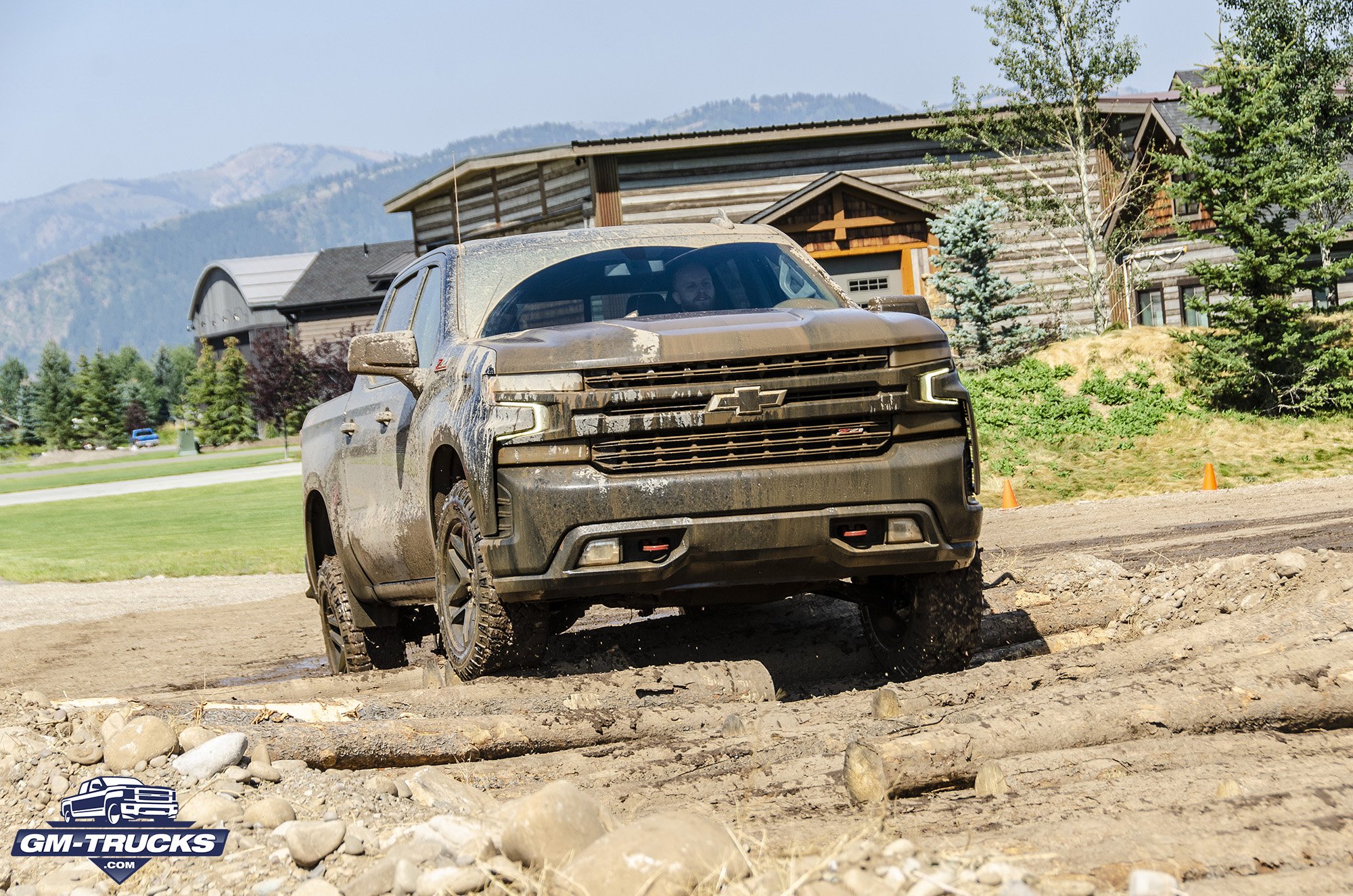
Zane Merva Executive Editor, GM-Trucks.com 8/13/18 Last week I traveled to Wyoming for an opportunity to drive the 2019 Silverado in a variety of situations, trim levels and engine/transmission combinations. Chevrolet was finally ready to let third party experts behind the wheel and I was ready to take them up on the offer. Things I Liked About The 2019 Silverado Butter smooth engines A smaller, more responsive driving feel Designed for function and usability above all A chassis ready take a beating Things I didn't Like About The 2019 Silverado Unloaded suspension float on bumpy roads Interior is functional but has a drab design Limited availability for 6.2L Enough trim levels to make a customer dizzy If you’ve been following along with all of our 2019 Silverado news for the last year, feel free to jump ahead. If not, or you need a refresher, check out these prior topics to get primed for our impressions. Here's A Photo Of Every New 2019 Chevy Silverado Trim With Features All-New 2019 Silverado Details: New Diesel Engine, Weight Savings, Steel Bed, 8 Trims, More Space Here's Your 2019 Silverado Trim & Engine Availability Matrix Official 2019 5.3L & 6.2L V8 Engine Specs Are Here The 2019 Chevy Silverado Will Come In These 11 Colors And if you’re not aware that we’ve ordered a new 2019 Silverado as a GM-Trucks.com long term review truck….well, sit down and read up on that too. Birth Announcement: Our 2019 Silverado Has Been Built Our 2019 Silverado Is Locked And Loaded At Event Code 3400 Our Long Term 2019 Silverado LTZ Has A Build Week And we've got a 2019 Chevrolet Silverado LTZ Order Number We Ordered A 2019 Silverado Today And You Can Too! After I touched down in Jackson Hole and had a moment to literally catch my breath while acclimating to an elevation of 7,000 ft, Chevrolet gave me some lunch and let me have a look around the new models. On display for my arrival was a brand new LT Trail Boss and High Country, along with a frame/suspension mock-up and a body/materials mock-up. At the forefront of Chevy’s talking points to the media was the thoughtful use of high-strength steel and a “truck for every buyer” trim level strategy. It made sense... if the truck backed it all up on the road. The next morning- the real fun began. After a quick breakfast, I jumped into a white RST with a 5.3L engine and 8-speed transmission. My co-pilot from Hagerty took the wheel first and we traveled up Wyoming Route 22. Driving Impressions 5.3L & 8-Speed Heading up 22, aka The Teton Pass Highway, winding back and forth through the mountains, our RST was rock solid and nimble on its feet. GM has put in significant work to decrease noise and vibration, stiffing the new Silverado far beyond the previous model. That translates into more communicative steering, less heft and weight, and a surprising nimbleness on the road. In fact, Chevy has trimmed back up to 450lbs from the new model Silverado, depending on cab choice. That’s significant noticable behind the wheel. Sporty yet comfortable and without harshness. GM engineers were able to soften the spring rate on the new Silverado because of the lighter curb weight. GM’s 8-speed transmission is also smooth, mostly in part to the new and improved 5.3L engine with Dynamic Fuel Management. The pair works well and provides the new Silverado with a tried and true option for owners who need a V8 but don’t want to support the fuel habits of a 6.2L. How does Dynamic Fuel Management Work? See This Infographic In our mix of mountain roads and long straight prairie flat-lands the 5.3L in our RST switched between 17-different cylinder firing modes in an imperceptible fashion. So while horsepower and fuel economy ratings stay largely the same and the 2019 Silverado 5.3L is rated similarly as the 2018 engine with AFM, the entire package is just a little smoother and quieter in the process. In The Rough With A Trail Boss After a few hours behind the wheel of the RST we arrived at our lunch stop. Chevrolet had set up a few ways for us to explore the new Silverado at this location, so we settled in, grabbed a bite to eat and headed toward the mud. The all new Trail Boss models is a factory warrantied 2-inch suspension lift and appearance package. What really matters is that those extra two inches add a lot of capability to an otherwise capable pickup. Chevrolet had setup a small off-road course for us to try out the Trail Boss on. It included a row of logs to traverse, a ditch to descend into, a hill to climb, rocks to cross, and a mud pit to let loose in. The only rule was there was no rule. “Do anything you want, it won’t break”, said the GM engineer next to me as I slammed the skid plate off a boulder. After a half dozen laps an a true honest effort to not give a crap, I’m inclined to agree. After watching a line of other journalists do their worst right after me, I’m also inclined to think that Chevy has baked one heck of a platform together. Solid and ready for a beating. The best part about the Trail Boss is that you can get it in an affordable Custom Trim or in a more mainstream LT trim. From a basic ranch truck with cloth seats to a leather trimmed LT that can take you out on the town, the Trail Boss is a great option for anyone who wants a Silverado that has more attitude. That said, you can’t get the 6.2L in the Trail Boss. It’s a glaring omission to be sure and one that pushed us to buy an LTZ. But not all hope is lost as the all new 3.0L Duramax will be available in the LT Trail Boss later on this model year. Unfortunately, Chevy didn't have a new 3.0L diesel for us to drive yet. Towing 6,000lbs of Quickcrete with a 5.3L Next up I listened to an overview of Chevy’s new advanced towing system and then took some weight for a spin. The brand has baked in a lot of customer-centric features for those who do a lot of trailering. When equipped, the Silverado can track trailer tire pressure and temperature, find wiring faults, alert you if someone disconnects your trailer via app, and keeps a log of fuel economy per trailer. Customers who opt for the trailering camera package get under mirror and cargo bed views, along with a trailer camera to hook up to their rig. Chevrolet had setup a few Silverado with trailers for me to drive. These enclosed trailers had been filled with 6,000lbs of concrete. I know this because I had to look for myself. And I had to look for myself because pulling that much weight in the new Silverado is just no big deal. Such a non-event I absolutely had to confirm there was anything in the trailer at all. Smooth shifts, no gear hunting, and no feeling of being dragged down with all of that small block torque. Driving Impressions - 6.2L & 10-Speed After having some fun getting dirty with a Trail Boss, comparing every single one of the eight 2019 trim levels, and pulling around some concrete, it was time to head back to the ranch. Our ride for the afternoon was a 6.2L LTZ with a 10-speed transmission. At idle, the 5.3L and 6.2L share no difference in vibration or exhaust note. Only when you step on the accelerator does the difference become apparent. Very apparent. Rated at 420-horsepower, the 6.2L is 65-horsepower more stout than the 5.3L. Just like the 5.3L, its rating from the previous generation has not changed. Horsepower and fuel economy are basically the same. Where things really get interesting is with Chevy’s new 10-speed automatic transmission. This new transmission option is clearly a cut above the 8-speed, offering a nearly imperceivable shift and 10 gear ratios ready for anything. Even cruising a mile above sea-level the larger engine simply digs in and provides endless torque at throttle. No downshifts and no delays. This just might be the best engine and transmission combination from General Motors we’ve ever driven. Final “First” Thoughts With just one whirl-wind day behind the wheel, it was hard to experience everything that makes the 2019 Silverado better than its predecessor. The list is just too long. However, the first impression was clear. Chevrolet has used the opportunity of a clean slate to design the most practical, customer oriented, feature rich truck possible. Not flashy, not gimmicky, and not for the short term. While I came away with an overwhelmingly positive impression and incredibly excited for our LTZ to arrive, it’s hard to overlook a few negatives. Mainly, prices of the 2019 Silverado are the highest ever. A fully loaded High Country will get darn near close to $70k. Also, it’s hard to overlook a lack of increased horsepower or fuel economy over the previous model. We’re also pretty jealous of the 2019 Ram’s 12-inch touch screen display. But with all weights factored in, it’s still clear that Chevrolet is bringing to market the most useful truck ever. No discussion. Ford and Ram are going to eat it in 2019. This is just the beginning of our time with the 2019 Silverado! Stay tuned for the full ownership experience as we take delivery of our Northsky Blue Metallic Crew Cab in a few weeks. See Our Full 2019 Silverado First Drive Photo Gallery

- 83 replies
-
- 1
-

-
- review
- 2019 chevy silverado first drive
- (and 7 more)
-
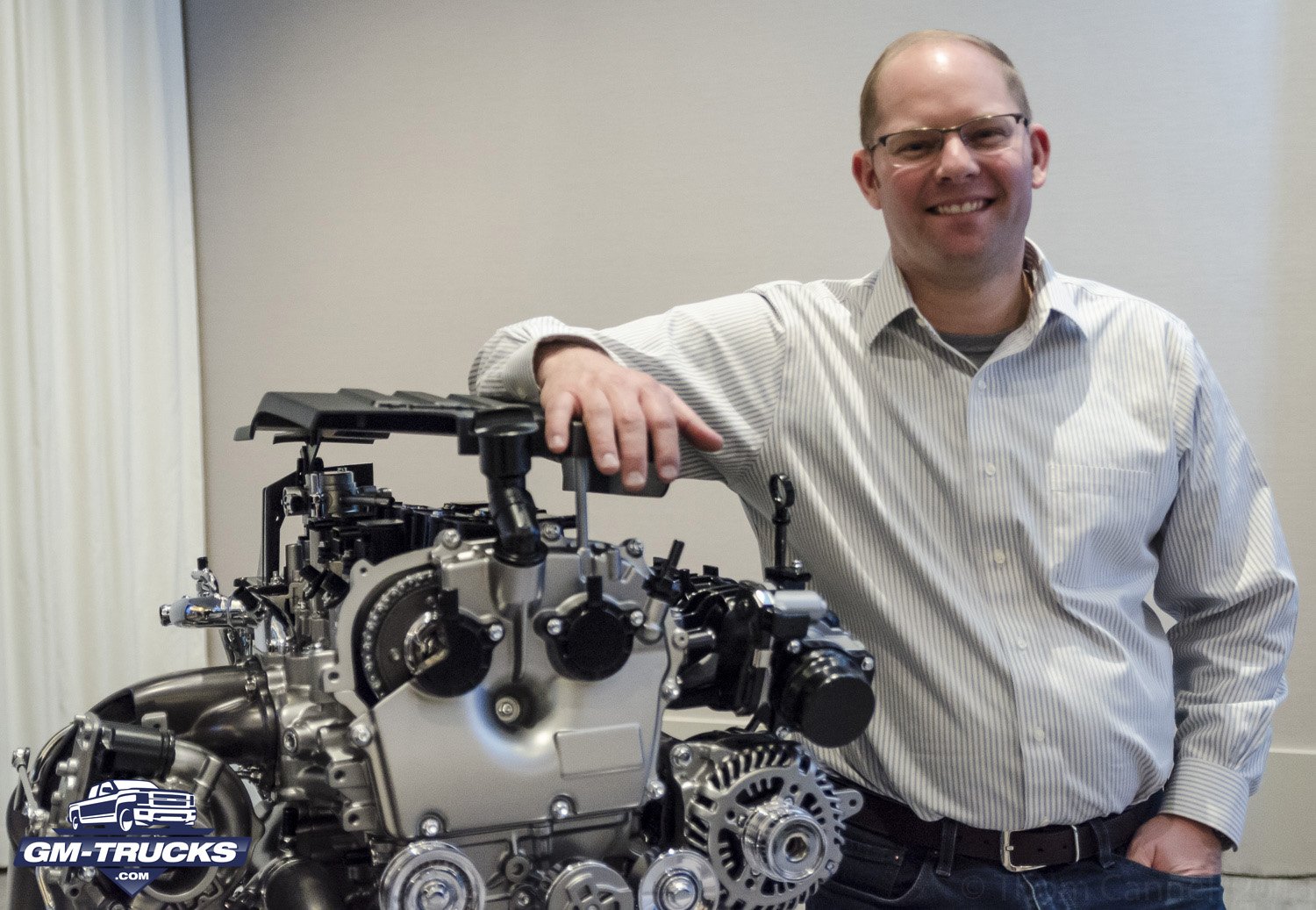
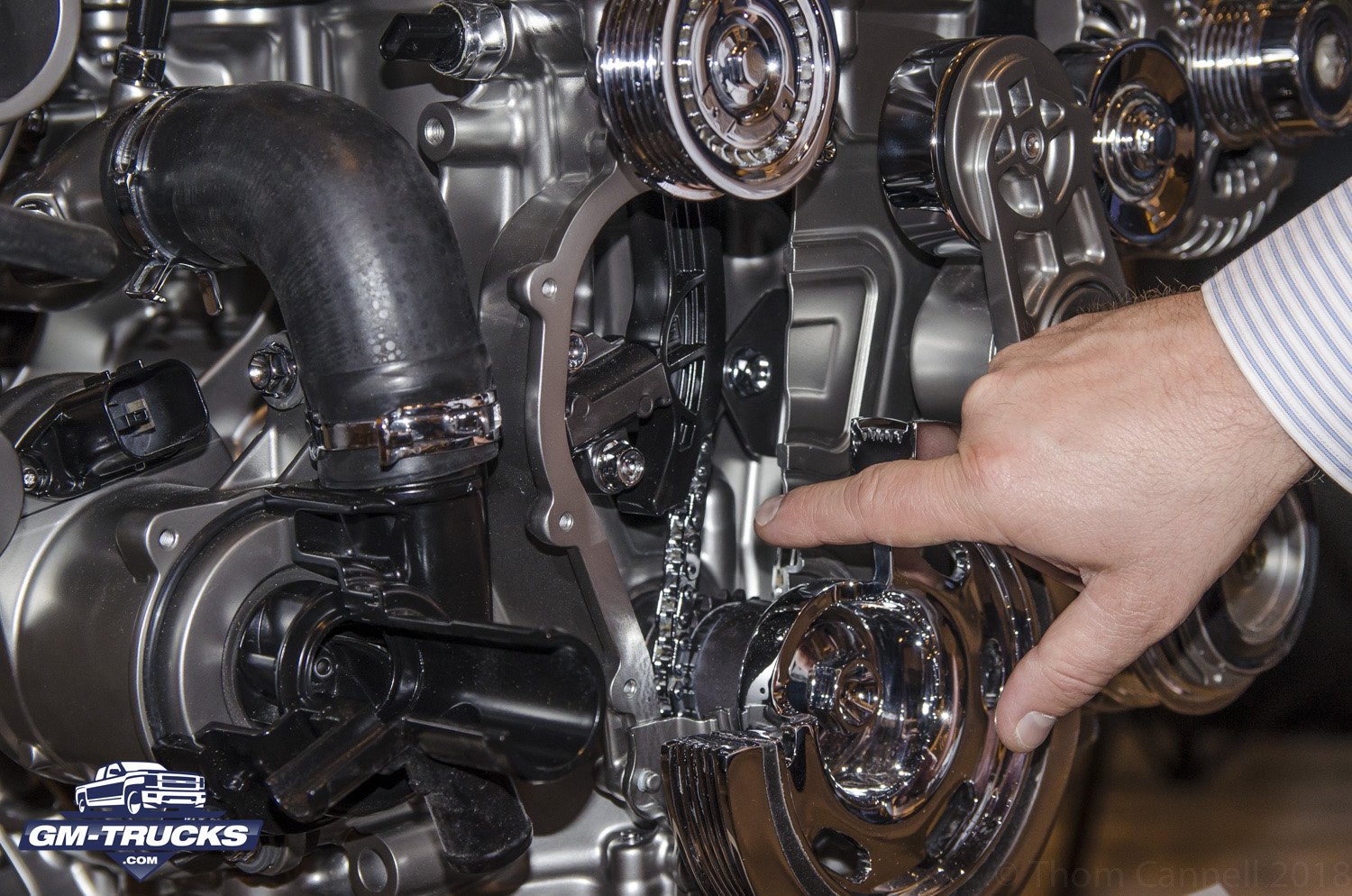
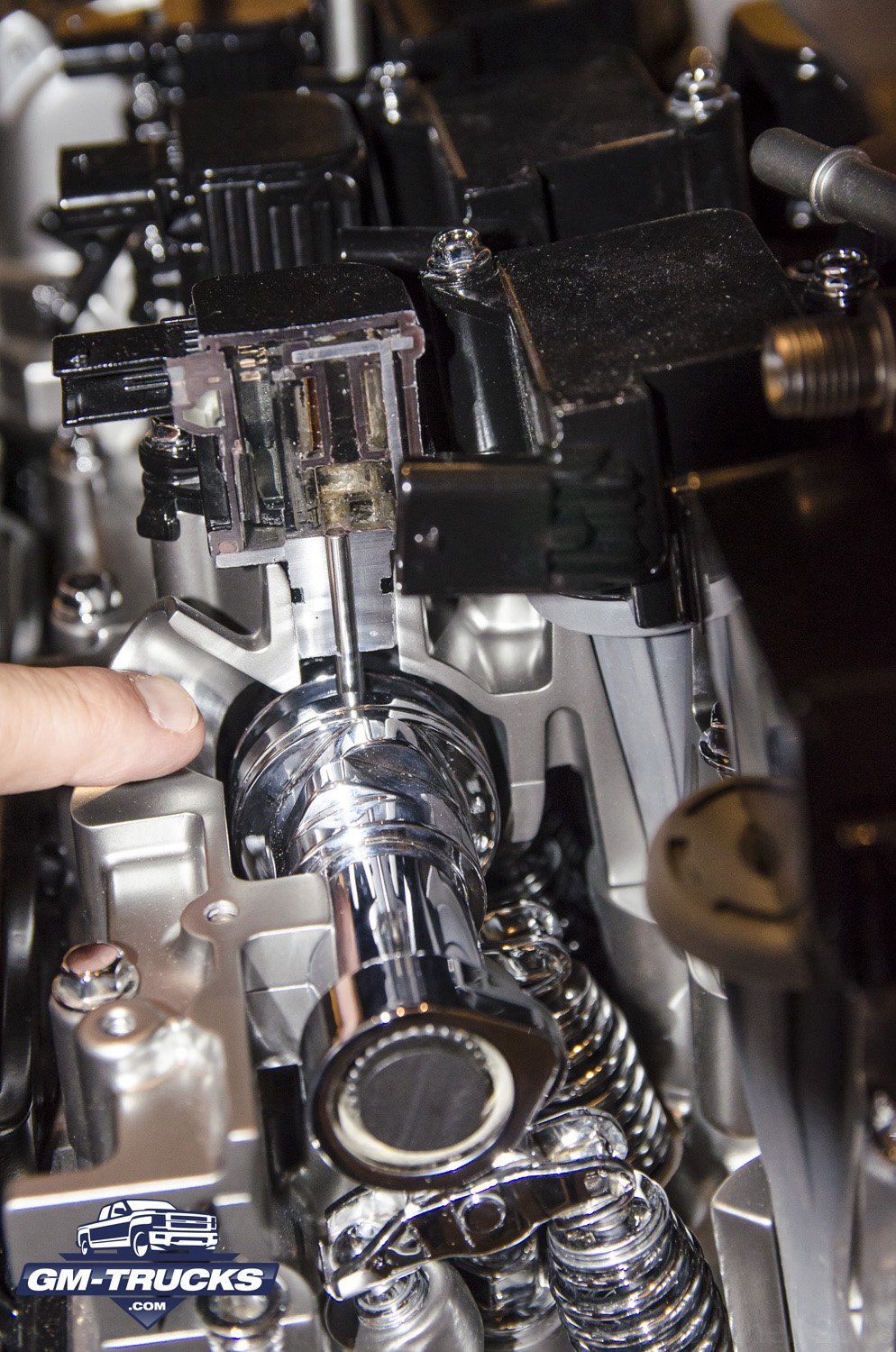
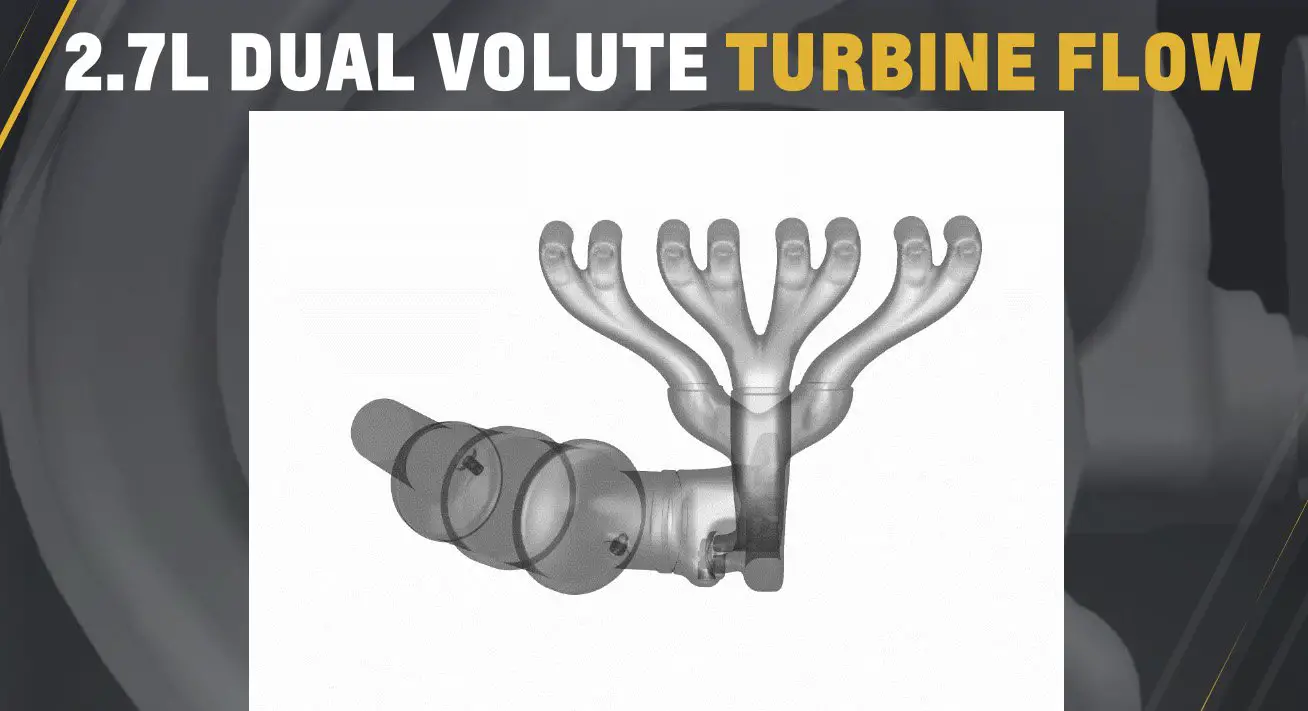
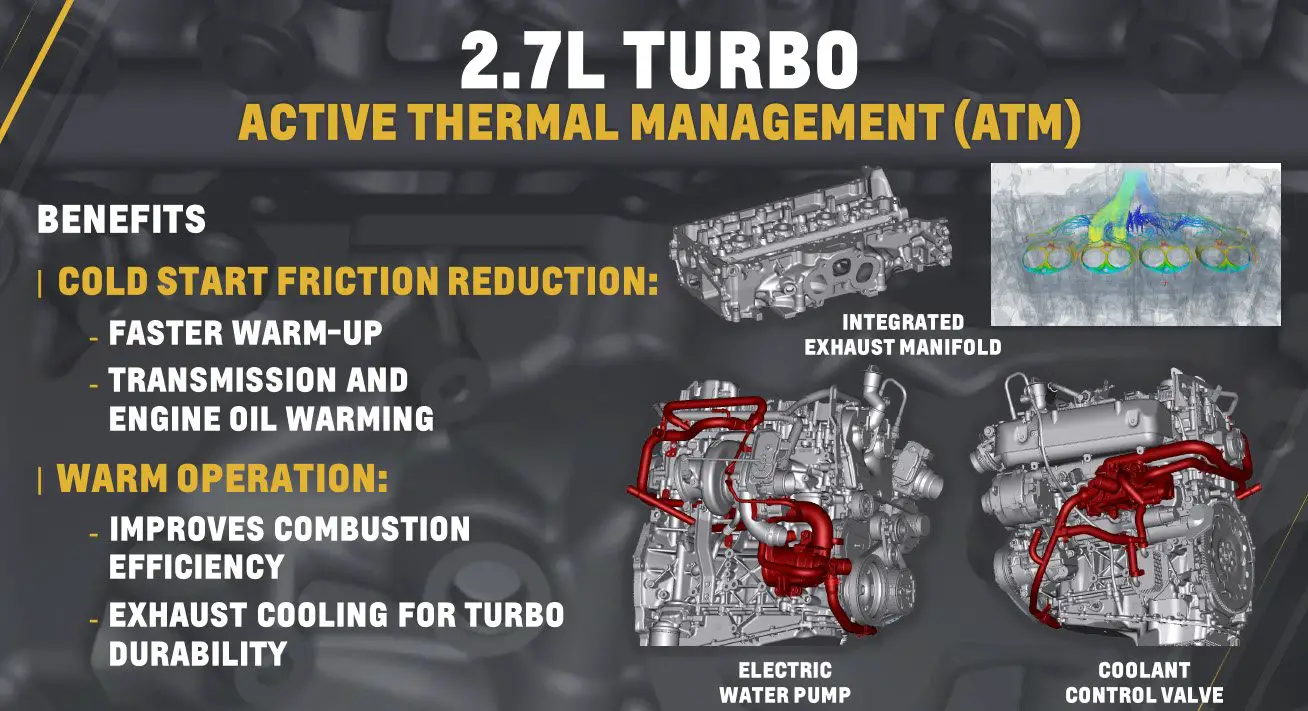
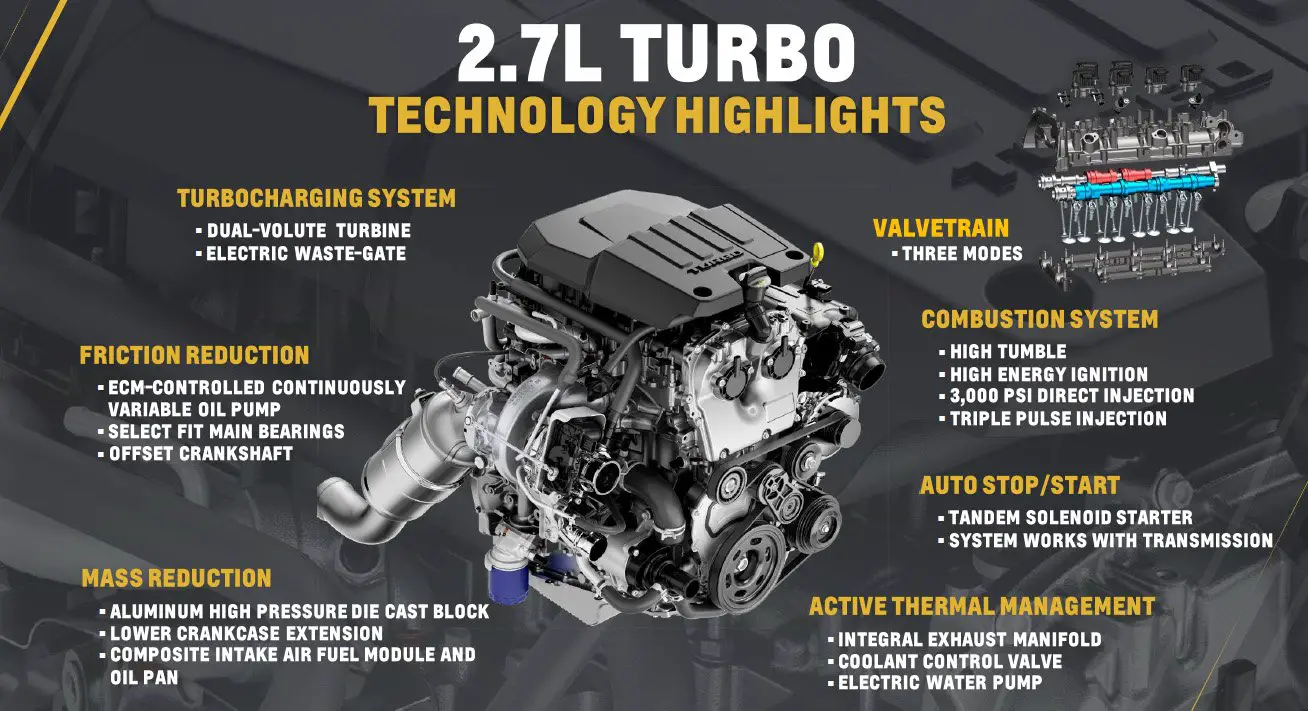
 Thom Cannell Contributor, GM-Trucks.com November 26th, 2018 Out of the gate you have to be asking the same question as we, “A four-cylinder engine in a truck? My Silverado?" Forget that the engine is rated at 21-combined EPA fuel economy rating, similar to base V-6 engines from Ford’s (3.3.L) and Ram (3.6 with a light hybrid system). Forget that the all-new 2.7-liter engine makes more power and torque than the LV3 4.3-liter V-6 and has accumulated over one million test miles in development. Just forget it…But…Like you, we stumbled over the entire concept. For answers to what some in the industry see as a profound mistake, we turned to those directly involved in its inception since a pen was put to paper, more likely a stylus set to a digital tablet at GMs Global Propulsion Systems in Pontiac, Michigan. Read Thom's 2019 Silverado 2.7L First Drive Impressions Here Kevin Luchansky is the assistant chief engineer for the new 2.7L turbo and formerly was the group manager over all valve train and cam drives. Our interview began with his statement, “This valve train is, we believe, industry leading and industry first.” He is, of course, referring to the Tripower system of cylinder deactivation that lets this engine run on just two cylinders. We’ll get to that. A very happy and proud Kevin Luchansky, a critical member of the 2.7-liter engine team. Since pen was put to paper, development has taken approximately five years, three years since metal, and it was specifically developed as an all-new truck engine from inception. Our first question was what you’d ask, “Kevin, why a four-cylinder in a light-duty truck?” That’s a good question,” Kevin responded, “and it’s all about efficiency. A few years ago we started to look at how to make the most efficient, most fun-to-drive package we can offer our customers, … and to provide what we think the customer would want. This four-cylinder (engine) provides us with excellent torque response. On this engine torque is near instant, less than two seconds at 1,500 rpm is very, very good. In order to accomplish this, we looked at several things. The fact that you've got big cylinder displacement allows us to design the dual-volute turbo that we have, keep the (exhaust) pulses separated and allow the turbo to spool very quickly. Also, we were able to package the turbo on the four-cylinder in an ideal location. It's mounted sort of midway up on the engine and directly in the center. If you know much about engines and exhaust systems, effectively we had equal length from every cylinder to the turbo.” We asked about the competition, which is a hard fact. “This engine is the base engine on the LT, the new RST and competes with Ford’s 3.3L and Ram’s 3.6L. This engine provides a lot of torque down low, much more than the competition. We're excited for our marketing-drive events where folks can compare those applications, because this (powertrain) is significantly more powerful down low and is fun to drive because of massive torque down low.” Note that there remains confusion about this motor versus Ford’s 2.7-liter. Though of similar displacement, GM’s engine was designed as a base engine for light duty trucks. Ford’s is a premium high-performance motor. Apples and oranges. The new engine had to meet objectives in fuel economy, power, weight saving. After all, an engine program costs tens of millions of dollars. The new motor is 80 pounds lighter than the 4.3-liter V-6 engine it replaces. That motor will remain available as the base engine in Work Trucks. “We feel we are offering customers great choices with all the powertrain combinations we have. We provide six different powertrain options starting with the 4.3L V-6 and an AFM version (8 cylinders/4 cylinders) version of the 5.3L for the work truck options. Then we step up to the LT, with the 2.7-liter and 8-speed, and you can upgrade to the 5.3 with Dynamic Fuel Management where engine runs on eight cylinders down to two, whatever it needs for optimum displacement and paired with the 8-speed transmission. Then the 6.2-liter paired with the 10-speed in the upper versions like Trail Boss, and 3.0-liter diesel in some models.” One of the prime directives for the new engine was durability. “I'd like to talk about some of the hardware in the 2.7-liter, from a durability perspective. This engine is not a car engine we've taken and put a turbo on to make a lot of power. This engine was specifically designed for this application, for these cylinder pressures, a lot like a diesel engine. If you think about diesel engines, there are four-cylinder heavy-duty diesel engines available. This engine was designed similarly. If you look at the details, the hardware is similar to what you'd find in a light-duty diesel. Like the piston, which has a cast iron ring carrier that holds the top ring; that's much different than a standard naturally aspirated engine. That cast iron ring carrier can handle the high pressures that a downsized turbocharged engine produces, and makes the piston very durable.” Pistons use a cast-in iron top ring carrier for durability against high in-cylinder pressures. It’s noticeable as less reflective in the chromed display cutaway. Kevin says the program spent good money on seemingly small things, like PVD coated rings. Physical Vapor Deposition coatings are very hard coatings that reduce wear. Piston crowns in the 2.7-liter are 100-percent machined for long-term durability. “The point I want to make is that, in terms of rotating and reciprocating parts is, there was no expense spared in making this a very durable engine. For instance, this is the strongest connecting rod we've ever designed for a gas engine, a tri-metal design. It has a forged steel crankshaft, and rod and main bearings are select-fit, as seen in many light-duty diesel engines. This is for excellent wear resistance and debris resistance. There was no holding back on picking the best parts the industry has to offer.” By now you’ve likely looked at some of the power and torque charts. Torque holds at nearly 90-percent almost to the red line, with matching horsepower. “It holds on pretty good,” Kevin responded. “It makes 310 horsepower at peak, but doesn't really roll off dramatically. That makes it fun to drive, very linear.” Though its published "time-to-torque" of two seconds seems long until you count “One and Two”, it’s not much different from other engines. “Let me explain. Time to torque is an industry standard test for turbos, where you hold the engine at 1,500 rpm on a dyno and don't allow it to go up in speed. You go from zero throttle to maximum and start the count. Then you count how quickly the engine achieves 90-percent of torque. It's (a test of) how fast the turbo responds, as 1,500 rpm is where the engine spends a lot of time in its operation. The best way to think of it is, with a manual transmission and you stepped into the pedal, how fast to you get torque. Two seconds is pretty quick.” Of course this introduces questions about the dual-volute turbocharger, which is a technology sometimes seen in diesels, and with a different design than other twin-scroll turbos. “Response is all the dual-volute turbo, one Borg Warner has just released and is an industry first application. Dual-volutes are, effectively, two chambers or two separated exhaust "screws or scrolls". What you see is the integrated exhaust manifold, which does a few things for us. One is provide heat, taking heat away from the turbo when it begins to get hot. That helps us with efficiency at high loads, like towing. You can see that we've paired the center cylinders together, so cylinders two and three are paired, then cylinders one and four are paired together. What that does is make equal firing order (firing order is 1-3-4-2) so you get, basically, even pulses and they are completely separated all the way to the turbine wheel, and we've separated them as far as possible, 180° apart from one-another. That's what the industry first really is. There are dual-scroll turbos that exist in high volume, but they come together at the same point at the turbine wheel, which means you can have exhaust gas bleed over from the cylinder that's firing to the cylinder that's not firing. Keeping them separated as far as we have done provides a very strong pulse hitting the turbine blades. That's how we get the fast spooling; it's pretty neat!” Borg Warner’s dual-volute turbo uses fixed geometry instead of a variable (VGT) design. The ducts, one inside the other, wrap around concentrically with the inner channel wrapping half way around before its gasses hit the turbine wheel, the outer volute wraps an extra 180° before its stream of gas strikes the turbine. “For example, if you put your two fingers together, that's what a typical twin-scroll would resemble, each dumps into the turbo and you can have cross talk,” Kevin explained. “That reduces efficiency as cross talk reduces gas pressure to the turbo. Also, this turbo is very aerodynamically efficient at low rpm.” “What I can't stress enough is that we have focused this engine on low-speed torque delivery. You should be impressed with how much torque is available, and that gets back to efficiency and drivability. If you have lag, you'll press on the gas pedal more. If we provide instant torque the driver doesn't go as deeply into the throttle, which produces better real-world fuel economy. Our new engines are focused on low-speed torque delivery. The big four-cylinder engine arrangement allows for good gas flow separation and equal lengths to the turbo - it's harder to do that with other engine architectures. By this time we were itching to talk about the novel valve train, which GM has called Tripower (when we first heard that name we thought, Pontiac’s three two-barrel carbs?) So, Kevin, what is the new Tripower? It's simple in concept; a single pin shifts the cam's lobes to produce differing lift profiles. What we've done is, couple cylinders one and two and cylinders three and four, so the first are on one slider in this four-valve overhead cam engine. There are three lobes, the high-lift lobe, a low-lift and a no-lift lobe (Note that cylinder one is the cylinder that never de-activates so it has only low-lift lobes). Between the lobes is the shifting groove geometry. We have two pins in the actuator, one moves in one direction, the other in opposition. The way the pins work, one pin drops in and shoves over one lift, the other pin drops in and moves to the next. So, in two cam rotations we can go from high-lift to AFM cylinder de-activation. The first rotation would go from high-lift to low-lift, the next rotation would go from low-lift to AFM. It's extremely fast. We can be in AFM for fuel efficiency, and if the driver steps into the throttle we can get to high-lift within two rotations and at the same time the turbocharger is spooling. Within a few seconds the engine goes from fuel miser to making peak torque. It's really neat and seamless to the driver. The changes are imperceptible. It's simple, and robust.” Kevin points to one of two of the electronically activated fingers that move cam lobes into position for, either high-lift, low-lift, and no-lift, the later for Dynamic Fuel Management. GM is maintaining its own control over the system, the camshaft is machined in-house, “from billets of the best steel money can buy. A neat process and very robust parts and they're like jewelry when you see them on someone's desk.” Moving along, we asked about thermal management. It seems most manufacturers are using electric pumps for power management and variability. “For the 2.7, it all starts with an electric water pump. We're able to control it from basically zero pump speed to maximum. The pump is completely decoupled from the engine, which allows us to flow what the engine and other components require, including cabin heating. Turbo placement is important; the pump is down low relative to the turbo, which we'll get to. The dual-volute turbo is cooled by oil, and by water. The water is either moved by thermocycling, or pumped. Lot of people have had experience with older turbos, and our engine has both oil and water-cooling. What is neat about the four-cylinder engine and turbo placement is, you can see there is a feed line (water) that goes in to the turbo and out of the turbo and they head upward. That provides natural thermal cycling. If that's not enough, we can turn the pump on to keep the turbo cool. 80's turbos didn't have coolant, only oil, and there was lots of oil coking issues. We've designed this engine for a truck, and the devil is in the details. We paid attention to issues like cooling to drive durability.” If you’re into deep tech, or run a parts department, the pump is a brushless DC pump, and completely controlled by the ECU. Kevin says the system, the block and the head, are completely separate in their coolant systems, so, a split cooling system. “When the engine starts, there's a lot of heat in the integrated exhaust manifold. We have a pipe directly off it and we use it for exhaust heat recovery. From an efficiency standpoint, we heat the oil in the transmission and engine to get them rapidly up to operating temperature to reduce friction. What that means for the driver, it makes the engine and transmission hotter, quicker, for friction reduction, cabin heat and emissions control. Though not part of our discussion, the oil cooler is water cooled. The other thing the pump allows us to do is over-cooling unrelated to the engine speed. For instance if you're running at a light load and suddenly tip-in with the throttle and ask for a lot of torque, we can quickly force coolant at a faster speed than if the pump was attached to the crankshaft. We can overcool the cylinder head, forcing coolant into the hottest part of the head, and in turbocharged engines that reduces knock, an efficiency enabler. Remember, this is an 87-Octane engine running at 10:1 compression ratio, high for a turbocharged engine.” Injection pressure is 3,000 psi as the industry moves to higher and higher pressures. It uses mechanical (solenoid) injectors that can deliver multiple injections. There’s also a fully variable oil pump, which means it is always right-volume for the given engine condition. It's controlled by the ECU to deliver the correct oil volume under any condition. And, we confirmed that the block is high-pressure die-cast aluminum with cast-in iron liners and made in-house. The cylinder head is aluminum from a semi-permanent mold, and also made in-house. “It's all machined in-house and the engine is built in Spring Hill, Tennessee. There’s a lot of USA content in this engine.” Some of the engine's technologies focused on City fuel economy, as well as high-load conditions. “The combustion system is designed for either condition and allows us to run 87-Octane fuel. Stop-Start works well for city fuel economy, as does as Active Fuel Management and Active Thermal Management. Hidden are the friction reduction steps we've taken like the electric pumps, select-fit tri-metal bearings and a low-friction roller chain, driving the camshafts. That’s for durability, and it's relatively immune from stretching.” The engine uses driven chains to operate cams. No cogged belts for durability and long life. One other comment on durability; we run the same durability schedules as any small-block truck engine because it is a truck. Don't think we skimped on durability testing; it's as durable as the legendary small block. What we did not know prior to our interview, Kevin was the architect on the engine, putting the first lines on paper five years ago. "This was one of my ideas, and they said why don't you go and execute it." Kevin, we’re honored to know you.
- 78 replies
-
- 2
-

-

-
- deep dive
- gms global propulsion systems
- (and 9 more)