


BillWho
-
Posts
24 -
Joined
-
Last visited
Content Type
Profiles
Forums
Gallery
Events
Articles
RPO
Store
Blogs
Everything posted by BillWho
-
2014+ Truck Bed / Tonneau Covers
BillWho replied to Green 1364's topic in Modifications & Accessories
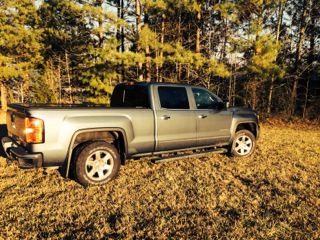
Installed a new Peragon cover on my 2014 GMC SLT a week ago. My 2011 truck also had a Peragon cover. The reason I got a Peragon is because it can be quickly removed/re-installed. The quick removal feature is handy when preparing to haul something tall and long where the full bed length is necessary. I have had good success the past two years with the Peragon cover on my 2011 GMC Sierra. We still have the truck and expect the cover's aluminum construction to give many years of use.
-
Here is a link that gets way down into the technical weeds. http://www.autospeed.com/cms/article.html?&A=112611 I did not understand the vacuum "energy cost" aspect until reading the link and can now see why cylinder deactivation makes even more sense. By the way, the Atkinson cycle motors Toyota puts into its hybrids manages the "intake" stroke so as to reduce the vacuum energy cost.
-
I'm guessing the fuel mileage for the three motor combinations is fairly close together for highway driving because all three engines go to four cylinders as much as possible, thus they are close to equivalency when running on four cylinders in terms of amount of power produced to keep the truck at speed. As we all know, engines are big air pumps, the air to fuel mixture is optimally around, what, 15:1 (somebody help me here with the correct ratio), and the power produced by exploding that mix per cylinder explosion would thus seem to be a constant amount. Racing engines turn up the RPMs, thus developing more power strokes resulting in more power per second. The V-6 has fewer cylinders and would be expected to have lower parasitic drag than the V-8s and I'd love to hear someone tell us how much this extra valve train and cylinder/crank frictional drag affects highway mileage. A whole lot of words to say that the engines when on V4 are generating the same amount of power and thus shoving the same amount of air and fuel mix into the engine. The differences are likely the two fewer cylinders parasitic losses and that, it seems, may not a big energy loss factor at highway speeds. When sitting in city traffic, the V-6 has a big advantage versus the V-8s as those V-8s have to keep feeding two extra cylinders with a air/fuel mix. I'd like to know more about the fuel/air mix going richer when under an increasing load, like going up a hill, and leaning out when going down the hill. With today's air flow mass sensor, direct injection and computerization technology, you've got to figure there is a lot of that kind of action taking place in our 2014 version engines. Merry Christmas to all!
-
Driving in the rain yesterday at highway speeds plus some urban stop and go, my 5.3 Sierra crew cab with 3.42 and 18" wheels averaged 20.2 mpg. Not bad for only having 1400 miles on the engine. It is econ happy at 65 to 71 mph. A sweet ride.


-
Forum Statistics
250.5k
Total Topics2.7m
Total Posts -
Member Statistics
342,917
Total Members8,960
Most Online
-
Who's Online 3 Members, 0 Anonymous, 1,666 Guests (See full list)