

working on it
-
Posts
34 -
Joined
-
Last visited
working on it's Achievements

Enthusiast (2/11)
0
Reputation
-
 Nice day outside, only 92F and a breeze, so I figured that I should start diagnosing the "slow-start" problem. I dug my old Century 200-amp wheeled charger from deep inside the garage (I haven't used it in probably four years), hooked it up to the truck, and voila, it started up as good and quickly as ever. Still, i'm not yet sure if it's evidence of a bad/weak battery, or perhaps the starter has some internal rust (I've had two other parked vehicles at home, that needed a jump, or a hit with a hammer, before they would rid themselves of internal rust}, after sitting atop damp soil for more than six months, without a single start. So, I'll start the engine about 5-6 times a day (both with and without a jump box or charger added), for a week, to see if there's still any signs of a slow start. By the end of the week, I'll most likely be sure that the starter itself is in OK shape, and that the 7.5 y.o. battery is the slow-start culprit. I always have a 1.25 to 2 amp charger/maintainer in use on all of my vehicles when parked (except for my wife's Lexus, because she can't be bothered with using one); that's why all my batteries usually last from 10-12 years...I haven't had to replace one this young since I started using charger/maintainers.
 -
It's been two years since I started this thread, and I (once again) had problems prior to the September inspection. This time it was a slow/barely turning starter, and the TPS setting a CEL, and going into limp mode, as well (which required that I had to clear it. since I had an appointment to get it inspected the next day...luckily, this time, it only took a 40 mile drive to reset the emissions monitors..except for EVAP, as usual...instead of the 500 miles it required the last time). The truck still starts slowly, though my 7.5 y.o. battery and the alternator both passed the tests on both my scan tools, so I brought along a jump box, just in case. It passed the inspection, so, I have a year to find what is causing the problems listed. Why am I posting the above in a thread about a slipping 1st gear? It's because the transmission is suddenly working just fine, once again. I have to admit, that after driving the truck last year on several 50-110 mile trips, I haven't driven it at all in the six months previous to just now. Maybe letting it sit let the Lucas have time to penetrate and clear away a pressure line, allowing the first gear clutch to get full pressure, again? Don't know, but I didn't need tow/haul even to pull out of my soft-sand parking spot (truck sinks after six months), or on an uphill start on a very steep hill. Whatever, I'm glad the tranny is working better now.
-
It passed the inspection, and now I have to determine whether to replace the battery, replace the starter, and/or renew some grounds, in order to make the truck start as good as it formerly did. $$$, even with me doing the work, or $$$$$ if I put it in a shop (not my thing, but I'm getting too decrepit to work under my vehicles for much longer).
-
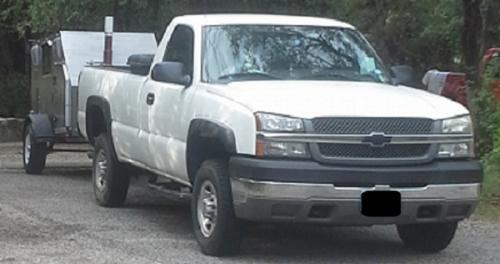
I was prepping my '04 Chevy 2500HD for the yearly inspection/emissions test (tomorrow), and noticed that the engine was slow to start, when I first moved it to where I was going to wash it. It started quicker, on the second and third tries, but still was a bit slow. I washed the truck (1.5 hours effort), then I was going to back it into its' normal parking spot, and once again, it started up grudgingly, so I got out my Clore 20-amp smart charger, and my Innova 3100i scan tool (with battery/alternator tester). The battery is always on a 1.5 amp Duralast charger/maintainer, so I expected the battery to be nearly charged, and it was. The Clore said it had a 95% charge to start, and after 10 minutes it reached 100%. I used the Innova scan tool to test both the the battery and alternator...both were good. So, why the slow start? I then tried restarting it, and suddenly the CEL came on (TPS malfunction codes on both generic OBD2 and Chevrolet Enhanced readouts. The DIC said that engine power was reduced (it was, severely, with absolutely no accelerator pedal response, at all). So, I had no choice than to clear the codes, just to unblock the driveway (I surely didn't want to, because the emission monitors now said "incomplete", and I was planning to get the inspection tomorrow). After cleaning-up, I decided to try running the "drive cycle", hoping to clear the "incomplete" monitors; I was able to get all but the "evap" monitor to complete (good enough for the inspection, in Texas), and while I was driving it (40 minutes), I was impressed with the throttle response, considering that the TPS set a CEL. Hopefully, the truck will start and run OK for the inspection (once started, I won't shut it off); if the CEL pops-up later, then I'll have some time to correct the problem. What do you guys think: low battery, rusty starter, corroded TPS, or all of them? I have to confess, the last time I drove the truck was 6 months ago, so perhaps the starter rusted-up, the TPS got some internal corrosion, or the "healthy" 7.5 y.o. battery needs replacement. I don't usually drive the '04, since I have the bed loaded full of camping & car repair gear, yera-round. Instead, I have several old cars & trucks to drive (though my wife usually drives us in her low-mileage '14 Lexus ES350), and my usual choice is my current "project car", a 2001 BMW X5 3.0i. We also use a '98 GMC (hers), and an '09 HHR Panel (mine), as backups. And, at 74 (also, tomorrow), I don't maintain, nor drive my vehicles like I used to. All are on charger/maintainers, and get an oil change every 5k miles (or each year, whichever comes first). I did notice that this old truck runs pretty darn good (139620 miles), with perfect fuel trims and MAF sensor readings...I wish my BMW could emulate that. since I've been fighting lean codes for three years on it (it is a "project car").
-
It's that time of year, again, when I recharge the GMC's refrgerant and it blows cold air (38F when the ambient air temp is 90F). This year, I added a manually-switched, 12" diameter, electric puller fan inside the viscous fan shroud, to aid the A/C when idling at stoplights (idles at 550 rpm). It works as well as it ever did...until the blower starts cutting-out, and I switch it to high speed). I installed yet another resistor (a Standard Motor Product) after last years' post (now I have two spares: a GM part, and a Dorman part), and it never helped. The control panel and blower are the same as last year, so I expected and received no improvement. I spent over a grand in February (IIRC) on the GMC's tires and braking system, so I'm hesitant to buy another control panel and blower motor for my wife's back-up vehicle, which only gets driven an average of twice a month (more in the summer than in other seasons). I was just checking in here, to see if anyone had a similar experience with their truck, or could recommend a work-around.
-
Not the Resistor, after all! Just installed the new resistor today, and recharged the refrigerant. However, the blower started failing while I ran it and recharged the R-134A...same as it did before the resistor swap...after running 20 minutes. I jabbed/hit the HVAC control module (replaced two years ago) and the blower started working fine again. It is a Dorman unit, so I should've expected it to go bad. I took out the blower to bench test it, before I swapped control module and each time I've installed another resistor, and it's always fine (VDO blowers are great, IMO). The resistor I pulled is probably still good, so it's a spare now. I'm going to slap the crap out of the Dorman part to make it work whenever the blower starts losing it, until it won't work anymore, then buy a cheap Amazon unit for half the price. I'm tired of this recurring problem, so I'm going to go cheap on it, and just pay the bare minimum for parts, since they all seem suspect these days.
-
We have a '98 GMC 1500 that we seldom use, but mostly do in the summer, so the A/C needs to work. Right now, the fan is OK when we start out, but goes wonky after 10-20 minutes, as it always does, when the resistor fails. We've owned it since '07, and I've had to refill the R-134A refrigerant every other year (slow leak somewhere), the control panel two years ago, the blower motor (& fan) once,and the blower resistor several times over the years. The last three were done 4 years apart, and it's time for another. I've been using GM #15039098 resistor, so it should be reliable, and I just bought another one to install...should I also get a new blower motor (as the one currently installed is from 2010 or 2011), because it might be why the resistors (and control panel) have been failing? I remember testing the circuits and amp draw when I replaced the resistor about eight years back, but the readings were as expected, IIRC, but that was long ago. Maybe the unused blower has gotten rusty inside, as it sits for months at a time, between uses (since 2016 or so).
-
Welp, you're right; five years later, I finally have a scantool that will force the Evap test (but the I/M monitor still shows Evap as incomplete, though the "tests" all reported "ok"). I used a Foxwell NT510 Elite, that I bought with dual programming (for GM and BMW) in January '21. First time I tried it on the 2500HD, though. I'm about to get the yearly inspection on Monday or Thursday, so I was checking the monitors (one incomplete monitor is OK in Texas), so I scanned/tested the truck today. It showed nine powertrain faults, of which none showed up on my Innova 3100i scantool. Some of them were evap codes (there before I fiddled with the active tests), some were cruise control (which I added years ago, so the ECM might not recognize), and a few were transmission-related (I have first gear slippage starting); of course I wanted to, but couldn't clear them, fearing a repeat of the extended drive cycle nightmare I had in 2017. I'll clear them after the inspection!
-
I used a quart of Lucas (after draining a quart of the old fluid out) and it immediately helped with the slippage, but as the fluid warms up, and viscosity decreases, it slips more, once again. So, I've been using the Tow/Haul button when leaving a light, or creeping in traffic, and switch off after it's about to hit second gear. Works fine that way, at least for the very few miles I drive it (only 25 since April 25...about 5 miles per month, haha). While checking the emissions monitors today, I decided to use my Foxwell NT510 Elite bi-directional scantool, which I bought to use mainly on my '01 X5, and also for my GM vehicles (it's got both programs), but I usually just use my dumb scantool (Innova 3100i) or Torque Pro app on the 2500HD; using the Foxwell, I tried to test the Evap system with active controls (it passed the "tests", but the Evap monitor still reads not ready (not a concern, all others will pass the truck). But, meanwhile, I discovered that the Foxwell will increase/decrease transmission line pressures as well! Perhaps I could safely increase the line pressure to help out with first gear? If so, what pressure increase % would be safe, without blowing seals? or should I just leave it alone, and use Tow/Haul until rebuild time?
-
I rarely drive my 135000 mile 2004 Chevy 2500 since I retired, usually just to tow my home-built squareback trailer (2250 lbs) on camping trips. Before retirement, it was a hauler for my drag race car (for 5 years), towed my camper (for 9 years, now), and also my daily-driver (for 5 years, then part-time after I bought an HHR panel as my daily). The bed is full of camping gear and emergency-use supplies (about 800-1000 lbs), year-round, so it sits while other cars and trucks get more usage. After sitting for three months this time, I changed the oil, topped up some other fluids, and took a 500 mile trip with my trailer attached. Sometimes, if I started off too hard from a stoplight, the 4l80e felt like it was slipping, but not so much if I feathered it at the start. At first I wondered if it might've been a U-joint getting loose, but a quick test underneath proved it to be OK. Furthermore, when I pulled off into soft mud, it really slipped before it grabbed (two-wheel-drive). Though my 6.0L engine/4.10 rear combo has no trouble pulling the 2250 lb trailer, I started using tow/haul mode on the second half of the trip, whenever I was either braking in traffic in urban areas, or when taking off from a dead stop. No slippage when tow/haul is engaged. I had the solenoids upgraded about 50000 miles ago, when stop & go daily driving in rush hour traffic was causing erratic behavior, and I used Lucas Transmission Fix about 25000 miles back, when I felt a slight slamming into second gear (upon part throttle). In each case, the problems went away. I didn't check my transmission fluid before the trip, I confess, but I did check the tranny pan, rear seals, differential for signs of leaks, and found none. On the trip home, I stopped just around the corner and bought a new grease gun & cartridges (for the driveline, which may need some, though I did the front end 10k miles back), and a 24 oz bottle of Lucas Transmission Fix (if the fluid level is low, I'll just top up...if the level is OK, then I'll drain/siphon 24 oz and replace with Lucas). It worked before, so why not try it again?
-
Not any of mine. I started with scanning apps: Torque Pro, then OBDWiz using two OBD dongles : a BAFX then an OBDLink LX (used the BAFX until I needed the LX to use the OBDWiz app). Both pps & dongles use a smartphone or tablet to give me the live data and OBD readiness status. I bought an Innova 3100i scan-tool to verify the apps' data, and to read my ABS faults (the apps cannot), I bought the 3100i for cheap ($75), but wish I'd ante'd up another $100 to get the 3130 bidirectional tool. That one will run the EVAP test.
-
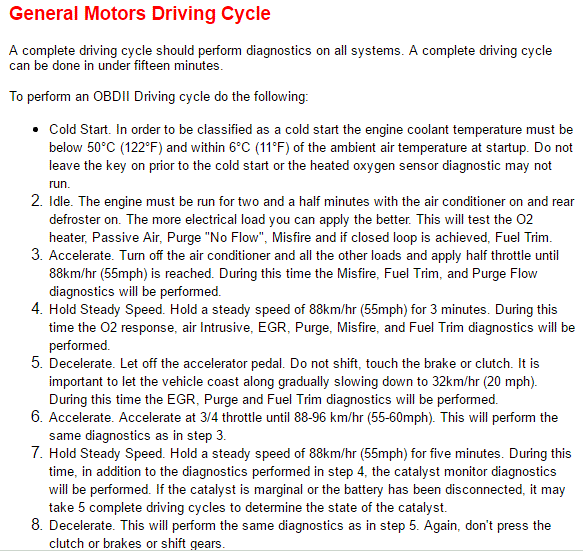
I had multiple problems to solve before my HHR was ready to test. I had parked it a year earlier, when the sticker expired. I fixed ABS sensor, MAP sensor, fuel cap leak, and finally the Evap vent solenoid. I had to restart the DRIVE CYCLE 5 times before I was done, and even so, I couldn't get the EVAP not ready to go away. Total 1100 miles; 200 after last repair. Texas passed it with the Evap still unset. I followed this Drive cycle : Good luck with your problem; I just got a P0135 code this afternoon, as well, on my '04 2500HD. I cleared the code, and will see if it sets again. I have 8 months to complete that next drive cycle!

-
Forum Statistics
250.6k
Total Topics2.7m
Total Posts -
Member Statistics
343,002
Total Members8,960
Most Online
-
Who's Online 7 Members, 1 Anonymous, 1,478 Guests (See full list)