
azurite
-
Posts
7 -
Joined
-
Last visited
azurite's Achievements

Enthusiast (2/11)
0
Reputation
-
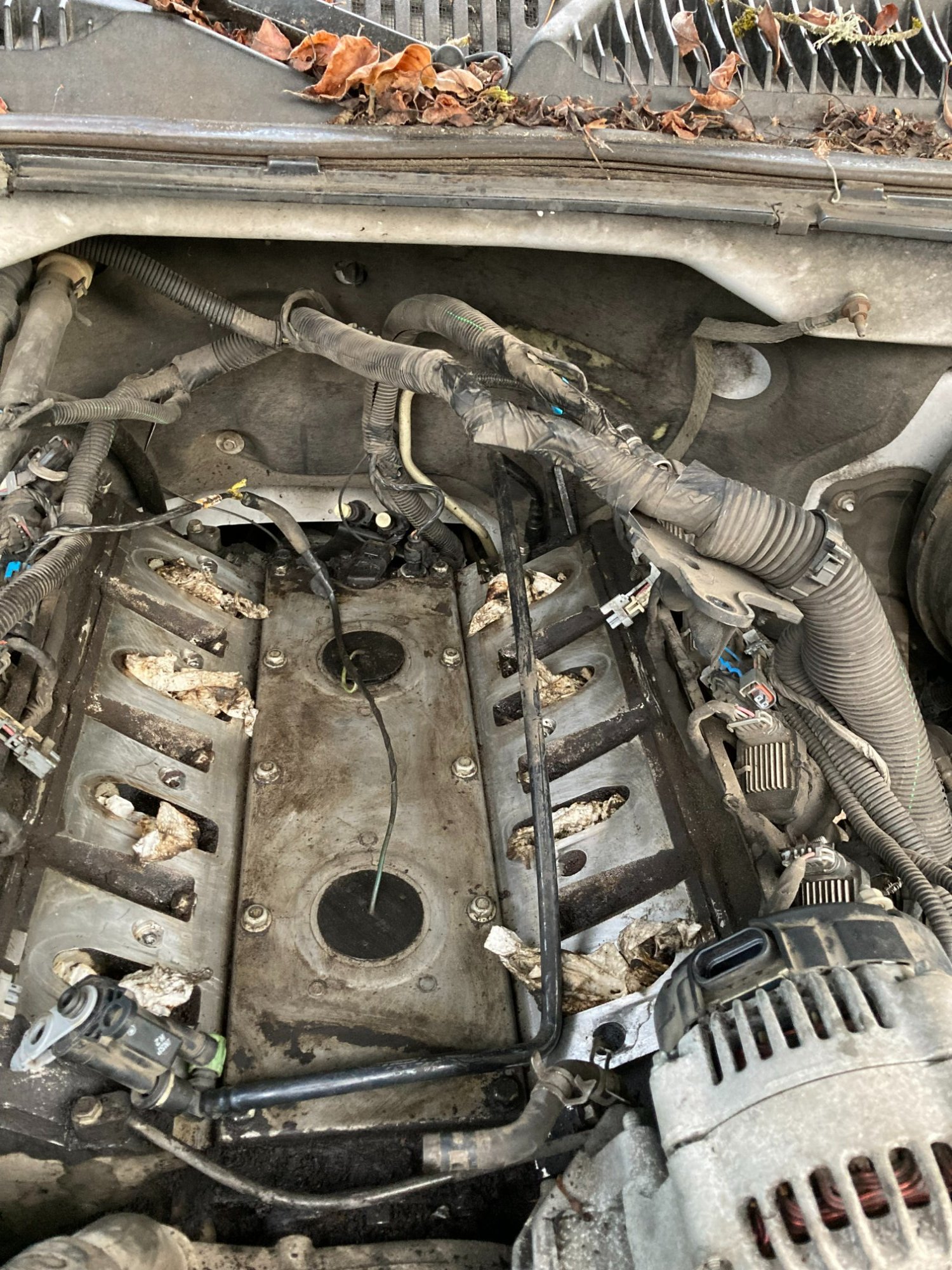
I fixed my truck! Thanks for all of the advice! To sum up the process: -Using my OBD2 scanner to see that the engine was running lean, P0171 and P0174 codes. The LTFT1 and LTFT2 were around +14%. - Tested the fuel pressure at the fuel pressure tester port; it was normal. - This meant that I likely had a vacuum leak somewhere. I was unable to locate the leak using "the spray the carb cleaner around vacuum lines and gaskets" meathod, or by looking around the engine. - I could now inveset in a smoke machine, or replace parts that probably needed replacing anyways, and hope the vacuum leak disappears in the process. I went ahead and replaced the valve cover gaksets, the fuel injector o-rings, throttle body gasket, air intake gaskets, valve cover bolt & grommets, both knock sensors. The gaskets were good quality (Felpro), and knock sensors were OEM. I have read way too many stories of cheap knock sensors failing early. -After putting everything back together and starting the engine, the engine mis-fired every couple of seconds and the LTFT had jumped to 25%. Ugh! In addition to seeing codes P0171 and P0174, I had P0300 (random misfires). -I bought a smoke machine. Running the smoke machine revealed that the rubber sleaves at the ends of the PCV hose were cracking on one end and split open on the other end. Also, I had left one bolt out of the intake manifold (smoke was pouring through the bolt hole). Thankfully, both of these items were simple fixes. My Silverado now runs smoothly again, the codes are gone, and the LTFT are back to zero.
-
No, I didn't check for warpage. Yes, I torqued the intake in the correct pattern and in two stages to the correct tightness. I will re-check some parts of the engine tommorrow. I doubt the entirety of the issue could be related to a fuel injector, bu would it be logical to check the fuel injectors and connections? If one fuel injector is not functioning (assuming the Computer is correctly tracking), would the computer throw a generic P0300 rather than a P30(12345678) to pinpoint a specific cylinder?
-
I could use your help again. I am super frustrated with myself. I replaced a bunch of things and now the engine symptoms are worse! Current status: At 600 rpm the engine misfires every 2-3 seconds. The engine sounds normal when I rev the engine to about 1500 rpm, maybe lower. Bank 1 and bank2 LTFT were at +14%, now they are at 25%. Short term FT can get as high as 50%. Current codes: P0300 - random misfires detected - This code is new P0171 and P0174: Long-term fuel trim is outside of normal range. What I have replaced since the last update: O-rings on fuel injectors, throttle body gasket, valve cover gaskets, both knock sensors with OEM parts, air intake manifold gasket. Gaskets were good quality from Fel pro. I ran the engine off and on for 15 minutes to try and give the ECU a chance to learn the throttle body position. Could a vacuum leak somewhere cause a misfire? Do I chase the cause of the P0300 first, or could they be one and the same cause that is triggering the LTFT issues? Any thoughts on what to do?
-
I am now thinking that replacing the valve cover gasket could help with the oil leak.
-
Ok, so I chose the route of removing the intake manifold and replacing the manifold gaskets and the fuel injector o-rings. I will figure out how to best clean the injectors. I will test the Knock sensors to see if they should be replaced. There is a layer of greasy dirt deposits where the manifold rests on the engine. Also, more greasy deposits toward the top of the the engine. What are some candidates for what is leaking? What else should I check/replace while I have the manifold off? Thanks. Jon

-
Thanks for the input, CamGTP. I tested the fuel pressure and it is in the normal range, 58 while idling, a bit lower with the key in the "On" position. While running the engine, In short bursts, I sprayed brake cleaner around the air intake hoses and gasket and listened for changes in the idle pitch. Admittmedly, I may not have hit every crevice while doing this. No leaks detected. I don't have the equipment to do a smoke test. Are there other easy checks that I can do before investing in a smoke machine setup?
-
Hello. I have a Silverado 1500 4.8L base model with 200K miles. I could use some guidance on how to troubleshoot two engine codes that my truck has. P0101 and P0171. I erased the codes, unfortunately. This is what I have done thus far: -Inspected the Air filter (it is clean) - Cleaned the MAF sensor with MAF cleaner. - The MAF values are responsive to changes in engine RPM. I don't have any special tools to check for vacuum leaks. I Took live readings with my Zurich ZR8 code reader The LTFT1 and LTFT2 hover around +14% when engine warm and idling around 600 RPM. Drove around a little and LTFT1 and 2 rose as high as 21%. MAP - 11 Hg MAF reads 0.52 lb/min TPS reads 9% Update 9/5/2021: I tested the fuel pressure and it is in the normal range, 58 while idling, a bit lower with the key in the "On" position. While running the engine, In short bursts, I sprayed brake cleaner around the air intake hoses and gasket and listened for changes in the idle pitch. Admittmedly, I may not have hit every crevice while doing this. No leaks detected. What are my next steps?