


Zeezil
-
Posts
8 -
Joined
-
Last visited
Zeezil's Achievements

Enthusiast (2/11)
2
Reputation
-
I'm looking to replace the ratty steering wheel on my 2012 Silverado LT. It's titanium gray, leather-wrapped, with cruise control and audio controls. Not heated. I've narrowed the correct part down to two possible numbers, via Rock Auto: GM GENUINE 22947785 Info TITANIUM; Exc. 'LT'/'SLT' Equipment / Sales Package (SLT); Cruise Control (K34), Leather Wrapped Steering Wheel (NP5), Steering Wheel Accessory Controls (UK3), Interior Trim Color (83I) GM GENUINE 22947801 Info W/O HEATER CONTROL MODULE; TITANIUM; Cruise Control (K34), Leather Wrapped Steering Wheel (NP5),'LT'/'SLT' Equipment / Sales Package (SLT),Steering Wheel Accessory Controls (UK3),Interior Trim Color (83I) I'm pretty sure it's the first one but am a little confused. I do not have an SLT RPO code but the truck is an LT. The part photos look identical but the second one is $100 more. What say you guys?
-
Illinois Emissions result: Reject WTF???
Zeezil replied to mikeyk101's topic in Troubleshooting & Recalls
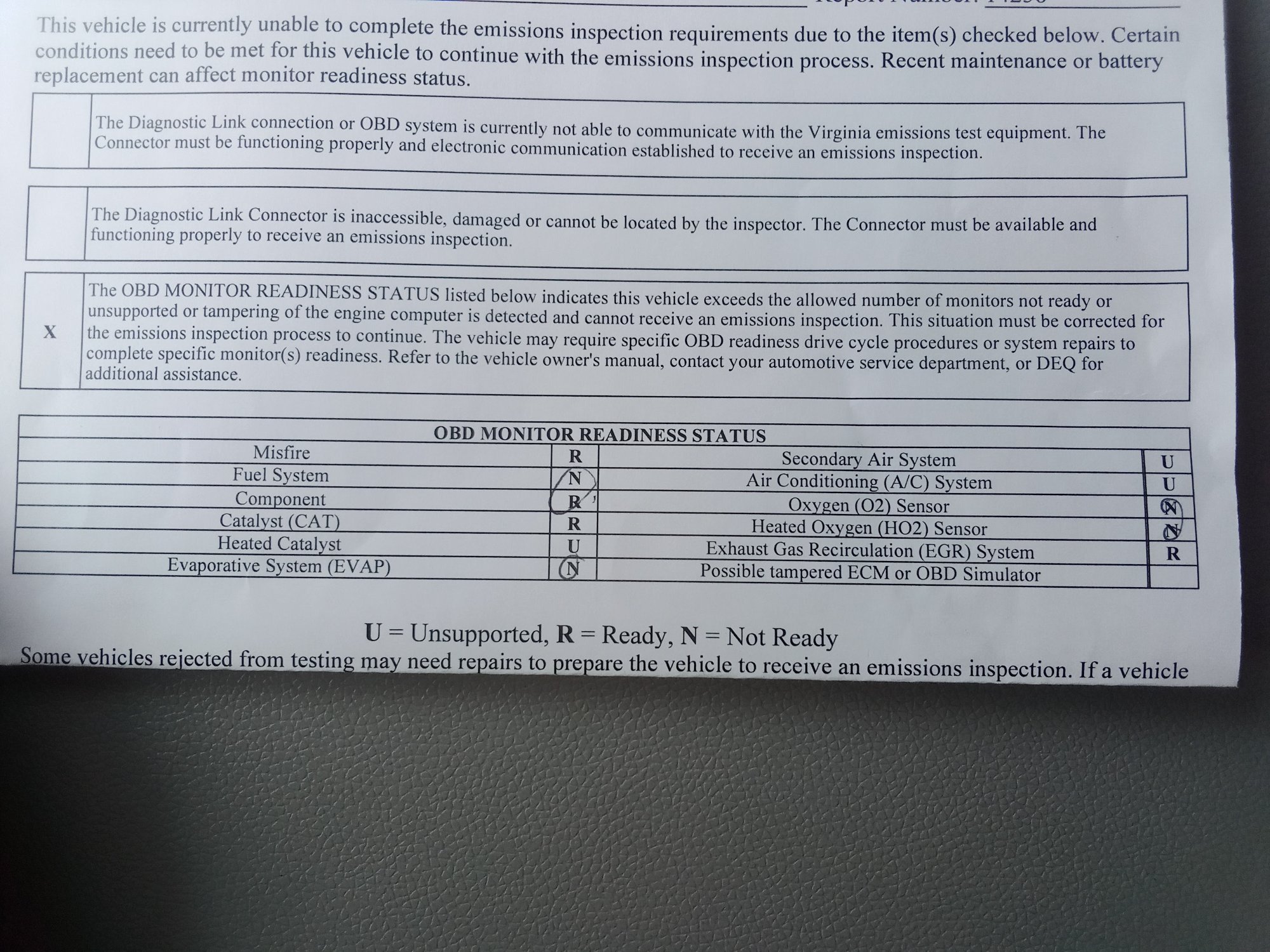
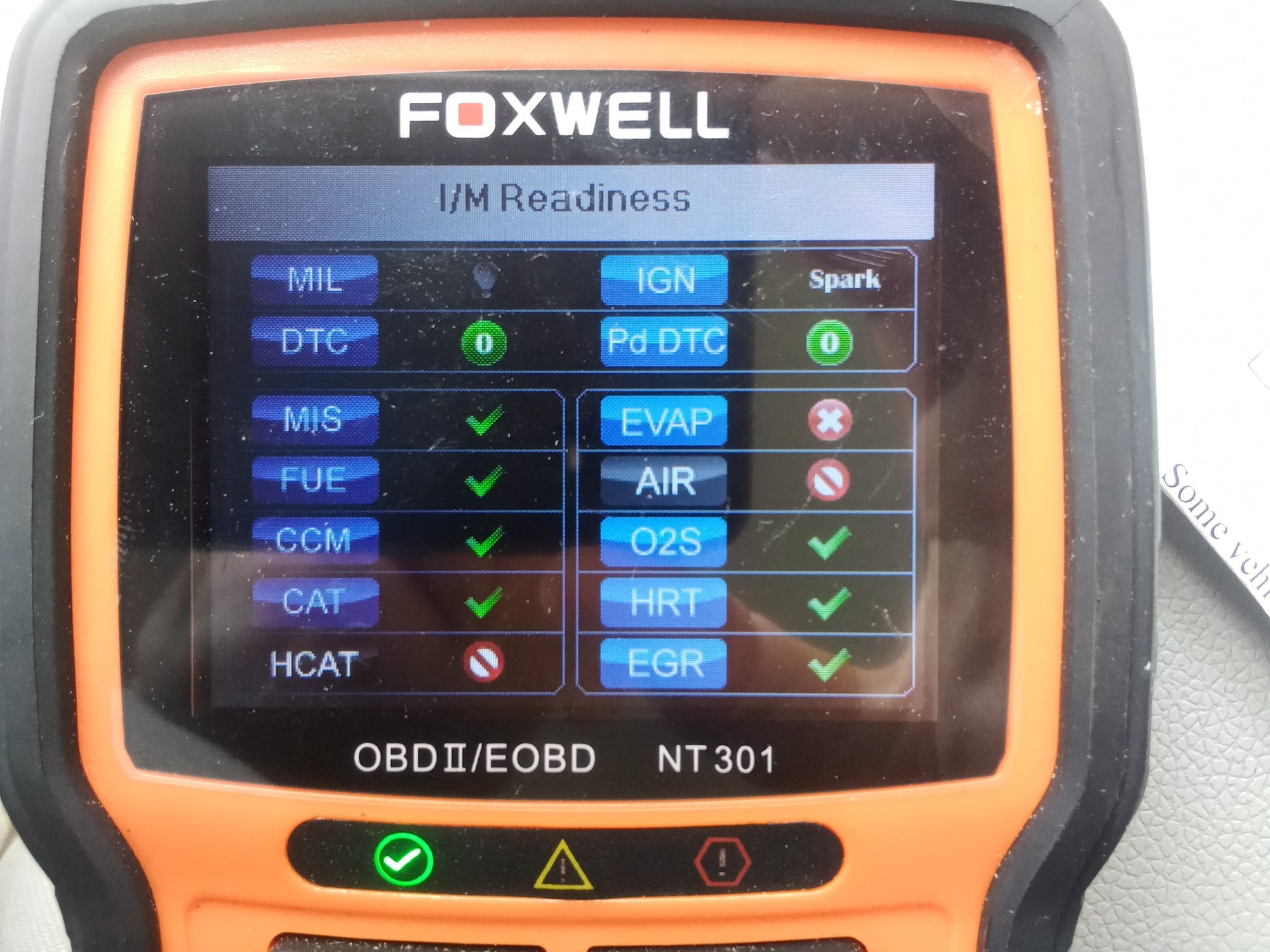
Adding to this thread because I had a similar experience in Virginia this morning with a generic AFM disabler (KVAC RA003) on my 2012 Silverado 5.3L. I have the disabler plugged in to a OBD Y-adapter and then zip-tied up under the dash. This is my first trip through emissions since I installed it and didn't even think about it causing issues. Truck didn't pass due to failed OBD monitor readiness. The printout showed the following monitors as "not ready" - fuel system, EVAP, O2 sensor and heated O2 sensor. On the drive home (<10 mi @ 40 mph), it dawned on me that it's likely the disabler. A few minutes of searching online suggested that was probably the case and that it might need some number of cycles to reset the monitors. Curious, I went back outside, hooked up my cheap scanner, and it appears that all the unready monitors are now ready except for EVAP. Sounds like I may be able to pass with that still unready but can't really confirm online. It's also not clear how long it might take to reset. I don't want to go back in and risk a second fail and trigger some kind of mandatory mechanic review. Problem is that I need to pass to renew my registration, which expires Friday.
-
Experience towing max weight travel trailer
Zeezil replied to Zeezil's topic in 1999-2013 Silverado 1500 & Sierra 1500
Well, I didn't mention in my post that I have 33" LT tires (25 lb more per tire than the stock 31.5" P) and a 1.75" level via Bilstein 5100s. Which is also part of the reason I'm concerned with that trailer for this truck. -
Experience towing max weight travel trailer
Zeezil replied to Zeezil's topic in 1999-2013 Silverado 1500 & Sierra 1500
Is this a 9k travel trailer? What kind of terrain are you hauling over? Surely you're exceeding your GCWR at that weight. Are you over your payload? In any event, it's good to know that in the real world, the truck handles fine. I know the 3.08 will put more strain on the engine and transmission but I go slow. -
Hey all. Not sure if this is the right forum for this, but I'll give it a shot. I have a 2012 Silverado 5.3L Z71 with 6L80E tranny and KC4, K5L, and KNP RPO codes (transmission cooler, heavy-duty oil cooler, etc.). I have the 3.08 differential (I know...). This gives me relatively low specs of 1,600 lb payload, 7,000 lb GVWR and 12,200 GCWR. In addition, I have a weight-distributing Class III hitch rated for 1,100 tongue weight and 10,500 trailer weight, axles are rated at 3,950 pounds each, and LT tires with 125 load index, so I'm good in all those areas. I'm shopping for travel trailers for my family of four. Our ideal model (2018 Bullet Crossfire 2200BH, for those interested) comes very close to maxing out my truck's specs. The trailer is 3,975 lbs empty with 425 lb tongue weight. Seems that the rule of thumb for RV folks is to assume a working tongue weight of 10-15% of loaded trailer weight, which includes the propane and battery. Assuming 1,000 lbs of gear in the trailer and using 13%, that's 650 lbs on the tongue. Adding 600 lbs of people and 300 pounds of gear in the truck puts the payload with loaded trailer at 1,550, which is within 50 lbs of the rated max. Also puts the truck and trailer combined weight at 11,925 pounds which is a cushion of only 275 lbs from the 12,200 GCWR. I'm wondering what peoples' experiences are towing a travel trailer with a load this close to the rated max. I know that the 5.3L and 3.08 gears means it'll be sluggish, especially up long grades. While certainly not ideal, I think the powertrain is probably acceptable. I'm more wondering about safety and stability- the truck getting pushed around at that weight, especially with the wind-catching shape of the travel trailer. Buying a bigger truck is not an option - buying a smaller trailer is. What do you guys think about this?
-
Advice on possible lifter tick and oil consumption
Zeezil replied to Zeezil's topic in Gen III & Gen IV V8 Engines (LS-Based)
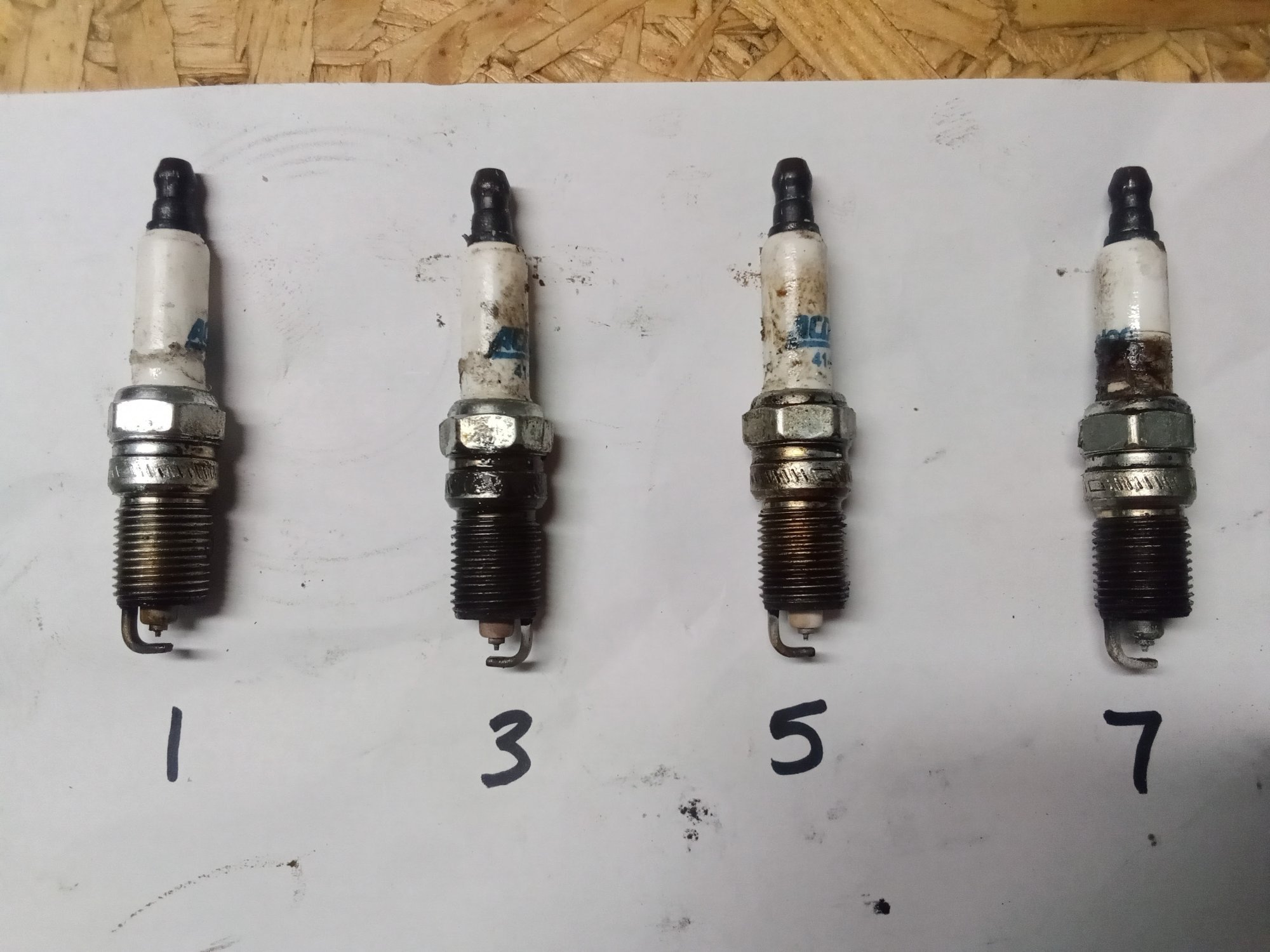
UPDATE: I've driven about 1,500 miles in the time since my last post when I pulled the plugs, finding several of them to be loose and oily. The tick has not returned even once since reinstalling the plugs tightly. The dipstick also shows a full pan. In my first post, I noted that it was burning about a quart every 2,000 miles. About 100 miles ago, I bought and installed a generic AFM disabler, and I really like it so far - no more surging forward when coming out of V4 mode while coasting to a stop, it seems to shift smoother/less overall, and hopefully will also reduce any future oil consumption. But questions remain. Could the tick and/or oil consumption just have been caused by the loose plugs? Or maybe the tick was but the oil consumption is unrelated (and I have worn out seals, rings, etc.). Does anyone have any comment on the state of my plugs from my last post, from before they were tightened? -
Advice on possible lifter tick and oil consumption
Zeezil replied to Zeezil's topic in Gen III & Gen IV V8 Engines (LS-Based)
I understand that these symptoms don't guarantee imminent failure, which is one reason I came here for advice. It's my do-everything vehicle - daily driver (WFH, so no commute), lumber/mulch/bike weekend hauler, and occasional light duty tower (boat/camper, both < 2,000 pounds). Typical annual usage is only 5-6k miles though. Also have the wife's car. Still advise to go with option 1, which is drive it until something bad happens? I've already lowered the oil change interval to 5k or less and will continue to do so. I am also happy to switch oils if it makes any difference. Is there a consensus on the best filters these days? I have been using using both Mobil 1 oil and filters for the last 10+ years on all my vehicles with no issues. I replaced the plugs 7k miles ago. Not because there were any issues but because the truck was at 127k and I had no maintenance records, so figured I might as well give it new plugs and wires. I inspected the old plugs upon removal and I don't recall there being any obviously fouled ones. I pulled the plugs today and what I found was pretty concerning. Nearly all of them were oily and three on the driver side bank were extremely loose, with dime-sized seepages of oil under the holes. I've never had a plug come loose before. Attached is a pic of the driver's bank after 7k miles. And here is a link to all the plugs, with closeups. I cleaned and reinstalled all, making sure they were tight. Drove great with no tick, though the tick has been intermittent since it developed. I've turned wrenches on lots of external parts but never done any internal engine work. It might be within my ability but it would be pushing it. Why would you go this route? Because it might eat the camshaft and do worse damage eventually? Thank you all for the feedback.
-
Been reading threads here for years, but just now signed up to make my first post. I bought my 2012 Silverado 5.3 in 2018 with 113k miles. No maintenance records but looked well cared for and has run great since I bought it. I changed the oil at 115k and at 122k (per DIC, and I always use Mobil 1 full synthetic) and I don't recall noticing low levels of drained oil, but I wasn't looking out for it - all just seemed fine. I did notice significant loss at the next change at 129k, probably 2 quarts or so but unfortunately didn't measure. So, I started monitoring the situation and switched to a fixed 5k interval, ignoring the DIC. Just changed again at 134k and was about 2.25 quarts low, so I'm burning just under one quart every 2,000 miles. Given the timeline outlined above, I'm not certain when it started burning. Could have been before I bought it and just never noticed it being low (dipstick never showed low and oil pressure is always good) or could have happened sometime between 5-12k miles ago. In addition, a few months ago, I noticed a ticking sound coming from the engine, pretty clearly on the driver's side. It's intermittent but around 75% of the time at startup. After doing some reading and comparing to some sounds on YouTube videos, I'm thinking it's a lifter. Putting the oil consumption and lifter ticks together and reading up on it, it seems like both are likely related to the known AFM issues, which I wasn't aware of prior to all this. That said, there are no apparent problems - engine is smooth at all RPMs, code reader shows no misfires or other codes, oil pressure is always 30-50 psi depending on engine temp and RPM, and the used oil looks fine to me. So, my question is what should I do? It seems like there are 3 main options after reading up on all this: Do nothing except continue to monitor oil levels and pressure, continue changing oil at 5k, and just address issues as needed (if a misfire develops, for example), hoping nothing worse happens. Possibly also add the Range AFM disabler, but I'm not sure if it will really prevent any additional problems at this point (will it?). Change the lifters (and also possibly add the Range) at moderate cost. Seems like this would address the tick, but also the oil consumption? Preemptively delete the entire AFM with cam/tune/etc. at significant cost to avoid catastrophic damage (destroyed cam sending metal into the lower end). Are there other options I'm missing? Given my situation, what should I do? Any advice would be much appreciated, so thank you all in advance.

-
Forum Statistics
250.5k
Total Topics2.7m
Total Posts -
Member Statistics
342,938
Total Members8,960
Most Online
-
Who's Online 5 Members, 1 Anonymous, 655 Guests (See full list)