
BlueV8
-
Posts
12 -
Joined
-
Last visited
Recent Profile Visitors
220 profile views

BlueV8's Achievements

Enthusiast (2/11)
0
Reputation
-
A complete delete is the most thorough mechanical solution, but it is also major engine work. On a quiet truck that is still under extended warranty, opening the engine purely as prevention is difficult to justify. A plug-in disabler stops commanded cylinder deactivation, but it does not remove or repair the collapsible lifters, so it should not be treated as failure insurance. I would keep the oil full, document the maintenance, and have any persistent tick, misfire, or loss of power diagnosed promptly. If the engine eventually has to come apart, that is the logical time to compare an OEM-style repair with a complete delete. The right choice depends on the truck’s symptoms, warranty status, expected ownership period, and whether the engine already needs to be opened. We explain that decision in more detail here—full disclosure, this is our own guide: https://www.bluev8.com/blogs/news/do-you-actually-need-an-afm-disabler One exception: some 2021 L82/L84 trucks have RPO YK9, meaning cylinder deactivation was already disabled in the factory ECM; on those trucks a plug-in disabler is redundant, although the AFM/DFM hardware remains inside the engine.
-
Disclosure: BlueV8 is a Supporting Vendor and sells plug-in AFM/DFM disablers. Before you spend a dime with us — or with anyone — try the AFM disabler GM already built into your truck. It's the shifter, and it's free. ⏱ The 10-second version Skip the M5 method if: Most of your miles are highway — M5 locks out 6th gear, so you cruise at higher RPM and burn more fuel You already know you'll forget — it only works if you do it every single drive Your lifters are already ticking — nothing that switches AFM off repairs existing damage You already run a tune or disabler — this would be doing the same job twice Worth trying if: You want AFM off today, for exactly $0 You want to test-drive V8-only life before buying anything Your driving is mostly town and short trips, where 6th gear barely matters Your truck is leased or under warranty and you won't touch the ECM — this is zero hardware, zero software The whole trick, in one paragraph Owners across GM forums keep reporting the same pattern: put the transmission in manual / range-select mode, pick M5 or lower, and AFM never activates — the truck stays in V8 the whole drive. Bump it up to M6 and V4 mode comes right back. Two of the cleaner threads on it are here and here. GM has never documented this behavior, so file it under "strong owner consensus," not gospel. The good news: it takes exactly one drive to verify on your own truck. Steps below. What "free" actually costs Effort, every drive. It's a routine, not a setting. Shift to M, tap up to 5, every time you get in. There is no set-and-forget here. 6th gear. When GM shipped trucks with AFM/DFM switched off during the 2021 chip shortage, its own estimate of the penalty was about 1 MPG — and those trucks kept every gear. In M5 you're also giving up overdrive, so expect the highway hit to be bigger than that. Patience. One Tahoe owner ran the L5 routine for two months, then got tired of it and bought a plug-in disabler — he had an extended warranty, so flashing a tune was off the table. That's not a knock on the method. That's just what month two feels like. I put together the full instructions, limitations, and links to the original owner discussions here: https://www.bluev8.com/blogs/news/how-to-disable-afm-for-free-the-m5-method
-
 Disclosure: BlueV8 is a Supporting Vendor and we sell AFM/DFM disablers. We wrote this because not every GM owner actually needs one. In some cases, regular maintenance, towing use, an existing tune, or simply using M5 makes another device unnecessary. ⏱ The 10-second version Skip it if… You keep the oil full and change it every ~5,000 miles. Your risk is already low. You're happy shifting into M5 every drive. That disables AFM for free. Your truck tows heavy most days. AFM barely runs under load. You already run a tune or delete kit. Done is done. It's already ticking or misfiring. You need a mechanic, not a plug-in. Worth it if… You bought it used and the oil history is a mystery. Checking the dipstick is… not your hobby. (No judgment.) You're a long-term keeper with lots of easy highway miles — exactly when AFM runs most. The V4 drone and shudder drive you nuts. You're under warranty, so a tune is off the table. The full article includes the supporting GM bulletins and owner reports: https://www.bluev8.com/blogs/news/do-you-actually-need-an-afm-disabler
 -
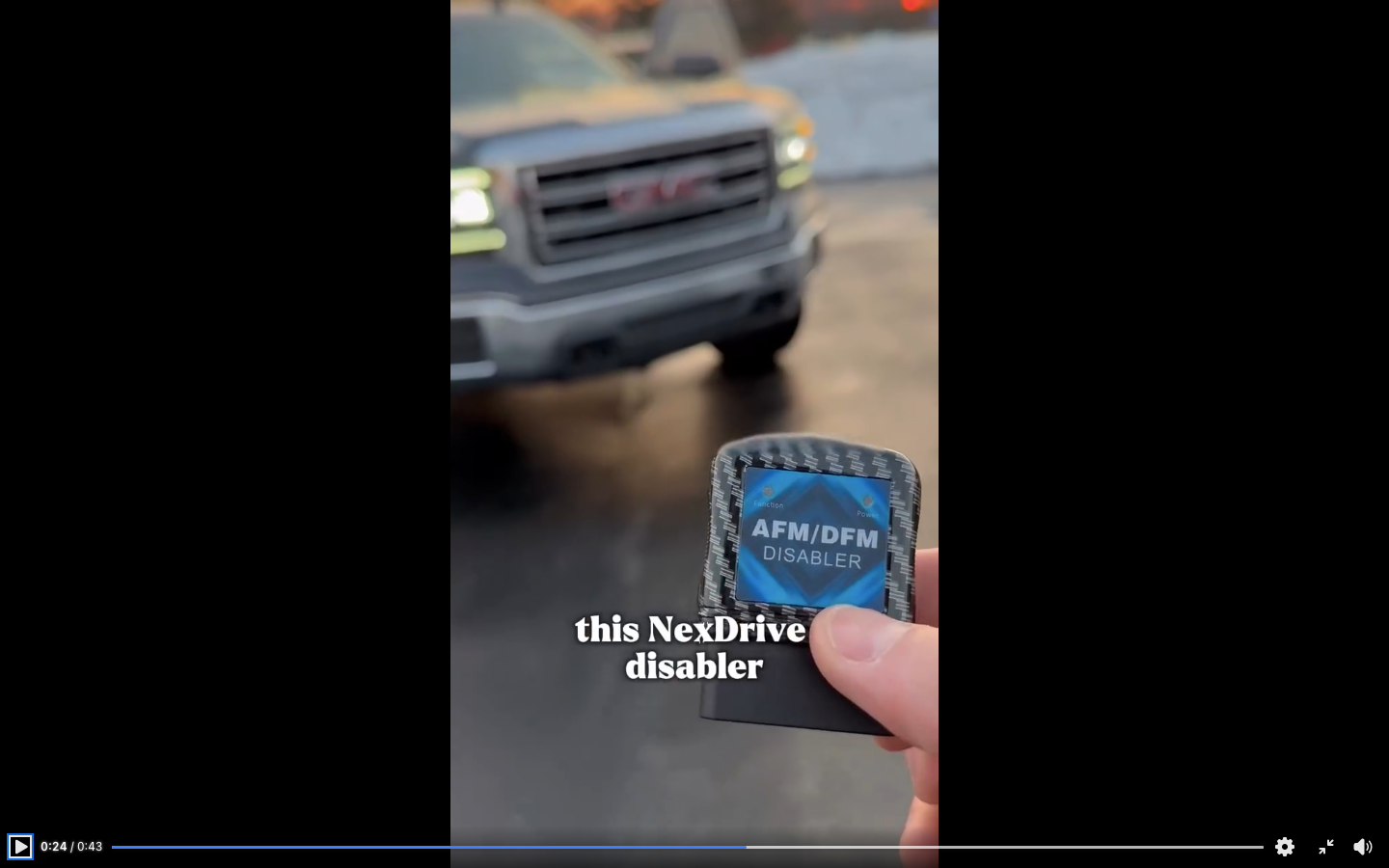
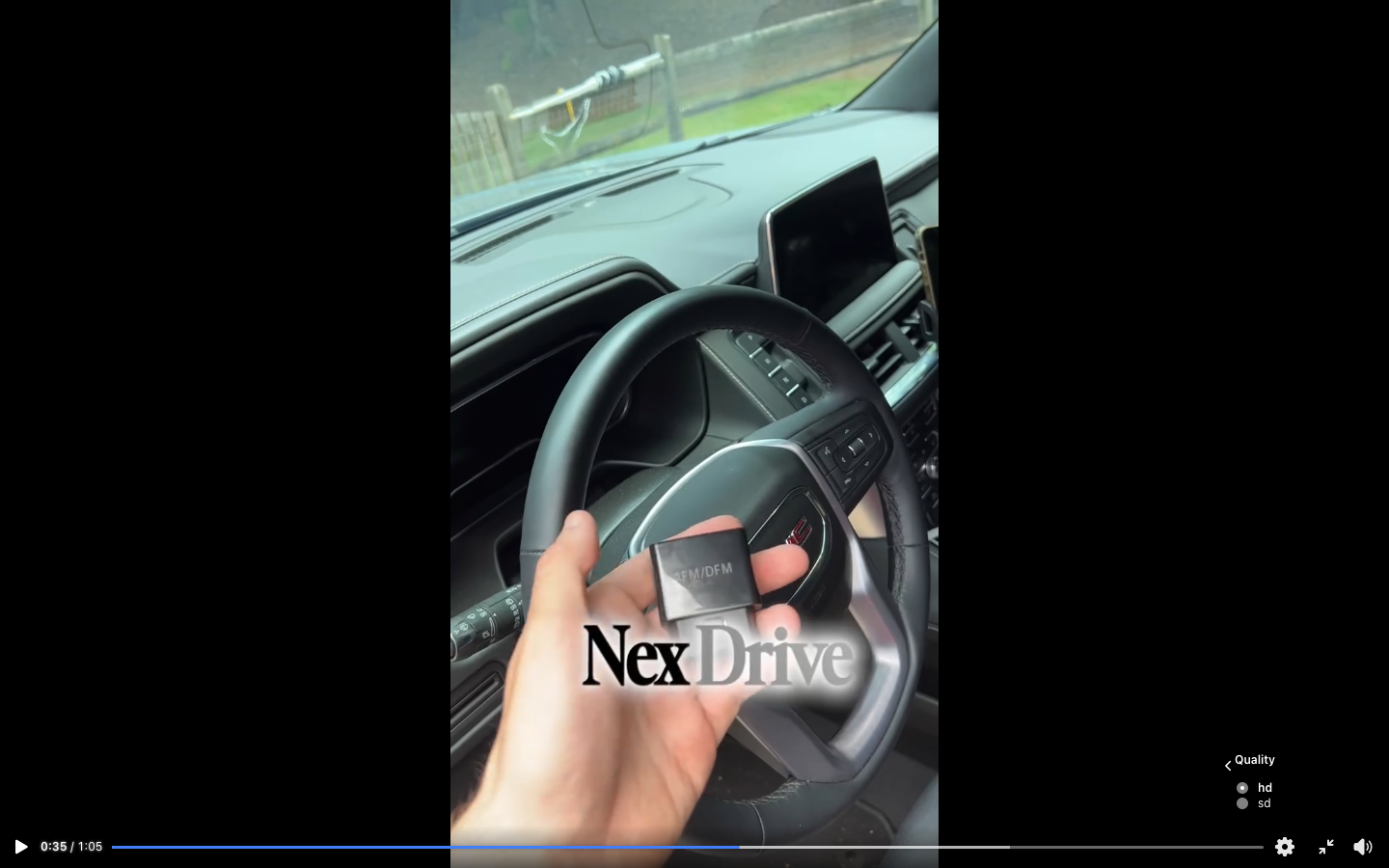
Disclosure: I sell a competing AFM/DFM product. NexDrive appears to be running a large number of active Facebook ad creatives: https://www.facebook.com/ads/library/?active_status=active&ad_type=all&country=US&view_all_page_id=973344495872584 Page ID: 973344495872584 In one of the videos, at approximately 0:12, the product box clearly says “ROPODE,” but the added voiceover and captions call it “NexDrive.” Several other ads also appear to show different products with similar dubbed narration and clips. Does anyone recognize the original videos? Is this licensed/private-label footage, or is the advertising presenting another branded product as NexDrive? I do not have time to trace every clip, so I am asking the community to examine the ads and post any original source links or screenshots. There may be a licensing explanation, so I am not making a final accusation. Please keep the discussion factual. Anyone who independently believes a specific ad is misleading can use Facebook’s normal “Report ad” option and identify the exact timestamp and branding mismatch. This is not a request for mass reporting.

-
I’d be careful about treating any AFM/DFM disabler as a lifter-failure guarantee. It can change cylinder-deactivation behavior, but it is not a mechanical repair and it does not remove the collapsible lifters from the engine. The other big thing is year/platform. A 2021 truck, a 2023 truck, and a 2025 truck should not automatically be grouped together for plug-in fitment. Exact year, engine, transmission, and refresh status matter.
-
Range AFM/DFM Disabler Flaw
BlueV8 replied to GN2018's topic in 2019-2026 Silverado 1500 & Sierra 1500
That remote-start behavior is worth separating from the AFM/DFM side. A lot of plug-in modules depend on when the vehicle wakes up the OBD-II network and when the module initializes. Remote start can change that timing compared with a normal key/button start. I would not treat unplug/replug every time as normal daily use, though. If the main goal is Auto Start/Stop only, the dash button may be less annoying. If the goal is AFM/DFM behavior, then fitment and startup behavior matter a lot. -
BlueV8 changed their profile photo
-
That is a fair point, and I think an OBD-first proof is probably the right next step. I agree that the value is not the hardware box by itself. The marketable part would be the software: always-on capture, baseline learning, event reduction, system-specific reports, and alerts. Also agreed that if an OBD device is always plugged in and has local storage, it should not miss the event in the same way that a scanner plugged in after the fact would. The only thing I would not want to assume yet is that an ELM327-class device gives all the late-GM data needed at the rate needed. Standard OBD live data, DTCs, freeze frame, Mode 6, VIN, and calibration information are definitely the right starting point. GDS2 also proves that a lot of useful ECM data can be viewed through the DLC without needing a DTC first. The question I need to test is whether the data needed for a useful GM V8 event report is actually available through the DLC, and at a useful sample rate: - misfire counts / roughness by cylinder - AFM/DFM state - oil pressure and oil temperature - fuel trims - voltage / reset context - U-codes and communication events - calibration / software information - whether these are standard PIDs, enhanced DIDs, Mode 6 data, GDS2-only data, or not available So I think the right benchmark is: 1. Build the OBD-only version first. 2. Keep it plugged in and logging locally. 3. Compare it against GDS2 / freeze frame / HP Tuners or another higher-end logger. 4. Measure which parameters are available and at what update rate. 5. Only justify ECM-side hardware if it captures useful evidence the OBD version cannot. So you may be right: the consumer product might simply be an always-plugged-in OBD event recorder with much better reporting. A question for you: when you say ELM327 devices can already deliver all the data needed, do you mean generic OBD Mode 01 data only, or GM enhanced data as well? For a useful GM V8 report, would generic OBD data be enough, or would you expect the tool to include enhanced items like misfire by cylinder, AFM/DFM state, oil pressure/oil temp, U-codes, and calibration information?
-
That is a good correction. I think “severity” was probably the wrong word for what I meant. What I really mean is closer to event priority, relevance, and actionability — not “this code is severe” or “replace this part.” I agree that a truck can have a lot of trivial or historical communication codes, and if the product starts pushing alerts for every stored or low-value event, people will ignore it very quickly. So the alert logic would need to be filtered. For example, I would not want a random old communication code to generate a push notification by itself. A useful alert would probably need to be based on things like: - new vs historical - active vs stored - repeated vs one-time - duration of the event - whether it happened near the driver-marked symptom - whether it happened together with voltage drop, reset, bus-off, misfire, oil-pressure change, etc. - whether the same pattern repeats under similar conditions So instead of saying “severity,” maybe the product should organize events by affected system and priority. For example: Misfire event: Show misfire counts / roughness first, then fuel trims, RPM/load, DFM/AFM state if available, coolant/oil temp, voltage, and related DTCs. Oil-pressure event: Show oil pressure first, but only in context — RPM, load, oil temperature, coolant temperature, DFM/AFM state if available, voltage, and baseline comparison. Communication event: Show which module/network/message dropped, whether voltage dropped, whether the recorder reset, whether it was active or historical, and whether it repeated. Voltage/reset event: Show battery voltage, crank/wake/sleep state, module reset, communication dropouts, and what came back online first. That also solves the display-order problem you mentioned. The main report should not always show the same fixed list first. It should show the system that appears abnormal first, and then the supporting values for that system. I also agree that the truck already has an oil pressure gauge and MIL. The point would not be to duplicate those. The value would be in showing what else was happening before and after the warning or symptom. For example, if the MIL comes on for a misfire, the truck already told the driver there is a problem. The useful part would be: - which cylinder or bank looked abnormal first - whether it happened after an AFM/DFM transition - whether fuel trims were already moving - whether oil pressure or voltage changed at the same time - whether the same pattern happened previously without a MIL On the OBD port point, I think you may be right for a consumer-facing version. OBD is much easier for the average owner: - easier install - easier removal - inside the cabin - easier phone connection - easier data download - easier to include a pass-through port for another scanner OBD is also the right place for DTCs, freeze frame, VIN, calibration information, Mode 6, and normal scan-tool parameters. The reason I was looking at ECM-side recording is that some events may be gone by the time someone plugs in a scanner, and some powertrain-side network evidence may not be available the same way through the DLC. But I agree that if an OBD-based version can capture enough useful evidence for most owners, that is probably the cleaner consumer product. Maybe the split is: - OBD/DLC version for most consumers - ECM-side version only if it proves it adds evidence that the OBD version cannot get - shop/pro version if deeper powertrain-side event evidence is actually useful So I would not want to force the inline approach if the OBD workflow solves most of the real-world problem. Your last point is probably the key product requirement: the report should be specific to the system showing the abnormality. Not “here are 50 parameters.” More like: “Misfire-related event detected. Here are the misfire/fuel/DFM/context values.” or “Oil-pressure-related event detected. Here is oil pressure compared with RPM/load/temp/baseline.” or “Communication event detected. Here is what dropped, when, and whether voltage/reset happened first.” That is a much better way to think about the report.
-
That is a fair point, and I agree that trying to log “everything in the truck” would be the wrong direction. There are a lot of modules and a lot of traffic. If the product became a full-truck datalogger, the amount of data would get huge very quickly, and most owners would never use it. I think the first useful version would need to be narrow: - powertrain-side event evidence - selected high-value parameters - communication / voltage / reset events - pre/post event window - short report first, raw log only as backup One distinction I should make is between active OBD/PID polling and passive bus capture. If you are polling PIDs through OBD, then yes: the more parameters you request, the lower the effective sample rate becomes, and you are adding diagnostic traffic to a vehicle that is already busy running itself. With passive CAN capture, the recorder is not asking all the modules for data. It is listening to traffic that is already on the bus. So it does not consume vehicle bus bandwidth in the same way that a scan tool polling hundreds of PIDs would. But your point still applies in a different way. Even if passive capture does not add bus traffic, the recorder still has limits: - processing rate - storage rate - timestamp accuracy - decoder workload - event filtering - report size - user attention span So the answer cannot be “log everything and let the user figure it out.” The product would need to store enough raw evidence to be useful, but only decode, graph, and present the important parts around the event. A practical report should probably show: - what triggered the capture - how much pre/post data was preserved - which selected parameters changed - how those values compared to baseline - whether the same pattern happened before - whether any voltage, reset, bus-off, lost-message, or communication fault occurred - selected graphs around the event - raw data only as supporting evidence So I agree with you. More data is not automatically better. The real product is the reduction from raw data into a useful event report.
-
That makes sense, and I agree with most of that. I think the product would need both: 1. a default powertrain template, so it is useful out of the box; 2. user-selected priority parameters, so the owner or shop can choose what they want to see first. Different users are going to care about different things. One owner may care about oil pressure and voltage. Another may care about misfire trend, AFM/DFM behavior, or U-codes. A shop may want communication events and repeatability first. Your baseline point is probably the most important one. Raw data is not very useful unless the report can show what normal looked like for that vehicle under similar conditions. The way I would think about it is: - start with a basic known-good baseline - learn normal behavior for that specific vehicle over time - allow the event to be overlaid against baseline - show whether the event was a one-time spike or a repeatable pattern - provide a simple severity level, but with clear limits on what that severity means For example, early severity could be something like: - Info: event captured, no obvious abnormal pattern - Watch: value moved outside baseline, but not repeated - Warning: repeatable abnormal pattern under similar conditions - Critical: communication loss, voltage drop, bus-off, reset, or severe repeated event I would not want the first version to say “replace this part.” That would be overclaiming unless there is repair-confirmed data behind it. It would be more honest to say “this pattern deserves inspection.” On the OBD port question, I think OBD absolutely has a role. OBD is probably the right place for: - DTCs - freeze frame - VIN - calibration information - normal scan-tool parameters - Mode 6 / enhanced diagnostic data if available The reason I am still looking at an ECM-side recorder is that the failure may happen before anyone connects a scan tool. If the owner plugs in a scanner after the event, the pre-event evidence may already be gone unless the ECU happened to save it. So I do not see this as “OBD versus ECM-side.” I see it more like: - ECM-side recorder: always armed, rolling buffer, event evidence - OBD/DLC companion: DTCs, freeze frame, VIN, calibration, normal scan data - phone/cloud: status, notes, upload, report generation, notifications I agree that phone connection and push notifications would be useful. I just would not want the phone or cloud connection to be required for capture. The recorder should save the event locally even if the phone is not connected. The phone should help with event marking, download, notes, upload, alerts, and report viewing. For a default GM V8 event report, would this list make sense? - RPM - calculated load / MAP - throttle position - vehicle speed - gear / torque converter state if available - coolant temperature - oil pressure - oil temperature if available - battery voltage - commanded AFM/DFM state if available - actual AFM/DFM state if available - misfire counters / roughness by cylinder if available - fuel trims - relevant U-codes / communication events - bus-off / lost periodic message / module reset / voltage drop events Which of those would you remove, and what would you add?
-
That makes sense, and I think you are describing the real product problem. Capturing data is the easy part. If the owner or technician has to manually dig through five minutes of millisecond-level logs, the product has already failed. The device would be at the ECM harness, not at the OBD port, so I agree that data retrieval and event marking need to be thought through carefully. The way I am thinking about the architecture is: The recorder itself should not depend on a phone, app, Bluetooth, Wi-Fi, or cloud connection to capture the event. It should always keep a local rolling buffer and lock the event locally. A button, phone app, or small cabin device would only act as an event marker. If the driver feels a stumble and presses the button 10–30 seconds later, the pre-buffer has to already contain the useful data. For data retrieval, the practical options would be a sealed service USB lead, Wi-Fi download, or a phone/cabin companion device. I would not expect the owner to remove the ECM-side module or work with raw files directly. The cloud or AI side would be for interpretation, not for capturing the event. The truck may have no connection when the issue happens, so the evidence has to be saved locally first. After that, cloud processing could help decode the data, compare it against baselines, and generate a readable report. For the first version, I would keep the automatic triggers conservative and objective: driver event marker bus-off error passive voltage drop / brownout device reset FIFO or queue overflow a normally periodic message disappearing side-to-side communication mismatch, if the topology supports that For “learning normal,” I agree with your point, but I would not want to overclaim it as automatic root-cause diagnosis at first. A realistic first step would be learned baseline comparison for that specific vehicle and operating condition. For example, a value would only be compared against similar conditions: RPM range load / MAP throttle position gear / vehicle speed coolant and oil temperature battery voltage AFM/DFM state, if decoded and validated Then the report could flag things like: this periodic message disappeared compared with its normal timing this value deviated from this vehicle’s normal range under similar conditions the same abnormal pattern repeated after the same type of event the anomaly occurred together with voltage, oil-pressure, misfire, or communication changes But I would still call that “abnormal pattern detected,” not “replace this part,” unless there is enough validated repair data behind it. So the intended product would not be “here is a huge log.” It would need to be an event package: what triggered the capture how much pre/post data was preserved what changed before and after the event whether the device itself reset, overflowed, or saw a bus error selected graphs around the event raw data only as supporting evidence From your perspective, what would make this kind of report useful instead of just another datalog? For example: What are the top 5 parameters or events you would want highlighted first? Would you trust a learned baseline for that specific vehicle, or would you prefer fixed thresholds? How much false-positive flagging would be acceptable before you stopped looking at the reports? What would a one-page report need to show for an independent shop to take it seriously? For misfire, AFM/DFM, oil pressure, or U-code complaints, what would you want the tool to flag automatically?
-
New member here. I am researching a read-first event-recorder concept for late-model GM V8 trucks. This is not a sales post. There is no product link, price, preorder, or mailing list. I am trying to determine whether the underlying problem is real before building anything. Has your truck ever had a brief problem such as: - rough running or a momentary misfire - an oil-pressure warning or unusual pressure event - reduced power or a brief stall - a U-code or lost-communication problem - a symptom that disappeared before the dealer or independent shop could reproduce it If so, I would appreciate the following details: - year, model, engine, and mileage - what happened and under what conditions - whether a DTC and useful freeze-frame data were stored - whether the shop was able to reproduce it - what the eventual confirmed repair was, if known - what additional information would have helped the diagnosis The concept being evaluated is a removable leave-in recorder that continuously retains a rolling window from before and after an event. It would not tune, reflash, clear codes, or change the vehicle calibration. I am also not claiming that it could predict lifter failure or see every internal ECM variable. The real question is whether continuous event history would add enough useful evidence beyond freeze frame, GDS2, and existing scan tools — or whether it would simply be another unnecessary gadget. For owners and technicians, which problem would make something like this genuinely useful: 1. intermittent misfire or AFM/DFM-related behavior 2. oil-pressure events 3. lost communication or electrical faults 4. none of the above Please be blunt. Negative feedback is just as useful as positive feedback.