


Nicky Ivy
-
Posts
4 -
Joined
-
Last visited
Content Type
Profiles
Forums
Gallery
Events
Articles
RPO
Store
Blogs
Everything posted by Nicky Ivy
-

New Member Just Bought a Vtrux
Nicky Ivy replied to Slimsalabim's topic in 2014-2018 Silverado 1500 & Sierra 1500
The top speed is software limited, I don't think there's a way to change it without de-doing the whole truck. If you can get a CAN log per my above post we can try seeing if there's anything obvious going on. What happens when you plug the truck in to charge it, does it ever fully charge up or does it stay at low battery %? -
New Member Just Bought a Vtrux
Nicky Ivy replied to Slimsalabim's topic in 2014-2018 Silverado 1500 & Sierra 1500
Some huge news: I've done a bunch of reverse engineering on the Vtrux's CANBusses and now we have a bunch of CANbus specs for helping diagnose these trucks! Quick summary: the Vtrux has 3 CANbuses, I've been calling them them the Powertrain, OBD, and Vehicle buses. Most of the Via high voltage components live on the Powertrain bus: battery, DCDC, generator inverter, charger, power electronics water pump, high voltage AC compressor. The drivetrain inverter and the original GM ECM live on the OBD bus, and the EBCM (brake/traction controls, etc) live on the Vehicle bus. Via's controller spoofs certain messages between the GM ECM and the EBCM to keep both happy (EBCM gets fake always-on engine data, for example). All 3 of the buses are broken out at the white DLC connector below the dash - the Vehicle bus at the standard OBD canbus pins (CAN-H 6/CAN-L 14), then Powertrain at CAN-H pin 1/CAN-L pin 9, and OBD at CAN-H pin 10/CAN-L pin 2. Both of my trucks came with a breakout harness breaking these out to secondary connectors with each bus on the primary 6/14 pins, such that a standard OBDII connector to CAN adapter can interface with the buses that way, and I bet most other Vtruxes out there have these. P2 is the powertrain bus on mine and P1 is the OBD bus. On one of my trucks, this harness was used to break out the OBD and Powertrain buses to wireless Bluetooth dongles, which were then connected to an iPhone tucked under the dash with a logging app. I was able to jailbreak the iPhone and pull the logger app off of it, then with the help of LLM tools using Ghidra, decompile the app and extract the CANbus specs from it. I have not been able to figure out any way to read diagnostic codes from the Via controller - everything I've been able to figure is just directly analyzing log data directly. Which aligns with how Via used to support these trucks, with the mail in logger. But now we actually have meaningful fault diagnostic data - for example, the other day, I was trying to reinstall a pack in one of my trucks after replacing the contactors and cleaning up some corrosion, but the truck wouldn't turn back on when reconnected. I was able to pull a log and diagnose the issue as a high voltage interlock fault, and sure enough, when I got back home and opened the pack back up, turns out I had forgotten to reconnect the interlock connector on the charger HV DC connector which I had done some corrosion cleanup on. Here are some links to the repo where I documented all the findings, including CANBus DBC definition files: https://github.com/nickyivyca/canbus-reveng-vtrux-coda https://github.com/nickyivyca/canbus-reveng-vtrux-coda/tree/main/projects/vtrux If you are trying to diagnose issues with the trucks, probably the best option is to take a CAN log while the issue is happening of the Powertrain bus. Then either you can use the tools in the repo yourself to check the log, or you can send the log to me and I can try taking a look. If you do not already have a means of taking a CAN log then these will work if you have access to a Linux based computer that can use socketcan: USB to CAN/DB9 adapter: https://www.amazon.com/gp/product/B09K3LL93Q DB9 CAN to OBD adapter https://www.amazon.com/gp/product/B081N7G2BR Important note: my previous assumption about my coolant pump was wrong. The truck does NOT suddenly turn off when either drivetrain or generator motor overheat. I did separate tests for both motors, unplugging the coolant pump and then driving around until the motors overheated. Both motors gently reduced their torque output when they overheated. It is still unclear to me exactly what was causing my truck to randomly shut off, since I only have one log of when it randomly shut off on me, which does not indicate an interlock or isolation fault, but swapping the battery pack with another running truck completely fixed the issue, so the issue was somewhere in the battery pack. I ended up replacing all 5 contactors, which looked like they had gotten hot over time, so once I can get it back in my other truck I can see if that indeed fixed the issue.
-
New Member Just Bought a Vtrux
Nicky Ivy replied to Slimsalabim's topic in 2014-2018 Silverado 1500 & Sierra 1500
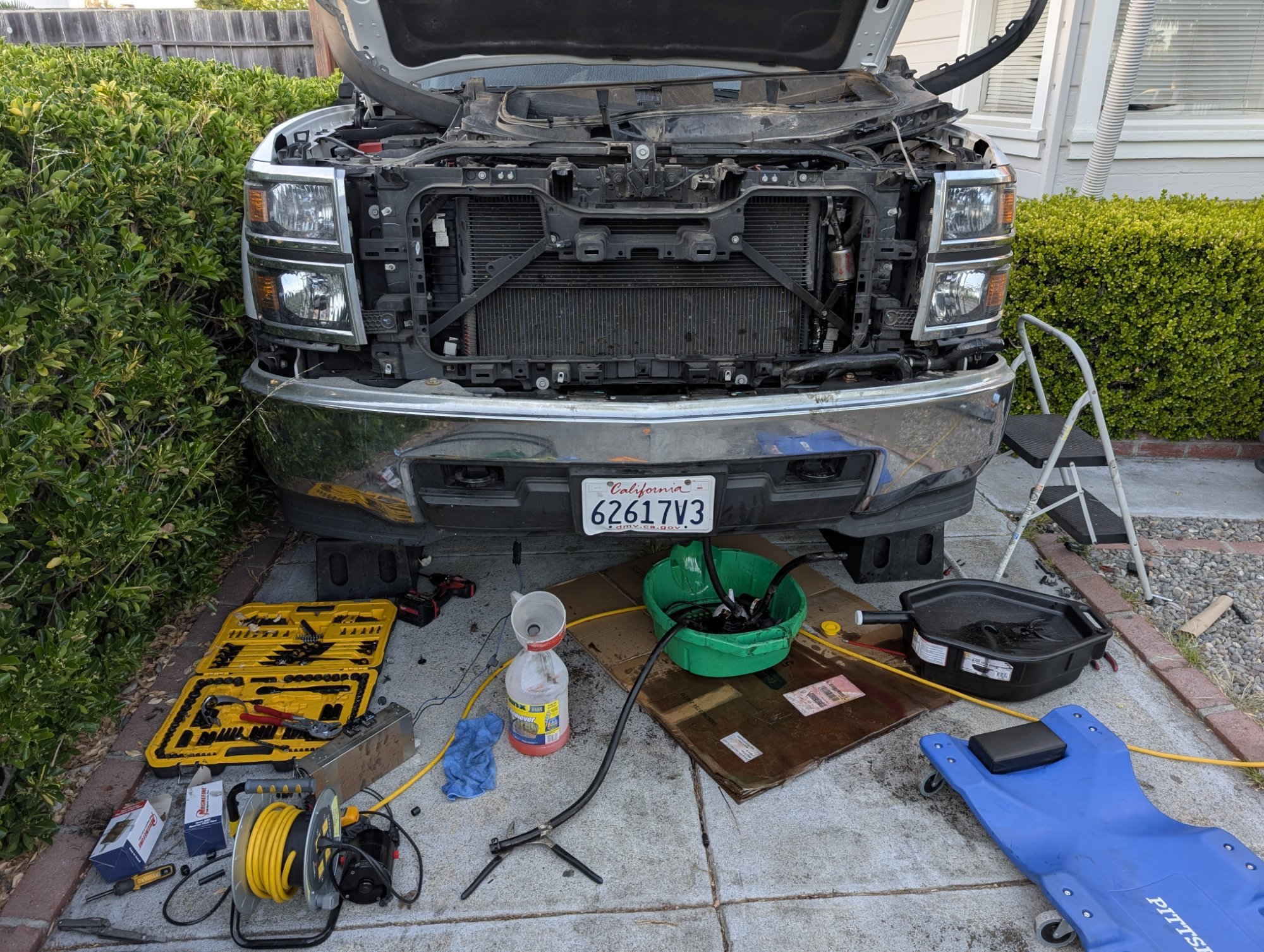
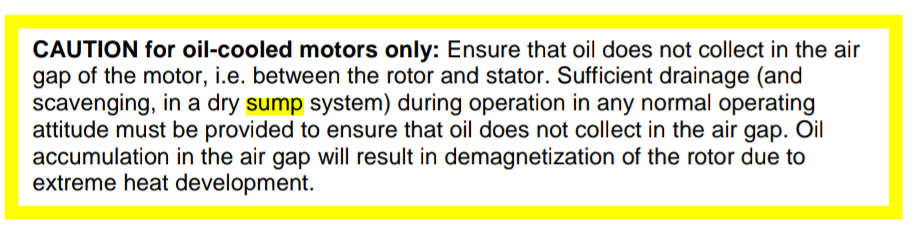
Via did indeed get CARB EOs for both the van and the truck conversions. (Put Via in the Manufacturer here). But, as the EO says: Mine was not originally sold in California, which is why I'm guessing that the CARB EO spot on the label was not filled out, so I'm still not sure how it would have gone if they had required I go to the referee. I also made some progress on my issue with the truck overheating. Like some other posters here, on a recent trip to a hotter area than where I normally drive it, the truck suddenly shut off a few times, but then was able to start back up soon after. Afterwards, I ended up diagnosing this as the drivetrain cooling pump was starting to fail, testing just with a 12V power supply connected directly to the pump it would slow down and pull less current over time while the generator one would stay the same speed and the same current. My guess would be the brushes are wearing out but I have not torn down the pump or sent it back for rebuild yet. I was able to order a replacement pump direct from Meziere, ~$640 including shipping. One of the people at Meziere I spoke with on the phone remembered the Via project and told me that for this application the difference between a WP702 and WPX702 did not matter so I got a WP702 pump. I also bought new Magnefine ATF filters (https://magnefinefilters.com/, I bought from the Ebay listing) so I could replace them at the same time as I was doing the pump. Replacing the pump and filters was quite an ordeal, and I did indeed bathe in ATF as Racerx944 said. I had to take off the front grille to access the filters, and then I also ended up disconnecting the big water pump in the center and moving it out of the way to get better access to the oil hoses. In doing this I discovered the previous filters were installed backwards (coolant flow direction is from the radiator out to the filter), no idea how long those filters were like that or if they were the original filters installed. Take special care to reconnect the filters in original order, at first I swapped them which resulted in me overfilling the system. This whole motor cooling system is definitely a major weak point of these trucks. Not only are the motors undersized for this usage, making good cooling extra important, Via never implemented any sort of thermal cutbacks (or at least temperature indications, so the driver could pull back themselves) and just resorted to just having the truck shut off with zero warning when it overheats. And, when this shutoff happens, it shuts off the brake booster. The second (and probably last, at least as heavy as I went) time I towed with my Vtrux my route had a couple hills and it overheated after cresting a hill - stopping and pulling over with a loaded trailer with the brake booster shut off was a bit...exciting, though I managed to pull off in a safe spot and didn't even cause a traffic jam. If the drivetrain motor overheats, it cools down fairly quickly since its only heat source is its own heat generation which stops when the truck stops. But the generator motor cooling has to dissipate both the electric waste heat as well as the carryover heat from being mounted to the engine, so if the generator motor overheats, it takes forever for it to cool back down (>1hour), because you have to wait for the whole thermal mass of it and the gas engine to cool down, and the truck won't run the pumps to cool its motors down when it's overheated. The truck also won't run the generator motor cooling pump when the generator is shut off, so if you were close to overheating and then shut off the engine, the heat soak could carry it over and cause you to overheat. I was thinking about what sort of improvements that could be made to this system. As it's built right now, it's a dry sump system, which helps fulfill the requirement (from the Remy 115D datasheet) to not let oil collect in the rotor/stator airgap. Any changes to this system would have to maintain the same constraints. I've attached my version of the diagram of the cooling system, based off of the diagram from one of the PDFs shared here but in what I hope to be a more readable format. Note that the generator loop's radiator is actually two radiators connected in series, one of which is in the same physical radiator unit (I'm assuming the fluid channels are separate) as the drivetrain loop's radiator. I'm first going to try to pick out the motor temperatures from the CANbus data, so I have a means for collecting data on what I'm doing. If anyone has any information on what CAN IDs I should be looking at, that would be incredible.
-
New Member Just Bought a Vtrux
Nicky Ivy replied to Slimsalabim's topic in 2014-2018 Silverado 1500 & Sierra 1500
So I have figured out how to get a Vtrux to pass smog, even in California. It took a lot of digging and some CANbus reverse engineering. Via definitely did not ever intend for these to pass smog test on their own. Basically, what's going on is that many of the O2 and catalyst monitors run in the 'deceleration fuel cut-off' (DFCO) state. Normally, the truck would enter this state whenever coasting on the highway, but since the Vtrux doesn't have the transmission anymore, when you're coasting on the highway, the engine drops to idle and the tests never complete, no matter how much driving you do. In order to get the tests to run, you have to get the engine into the DFCO state, which in the Vtrux means backdriving it with the electric generator motor. With a bit of digging around on the truck's CANbusses, I was able to figure out the message that carries the torque command to the generator motor's inverter, and then rigged up the truck with my laptop, a couple USB-CAN dongles, and a Python script to modify that message and backdrive the generator at certain times. With this, I was able to get the monitors to run, then I undid the mods I did and was able to get it to pass smog and get my plates. I made a video detailing the whole adventure here, and I attached my script as well. Overall, the Vtrux has never fully stranded me but it has a history of being fussy. It used to like to not start on me sometimes, but I eventually found that the 12V battery negative terminal was loose and that fixed most of the issues I was having. It sometimes faults while charging, which I am starting to think is an issue in the charge harness, since it doesn't seem to fault once it's fully charged. I've also had shut off suddenly on me a few times, once when I stomped on the brakes while the generator was going at full power which makes me think that was some sort of reaction to overcurrenting the battery (full regen+full generator power might be too much for it). The other times it was hot out or I was working the truck hard, so I think this might just be it overheating, especially since I checked the motor cooling ATF reservoir and it looks a little low. generator_runner.py




-
Forum Statistics
250.5k
Total Topics2.7m
Total Posts -
Member Statistics
342,873
Total Members8,960
Most Online
-
Who's Online 7 Members, 0 Anonymous, 442 Guests (See full list)