

AmericanPie
-
Posts
8 -
Joined
-
Last visited
Content Type
Profiles
Forums
Gallery
Events
Articles
RPO
Store
Blogs
Everything posted by AmericanPie
-
 I've worked as a tradesman in the automotive industry since 1968. I've drag race since then also. Before the advent of full synthetics and OEM requirements to use zero or 5W grade oil, we would NEVER consider using such low viscosity engine oils. Yes I know we're talking about full synthetic vs conventional oil, but 10W-30 was the minimum viscosity oil used in very cold winter months. If your truck is still covered by GM warranty, deending on your engine, you must use the required 0W-20 or 5W-20 Dexos (yeah the watery stuff). My 2020 Sierra 2500 HD L8T gas is still covered, following a warranty engine replacement, so I must continue to use Dexos 5W-20, however I'm a firm believer in hedging my bets, so I add one quart of full synthetic Lucas oil stabilizer to each oil change. It adds to viscosity and has long strand molecules, which helps to keep the oil on the bearing surfaces (providing cold start up and high stress/high temp protection). You can bet, as soon as warranty period is over, it's getting nothing thinner than full synthetic 10W-40 (winter) and possibly 15W-40 full synthetic Rottella (diesel) in warm months, plus the Lucas full synthetic oil stabilizer every oil change. BTW, I've used Lucas conventional oil stabilizer as an additive to 20W-50 racing oil in my 1200 hp supercharged engines for decades with outstanding success. If it weren't for GM executives striving to meet unrealistic fuel consumption requirements, you wouldn't be required to run such piss thin oil, and engines wouldn't be destroyed as often.
 -
Waxed Chassis Rust Prevention
AmericanPie replied to AmericanPie's topic in 2019-2026 Silverado 1500 & Sierra 1500
Even if we recoat the chassis with the correct wax type product, we still have the issue of surface rust and how to deal with it. My initial thought is to power wash the chassis to eliminate any contamination, especially from road salt. Even then the bare metal has residual oxidation that must be removed or chemically converted. There are many OTC products that will work, but my experience is they're only asgood as your chassis is free from road salt. If you coat with brush on latex or Permatex spray type rust converter, over road salt, you actually make it worse by locking in the Oxidizer. -
6L90E (gas truck) 2-1 downshift CLUNK
AmericanPie replied to Epsilon Plus's topic in Troubleshooting, Warranty & Recalls
Sorry it took so long to reply. My long term experience following the high mileage 6L90E trans flush is good to date. I've put approximately 14,000 miles on it since the flush, and the hard downshift, and clunk is 99% gone. On a rare occasion I have heard/felt it, but it was almost imperceptable. I may do another full flush after I hit 20,000 to 25,000 following the first flush. It depends on how the trans feels. As of this writing, it upshifts with certainty and downshifts smoothly. It has about 114,000 miles on it, but feels like a fresh transmission. One last thought....I used the correct full synthetic, Dexos rated, Valvoline brand, trans fluid for the flush. I wonder if that had anything to do with my success? FYI, at 94K GM warranted a new L8T engine, as it threw a rod. I may have addressed this issue elsewhere in the site, so I won't go into detail other than it was covered up to 100K because it was originally a Fleet Purchased vehicle and the new motor is awesome! Bravo GM! -
6L90E (gas truck) 2-1 downshift CLUNK
AmericanPie replied to Epsilon Plus's topic in Troubleshooting, Warranty & Recalls
I only wish that it would be that easy on a 2020, L8T - 6L90. It's a sealed transmission, so no dipstick tube, and no dipstick (thanks GM). Plus, due to the poor condition of the old trans fluid, I determined that it needed a full fluid flush, not just a pan drop. -
6L90E (gas truck) 2-1 downshift CLUNK
AmericanPie replied to Epsilon Plus's topic in Troubleshooting, Warranty & Recalls
I believe you are correct sir! As I'm the second owner of this truck, and not sure of the maintenance performed on the trans, I recently I did a complete fluid flush. I based my decision to do a complete flush on the condition of the old fluid, and not the mileage, because the overall condition of the trans was very good and the pan was very clean. Many people warn not to flush a high mileage trans. However, high mileage trans failures following a complete flush are usually associated with mechanical problems that cannot be fixed by a simple fluid exchange. I looked for a posting from someone with a 2020 and newer 6L90 trans, but no luck. So I tried to follow the 2016 to 2019 info that was available. WRONG! If you're doing a complete flush, on a 2020 L8T - 6L90 combo, then you can follow the steps that I took. Please read to the end for an afterthought. 1. Jack up your truck and set it level on the big 6 ton jack stands. Yes check level, with a bubble level or equivalent, sise to side and front to back on frame rails! 2. Remove the LH front wheel and tire, then the fiber wheel house, exposing the lower LH trans cooling return line coming out of the radiator. 3. With the trans cool, pull the fluid level check plug in the pan, and drain the cold trans fluid. This is the o-ringed plug on the upper horizontal step of the pan. I think it's a 15 mm socket. 4. Then drop the pan and drain the balance of the cold fluid. Clean the pan and magnet. This will give you an idea of the actual condition of the trans. 5. Remove and replace the trans filter with a new one. As I don't have the tool to remove the replaceable seal, I reused the original with no issues. 6. Replace the cleaned pan. You can reuse the pan gasket if it's not damaged. 7. Pull the fill plug (on the RH side of the case (about where a traditional dipstick tube would be), and insert a 2 foot long, 3/8" rubber hose with a funnel attached on top. 8. Add the correct DEXOS 6 rated full synthetic trans fluid, in the same amount that you drained. 9. Remove the lower LH trans return line from the radiator and insert a piece of 1/2" ID hard plastic tubing into the radiator and run it into a graduated 2 gallon container. These are available at Menards in the paint dept. I used a short piece of translucent hard plastic tube into the trans and added clear tubing, so I could see the condition of the fluid. You can add a piece of rubber hose to the actual return line to catch residual fluid. Place both in your graduated bucket. 10. Have a helper start the engine while you watch the old trans fluid flow through the clear tube into the graduated bucket. Run it until it stops full flowing. Add more new trans fluid to equal the total removed, and continue this process until the fluid runs cherry red. I used 3-1/2 gallons (14 to 16 quarts) to do this. I ran the trans thru all 6 gears (while up on jack stands) to be sure we cleared all old fluid, and warmed the fluid above 160 degrees. 11. With the trans at operating temperature, in park with engine idling, I removed the fluid level check plug from the pan and let fluid run out until it stopped flowing strong. 12. Finally we took it on a road trip and the trans operated perfectly (albeit rather hot at 200 plus degrees while towing). In a short time the hard downshift and lurch were no longer evident. Afterthoughts...because the 6L90 trans has a transmission Thermostat Bypass Valve (TBV), some of the old fluid kept recirculating in the trans, while I was flushing it. It would have been advantageous to set it up so fluid would not recirculate, rather go directly into and out of the radiator trans cooler. This could have been accomplished by flipping the pin in the original TBV, or have the trans at operating temp for the entire time (which is near impossible, unless you have the updated 160 degree TBV (which is available at GM dealers under a Service Bulletin number 21-NA-199). BTW, because we had a hard downshift and clunk reported on a dealer repair order, and the dealer couldn't duplicate the problem, GM has since replaced the original 190 degree TBV, with a new 160 degree TBV. WORKS GREAT! -
I'm hoping that this Service Bulletin covers my 2020 Sierra 2500HD L8T/6L90. I bought this vehicle with 92K on it and 96K now, but because it was originally purchased under a fleet contract, powertrain is covered up to 100K from day one. I know this, because GM just covered a new complete L8T (right off the assembly line), as the original had a catastrophic failure on number one rod at 94K, but that's a story for another day. Anyway, my 6L90 has an intermittent hard 2-1 downshift, and while towing a 34' travel trailer recently the trans temp went up to 204°F. Things may clear up with fresh fluid, a new thermostat bypass valve, and some driving. I've since done a flush (using the trans pump, and no machine). I have yet to take it for a trip, but I'm hoping the temps drop a bit. BTW, with 96K on it, the fluid was spent, but the trans pan was very clean and just a bit of the normal fine particulate accumulated on the magnet. One other thing...if anyone is going to flush their 6L90 in a 2020 GMC, don't count on a YouTube video with correct info on how to. The setups I saw steered me wrong and I had to move the flush exit port to the lower left hand (drivers side), trans cooling line coming out of the radiator.
-
6L90E (gas truck) 2-1 downshift CLUNK
AmericanPie replied to Epsilon Plus's topic in Troubleshooting, Warranty & Recalls
My 2020 GMC Sierra 2500HD has 94K on it, and I'm having the same intermittent downshift clunk and jerk from 2 to 1 upon slowing to a stop. I had it at the dealer for other engine work, and of course they couldn't duplicate the problem. Has anyone else with this problem found a reason and a fix? -
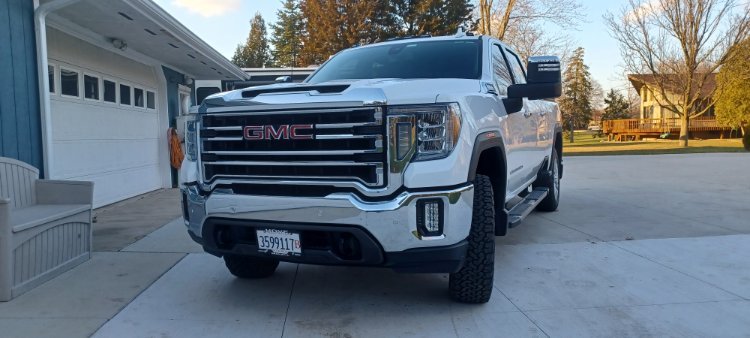
I own a 2020 GMC Sierra 2500HD gas 4x4. As with all GM trucks of this type, the chassis was dipped in wax to protect it from corrosion, however over time, some of this wax peels away ( or is chipped away), then surface rust appears. Left unchecked, the surface rust takes over, and the next thing you know, you're looking purchasing a new truck. Two questions: 1. What methods are used to clean and stop the surface rust? 2. What products are used to recoat the chassis following the removal and remission of surface rust? Is there a compatible wax undercoating available from Bodyshop supply houses, or do we simply use off the shelf spray can undercoating (will it stick to the wax)?
-
Forum Statistics
250.5k
Total Topics2.7m
Total Posts -
Member Statistics
342,986
Total Members8,960
Most Online
-
Who's Online 5 Members, 0 Anonymous, 547 Guests (See full list)