


Joe97281
-
Posts
29 -
Joined
-
Last visited
Joe97281's Achievements

Enthusiast (2/11)
13
Reputation
-
Stumped! Single clunk/pop when turning slow
Joe97281 replied to 22 6.6gasser's topic in 2020-2026 Silverado HD & Sierra HD
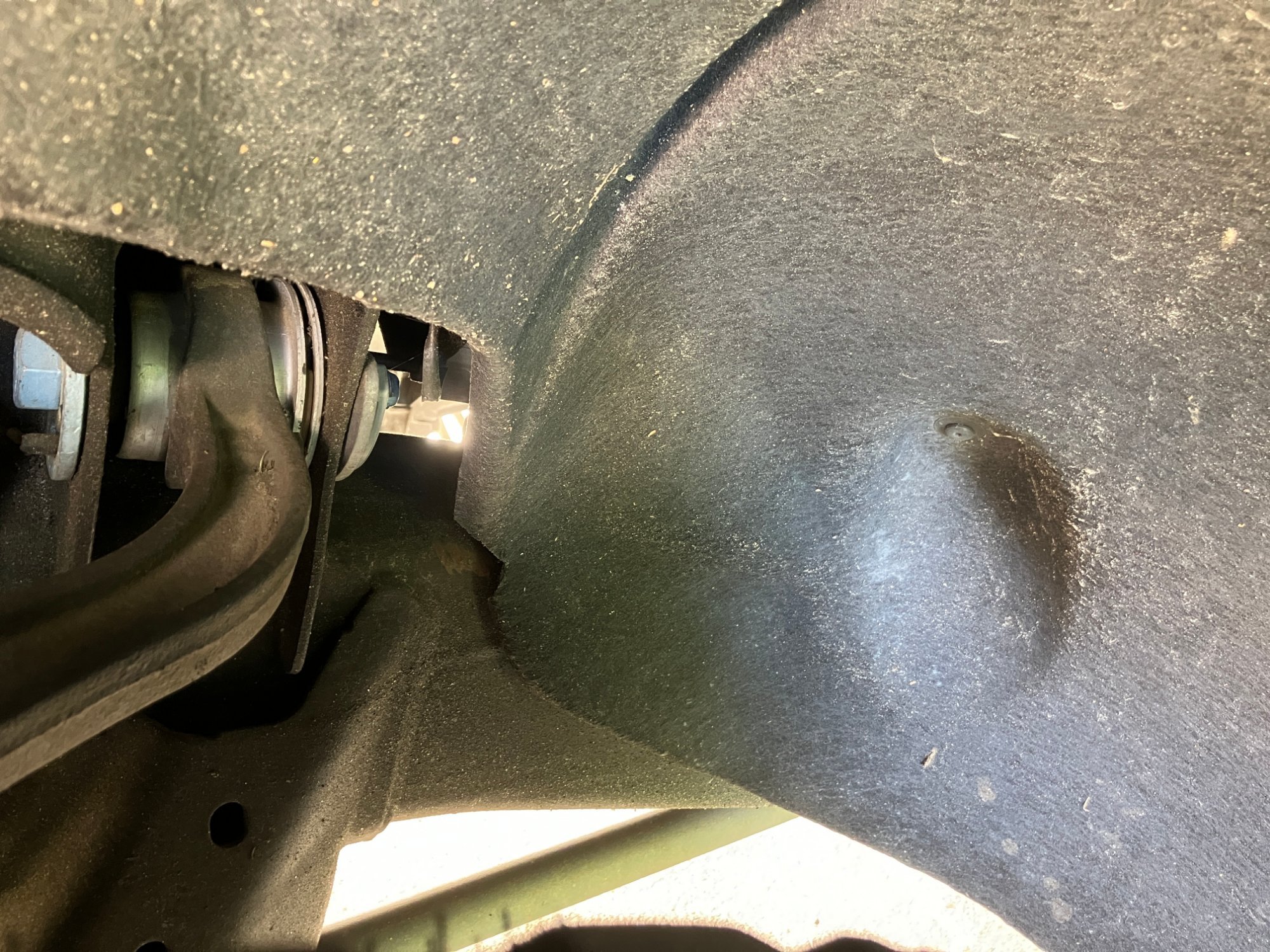
Check the inner fender liner. I had single loud "clunk" for 40K miles. Always happens when turning left. Dealer couldn't find anything. I found a spot where the fender liner was rubbing and cut out a small section. It wasn't rubbing all the time, but had an obvious contact spot in the frame grease. Noise is gone now. I was convinced it was the suspension or steering because of how loud it was.
-
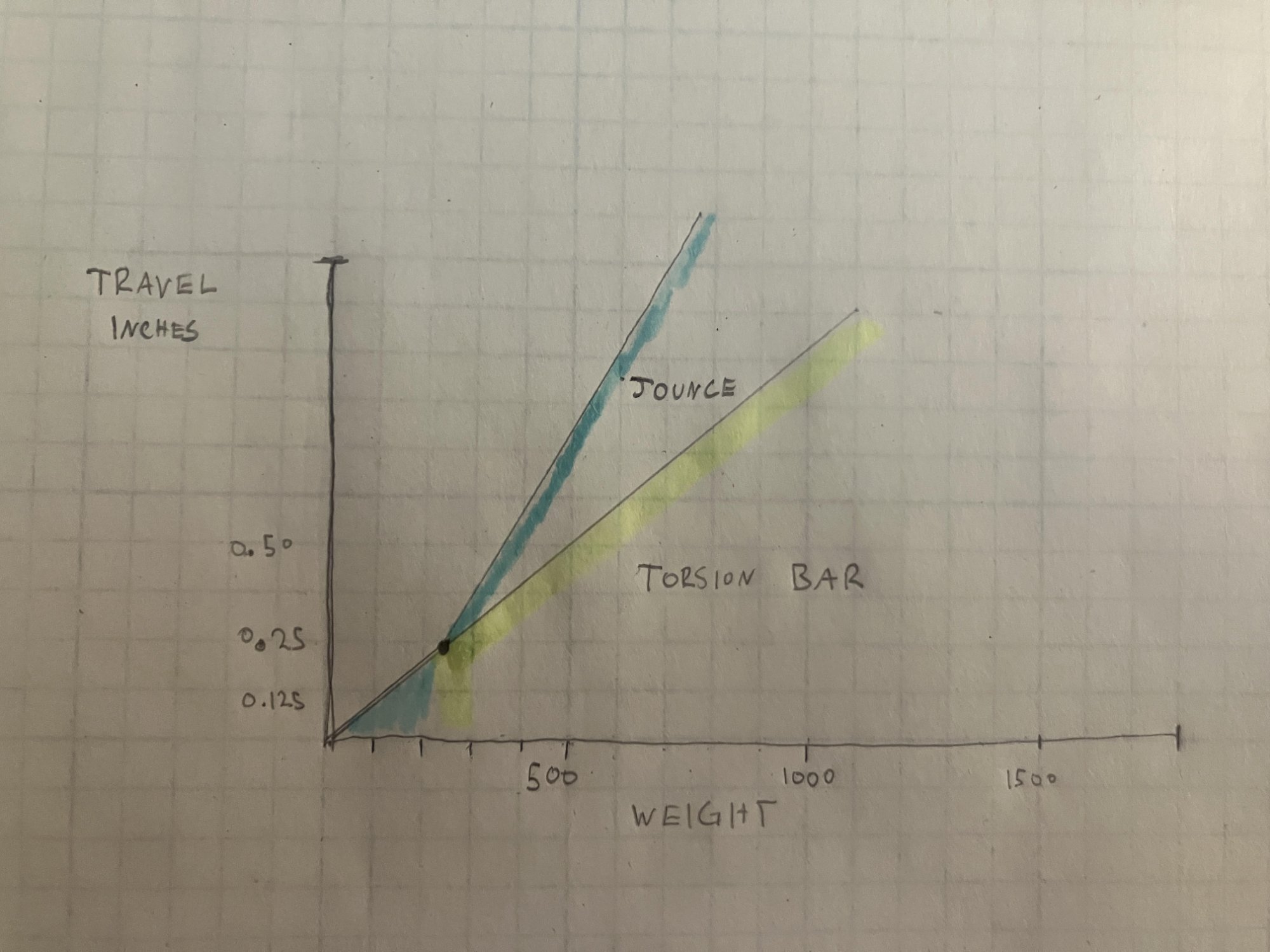
I have been meaning to graph the contribution torsion bar vs jounce bumpers to draw conclusions about ride stiffness. I was too cheap to buy a a line pot for a data acquisition unit, so I never got anywhere. It would be very easy to do for someone with access to basic mechanical instruments at a college, tech school, or employer. The question to answer: What is the spring rate of the jounce bumper? With that info you can make decisions about modifying it to get a lower overall effective spring rate. Maybe drilling a hole down the center of the bumper solves all problems and no one needs new torsion bars. Pic attached demonstrates the concept of overall spring rate. At some distance of suspension travel, the jounce bumpers make contact with the control arms and the overall spring rate of the suspension is increased. This is the blue shaded portion of the graph. If anyone knows spring rates of the torsion bars or equivalent conversions as if it was a coil spring, that would help as well. Also, I have always understood the spring rate of torsion bars to be linear, therefore cranking the keys does not change ride quality, all it does is lift the suspension. This is a common misconception from people with cranked keys because the upper control arms kit the service stops on down travel, making for a crap ride. The concept of "preload" for linear coil springs and torsion bars resulting in a rougher ride has no merit. This is not true for a progressive rate coil spring. Fingers crossed someone here is a physics teacher and measures and generates a graph accounting for the torsion bar, and 2 jounce bumpers corrected for motion ration.
-
$1k for a shock spacer. Cognito product description seems to have been written by a simpleton. “Torsion key clocking” doesn’t accurately describe the ZRX front lift. Also, they admit the ugly control arms are not needed. Recommend you jack the front of the truck to measure suspension travel. The 2 inch droop claim seems low.
-
The official chevrolet and gmc parts websites are having a 35% off sale right now. I got both zrx knuckles shipped to the dealer (free shipping this way) for $225. Probably a good time to get all the conversion parts if you have been on the fence about it. The big discount parts centers might have better prices, but shipping on the heavy items kills the deal.
-
Mine squeals on cold startup if i press the brake too hard. If anyone has a cold start noise, but not while driving, try less pressure on the pedal.
-
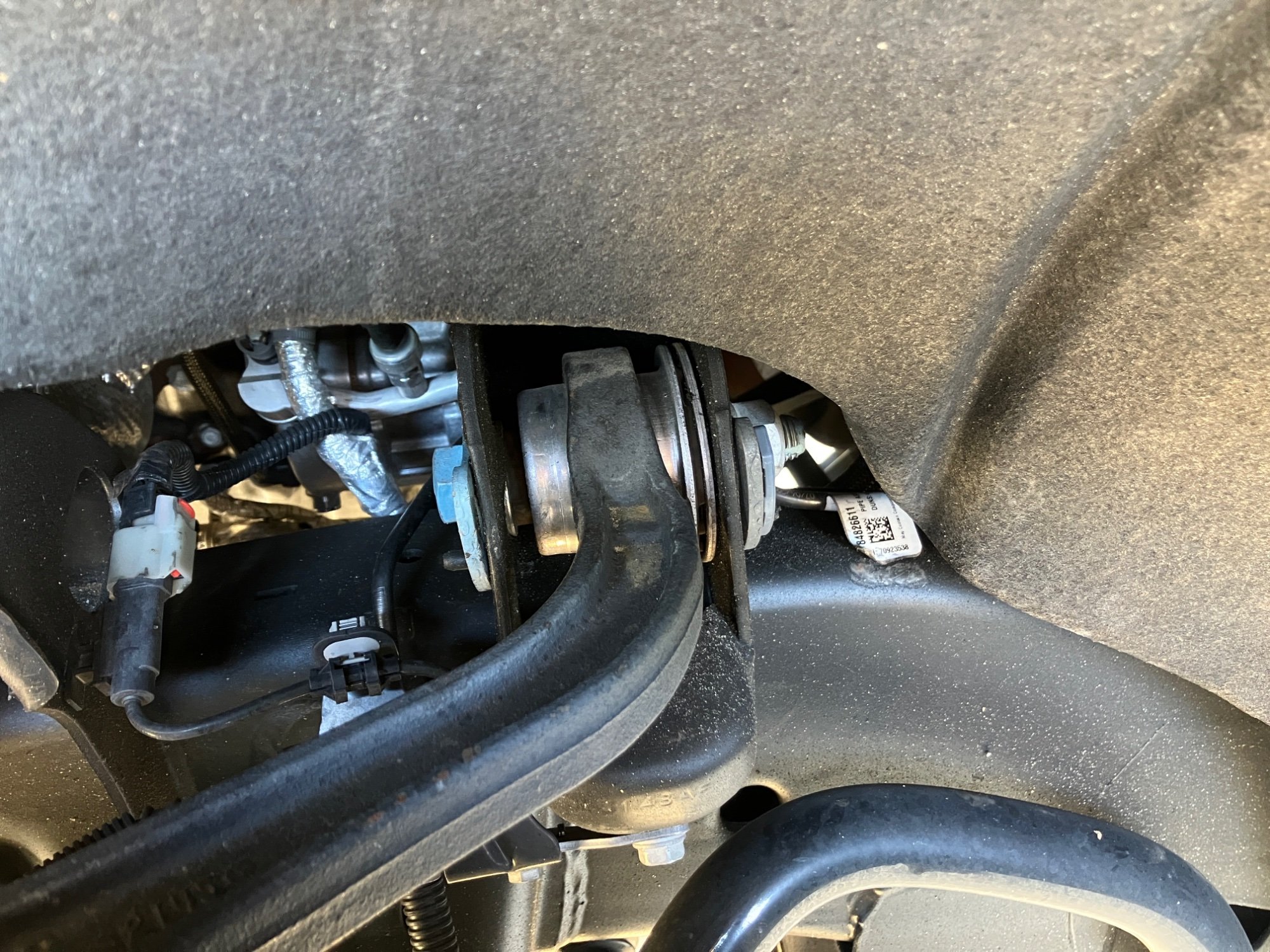
I think your brake lines and sensors are fine unless you want to fit the dssv shock. The extra size of it causes interference with the sensor wires and brake line bracket. I am hoping my 2022 gets crushed by a tree so i can start fresh with a 2024 WT. Brake pipe change on pass side of 2023 and older for DSSV to fit looks like too much work. I might be able to snake it through from the pass side wheel well. Transfer case skid fits great. Had to drill new holes. Crossmember is very thick. You are going to struggle with normal drill bits.
-
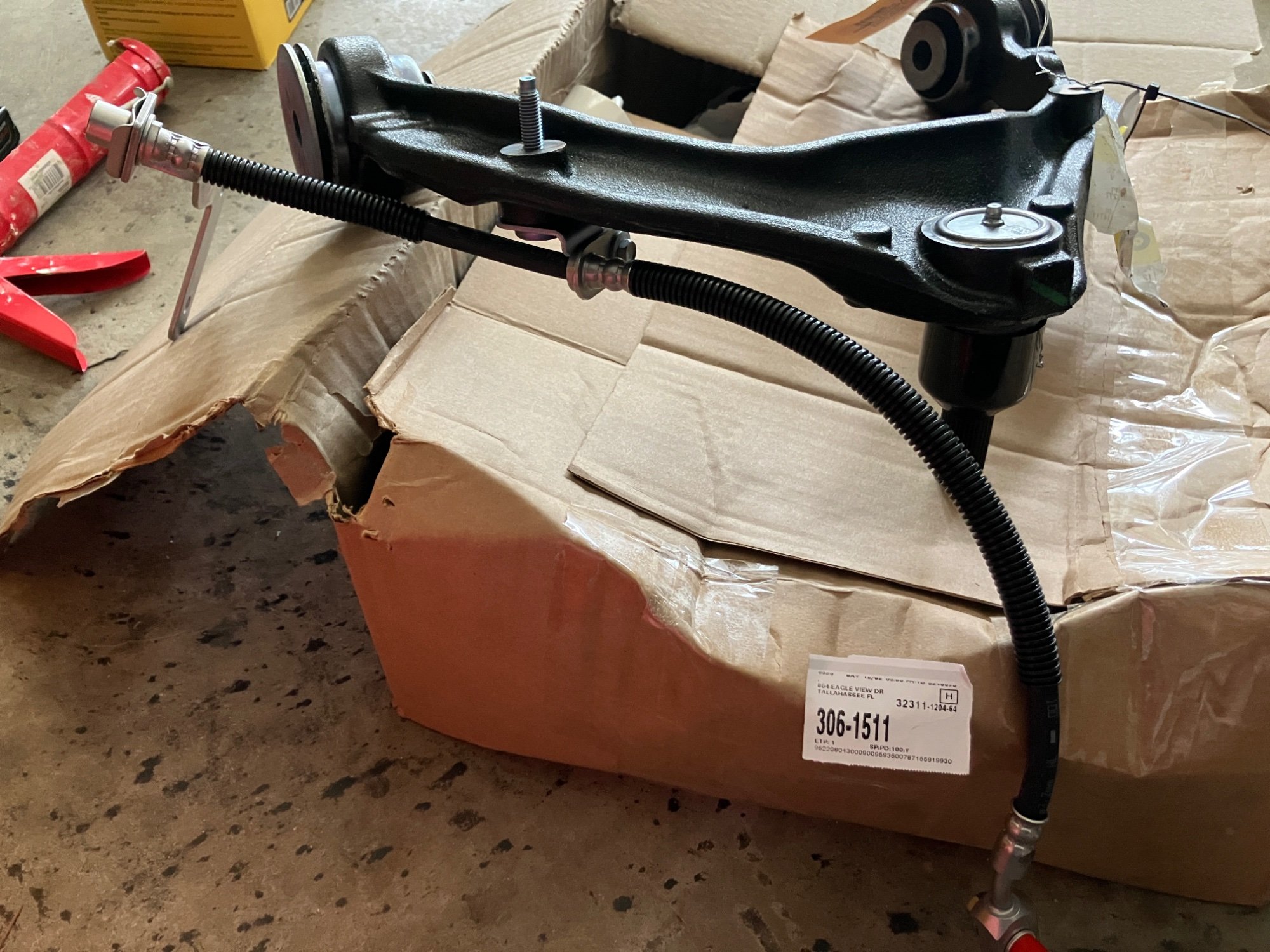
Brake hoses and speed sensors arrived, and appear to be correct with all brackets included. Passenger side will need a hole drilled into the frame for the mounting bracket. It might be impossible to change the RH hard line. It is probably the second step in truck assembly after coating the frame in crappy black wax. It runs from under the steering column to the radiator, across, and then down the other frame rail. Lots of crap on top of it. pics of MY 2024 brake junction box needed to see what happens with hardline and hose.
-
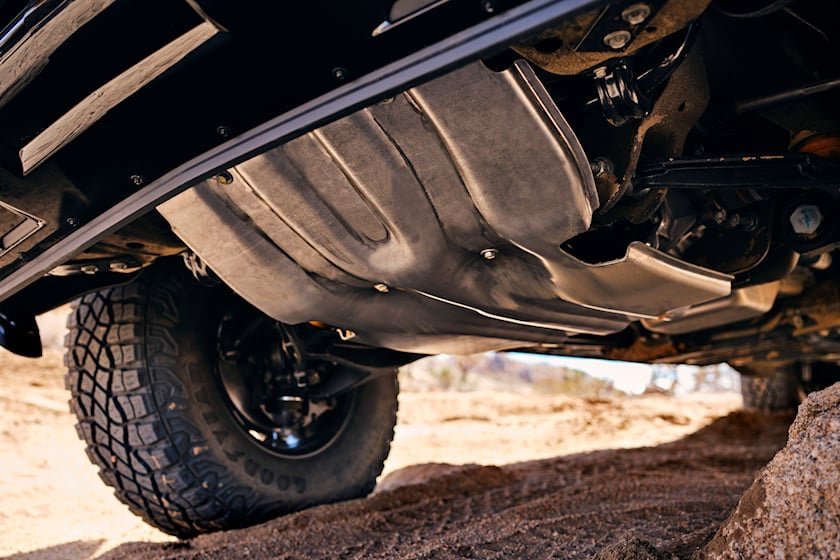
Front skid arrived. Takes 5 minutes to change with a 15mm socket and needle nose pliers. Pliers are needed to get the keeper off the two rear engine shield bolts. It sits lower than the stock steel piece (to allow for diff drop). Oversize shipping made it the same price online and shipped as ordering to local dealer.
-
-
I think the parts catalog is wrong. I know it says i already have that brake line. But what i really have is 84826611. I cannot find that part number anywhere. i think 2024 has hardlines that connect towards that back of the vehicle, 2023 and older have lines that connect by the front pivot point of the control arm.
-
And they delivered half a pint of beer! Have you looked to see where your brake line connections are? My pass side intermediate line has a part number on it that doesnt exist on google, and all parts websites claim I should have the brake lines that connect behind the control arm. ( i dont) Maybe my truck is a Frankenstein due to COVID shortages.
-
The bends on 84751583 look like it places the connection behind the control arm. https://parts.gmparts.com/product/gm-genuine-parts-front-passenger-side-forward-brake-pipe-84751583?body=Crew Cab Pickup&bodyId=22&bodyNumDoors=5&bodyNumDoorsId=5&categoryId=3074457345616983764&drive=4WD&driveId=8&engine=6.6L V8 GAS&engineId=17733&make=Chevrolet&makeId=47&model=Silverado 2500 HD&modelId=494&trim=ZR2&trimId=528&wheel=Standard Box&wheelId=349&year=2024&bac=114792%2C323092%2C288285%2C318147%2C112603%2C278292%2C202223%2C313643%2C172834%2C278294%2C116427%2C112629%2C117865
-
I think this is the *79,
-
85637479 Should be an aluminum one piece that replaces the stock plastic splash shield and engine skid. (Zr2 and at4x). I ordered one on 12/15 but am still waiting on shipping confirmation. Alot of the other stuff is bison specific and you need the $5k front bumper to tie it all together. drop brackets arrives. The distance between corresponding mounting surfaces is ~95mm. I have nothing to compare it to, but maybe someone else does.
-
@BuckWallace, duck down and look at the brake line routing on your 2024. If the connection is behind the upper control arms (toward the rear of the vehicle) than you should have less problems. It might be possible to add dssv to the front and leave the brake lines alone, but the clearance for the lines and associated bracket is tight. will post pics of the brake lines and speed sensors when they come in.





-
Forum Statistics
250.6k
Total Topics2.7m
Total Posts -
Member Statistics
343,003
Total Members8,960
Most Online
-
Who's Online 11 Members, 1 Anonymous, 1,296 Guests (See full list)