

CMNTMXR81
-
Posts
3,061 -
Joined
-
Last visited
Content Type
Profiles
Forums
Gallery
Events
Articles
RPO
Store
Blogs
Everything posted by CMNTMXR81
-
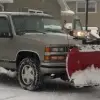 I forgot I posted this here... So I did the mounts (as posted above), then got around to the truck side wiring. Then mounted the plow. Was HIGHLY dissappointed... See any possible reason why... Yea, , that was MAYBE an inch of clearance between the plow and the ground. I was NOT happy. The whole point of getting a 3/4 ton truck was for this plow. It is/was supposed to support it a lot better than my 1/2 ton. Anyway, asked around, and found out that my plow (I bought it used), was "configured" for a ford setup. They sit up much higher in front than the GM IFS trucks. So their configuration is to sit them lower. So I went about fixing this "configuration" to a GM setup. To do this, you move the pivot plates on the back of the plow's "A" frame. See the circled plates. The flat edge of the plate, is for a ford setup; GM needs the beveled side up; As one can imagine, a plow that dates back to the early - mid 2000's, and having been used and subjected to snow, ice, water, muck, things are rusted! Well make no doubt, the bolts for this pivot plate did NOT want to come off. Even my 400lb/ft impact couldn't break them loose. I ended up with a 5ft breaker bar, and snapped a couple off completely. The remaining 5, no dice. So I had to breakout our the sawzall. Got everything done, moved around, reassembled, and statically, sitting on my rollers, it sat 3" higher. Note, the beveled edges facing up... Then this past weekend, I actually mounted it to the truck... Success... 5.5" of ground clearance. And this amount is WITHOUT the 700 pounds of ballast I put in back to counter the plow, the front Buyers bump stops I had not yet put in, and the smaller tires I currently have on (I plan about another half inch to inch of clearance with the tires I want). So I am happy!
-
New Trimmer Shopping- Echo vs Shindaiwa
CMNTMXR81 replied to Blue2500CC's topic in Garage, Shop & Tools
I was gonna say, Echo or Stihl, but this is an old thread... I have two Echo's, both are workhorses. -
Snowplow Suggestions for first time owner
CMNTMXR81 replied to Lithoman's topic in Garage, Shop & Tools
If you're just doing your own driveway and/or very minimal snow removal, you don't need to upgrade to a 2500 truck or get a big plow. Heck, I've been running a big 8ft Western on my half-ton Burb for years. I digress though, any of the simple sno-dogg, Western HTS, or smaller lightweight plows will work. Two other things I generally offer advice on... 1) I would also say that you get something that leaves as little truck side plow mount/hardware as possible because if you're using it so minimally, you don't need a big mount hanging down all year. Western's Ultramount setup is probably one of the best in this regard, but the others have come a long way also. Stay away from the ones with fancy motorized attachment methods. In the "suck" of winter, that stuff will gunk up/freeze up. Good old manual attachment methods work best and quickest. 2) Any plow you buy, I say go with the most common plow in the area. Why? Parts. Inevitably they will need repair/service and will of course break at the worst time, so you want a plow that has a ready amount of parts available. Generally (at least here in the midwest), this again is where Western cleans house with the other brands even though Douglas Dynamics owns them and Fisher and many of the hardware pieces are interchangeable. -
I'm sure this has been asked before. I went through some 20 pages looking but didn't see anything. 2003, 2500/2500HD 16x6.5, 8-165.1 bolt patterned wheel... What is the largest size you can go? Originals are 245/75/16. Previous owner of my truck put 265/75/16's on. I could've swore, back in the day on my '02 2500HD with these same wheels, I put 285/75/16. Even looking through my maintenance records, It says that size tire... So I wanted to do that same size again and now all the tire places are wigging out because of the goofy 6.5" rim and the bead difference on it vs. a non half size wheel. I really wanted to go with that size. It gives the extra width and another half inch or so of lift to help with clearance on my plow. So to get similiar lift, I now have to get tires AND bigger wheels.
-
There is a double edged sword to putting bigger keys in. Yes, I can get additional front lift, but... 1) I have it lifted already to where I feel it's pretty level. Crank them higher, and then the front sits very high, making it look like the back is sagging just to support a plow on 3/4 ton truck that shouldn't have this issue handing it. 2) lifting the front to much, you start wearing your CV joints out from the angle they get put in to.
-
Oh, and I should mention that the torsion bars are up pretty much all the way. If I were to go this route, I'd need new keys.
-
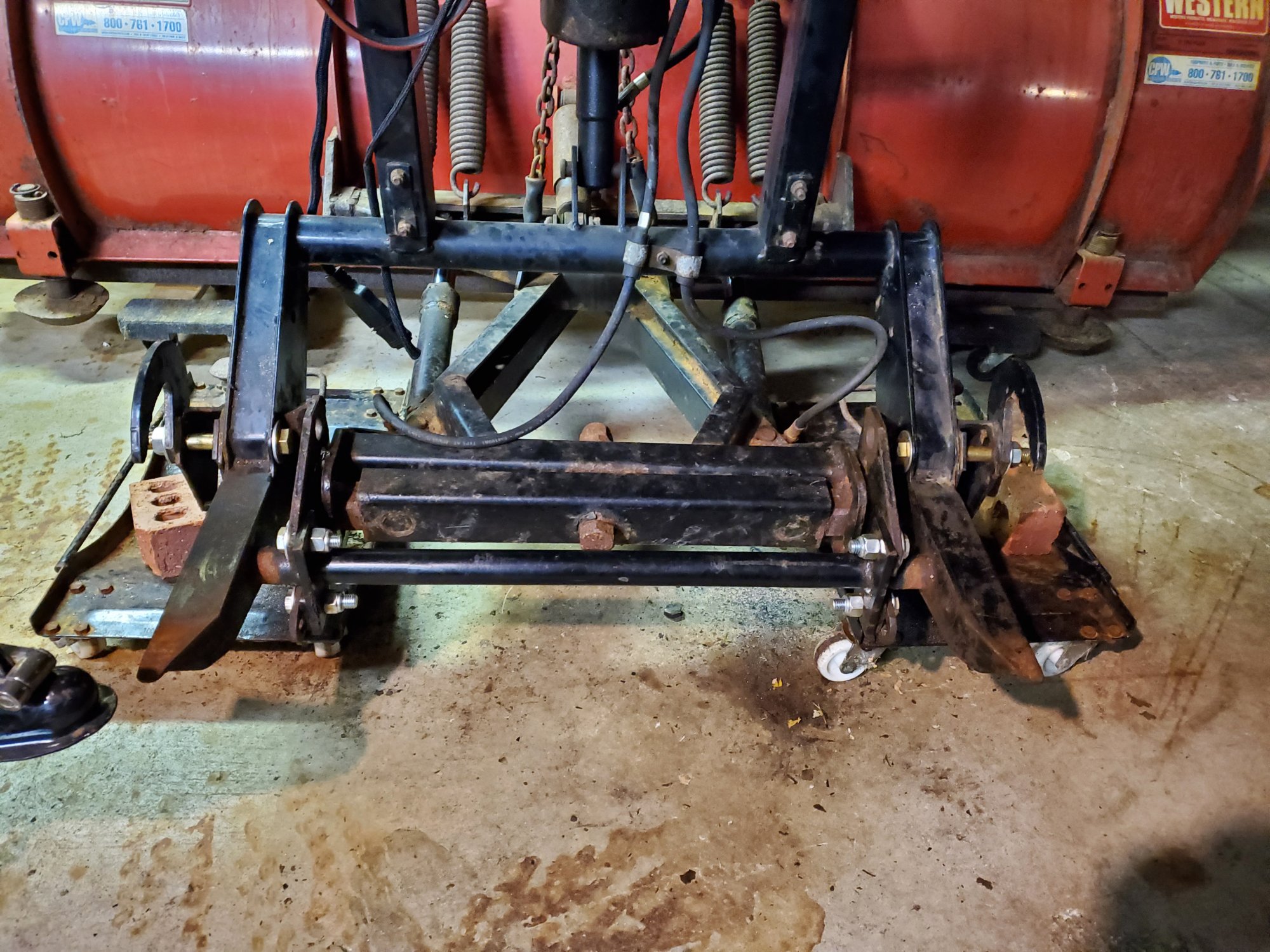
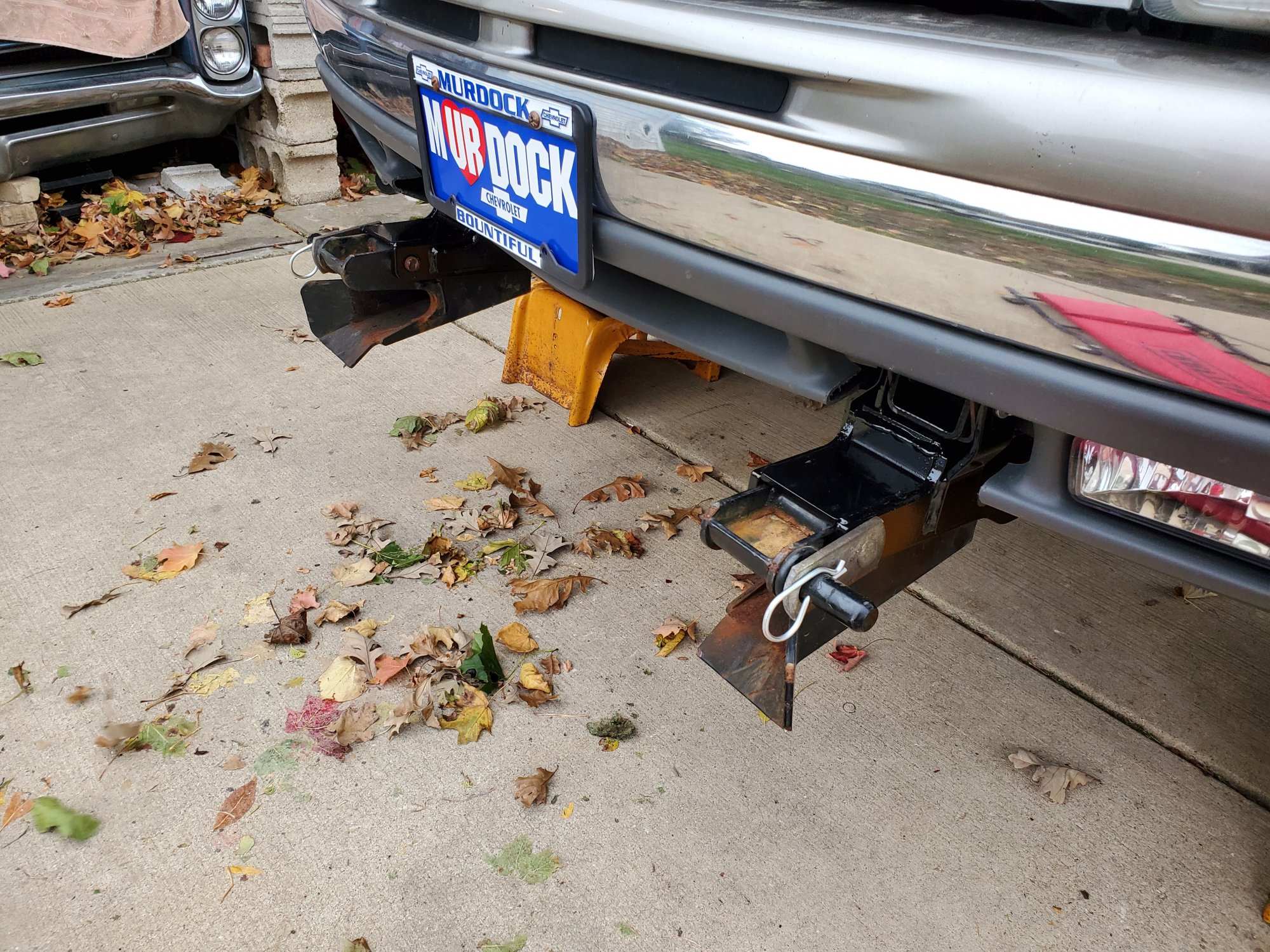
So a little back story, I've been using my 1/2 ton GMT400 Suburban to plow for several years. It is a Western Pro 8ft with Ultra-Mount setup. The plow is a little heavier than that truck should be handling, so it was one of the reasons (among others) that I specifically got a 3/4 ton 800 with the Big Block. So yesterday I put my Ultra-Mount truck side mount on the 2003. Put the receivers on, and thought... WTF... This looks like it sits lower. Sure as crap, when I put the two trucks nose to nose, and measured, to the top of the mount on the GMT400, it was 17" off the ground. I did the same on the 800 and it was 15" off the ground. Not to mention, the mounts on the 800 sit much further out than my 400. So I'm a little frustrated. The whole impetus here was to get a 2500, get a little more ground clearance for the delicate Ultra-Mount parts as well as the angling ram parts, and here I am sitting 2" lower before even mounting the plow. Are others with 800's seeing the same? Any solutions? I already have one size larger tires on it, and will be buying a new set of tires another size bigger here in the near future, but... See how far they stick out... By way of comparison, here is my 400;
-
New mower shopping- 21" self-propelled
CMNTMXR81 replied to 99silveradoz71's topic in Garage, Shop & Tools
I know this is older, but Snapper or Ariens. Snapper because of their Hi-Vac deck and Ninja blade. Nothing matches it. Not Honda or any other mower out there. It turns the grass into a fine powder almost in mulch mode. And much like the Ariens I'll talk about below, is pretty much all commercial grade steel. My oldest Snapper as of this summer is now 25 years old and will run circles around pretty much any mower you can buy today. Yea it burns a little oil and I have to manually choke it to start, but, it's 25 y/o. My newer Snapper is about 5 years old and the ONLY issues I have with it are the autochoke mechanism on the Briggs motor. I then have an Ariens. Not the newer Ariens, but the older LM21 series. Pretty much everything on it is made of steel or aluminum. You could drop it on a pile of rocks and it would turn them to gravel. It is truly a tank and weighs like 200 pounds. I then also have a Crapsman tractor. Crapsman tractors are made by Husqvarna, so they're decent too. -
Garage Flooring Ideas? Easy sand/dirt Cleanup?
CMNTMXR81 replied to SkiDooNick700's topic in Garage, Shop & Tools
I have the epoxy flooring. Several layers of it. The Rust-o-leum kit stinks BTW. It needed to be re-done every year it seemed and would pull up if the tires were warm/damp then sat overnight. I ended up going with the premade Behr stuff at Home Depot and haven't touched it in 10 years. It could be re-done just to freshen it up, but it's not due to damage. it's held up fine. Second, I have a carpet runner down for the path of the tires. Get one of those sharks for the garage and you're set. Unless you're tracking in chunks when it's wet. Real only picture I have of it; -
GM is pretty standard with 3/4 for cars and 7/8's for trucks. I worked for Sears and sockets aren't the issue. All tools are cheap chinesium anymore, so...
-
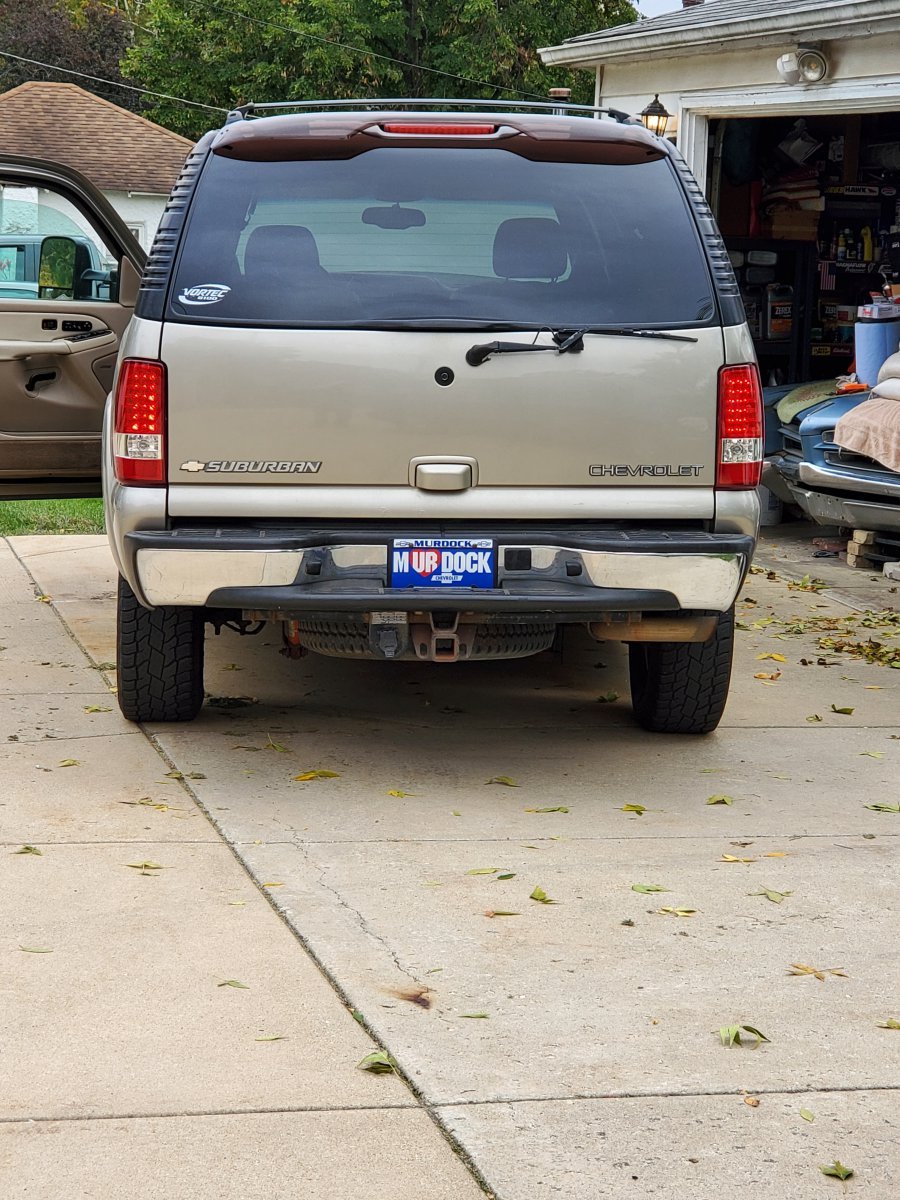
I'm back, back again, Shady's back tell a friend... So still have the '99, but picked up a 2003 Suburban 2500 LT, 8.1 (God I missed my BBC), 4.10's, etc, etc... has less than 100k on the clock, LT, etc, etc... Came from Utah. I wonder if the previous owner is on here?? After doing some things this weekend;
-
Also, having worked in a GM service department, one of the best things to do is to keep your cool and keep your composure. Document, document, document also. Being able to listen to what they're (the service writer, manager, or even technician), telling you, will also maintain an open line of discussion for you with them as to possibly resolving the problem. The minute you fly off the hook, start telling us what a P.O.S. the vehicle is, and how much you spent on it, and that you'll never buy another GM vehicle or buy from us again, or whatever tyrade you go into, we shut our ears off and we go into defense mode. That is typical human nature. Once that happens, good luck! Calling the number posted above, usually will only help if GM is gauranteeing that they will foot the bill for whatever repair is in dispute. A dealer is an independent business with an agreement to sell and service GM's products. As with any independent business, if they don't want to serve you, that is their right. Just as much as it is for you to never patronize them again. If you're being denied warranty coverage, there is probably a reason why. Not just because you're being singled out! Chances are, they (the dealership service department), determined that the failure wasn't due to a fault of the part and or workmanship of the product, based on GM's requirements. To make a long story short, a dealership foots all the costs of warranty (based on GM's requirements for coverage), until GM pays them back. Sometimes after an audit (if there are questionable items or a history of questionable items). The dealership service department can also "goodwill warranty" stuff through GM too. Say a vehicle is just out of the mileage or a month or two out of warranty coverage and a power windoew regulator fails. 9 times out of 10, they'll do it out of good faith and usually GM steps up and backs them. Point being, whether it's right or wrong, that's how they operate in reality. You attract more flies with honey than you do with vinegar. I've had customers come in, say "hey, I know the car is at 40k (back when they were covered under 3yr/36k warranty), and this failed on me! I really don't think I should be made to pay for it!" Honesty and niceness would've gotten you covered (i'd have "goodwilled" it). But you come in spewing venom, and I go "lalalalalalalalla"
-
Well, I was never really gone, but I'm back in another GM truck. Back in January, I picked up a sunset gold metallic, pretty low mileage, California lived, 1999 Suburban LT K1500, for real cheap. Got it as my winter beater, family hauler, family trip vehicle. As can be figured, being 14 years old, 123k, it had/has some mechanical as well as cosmetic things that I'm working on, most I've handled (still have some suspension/steering things I'll do come spring), so now it's onto little things. One I'm looking into is LED taillights, since the stock ones are cracked in a couple places and hazed over (beyond restoration, that was one of the first things I tried). I love the vertical column LED's on my STS, so I figured, while I'm spending, why not look into them. The two most common brands I'm finding are IPCW and Spec-D. Anyone have familiarity with them? First things first, I'd like to keep them in red lenses and as close to OEM looking as possible. None of that smoked out or altezza looking stuff. and second, as I mentioned, I like the vertical columns of light vs. the circles (again, like those on my STS), and these two seem to fit that. I also see a few other brands which are either IPCW and Spec-D's that are rebranded. Pictures of them lit would be nice if anyone has any. Thanks.




-
Forum Statistics
250.5k
Total Topics2.7m
Total Posts -
Member Statistics
342,963
Total Members8,960
Most Online
-
Who's Online 7 Members, 2 Anonymous, 838 Guests (See full list)