
Leaderboard


.thumb.JPG.2c573de60d3a3a4407c7d92298db46dd.JPG)

Popular Content
Showing content with the highest reputation on 04/25/2026 in all areas
-
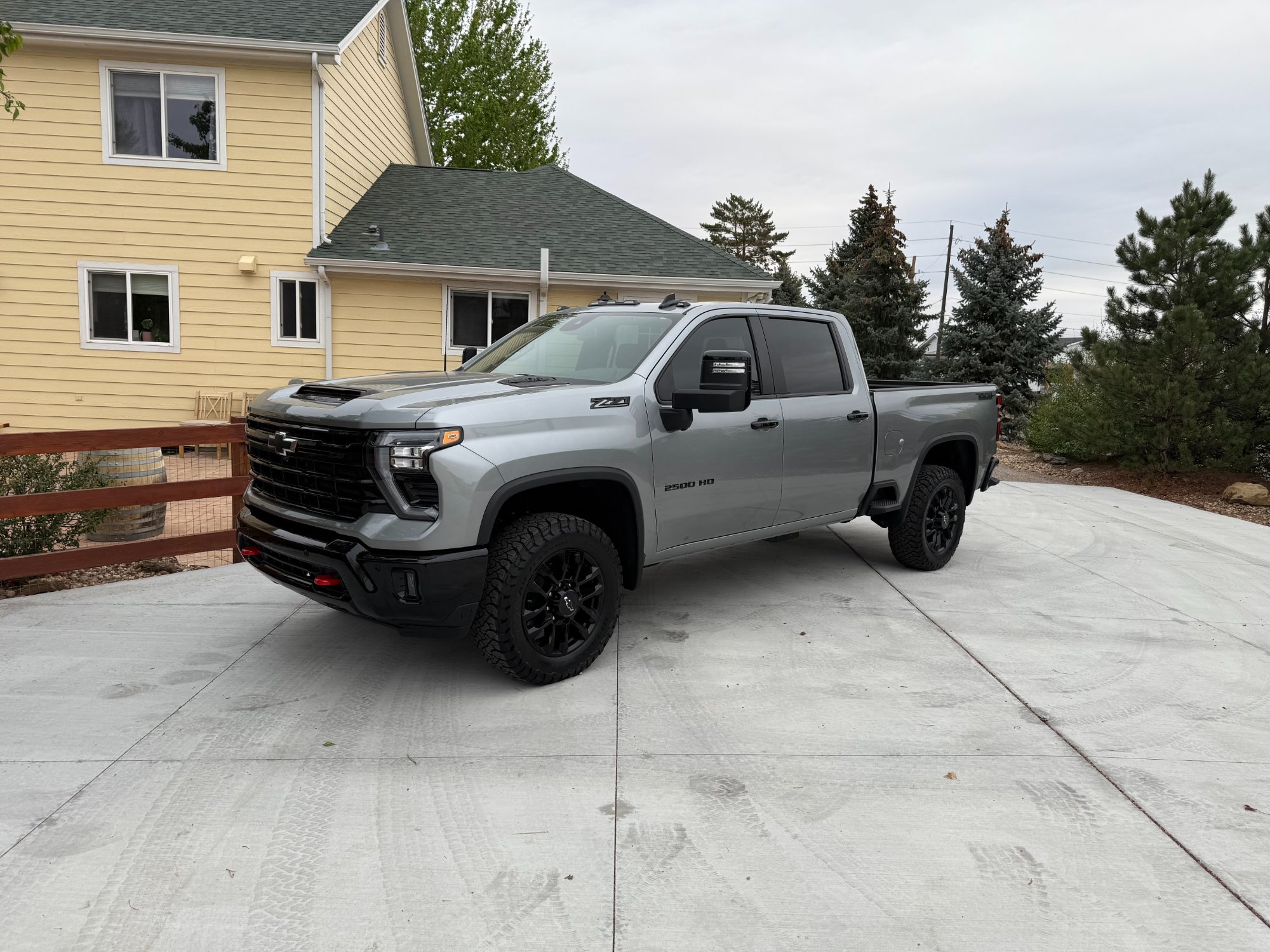
new member here - just traded my 2018 Colorado long bed LT/4WD V6, lifted 2" w/ ZR2 wheels for it's big brother - 2026 2500HD LT / 4x4 / trail boss 6.6L in the same sterling gray color. I tow a 5-6Klb car trailer and moved to CO last year from CA and now have a farm property, so plenty of room and more hauling duties as well plus the mountains / elevation around here really kills the already underpowered V6 in the Colorado. I don't drive a lot, so the Duramax wasn't really necessary, and gas around here is $1 cheaper than diesel as well. This truck has well more than double the towing capacity I need anyway - I was just looking for some margin and to cover for the mountains which go up to 10K feet in some places.
 3 points
 -
Oil temperature is not as closely related to water temperature as you might think. Oil temp is indeed related to air temperature AND to load and rpm. Ya like measurement and science...here it is. Pepper in the winter runs about 175 F oil and has a 180 F water thermostat. In July she runs roughly 200-210 F on oil. Both temperatures are running 55 mph. Run 55 mph in fourth gear and it will run up past 250 F. Not uncommon pulling a trailer loaded at max GVW and this wasn't. Drop 7 K lbs on that trailer and you can cook road kill. I don't recall how many times I've posted this chart but a bunch. This is high gear with changes only in road speed for three different water thermostats and three different base oil packages for the center water thermostat. All within 5 degrees air temperature over the exact same roads in winds under 10 mph. Bottom line is water temperature does not regulate oil temperature to within a few degrees of water temperature. That nearly 18 degree F oil temp swing from cold to hot cuts oil life in half. The Arrhenius rate rule states that for every 10°C (18°F) increase in oil temperature above 60°C (140°F), the oxidation rate roughly doubles The bold in the quote above is the oxidation onset temperature of mineral oil. Synthetics, by type, are higher to start the process but the 'rate' is the rate. Double per 18 F (10C).
2 points
-
When towing a tall trailer on the interstate, I get 8-10mpg; for a stock range of ~184 miles max. I find this unacceptable, especially driving across the great plains at night. Looking for gas every 130 miles isn't a good feeling (or probably less, where is the next town with an all-night station that isn't 20 miles off the highway?) . I don't put many miles on my truck; but when I do, it is often the above scenario. Having double the range makes my travel less stressful: I buy gas when I need a break, not every gas station. It's not for everyone; but I love my 50 gallon tank!1 point
-
Agree with keep what you have - 100%. I just spent the last 10 years in Colorado's, last one for 8 years a 2018 long bed V6 / 8spd 4x4, lifted 2". Tow rating is 7000, payload is 1550 which isn't bad. I towed a 5-6Klb car trailer quite a lot including long distance trips over significant mountain ranges. The small truck did great for a small truck, but it did make for a more stressful drive every time. I used a wt. dist hitch always. My trailer tracks really well - it's a very nice trailer and open car trailers are reasonably aerodynamic which helps too. So it was adeqate. But I was always alone in the truck - if I had passengers and cargo it would have blown up the GVWR for sure - I was near the limit on everything. The biggest issue I had was power, and since I moved to CO last year it's a real problem in the mountains around here - the poor V6 is ripping along at 6Krpm trying to maintain 45mph up the steep grades on I70. And there isn't much margin there. So while it's workable and technically within the limits of the truck, it's not ideal. I have had larger trucks including 2500 suburbans so I have a good feeling for the difference. Never really owned a 1500, but had a Nissan Titan but that thing was a beast and closer to a 2500 in ratings. I just traded in the Colorado for a new 2500HD 6.6L. This thing is a serious truck - it will tow my rig with ease. And it does give me the opportunity to consider getting a travel trailer down the road. No reason for a 3500 in my case and my kids are grown so if we did get a travel trailer it would just be for 2 of us so don't have to go nuts there at all. Anyway - just went the other direction as what you are considering and so far I wouldn't look back on my move. 3 days a week 50miles RT I would just drive it - maybe it depends where you live but assuming gas prices get back to where they were or close - we get gas for $2.5 a gallon in CO so 150miles a week or aprox 7K miles a year considering vacation weeks, etc. doesn't seem like much of an issue to me. It's not my only vehicle in my case - I have two Camaros so if it were me I would drive the 2016 all summer and the truck all winter and no biggie. How bad is the mpg on these things anyway? I would think it can pull 17 on the highway? That's not terrible at $3 / gallon.1 point
-
The HMI also handles switching of the rear camera input/ output, so the fact that the backup camera works on demand generally rules out the HMI as well. If the HMI fails, you'll still have sound coming from the radio, but the infotainment will be blank or unresponsive. Typically, stations and volume can be controlled from the instrument cluster if that happens. The radio, amp, HMI, CD player, and instrument cluster are on their own dedicated communication bus known as the Media Oriented Systems Transport, or MOST bus. It is fairly easy to diagnose with the proper tooling. GDS2 and some aftermarket scan tools will outline which 'node' or module (of the aforementioned components) are not working properly and help to isolate the defective module or circuit portion. The dealer should have been able to find this out without too much effort.1 point
-
Ordered all the parts to build 8 injector pigtails to keep in the truck (common problem for the L5P) also Ordered all the stuff to build a 2WD low unlock harness. It makes it easier when you need the extra torque but also need to navigate tight spaces around your house. Also ordered the upper intermediate shaft for the steering shaft.1 point
-
Speed limit works off the navigation system. Which is...in the radio. Park assist. The alert tones are handled via the radio. The tone not working won't disable the system though. The only things that will disable the park sensors is things related to those like a bad sensor or multiple sensors, wiring, bad module, etc. Sounds to me like the radio is the issue. A failed or failing HMI most commonly would have the radio changing screen pages on its own, radio source switching on its own, etc. You'd have a working screen but it will have a mind of its own. But everything would work still as far as the radio and what it does.1 point
-
Replaced 2 backup sensors and removed thermostat in the thermal bypass valve for the transmission.1 point
-
Open highway Pepper gets about 25 mpg so one fuel stop between De Kalb Illinois and Denver. A forty gallon tank gets me there on zero. LOL. I stop for the day in Lincoln and stop several times a day. Often at a station. So...... My butt gives out before the tank does.1 point
-
100% Keep your 3500. I agree with all others.1 point
-
Yeah I think driving it with a big lead foot is never good long term. I get my excitement from my motorcycle. I drive the truck very relaxed and slow because it is slow even when trying to go fast so there’s no point.1 point
-
What do you mean by not considering the cost of the truck and how does that alter the overall financial picture? Unless the truck is already paid for or has an unusually low payment the variables still don't swing in favor of a second car. Quantifying how much longer it would last is even murkier, you are saving miles off it, but not time, or depending on how its kept when not in use, weathering. Regarding the lower maintenance costs, again, it has to be next to nothing - in my math above 150 a year or less. You have to WANT a second car for reasons that COST more money. Making the truck last longer is a reason, but unless the car or truck are already owned or free, it won't save money. In the case of the OP the trucks considered are likely over 50K when does the additional cost of the second vehicle that presumably would have to be purchased too "lower the overall cost" of the truck begin to save money? My math above looks like years if not decades. I'm not arguing your opinion, just trying to understand how you make the financial part work.1 point
-
Yes, the specific Elevation I checked has a payload of 1,631, which I was pleasantly surprised with. My 2010 Tundra's payload was about 1,300, so the Elevation would definitely have given us some more capacity. Overall, I can totally see myself regretting getting rid of the L8T. It's so relatively simple compared to all the engines in the modern half tons and I'm sure it'll give me much more peace of mind in the future. I did run numbers on the initial cost + insurance - fuel savings and it would take me a fair amount of time to break even on getting a cheap (even sub $5k) commuter car. There's also the consideration of added mileage and wear-and-tear on the truck if I'm commuting in it, but I'm not super worried about that.1 point
-
Latest fill was with 725 miles on the tank at 15.8 mpg indicated. Took 45.4 gallons (US) and range indicated at 40 miles (~80 actual). Zero issues.1 point
-
Weekend update on the install: Everything seems to doing fine! I will likely fill the tank to the brim later this week; I added another 10 gallons without drama. It's weird watching the range monitor move at 1/2 speed. That is the only change that I notice - no wind noise, the tank fills at the same rate (no venting issues)without shutting off the pump handle, the tank is tucked up in the stock location - nobody will ever notice it. The owner of Long Range America called me to talk about my experience. They are working on more weekend warrior friendly instructions, a kit with bracket for installs in the long box, and addressing the BSP tap issue. He seemed quite impressed that I was able to get the tank in working on the floor. I appreciate that this is a company that seems very customer oriented and wants to make purchasing and post purchase experiences as great as they can. All my communication with them has been top notch; prepurchase questions answered quickly, shipping conversation, and post installation. Feel free to reach out in this thread if you have questions or concerns.1 point
-
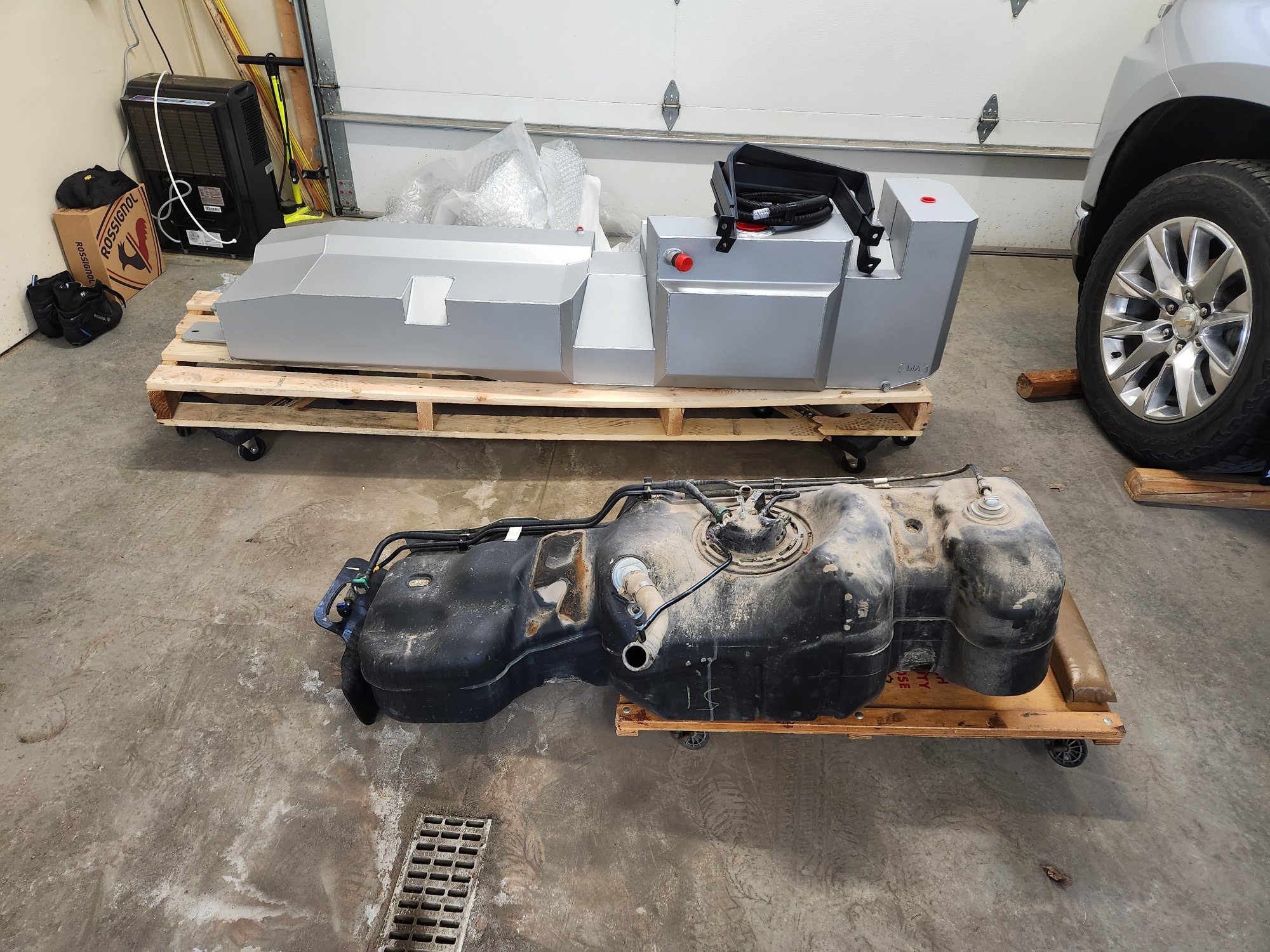
Size comparison: The website keeps flipping this upside down, I assure you I did this install in the traditional orientation :
1 point
-
Posting an install update: About Me: Mid-50’s desk jockey. Above average mechanical skill, mostly on motorcycles so I’m used to standing up and relatively easy access to things. I made the swap on the floor in my heated garage. Rear of truck on jack stands. Me on a creeper on my back - whole job done solo. About the truck: 2022 Silverado 6.2 4WD Crew, 6.5’ box (the larger one) - this makes a difference. The tank arrived very well wrapped on a long and skinny pallet. Save yourself a few bucks and have it delivered to a friend's business address. It was light enough to load manually with 2 people. My wife helped me get it out of the pickup when I brought it home. It is a very high quality tank. The welds are great and all the mounts are clearly laid out with precision. The hardware kit is fairly complete (with a few exceptions noted below). The install: Removal of the factory tank was relatively painless. Get familiar with all the ways that the fuel and vent lines disconnect - there are at least three different varieties used and you can’t always see them (Thanks GM). Relocating the hardware to the new tank was also relatively painless. A couple of trouble spots for me: I didn’t have a ¼ BSP Tap for the pressure control valve plug. BSP isn’t something you get at the hardware store in the US. Order one in advance or I used a ¼” NPT plug and tap and it seems to work fine. Swapping the float arm was painless, except it would be easy to break the plastic mount if you aren’t careful. Be ready to replace the sender if you break it. I did have a lot of trouble peening the end to hold the float/washer on the end - It isn’t soft wire and I didn’t have the tools to do it. A spot of JB weld saved the day. Also (not trouble): The sender gasket sent with the kit is thinner than the factory gasket. Spend the $12 to get a new one from your FLAPS. You don’t want to go back in there later. Have some Red Rubber Grease, dielectric grease, blue Loctite, and thread sealant/Teflon handy. Installing the tank: It’s a VERY tight fit and will require rotation in addition to elevating it to get it into position. The barb on the right would probably be easier left off until the tank is in place and would buy you some room (it’s that tight), it will be easy to put in and connect after the tank is in. Watch the fill to ensure it clears the frame or it will get damaged. I used a motorcycle center lift on wheels and it worked very well for the job, stopping ½ way (dropped on jack stands) to rotate and re adjust the balance point. Re-connecting the three electrical plugs was painless - put dielectric grease on all plugs to help them glide together and keep out the dust. There are six hose connections to make as the tank goes up - most aren’t too bad. My fuel line interferes with the tank slightly - I have a pad in there now and I will keep an eye on it for wear. I may have to lower the tank and adjust it slightly later (may be related to the longer box?). I put 5 gallons in today at home and added another 5 at the gas station - the range now shows ~60 miles, which is about ½ what it really might be. I have not filled the tank yet - I need to get some miles on before I feel confident enough with my install to put that much in; I do not want to drop the tank full or have to find a place for 50 gallons of gas on short notice. The directions are made for folks who do this kind of work and are familiar with the venting on a modern gas tank. I spent some time scratching my head to make sense on a few occasions - better to take your time and get it right the first time. They say it’s a 6 hour job - I’m guessing I spent ~12 hours on the job in total over three days. I think I could do it in about 7-8 hours the second time. A vehicle lift would have saved me some time, body aches and make it easier to access the belly. Additional notes for folks with the 6.5’ box (ignore if you have the shorter box the tank is “made” for): No need to relocate the separator canister - it will fit in the stock position (I did it anyway as I didn’t know). Save yourself the time and trouble. You will need a longer ⅝” vent hose to connect to the canister. I used ~7’ - know this before you put the tank in place! buy 8' and cut it at the cannister end once the tank is installed. I used 2 18”x2"x3/8” steel plates and M10 grade 8 bolts to make the front bracket. I think it’s plenty sturdy. Otherwise it’s essentially the same underneath. I will post updates as I use the truck. I will add a few photos too. I'm not sure why my paste is bold. Sorry.1 point





This leaderboard is set to New York/GMT-04:00