


Atlas
-
Posts
1,091 -
Joined
-
Days Won
45
Content Type
Profiles
Forums
Gallery
Events
Articles
RPO
Store
Blogs
Everything posted by Atlas
-
So I watched the segment on diesel (starting at ~1hr 30 minutes in) until the end. Felt the need to comment. Key points for diesels: Higher viscosity leads to lower wear, 50 weight shows an improvement over 20 weight Cleaner oil (less soot) leads to lower wear (add a bypass filter, and higher quality primary oil filtration). Oil additives tested show no significant benefit or harm, but harm may exist for things like wet belts as additives are not subject to API compatibility tests. They did not discuss fuel additive significance except in relevance to the Bosch CP4 pump which is stated to require fuel with higher lubricity than standard ultra-low sulfur diesel sold in the US. My editorial on the data they presented: It lacks meaningful context. I'm left wanting more data, which these experts never seem to provide. Theory: the data exists but it's very underwhelming and wouldn't sell the sensationalist skew that leads to increased product consumption, including oil testing/analysis. I was annoyed by closing statements like "this helps people make choices backed by data". Ok, well, no, it doesn't for me since higher viscosity is specifically contraindicated. Example: In discussing "Babymax" oil (0w20) this is specifically indicated for use by GM. 50 weight oil supposedly leads to less wear according to their chart which is explained by "For diesel-fueled engines, higher viscosity lubricants provide slightly better wear protection". 20 weight shows an average of ~2.2 "Log of Wear Metals Per 1k miles LS Means" against operating grade, and 50 weight shows a mean of ~1.8 "". What does 1.8 versus 2.2 actually mean? How many more miles, hours, smiles, dollars, rainbows, wishes, or gold stars does this provide in terms of longevity or benefit, where lower wear theoretically means more longevity? Analogy: If my doctor tells me that consuming 100mg less sodium per day, when I'm well within "healthy" limits for sodium intake, translates to 1 fewer diastolic mm/Hg blood pressure, does it actually matter even though the numbers are statistically significant? Meanwhile, exercise in a daily routine lowers blood pressure even more, and the effect of limiting sodium consumption is virtually invisible in people who exercise regularly. This might translate to "driving style" or "exhaust gas temperatures". But sodium, just look at the data! Meanwhile if idle hours are significantly reduced in a diesel or lower gearing is used to keep EGT lower at cruising speeds under load, maybe 1.8 unicorn poops versus 2.2 really means absolutely nothing... Help me understand? How do relatively many pickup truck owners reach 1M miles using conventional oils, brand agnostic, of manufacturer-prescribed weights?
-
Gas prices have hit a national average of $4.02... Diesel is over $7 some places around here in the Northwest, $6.39 at the discount stations around here, lowest I can find.
-
Fuel retailers are going to need to up their card payment pre-auth limits again and put a sign on the pump: Insert card, mortgage application, or kidney.
-
Diesel at $7.09/gallon near Seattle. Know what's affected by the price of diesel? Everything. The more times we win this conflict with Iran the more the price of fuel seems to go up.
-
In celebration of the Vernal Equinox today, I've created a new thread. What are you working on? Home/garden, acreage, cars/trucks/campers, boats, tractors, the perennial "honey-do" list, or personal hobbies? Discuss!
-
Meanwhile, electricity is holding around 15 cents per kWh and gas prices aren't a concern for the EV we put ~20k miles on in the last year. It also never needed an oil change. It did need tires at 25k, as I'd expect any 4-second car in our household to need by then. 91 ethanol-free premium was clocked in at $6.89 last night at the ripoff station as we drove by. Now that the weather is nicer the fun cars will need some of that.
-
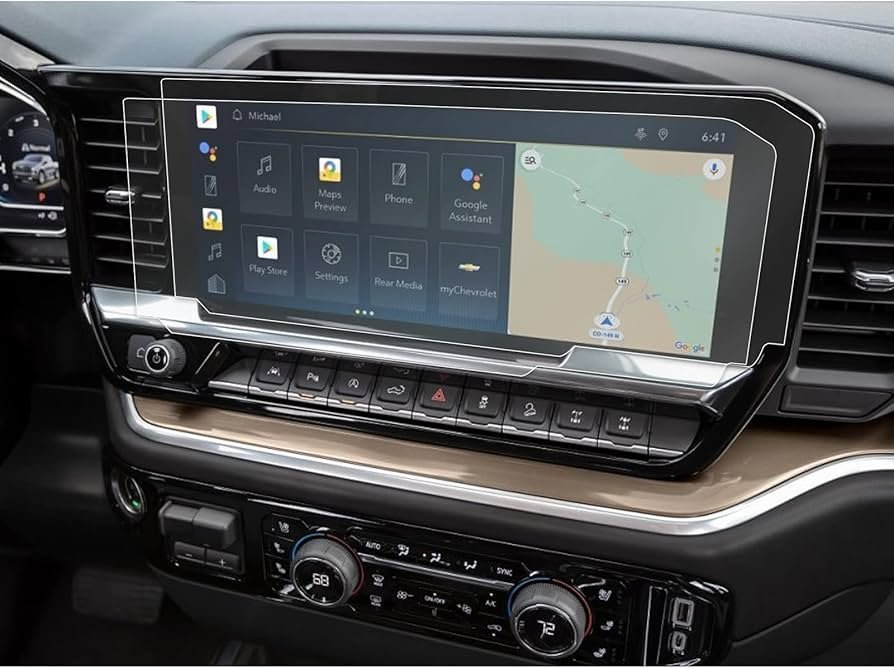
The screen portion on the right can be scrolled/swiped to change what's displayed. See the 3 dots on the right side? Those indicate the different screens that are available depending on what the main portion is displaying. Swipe up or down to change the screen, just like you would on a phone. I'm a Carplay user, but I use XM radio on the right side when the left side is displaying Carplay/Apple Maps.

-
Probably, but prices are always higher here on the West Coast. And we're over $5 for regular now even at the cheap stations.
-

2025 3.0L toast
Atlas replied to Catchme2003's topic in Engines & Drivetrain (V8, Duramax, TurboMax)
Hey @GMCustomerService how about buying my truck back. I don't want it anymore, it's a 2025 3.0 diesel with 2,000 miles and I'm basically waiting for the engine to fail since it's within what appears to be the highly problematic date range for the production run. -
Diesel is increasingly high 6's around the Seattle area. Saw $6.89 yesterday.
-
The "Diesel" sticker on the steering wheel says the 3.0 will probably be a part of the next generation. That's good, I think? (If they've fixed the thrust bearing issues) Not a fan of the new cluster layout where it looks like you're staring down at a computer monitor. Much prefer the inset and shrouded screen of the <2027 trucks. I'm not sure what the hang tag is regarding the physical key usage. Is that for a fleet or police model? Nothing about the 2027's so far makes me wish I would have waited for one.
-
2025 3.0L toast
Atlas replied to Catchme2003's topic in Engines & Drivetrain (V8, Duramax, TurboMax)
Any indication that it was about to fail? I've just rolled over 2,000 miles on mine and no issues so far, but I'm nowhere near out of the woods if the typical failure is sometime <10k. -
2025 3.0L toast
Atlas replied to Catchme2003's topic in Engines & Drivetrain (V8, Duramax, TurboMax)
The 3.0's are warrantied to 5 years/100k by default. But yes, if GM is aware of the production run for the affected engines, those engines should be recalled and replaced. -
We're getting the tail of the storm here that totaled just over 46 inches of rain in Maui over a few days last week. We've got flood watches in effect. This is also unusual for this time of year as winter turns to spring. I mean, it's often rainy, but this is a LOT of rain. The rain is also how we turn this place into mecca between mid-April and October.
-
Hardware for 2022-2026 GM running boards?
Atlas replied to Atlas's topic in 2019-2026 Silverado 1500 & Sierra 1500
I ended up going with the Auveco 22908 bolts. They come 5 bolts to a box so ordered 4 boxes from Autozone, delivered to my door. It's a near-perfect factory match as far as I can tell at less than half the price. When removing the factory plugs from the rockers, I noticed the factory didn't install plugs on the vertical surface on the right side. Nice job, GM. So I used the extras I removed to plug up the holes that the rocker guards won't be using.
-
I think....winter is finally packing its bags? After a hard freeze on Saturday night we were back to rain on Sunday and we should hit almost 60 this week.
-
$4.70 is the cheapest for 87 right now, most stations around are into the 5's for regular. I paid $6.29 for 91 today, highest I've ever paid.
-
Yep. This kind of unpredictability and off-season severity is exactly the kind of stuff that is becoming increasingly common.
-
We got 10" of snow here in the Upper Left yesterday and we're passing the 1 day mark without power. Gee I'm sure glad we Doge'd the NOAA and banned climate change because not only was this not forecasted, but it's practically a never-event for the middle of March here. We're expecting a hard freeze tonight. You can tell the birds are like what the hell happened?!. And I'm stuck inside, and providing care and feeding for the generator.
-
Probably not. But yeah, if you actually owned an EV maybe some of your perceptions would change...
-
I bet EV's are looking a lot better now that gas prices are going way up again We never saw that coming -- except we did, they didn't. There are plenty of good used EV's on the market at really reasonable prices for those who want them. We're starting to shop for our next EV. Hoping the BMW iX3 is available to order soon.
-
WTI crude climbing again this morning on headlines. Gas prices never retreated from the previous climb to 120 so my guess is they will only go higher.
-
Found a set of new take-off GM accessory boards/steps for my crew cab ( 85534568 rocker protectors plus 85554009 (4) removable assist steps). List price from GM is $2845 and I got it all for $100. Everything but the hardware to attach them. The common consensus seems to be the factory thread insert in the rockers requires an M8x1.25x25mm hex bolt with washer for any/all GM boards/steps of this era. I need 8 per side for my crew cab. Double cabs may need fewer. GM sells the bolt as singles, part 11519388 MSRP $10.71 each. They also sell them as packs of 8 with nutsert -not needed for our trucks--, part 22876958, MSRP $65. The GM hardware is zinc/galvanized. Grade 8.8. I can find grade 9.8 black phosphate -finish automotive body bolts, hex head with washer in M8x1.25x30mm (5 mm longer) commonly, for cheap. I'm not sure about black phosphate holding up very well over time in an undercarriage, direct spray from the wheels, environment. I can also piece together stainless hex bolts with fender washers from the hardware store, but these aren't technically body bolts, they're just machine bolts. The closest hardware I can find to the factory bolt, without paying a fortune, at an almost reasonable price is Auveco 22908, which is a M8x1.25x30mm 8.8 hex bolt with washer, zinc coated, dog point. It's actually for a Chrysler application as Auveco doesn't appear to sell the 25mm version in bulk, at least not in retail applications, which would be an exact match for the GM hardware. Probably so GM can try to get $10/bolt. So, Black phosphate Zinc, or Stainless? and does the actual style of bolt really matter, and does anyone actually care for any reason if the bolt is 5mm longer (all reading I've done says they will fit just fine).
-
Crude futures were trading over $120/barrel this weekend but are back down to ~103 at market open this morning. And it's predicted to keep rising. Wouldn't be surprised if stations were updating their prices overnight to catch that high mark. Yesterday I saw more stations out and about with $6+ diesel.
-
I misspoke. During a drive into town today, I saw there are several stations where diesel is over $6/gallon now, the highest at 6.19. Six. Dollars. Per. Gallon.





-
Forum Statistics
250.4k
Total Topics2.7m
Total Posts -
Member Statistics
342,768
Total Members8,960
Most Online
-
Who's Online 5 Members, 0 Anonymous, 604 Guests (See full list)