

M1ck3y
-
Posts
1,096 -
Joined
-
Last visited
-
Days Won
3
Content Type
Profiles
Forums
Gallery
Events
Articles
RPO
Store
Blogs
Everything posted by M1ck3y
-
Has anyone done this GM vacuum pump delete?
M1ck3y replied to rav3's topic in 2014-2018 Silverado 1500 & Sierra 1500
40000 kms. No idling, but I do drive hard frequently. It was probably at 30000 kms when I checked it. -
Has anyone done this GM vacuum pump delete?
M1ck3y replied to rav3's topic in 2014-2018 Silverado 1500 & Sierra 1500
Ok this answers a few things. https://www.gm-trucks.com/forums/topic/230820-how-to-delete-brake-vacuum-pump-video/ I can't pretend that I know exactly how the pcv system works but I dont agree with him saying the majority of the vapor/gas/oil comes through the valve covers and into the air intake tube. I've had my throttle body off to clean. Intake tube was spotless and the front of the throttle body had very little oil on it. The backside was coated in oil as well as the inside of the intake manifold. -
2022 Silverado Render
M1ck3y replied to I Like Ford Chevy GMC NOT RAM AND ESCALADES's topic in Future GM News & Rumors
looks like ******. k2xx or die! -
Has anyone done this GM vacuum pump delete?
M1ck3y replied to rav3's topic in 2014-2018 Silverado 1500 & Sierra 1500
Well... So he said he deleted the pcv line that goes directly to the manifold, and the booster is hooked up to the drivers side valve cover. So there's one pcv line that can run to the intake tube on one side only, before the throttle body... Is that enough? I mean I thought the two valve cover breathers were just that, breathers. They help equalize the pressure or something, where as the pcv line to the manifold actually expels the vapor/liquid. With the valve covers having a similar purpose of a catch can. And besides that, he capped off the other valve cover. This whole time I've been thinking the vacuum pump actually created negative pressure in the crankcase... lol -
Has anyone done this GM vacuum pump delete?
M1ck3y replied to rav3's topic in 2014-2018 Silverado 1500 & Sierra 1500
I'm not doubting guys, just trying to get a picture of how the brake booster works, along with the pcv system. And what's affected, if anything by introducing the brake booster to the pcv system. -
Has anyone done this GM vacuum pump delete?
M1ck3y replied to rav3's topic in 2014-2018 Silverado 1500 & Sierra 1500
Thanks, yeah I know the pumps have had problems. But I thought most of the problems were from extended drain intervals. Seems like a really back asswards way of doing things on gm's part... I watched the video you posted. Did he change the way the pcv system will operate? The vapor canister and valve cover oil/air separator still works? -
Has anyone done this GM vacuum pump delete?
M1ck3y replied to rav3's topic in 2014-2018 Silverado 1500 & Sierra 1500
I'm confused now. Where would the brake booster draw power if not from the crankcase? Ah, the manifold... so these engines don't even have a pump to create a vacuum in the crankcase... just ventilation. -
Your right to a degree, but that's no different then any other auto maker out there.
-
I may not be blind, but I guess I'm stupid. How are we all assholes, lol.
-
There's nothing wrong with it. That being said, you must be talking about the hood/grille alignment. No idea how to fix that. You should have gotten black ?
-
Launch Control 2017 silverado 6.2. Yes or No?
-
Has anyone done this GM vacuum pump delete?
M1ck3y replied to rav3's topic in 2014-2018 Silverado 1500 & Sierra 1500
I'm keeping mine, although I would like to install the improved version. When does a Vacuum Pump benefit an engine? A vacuum pump, in general, is an added benefit to any engine that is high performance enough to create a significant amount of blow-by. A vacuum pump will, in general, add some horse power, increase engine life, keep oil cleaner for longer. How do Vacuum Pumps work? A vacuum pump has the inlet hooked up to one or both valve covers, sometimes the valley pan. It SUCKS the air from the engine, thus reducing the air pressure build up created by blow due to combustion gases going past the piston rings into the pan. Vacuum pumps vary in the amount of air volume (CFM) they can suck so the potential VACUUM a pump can create is LIMITED by the amount of air it can flow (CFM). The exhaust from the vacuum pump is sent to a BREATHER tank with a filter on the top, which is intended to retain any fluids (moisture, unspent fuel, air born oil) sucked from the engine. Exhaust air goes to the atmosphere thru the air filter. So what actually happens at high RPM during the combustion process, and how does a Vacuum Pump change that? As RPM increases the rings start to get pushed upward on the outer ring edge due to the pressure behind them due to the blow-by build up in the pan, this causes a reduction in ring seal to the cylinder walls, this causes more blow-by. It also causes the rings to "flutter" which further increases blow-by. The increased pressure in the pan (due to the fact that in a higher performance engine you cannot get all the excess air pressure out of the engine with just breathers (much less engines with PVC systems that are sealed) then PUSHES oil entrained in the air past the rings on the intakes stroke when the engine is SUCKING in air. During the intake stroke oil is also SUCKED past the valve guides. The net result is oil contamination of the fuel (the same way a PCV system contaminate the fuel by sucking oil into the intake), which effectively reduces the octane rating of the fuel. This reduces HORSEPOWER, and on a nitrous or power adder engine can actually burn a hole in the pistons from the increased heat in the chamber due to the faster flame front. The vacuum pump can reverse every one of these problems by reducing, eliminating or even putting a negative pressure on the engine. The net result is better ring seal, less or no oil contamination, less oil leaks, cleaner oil, longer engine life and MORE HORSEPOWER. An added advantage is your engine builder can use lower friction ring packages because the resulting blow-by is mitigated by the Vacuum pump. -
-
It was hard to find without e85 being in the name. But for those that are interested, here it is. https://www.gm-trucks.com/forums/topic/178280-k2xx-53l-pic-request-flex-fuel-sensor-mounted-on-the-frame/page/5/ 20967866 Clip 13577429 Sensor 23171538 Hose 20967834 Hose 23158923 fuel line 23171532 fuel line 15168646 fuel line clips Anyone know if e85 is ok with kooks race cats... lol
-
Does anyone have a parts diagram for the flex fuel crew cab? I found a another thread where it appears he bought all oe parts for a factory finish. ACDELCO 13577429 GM GENUINE 23171538 GM GENUINE 20967834 GM GENUINE 23158923 There was also part# 23171537 listed but I couldn't find it. I'm trying to figure out what he did exactly...
-
I've found a number of different threads on e85 and they've been helpful. However, I'm not sure if you have to replace the entire fuel line when going with the oem route; or if it's just a matter of a couple quick disconnects and your done. Will the 5.3cc flexfuel sensor swap over to a 6.2cc?
-
(Y-pipe ONLY) With stock headers and exhaust
M1ck3y replied to Nightmare_snake's topic in Engines & Drivetrain
Afe has an aftermarket y-pipe that fits. I have no idea if it requires a tune, or if it actually free's up any power like they claim. -
Thanks, was hoping to avoid cutting fuel lines, probably for the best though as I'm thinking about doing an e30-40 mix. Ive read that it may be the best balance between the fuels. Potentially improving fuel economy and not missing out on that much power compared to e85?
-
Will Borla XR1 with headers no cats drone
M1ck3y replied to JONBLARC7's topic in Engines & Drivetrain
The mutlticore is the same tech that's inside the borla attack. Something to do with tubing in the muffler that produces different exhaust notes. That being said I've read that the attack drones, and will be insanely loud with headers. So figuring out which xr1 muffler to go with would take trial and error. -
Is this accurate? E85 Flex Fuel Description E85 compatible vehicles no longer use an alcohol sensor to determine and adjust for the alcohol content of the fuel in the tank. Instead, the vehicle calculates the alcohol content of the fuel through measured adjustments. The ethanol calculation occurs with the engine running after a refueling event has been detected via a measured change in the fuel level sender output. The virtual flex fuel sensor (V-FFS) algorithm temporarily closes the canister purge valve for a few seconds and monitors information from the closed loop fuel trim system to calculate the ethanol content. This logic executes several times until the ethanol calculation is deemed to be stable. This may take several minutes under low fuel flow conditions such as idle, or a shorter time during higher fuel flow, off-idle conditions. Air-fuel ratios and the corresponding ethanol percentage are updated following each purge-off sequence. The fuel alcohol content percentage value can be read on a scan tool. When an E85 compatible vehicle is built, an ECM or PCM replaced, or if the learned alcohol content has been reset with a scan tool the fuel system will need to contain ASTM gasoline with 10 percent or less ethanol content. A minimum of 11 liters (3 gallons) must be put in the tank in order for the vehicle to recognize a re-fueling event. It is not necessary to turn the ignition OFF in order to have the re-fueling event recognized, however local safety regulations should be followed. After the re-fueling event, the system registers the amount of fuel that was added, relative to the amount that was in the tank. Reading fuel trim and O2 sensor activity, the system determines if the fuel added was either ASTM Gasoline or ASTM E85. Based on that determination, the system adjusts to the expected alcohol mix in the fuel tank, and then the fuel trim and O2 sensor activity fine tunes the adjustments. The system must remain in closed loop in order for this adjustment to occur. Numerous short trips after switching from gasoline to E85, or E85 to gasoline, can result in driveability symptoms due to the inability of the system to adjust for fuel composition by not attaining closed loop operation. Switching Between Gasoline and E85 No special precautions need to be taken when switching back and forth between gasoline and E85 other than re-fueling events must be 11 liters (3 gallons) or greater, and the vehicle must remain in closed loop long enough, usually by the time the engine has maintained full operating temperature, to calculate the composition of the new blend in the tank. https://forum.hptuners.com/showthread.php?51424-Flex-Fuel-6-2-Silverado This forum post is claiming the 6.2 doesn't need to have a flexfuel sensor to operate on e85?
-
Will Borla XR1 with headers no cats drone
M1ck3y replied to JONBLARC7's topic in Engines & Drivetrain
Your going to want a multicore xr1 then. The catbacks a single in - dual out. -
It has afm, but with updated design. I think it uses the same solenoids on the l87 instead of oil pressure to collapse/activate the lifters.
-
I can't say I disagree with anyone, but I imagine manufactures build intake manifold's based on the engine and a target power output, efficiency concerns etc. I think a more, "powerful" manifold is always possible, but with draw backs; increase in size, increase in fuel/emissions etc. The LT2 has a slightly different cam profile, but it appears that manifold is good for 22 rwhp on that camaro. Great for them, not so much for the trucks though.
-
Thanks Grumpy. I forgot to add that I didn't really hear any knock either. I thought I could have heard something but it was to hard to tell if it was the valve train, injectors etc. or if it was knock. The truck is loud, makes it difficult to tell the difference. And I'm using the highest octane I can get here. Justin was saying that the octane rating should be the same but doesn't usually work out that way. The ethanol seems to provide more knock resistance. It doesn't help that overall cdn gas seems to be worse.
-
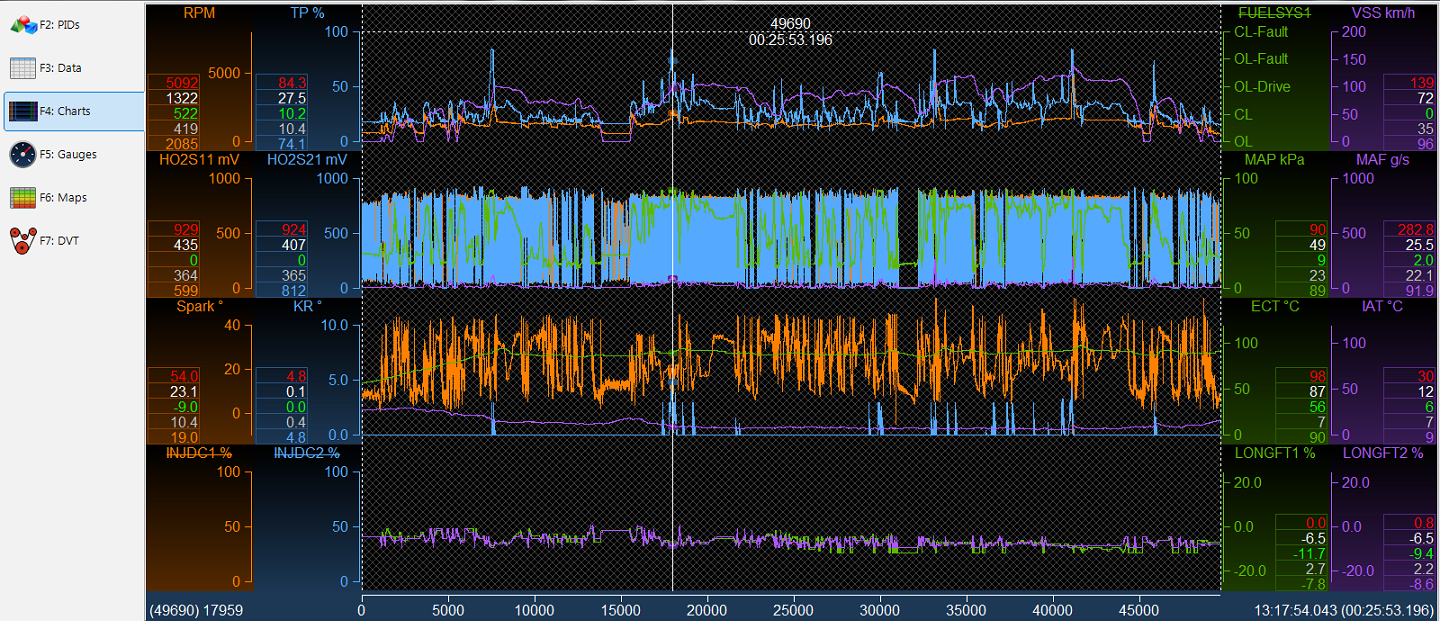
I tried searching and I couldn't really come up with anything. I'm trying to find out if there's an acceptable level of knock on the Gen V engines. Justin did up the tune for me and its been great, But I've been trying out e0 (tuned e10). I just filled up today and I'm pretty sure they've made the switch to winter gas now, and the log is showing a max of 4.8 degrees knock ******. Where as before it wouldn't move far from 3 degrees. Happens at wot, and low rpm going up a hill or accelerating without downshifting. Wot seems to be consistant around 3 degrees, its the low rpm/load that has me concerned. I don't have access to the tune, and it is on efilive... I'm just not sure if its safe to go through this tank then put in some e10 or if I should be looking for some octanium right now?


-
Forum Statistics
250.4k
Total Topics2.7m
Total Posts -
Member Statistics
342,771
Total Members8,960
Most Online
-
Who's Online 3 Members, 0 Anonymous, 350 Guests (See full list)