
Jsdirt
-
Posts
6,690 -
Joined
-
Last visited
-
Days Won
20
Content Type
Profiles
Forums
Gallery
Events
Articles
RPO
Store
Blogs
Everything posted by Jsdirt
-

2019 Silverado 1500 5.3L Anyone know what this sound is?
Jsdirt replied to dlenk5698's topic in Ask A GM Technician
Can't see the vid. Your chances of success will be higher uploading it to Rumble, or YouTube. -
Welcome to 21st century GM quality. Crappy part is, go buy another brand and you'll have the same issues. It's like they all had a big meeting and decided that NOBODY was allowed to produce a reliable vehicle anymore. What a sad state of affairs. Just when you think it can't get any worse, it DOES ...
-
If I remember right, I had one of these come in with an open in the 40A wire to the ABS. Since I grew frustrated REAL quick with trying to find the open, I ran a new power wire from the section of wire that was still good from the fuse block to the ABS unit. I can't recall if it was the exact same code, but those digits ring a bell. It was much easier to troubleshoot since that wire was totally dead, and not intermittently providing power.
-
Do a resistance check between pins 6 & 14 (CAN high and low) - should be 60 ohms. If 120 ohms, there's probably an open in the comm lines somewhere. If that checks out, the first thing I'd be doing is assuming that water DID penetrate anything in that area, and focus my attention there. If it is indeed good there, do a visual of all wiring under the hood and along the frame, looking for anything obvious. Keep the scan tool connected and wiggle sections of the harness. If it suddenly starts working you know where to focus your attention. If that is all ok, then I'd check ALL powers and grounds to the ECM. Test them with a halogen bulb to be sure they can each carry that load individually. Then check all the pins to make sure they're clean, not GREEN, and that none are bent, since you'll have it unplugged anyway to do the test. If that checks out, check ALL grounding points. Start with the battery cable and move out from there.
-
This to me is screaming of an intake manifold gasket leak. Those can seal up tight when warm. You're feeling a lean misfire when cold, is what I'm guessing. Good way to test is with a bottle of water with a hole poked in the cap. On a cold engine, squirt the water along the intake manifold mating surfaces at the cylinder heads. If it's bad enough you'll actually hear the water getting sucked in, and the tailpipe steam will get extra thick. Any change in the way the engine runs after squirting water along that junction is an indication of a leak. Since the engine is cold, the fueling isn't relying on many (or any) sensors for inputs - that's why you're not getting a flashing check engine light. 9 years with no trouble - that's a KEEPER!
-
NEVER put anti-seize on spark plugs. A great way to end up tapping a few plug holes later! Anti-seize, oil, or similar substances that act as a lubricant will cause you to OVER-TORQUE the plugs, EVERY time. Same reason they say to never apply it to lug nuts, either. They'll end up WAY too tight. Only time to add any kind of lubricant is if it is specified, like on head bolts. The torque / angle specs are derived factoring in the lubrication to the spec. Those they WANT super tight, because they, by design, will stretch when final torque or angle is reached. You don't want to stretch a spark plug! Thankfully I can say I've never done that. I had some great teachers in my youth. Grandpa and dad, mainly. As far as dielectric grease goes, I ALWAYS use that. Not only as an added barrier against carbon tracking / leaking voltage, but mainly as insurance that the damned things come off without kicking my ass the next time I need to change everything.
-
The spec used to be 500mV for battery cables. I'm betting on all the electronics aren't playing well with that spec these days so they've lowered it to 100mV. Add in some low-bidder copper wiring and you've got a very common failure. If they're not going to cover it, get it the hell out of the dealer. I'd suggest doing it yourself over a weekend. If that's not an option, ANY private garage can handle this, and I'd wager it'll save you 75% of that quote at a MINIMUM. Most garages can make their own cables so you won't have to pay $300 (just a guess) for OE ones, AND it'll be better quality cable! I wouldn't use OE anyway, since they can't even get them to last 10 years today.
-
Yeah, that's a "lean, bank 1" code. Your post just reminded me of the test I used to do for this. Full throttle in 1st gear (so you don't end up doing 60 in a 30 zone ...), watch o2s on the scan tool. If they peg lean, it's starving for fuel. MAF should also be deep into the 100's of grams per second range as well. And the MAF should read close to engine displacement in liters as grams per second (so a 5.3 should be near 5 or 5.3 g/s plus or minus a few tenths) at idle.
-
2003 Chevy Silverado odometer lit up when turned off
Jsdirt replied to omar548's topic in Ask A GM Technician
Probably glitching out due to low voltage from the dead battery, probably caused by a failing ignition switch from the sound of things. You'll have to get a good battery in there first to do any kind of useful troubleshooting. -
I'd wager the new fuel pump isn't moving the required amount of fuel. That could be either due to a plugged or defective fuel filter, or a defective pump. Also, low output can be due to wiring issues. If you're having the exact same issue after replacing the pump, then it's time to check wiring and amp draw. Fuel pump wiring should power a halogen bulb nice and bright - if it doesn't, that needs to be investigated. Powers AND grounds - both are equally important as the load will not work with either of them bad, let alone both. Always check areas of heat and vibration, and ANY connections. Those are the usual suspects.
-
Way to check what maintenance has been done on a used vehicle
Jsdirt replied to Badbird2000's topic in Ask A GM Technician
EDIT: Don't know why Nick's post wasn't quoted in this after I clicked said button ... but this was in response to Nick's post. Friggin computers!!!! BANE of my EXISTENCE ... Great point on tires. When I acquired my late father-in-law's '03 Buick Century, on the drive home I ended up in the woods trying to make a left turn. ZERO traction! Felt like I had polished steel tires on ice! Knowing my FIL, I knew I was dealing with ancient tires. Sure enough, put it up on the lift and I had 3 tires that were 10 years old, and one that was EIGHTEEN years old!! Age hardens tires. Hard tires give VERY LITTLE traction in ANY condition. Another case-in-point - the wife and I took one of our mid 90's Volvo 940's up to NH to see an airshow. On the way back in the rain, I was confidently speeding through corners ... because in my mine I had the tires that were on the OTHER car, way back at home! I didn't realize this until the ass-end of the car tried to pass me, and I couldn't regain control for several seconds!! Fishtailed 3x but I managed to keep it on the pavement & keep from doing a 180. Rear tires on that were 10 years old. That was my winter beater. The wife's 940 has all new summer and winter tires. Mine will be getting new rear summer tires next year! Just bought a new set of snows. I learned a long time ago that tires are nothing to eff with! Tires are cheaper than bent metal or broken bones. EVERY time. -
Way to check what maintenance has been done on a used vehicle
Jsdirt replied to Badbird2000's topic in Ask A GM Technician
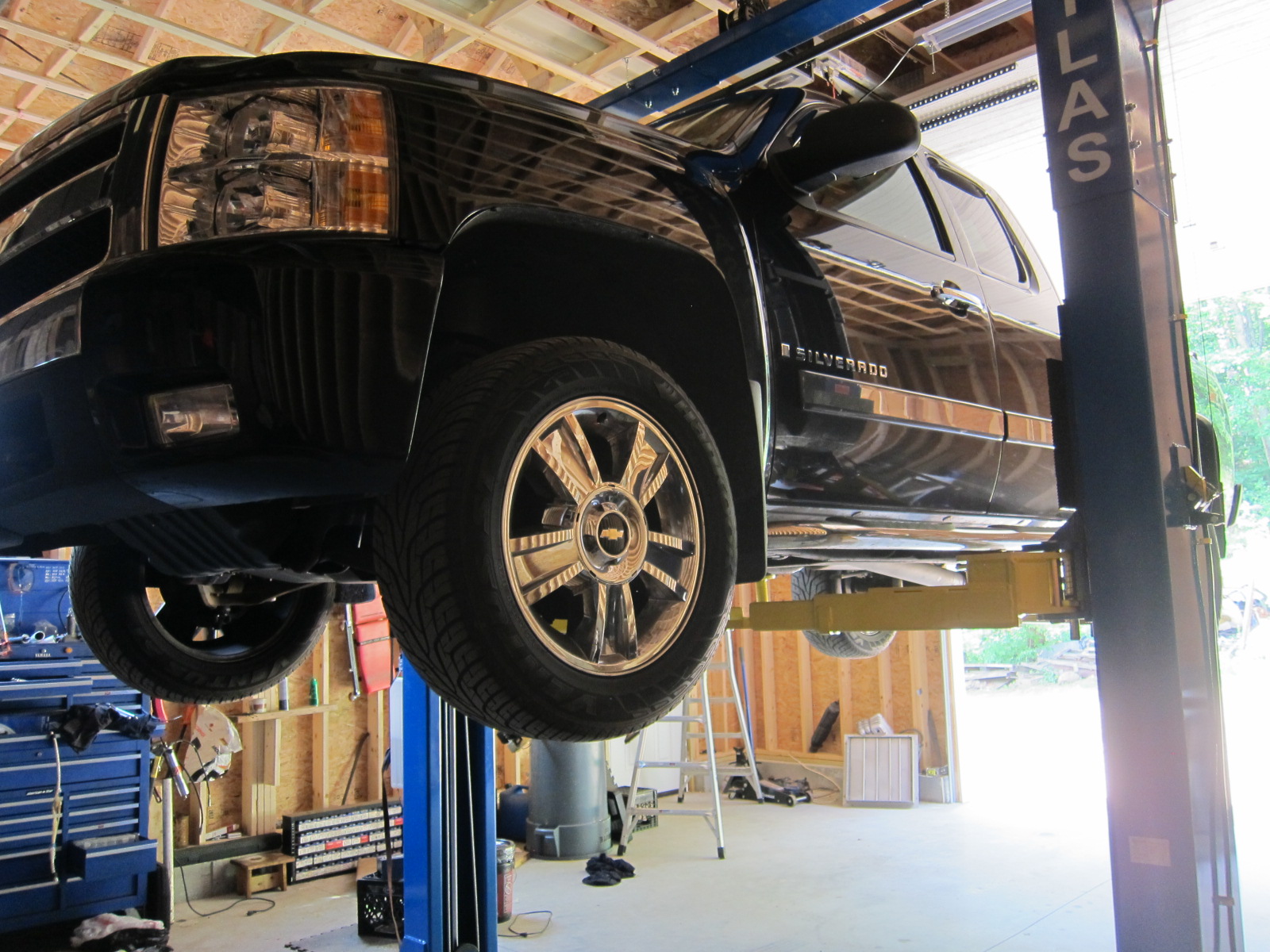
Any used vehicle I buy, no matter if I'm told the, "fluids were just done", I dump ALL of them and get top shelf synthetics in there. That's the only way to know for sure that everything is good. I started doing analysis on my Silverado about a year or 2 after it began using oil when pushed hard (50k miles is when that started). Found all kinds of elevated metals related to pistons and rings. Switched to Amsoil Signature Series 10W-30 from the factory recommended 5W-30, and at least the piston and ring metal levels dropped significantly. Later, some bronze was showing up, which I suspected to be camshaft bearings. All that lead up to eventually selling it at 134k miles a few years later, once I found my dream diesel truck - a 1st gen Ram, manual trans, 205 transfer case, and Dana 60 & 70 axles. No more headaches! Anyway ... the analysis is money well spent, especially on an unknown (new to YOU) vehicle. Oil analysis, '07 Silverado 1500 5.3 LMG -
Way to check what maintenance has been done on a used vehicle
Jsdirt replied to Badbird2000's topic in Ask A GM Technician
TX tends to still have God-fearing Patriots in its population. Those qualities are getting very sparse in the Northeast these days, and have been on that trajectory for a long, long time. -
Way to check what maintenance has been done on a used vehicle
Jsdirt replied to Badbird2000's topic in Ask A GM Technician
Besides the fact that I could never pay someone for something I can do myself, up here in MA, trust is a MAJOR issue. Just finding a competent shop that could perform a simple front end alignment has been a 20 year process for me! Between my cars coming back with the steering wheel completely sideways, tie rod adjustment collars left loose, and tools left under my hood, it's TOUGH up here! I ran my own shop 14 years. If you're leaving tools under the hood, that means you're rushing. If you're rushing, quality has taken a backseat to speed. If I had the equipment, I'd do alignments myself. Only other things I don't do is glass or any body / paint work (unless it's a rattle can). I have ZERO patience for that kind of work. -
Way to check what maintenance has been done on a used vehicle
Jsdirt replied to Badbird2000's topic in Ask A GM Technician
Pretty easy to keep info off Carfax. Dealerships will put the info in there IF it comes in for service. If an incident or accident doesn't go through government (police) channels, then it won't be on Carfax. For example, you get in a bad wreck in a rural area and the guy begs you not to call the cops and pulls $4,000 out of his wallet, then that wrecked vehicle is clear. It never happened. On my '07 Silverado, I did my own repair work since day 1, so nothing service related was shown. When I backed into a sapling in my yard one time and nearly totaled the vehicle, I did most of the work there too aside from straightening the box (POS beer can!) & painting the wrinkled metal that was straightened. The Carfax on that truck was VERY short - only recalls showed up. None of 30 or so trips to the service department for warranty issues did. -
2001 GMC Sierra 1500 5.3L Secondary Air Monitor
Jsdirt replied to Aussiehomie's topic in Ask A GM Technician
They are giving you B/S information that they know full well nobody can decipher. Par for the course. -
2001 GMC Sierra 1500 5.3L Secondary Air Monitor
Jsdirt replied to Aussiehomie's topic in Ask A GM Technician
Still doesn't tell us anything. That stuff needs to be translated into something humans can understand by a more expensive / capable scan tool. -
Most of the oil typically sits in the condenser, so you may have too much oil in the system ... especially if the accumulator wasn't changed. The accumulator should always be changed since there's desiccant inside. Once open to the atmosphere, that desiccant is done doing its job. Stop leak is a really bad idea. You might be on the hook for the technician's equipment if that stuff ruins it, although most these days have taken precautions against it, since it's sold everywhere these days. That garbage shouldn't even be sold to the general public. Once the tech finds out there's stop leak in there, they might refuse to work on it - just FYI. That stuff will destroy a $6,000 recovery machine pretty quick, and makes a mess out of gauge hoses & fittings. It's designed to harden upon contact with air.
-
2001 GMC Sierra 1500 5.3L Secondary Air Monitor
Jsdirt replied to Aussiehomie's topic in Ask A GM Technician
That's just basic computer logic from a cheap scan tool. Can't make any sense of it. I think ScannerDanner has some YouTube videos on diagnosing that system. If not, someone does - maybe Eric O. at South Main Auto. I recall watching one years ago and it was very detailed. Of course, I can't remember a thing about it ... Usually it's either the pump motor failing, or wiring issues, especially on a '01. -
You definitely need a reliable leak detector for evaporator leaks. 2003 is good - they were still reasonably well built at that time, although interior components had started going downhill. Best thing to do is get a spray bottle of soapy water and hit every single connection under the hood to rule those out. Hopefully you flushed the new compressor out with fresh oil, changed the condenser, orifice tube, and accumulator before running it ... I highly recommend using Nylog on every o-ring. The stuff is amazing. Been using it for 15+ years. I've seen that stuff hold a completely unsecured connection for a whole week before blowing out! Vehicle had the totally wrong accumulator, so there was a 1/4" gap between the pipes! Nylog held it all in all that time. Amazing stuff.
-
Yeah, better stick a sniffer up the condensate drain tube after adding some pressure with 134a to be sure that's where the leak is. If it's newer than a 2012, I'd put money on a bad condenser. Just about every single one leaks there down low on one side. More low-bidder GM junk! 134a won't kill you. I huff the stuff every day. Seriously - it's used as a propellant in asthma inhalers!! Before the 21st century they used R12. They use the chemical name of the propellant in the ingredients list - it's always a refrigerant.
-
NOTHING should be this frigging complicated in making an attempt to do what it was designed to do, especially on a $90,000 truck. What the hell good is a truck if you can't even tow with it because the G / D electronics won't let you? RIDICULOUS!
-
Nothing I say is really going to help you feel any better here, but GM, as far as I'm concerned, is DEAD. Based on past experience turning wrenches professionally for 14 years, owning a GM product for 16 painful years, and reading story, after story, after ENDLESS story of problems, I'd seriously recommend dumping that vehicle for ANYTHING else. Preferably something built when manufacturers still SORT OF gave a crap about their customers - at least something built before the 2007 model year. Your wallet and your sanity will thank me later. And if that truck has the 6.2, you had better check up on that engine recall before the thing blows up on your next trip.
-
Everything is controlled by the BCM / communication these days. If he shorted a comm line, literally nothing would work in the vehicle, up to a possible no crank or no start. Plus at least 10 "U" codes.
-
You need to look over EVERY SINGLE WIRE near the motor, and anything you touched. If it worked prior, it's an "installed problem" as we call it. Either something got plugged into the wrong plug (not usually possible), was left disconnected, or got pinched hard and smashed under something that was bolted down.



-
Forum Statistics
250.4k
Total Topics2.7m
Total Posts -
Member Statistics
342,750
Total Members8,960
Most Online
-
Who's Online 7 Members, 1 Anonymous, 1,703 Guests (See full list)