


SquireSCA
-
Posts
474 -
Joined
-
Last visited
-
Days Won
3
Content Type
Profiles
Forums
Gallery
Events
Articles
RPO
Store
Blogs
Everything posted by SquireSCA
-

Instead of catch can, why not delete PCV?
SquireSCA replied to SquireSCA's topic in Engines & Drivetrain
So because I did a half ass job with the Seafoam I went and got another can, and went with the CRC brand as it had a much better nozzle and seems to get good reviews... This time, instead of spraying it into the throttle body, I figured I would plug it in to the vacuum line going to the manifold... you know, so it would suck it in and follow the exact same path that the engine oil travels when the stock PCV line is connected... Followed the instructions, put the motor at 2000rpm and sprayed the contents of the can into the motor via the manifold vacuum line, let it idle for another minute and then shut the motor off. Says for it to sit and heat soak for 1 hour and then go drive it at highway speeds for 10 minutes, which I will did... At first the truck ran a little rough and I got a check engine light a few times, but after riding it around a bit and stomping on the gas a few times to run the motor through the entire rev range, it cleared up and is running just fine. Plugged in my SuperChips Flashpaq F5 to scan and make sure there was no DTC to clear and it didn't find any... At this time, I have done two intake valve cleanings, and now knowing that my catch can with steel wool inner filter appears to be trapping 99% of the oil, I think I will stop worrying about this whole thing. ? -
Instead of catch can, why not delete PCV?
SquireSCA replied to SquireSCA's topic in Engines & Drivetrain
FUD = Fear, Uncertainty and Doubt. -
Instead of catch can, why not delete PCV?
SquireSCA replied to SquireSCA's topic in Engines & Drivetrain
Well, in my case I gave up on the idea of capping things off when I saw how little oil was going into the motor. I left my catch can in place, so the PCV system is there, it just goes through the catch can to remove the oil before heading into the manifold... and the valve covers are still venting into my Airaid MIT... so everything is intact... I will do another valve cleaning process with a fresh can and call it a day. Out of curiosity, is one product really better than another? Should I do another round of Seafoam, or try the CRC brand this time? The process was simple, but the straw refusing to attach to the nozzle was a real pain. I was able to raise the revs by putting a 1x4 between the pedal and my front seat, and adjusting how much it pushed on the gas peddle by moving the power seat forward and back. I was able to set the throttle to 1800-2000rpm while I sprayed the seafoam... -
Instead of catch can, why not delete PCV?
SquireSCA replied to SquireSCA's topic in Engines & Drivetrain
So as I was doing this mod, I checked some things out. I noticed that the line from the catch can to the manifold, the hose that is under vacuum, was pretty much bone dry. Now, I checked and there is no blockage, the system is drawing a pretty strong vacuum when the motor is idling. I can remove the dip stick from the top of the catch can, and there is strong suction and a whooshing noise... So why no real oil in the return line? Because the catch can seems to be doing it's job. After 1,500 miles I have collected several ounces of motor oil and a little bit of water. Now, I know that you said that it only works when it is cold, via condensation. One thing that I changed on my catch can, was inside, there is a smaller "canister" that screws into the lid. It is connected to the line coming from the crankcase vent, and the hot air must pass through this cylinder and exit out the bottom via some holes... That inner cylinder unscrews from the lid, and I filled it with moderately packed, very fine steel wool, and screwed it back in. The hot oily air being sucked in via the vacuum line, is forced to pass through that steel wool "filter", if you will, with causes the mist to form droplets and separate out and drip into the bottom... Those droplets are too large to get sucked up into the very top of the lid where the return line is... It's working, it's collecting more oil than I expected it to so nothing is clogged or blocked, but clearly it's trapping 99% of the oil from going back into the motor. I looked down that return line and couldn't see any oil in it, and it felt almost bone dry... hardly anything... I then checked the valve cap lines and there was next to no oil in them, minimal at best. So at this point I left my filtered catch can as it was, as it appears to be doing it's job of collecting oil and passing almost nothing back to the manifold. I then did the Seafoam intake cleaner treatment... only got about 3/4 of the bottle in there because the staw wouldn't attach to the cap and I had to sit there trying to hold it in place... But after that and letting it sit 15 minutes to heat soak, I went out and got on it and left a big cloud of white smoke in my neighbor's yard... sorry bout dat... lol I will redo a new can of the Seafoam this weekend and make sure to do the entire can this time, but everything seems fine. I think that for whatever reason, my setup is in fact catching almost all of the oil and very little is passing to the motor and intake valves, and so another good cleaning and it should be fine and I won't worry much about it going forward... -
Instead of catch can, why not delete PCV?
SquireSCA replied to SquireSCA's topic in Engines & Drivetrain
Ok, I will do that then. Already have the can of seafoam cleaner... -
Instead of catch can, why not delete PCV?
SquireSCA replied to SquireSCA's topic in Engines & Drivetrain
So if I cap the smaller bottom vent and vacuum line, and take the valve cover lines to a catch can that then vents to the air, I would stop all the oil from entering the intake manifold, yes? At that point I can simple do a proper Seafoam cleaning(I have 20k miles on my 2018 truck) and from there I would get much more in the way of deposits because no more are entering the motor's intake? -
Instead of catch can, why not delete PCV?
SquireSCA replied to SquireSCA's topic in Engines & Drivetrain
So you are saying that valve carbon buildup on modern gdi motors is a non issue? It’s FUD and nothing more? -
Instead of catch can, why not delete PCV?
SquireSCA replied to SquireSCA's topic in Engines & Drivetrain
Hmmm... that little one under the throttle body is the one that pukes out the most oil... So you are saying just cap that one, and it won't build any pressure in there, because it's all connected internally to the valve cover areas and it can just vent from there? -
Instead of catch can, why not delete PCV?
SquireSCA replied to SquireSCA's topic in Engines & Drivetrain
How will it do that, if it is capped off, as you suggested? I feel like we are losing something here, in translation... LOL -
Instead of catch can, why not delete PCV?
SquireSCA replied to SquireSCA's topic in Engines & Drivetrain
What 3rd little line? You have one line from the crank case, the vent line... Then each valve cover has a vent line. Which one are you talking about? -
Instead of catch can, why not delete PCV?
SquireSCA replied to SquireSCA's topic in Engines & Drivetrain
So I would have 3 lines total, right? The crankcase vent line, plus one each from the valve covers... The one going back to the manifold, the vacuum line, gets the cap. Correct? I can use my current catch can, where I can simply take the "exit" line that was connected to the manifold vacuum line, and put one of those pod filters on that... -
Instead of catch can, why not delete PCV?
SquireSCA replied to SquireSCA's topic in Engines & Drivetrain
So if I understand this... I can run the crankcase vent and the valve cover vents to a catch can that vents to a little pod filter, to prevent anything from getting back into the system, and to help capture as much oil as possible to reduce any mess under the hood... All 3 lines could be spliced to a single catch can... And then just plug the manifold vacuum line. This would work, and prevent ANY oil from the crankcase from entering the intake system... -
Instead of catch can, why not delete PCV?
SquireSCA replied to SquireSCA's topic in Engines & Drivetrain
So in reading all of this... Is there a simple way to eliminate the introduction of oil into the intake? Can we simply route the crankcase vent to the air, or to a catch can that would not rely on vacuum? Just have it go to the can, deposit any oil and vent to the atmosphere? Same with the vents on top of the heads? And then simply cap the vacuum line so it's not sucking air or throwing a CEL? What would be potential problems with this type of setup? I feel like if pressure builds up in the case, it pushes how the hose into the catch can... The only drawback might be allowing humidity into the case because the catch can vents to the air and therefore isn't a "sealed system"....So in reading all of this... Is there a simple way to eliminate the introduction of oil into the intake? Can we simply route the crankcase vent to the air, or to a catch can that would not rely on vacuum? Just have it go to the can, deposit any oil and vent to the atmosphere? Same with the vents on top of the heads? And then simply cap the vacuum line so it's not sucking air or throwing a CEL? What would be potential problems with this type of setup? I feel like if pressure builds up in the case, it pushes how the hose into the catch can... The only drawback might be allowing humidity into the case because the catch can vents to the air and therefore isn't a "sealed system".... -
Instead of catch can, why not delete PCV?
SquireSCA replied to SquireSCA's topic in Engines & Drivetrain
They have some agreement with GM. My dad just got a 2017 Callaway SC757 Corvette and it's all covered under warranty. That's the benefit of going the Callaway route... you order it through your dealer, they take care of it, it's all part of the financing and they add their own warranty on top of the factory warranty from Chevy... If you were to take a new truck and go to some speed shop and toss on a supercharger and stuff, your GM warranty is pretty much toast. With Callaway, it isn't. -
Instead of catch can, why not delete PCV?
SquireSCA replied to SquireSCA's topic in Engines & Drivetrain
It doesn't give a lot of details on that particular truck. I will have to ask my dealer for more info. A Trailboss with 560hp would be a pretty badass truck though... -
Instead of catch can, why not delete PCV?
SquireSCA replied to SquireSCA's topic in Engines & Drivetrain
Yeah, the catch can won't eliminate oil in the intake, just slows it down... For 2020 I am considering a new Z71 TailBoss with the 6.2L motor in it, and ordering it with the Callaway 560hp package... I wonder if they install a catch can? -
Instead of catch can, why not delete PCV?
SquireSCA replied to SquireSCA's topic in Engines & Drivetrain
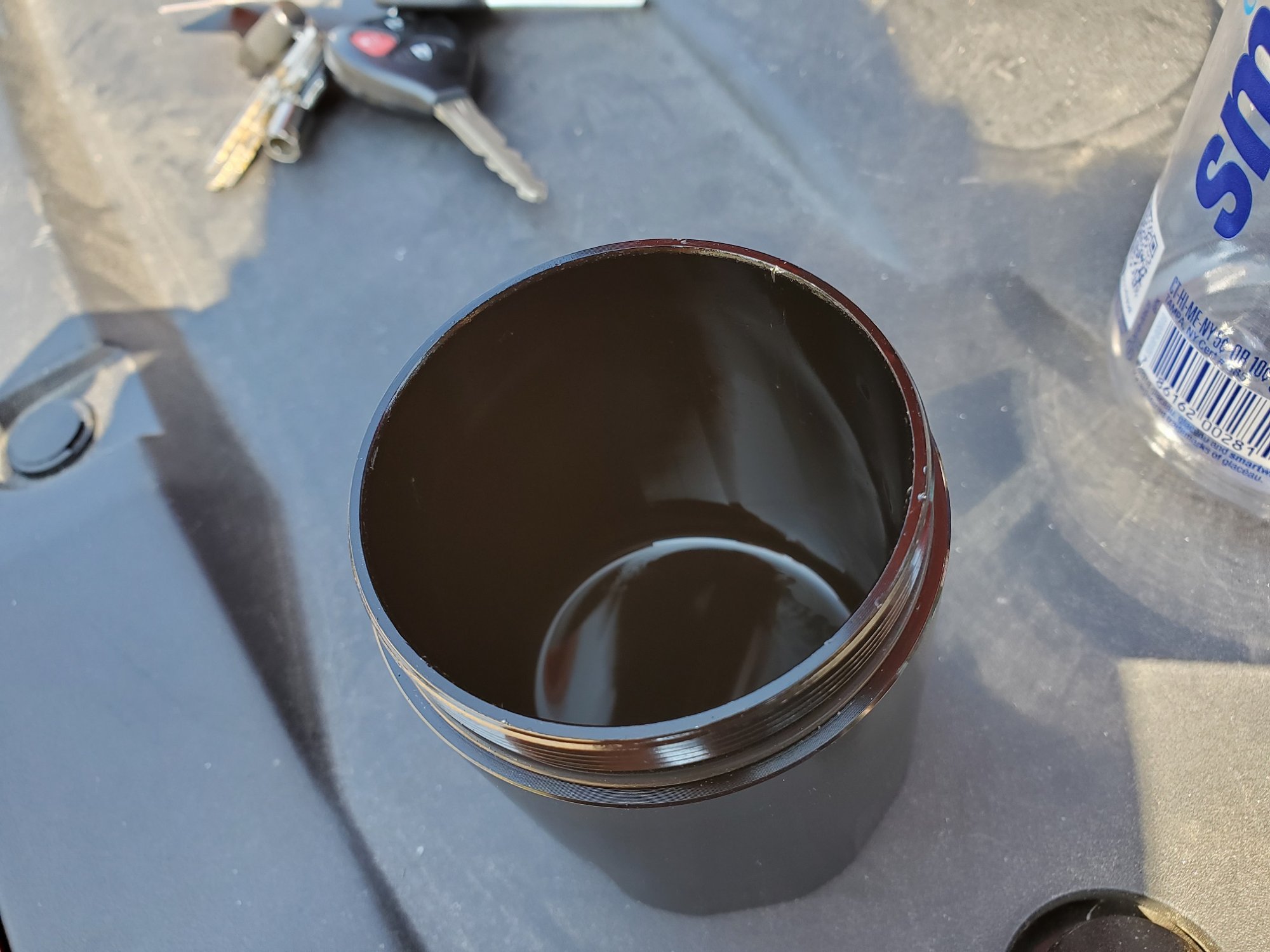
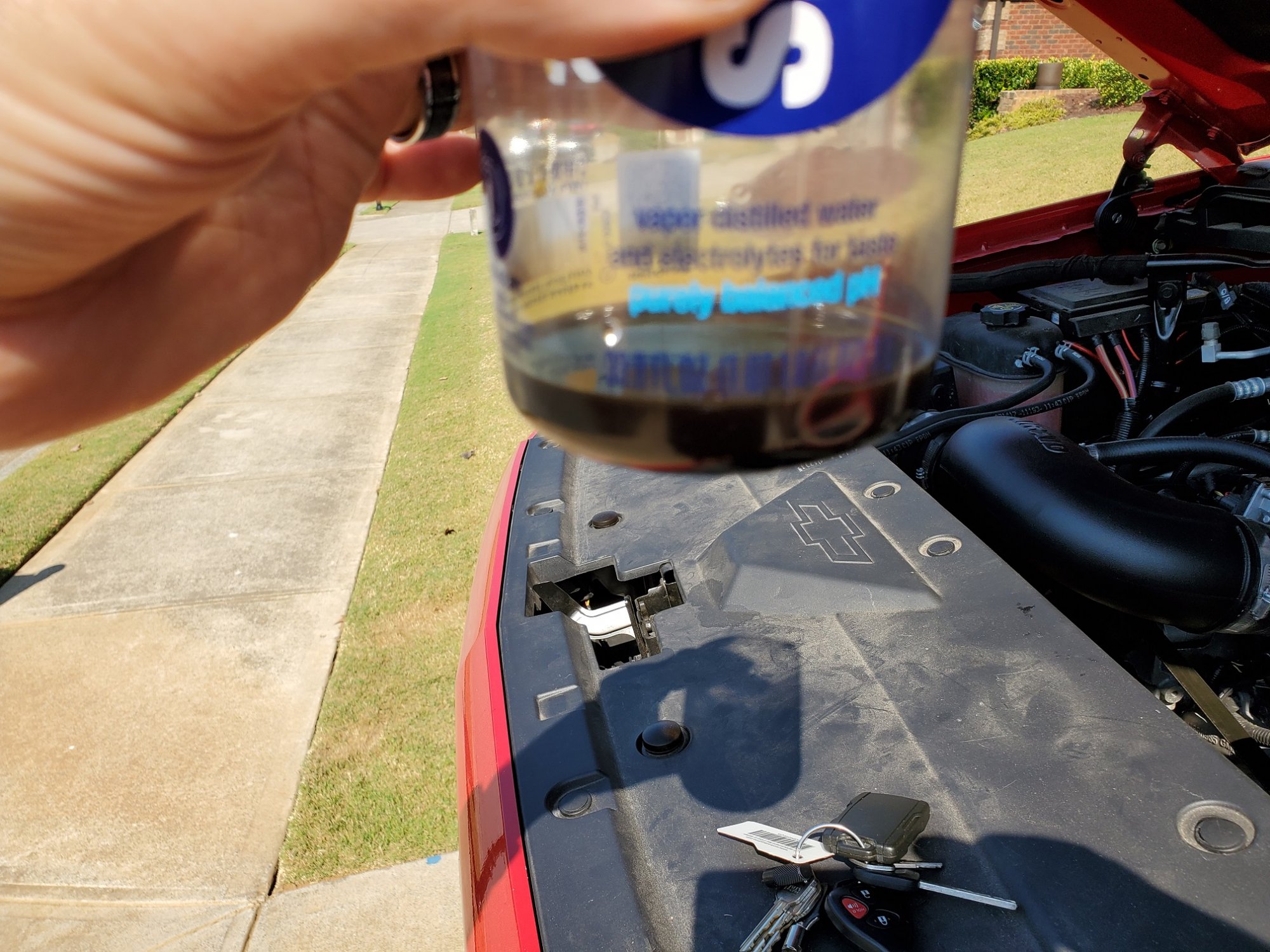
Here it is after 900 miles. A couple ounces of dirty oil. Oil change itself was only 5k miles ago, it's going in on Monday for an oil change and the brake recall...
-
No lines cut, but I don't think the anti-siphon tank works at all... They can still snake a small tube down there if they want, it seems. Been going on for many months, I see no signs of cuts or drilling, no leaks... Just some lowlife too lazy to work feels they are entitled to what I work for. One of these nights I hope to catch him on camera, or better yet, at the end of a 12ga shotgun, and hold him till the cops come to collect him...
-
I got mine, and it's cheap plastic and you can pull it right off with your hand, despite being "locked".
-
Instead of catch can, why not delete PCV?
SquireSCA replied to SquireSCA's topic in Engines & Drivetrain
Yeah, I have no illusions that the Seafoam will magically pull any old oil out of the manifold... but I figure it can't hurt, and if it removes some of the buildup already on the valves, then the catch can can keep it, or at least slow down the process of it accumulating more... -
Instead of catch can, why not delete PCV?
SquireSCA replied to SquireSCA's topic in Engines & Drivetrain
So you think I should pop the cover and look in there, and soak up the oil with some paper towels or something? -
Instead of catch can, why not delete PCV?
SquireSCA replied to SquireSCA's topic in Engines & Drivetrain
I do my oil changes every 5k miles, but the dealer does them so I don't know how low it is... I should probably check from time to time, LOL -
Instead of catch can, why not delete PCV?
SquireSCA replied to SquireSCA's topic in Engines & Drivetrain
So an update... Put around 450 miles or so on the truck, give or take. Pulled the can today to see how much oil was in there, and there was roughly at least half, if not 3/4 of an inch of motor oil in the can... I left it in, and will pour it out and measure it at the 1,000 mile mark. I also picked up a can of the Seafoam intake cleaner that I plan to do soon, now that I am trapping at least most of the oil from going into the intake... I would imagine at this rate, by the time I hit 1,000 miles I will have a couple inches of oil in the can... -
Where can I buy this? At least once a month, some scumbag steals gas out of my truck... I guess the best economy in 50 years and record low unemployment isn't enough for some people to just get an F'ing job, and they feel the need to steal gas from people... I need a locking gas cap apparently...
-
Instead of catch can, why not delete PCV?
SquireSCA replied to SquireSCA's topic in Engines & Drivetrain
If we didn’t have gdi motors nobody would have concerns...


-
Forum Statistics
250.5k
Total Topics2.7m
Total Posts -
Member Statistics
342,947
Total Members8,960
Most Online
-
Who's Online 9 Members, 0 Anonymous, 620 Guests (See full list)