
Leaderboard


.thumb.JPG.2c573de60d3a3a4407c7d92298db46dd.JPG)

Popular Content
Showing content with the highest reputation on 01/30/2024 in Posts
-
Jay from Banks here. I think all three companies are saying the same thing... We're all displaying what the ECM broadcasts. I think the guy at Aeroforce is confused. If all they're plugged into is the OBD port, then all their gauge will display is what the ECM broadcasts, which is a calculated value, which one of our techs explained during your phone call. Now, this is the first time we've said this anywhere... but we have a new iDash coming this summer that will have four analog inputs included. You'll simply plug up to four external sensors into the back of the iDash, tell the iDash what the sensor is, and it'll display the data. These four inputs will eliminate the need for an external/intermediate module. The only caveat is that you'll have to wait a few months for it.4 points
-
Time in the sump. Seems to be of minimal impact when taken on it’s own. But this is one I’ve been kicking around for awhile. Since I put my truck away for winter at least. I recently came across analysis of oil that had spent nearly 2 years in the sump (but less than 1000 miles). Driven properly, no short trips. Toy vehicle. TBN virtually the same as virgin, nitration - 5, sub-2% fuel. Everything looked great. So how long do you go? Manual says never exceed 6 months. At 2 years he had to blink. I think these are all too arbitrary. Time especially but even mileage to a lesser extent. Book in the glovebox doesn’t know when or how you drive, or the condition of the engine. Or anything really.1 point
-
After going through ALL of the resets, delete, add back on, lock the door, and the dealer even tried (I don't know why) replacing the usb port, gm authorized a radio replacement and all is well. Phone worked before but no waze, spotify, and a dark apple car play. PIA but good to have it working. Just wanted to share. 2023 Sierra Denali 1500.1 point
-
TBN is needless on modern spark engines. Grumpy posted up a not really applicable link and article about nat gas engines. In doing so he brought up a valid point. Nitration is your critical factor NOT oxidation in new engines. Traditional TBN additives will not neutralize nitration effects effectively. I got the lowest nitration since new reading on my 2.7T running a 0 ZDDP oil posted at 2.7 fab club thread. That Delo 600 ADF 10w30 has a base oil or additive I can’t determine yet. Found it here. Found this in my Delo testing. Not sure what it is but it’s a lot. if you did a clean reference sample of the Valvoline Clean and Restore you might find something like this.1 point
-
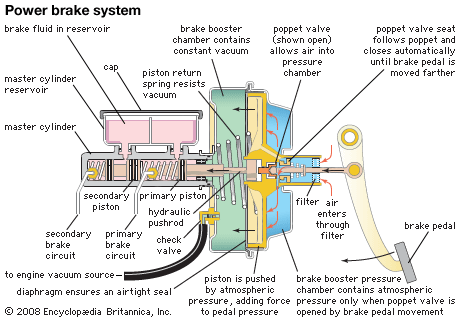
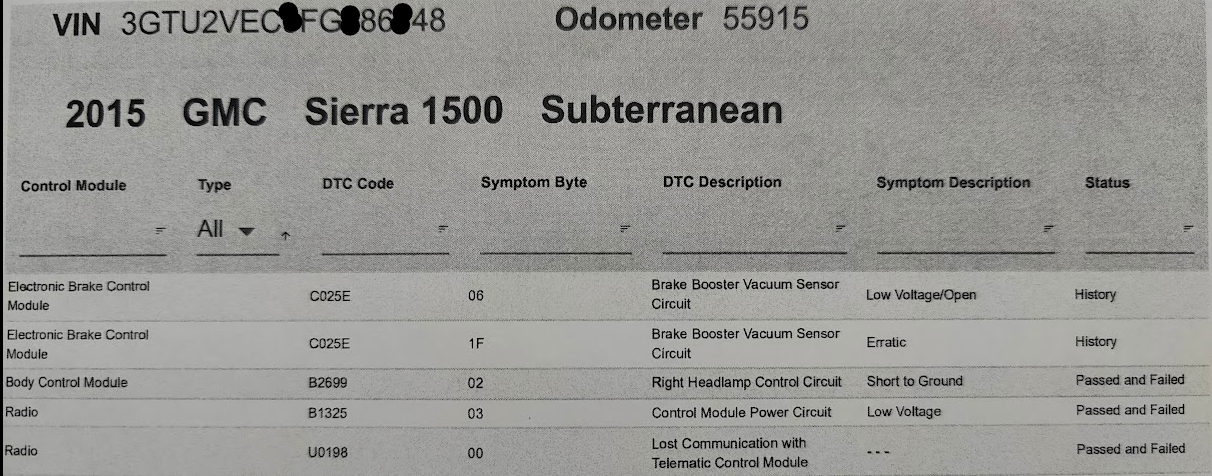
The picture attached isn't accurate to these trucks but what I'm getting at is the "poppet valve" in the image isn't fully closing or is leaking this would apply the brakes until the vacuum (on the vacuum side) bleeds off. I'm not ruling out the master cylinder yet either, the vacuum codes are why I'm more interested in the booster.
 1 point
 -
FWIW, HPL oils have the best TBN retention I've seen. Even better than Amsoil SS.1 point
-
The sensor is right on front of the booster...1 point
-
Taylor Swift and Travis Kelce. Wing nut news releasing the newest conspiracy theory. What is the matter with people?1 point
-
right hand inside fuse panel, fuse f41 powers the control panel. 10 amp fuse1 point
-
Girls get aroused by reading, such as 50 Shades of Grey. Guys get aroused by looking at pics. I'm a guy. I need pics. Thanks for posting some up.1 point
-
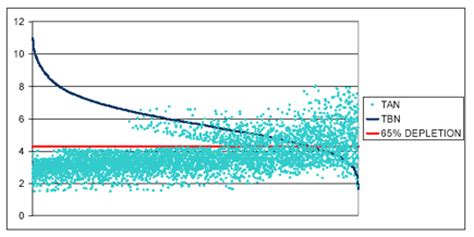
Destructive Testing on YOUR Vehicle Every once in a while, I hear someone really smart say something really dumb and this video (below) is an example. As you view this video ask yourself how much preventable damage you are willing to allow your machine to undergo. For starters, he tries to make a point that the crossover point is based on the PH of aqueous solutions thus has no bearing on that of mineral solutions. Problem with this is that corrosion is an issue of excess hydrogen ions, corrosion, or deficient hydrogen ions, caustic embrittlement. While aqueous v mineral base sounds line apples and oranges excess H+ is plain old excess H+. Rubbish. Secondly the actual acids ARE aqueous. Nitric and Sulfuric acids from the dissociation of Sulfur and Nitric combustion byproducts with ever present water of both oil and fuel. That he claims the test is "notoriously' has poor Unrepeatability and reproducibility. They extrapolated that with an assumption the bias is ALWAY in the same direction for all cases (2), which is not true. But his point on that is not without merit. It's just that most of that 'random' results are NULLIFIED by using the 50% rule. Crossover is more generous yet. 60% percent is dangerous. Copper corrosion test to 4A or greater are destructive. Also dampened by ISO standards and the human element is smaller than suggested. And yet folks it is an acceptable ASTM method used to produce this showing increase wear metal actually BEFORE the cross over point: Shortly before making this claim, he ADMITS at about 2 minutes into the video that this method "Gives a large Safety Margin" Hum....like that is a bad thing. It's a great thing! Then he makes a statement that there "Isn't a test for the depletion of the corrosion inhibitor". Also, not true. What he should have said is, "There is not DIRECT" measurement of the depletion of corrosion inhibitor." Does that sound like I'm splitting hairs? Any idea how much science is done by indirect measurement? Like theoretical physics! The graph above is an example of indirect measurement of that very ask. To explain.... He suggested that we plot (TAN V TBN) V Copper (or Iron) PPM wear metals. And find the point where the copper wear metals increase 'happens' v the TBN/TAN relationship. That kids is called "DISTRUCTIVE TESTING" and assumes that there is an ACCEPTABLE level of damage to be endured with EVERY oil change interval to extract the absolute maximum value from you OIL dollar. When in reality the idea is to extract the maximum value from the power trains LIFE. He further suggests you run copper corrosion test to find YOUR limit of acceptable destruction. Really? My limit is zero IF it can be avoided. 50% depletion is just entering the TAN 'troublesome" range. I'm good with 1a/1/a 3 and 24 hour. Any idea what ZDDP was FIRST used for before discovering it's antiwear properties? You guessed it. Corrosion Inhibitor. Also, a GREAT antioxidant. Versatile. Not all his stuff if junk. Just use you noggin to ferret out the rational from the marketing.
1 point
-
Many people have had problems with their rear entertainment screens breaking. I couldn't find instructions on how to remove/replace them, so made this tutorial video:https://youtu.be/RT5lFuyLSuM?si=G4fy2cOj_A_QEBCG Link to buy the replacement cover: https://infotainmentscreencover.myshopify.com/products/gm-chevy-rear-entertainment-removal-cover-set-of-2-covers-only?utm_source=copyToPasteBoard&utm_medium=product-links&utm_content=web1 point
-
I remember the 3 hour trip home on 2 lane roads when I 1st picked up my truck. Butt was sore. Thought maybe I'd made a mistake buying it. Bought a cushion to sit on. Lowered the tire pressures as much as possible. Now I don't even notice. No longer use the cushion, Biggest problem I have now is if I'm not using cruise control, I'm always going faster than I think I am. Going 80 feels like 50. I do pull a trailer with a skid steer or tractor at times. My pressures are set about 5 lbs above minimum. Haven't noticed any swaying problems pulling the trailer. Overall happy with everything.1 point
-
GM doesn’t actually give us recommendations for how much to reduce pressure at lower weights than the GAWRs, and I suspect they don’t want to take on the liability of providing that advice. I don’t think GM necessarily “wants” the tire pressure to be higher in the rear when the rear axle weight is way below the front axle weight. I believe the OEM alert pressures for the TPMS are simply some fixed percentage below the maximum tire pressure recommended based on the axle weight rating and whatever handling factors went into setting the maximum pressures on the door jamb sticker. They only want to pay for a fixed alert level, and they want to give you a meaningful alert level for when you are maxed out (probably driven by DOT regulations). Their 80 psi recommendation at 7200 RGAWR and the associated 63 psi alert level (and 70 psi and 55 alert level for the 2500) don’t account for the fact that, when empty, the rear axle weight is only about 3350 lbs. Towing a medium or heavy trailer is a whole different set of concerns, and you want maximum lateral stiffness to avoid sway regardless of rear axle weight, so “good on ya” JT for running at the max rear pressure when towing.1 point
-
the professional application is all in the prep. I have a buddy that's had several of his cars ceramic coated at roughly $1k each. It doesn't matter if the car is brand new from the show room, they still do full PH-wash, clay bar, polish and paint correction. This is what guarantees the long term bonding and also what takes so long. Easily can be 8 hrs of shop time/materials before the actual ceramic coating even starts.1 point
-
It sort of defies logic. The push rod getting longer would be going against physics. If the jam nut came loose, I would expect it to get shorter since becoming longer means it has to overcome the static pressure in the master cylinder. You will want to unbolt the master cylinder and slide it off the studs so you can take a look at the push rod. Having never seen behind a master on a hydra boost system I am just assuming the push rod can be removed this way. The push rod should have a lock or jam nut preventing the rod from turning on its threads. Be careful to avoid losing the current installed length. Using washer as you did is a good way to help diagnose it, but is not wise to leave it that way. You sure this didn't start after the master was changed?1 point









This leaderboard is set to New York/GMT-04:00