.JPG.6537b7f00fa66f30aa51f5040da0fd95.JPG)
Grumpy Bear
-
Posts
12,788 -
Joined
-
Last visited
-
Days Won
459
Content Type
Profiles
Forums
Gallery
Events
Articles
RPO
Store
Blogs
Everything posted by Grumpy Bear
-
^ Well that's no joke!
-
I've been thinking of converting the Mirage to E-85. I have one station in the area that is $2.29 The rest are over $3! Does that make sense?
-
Let me introduce you to my Mirage 1.2 three pot with a CVT! Know what a Mirage can pass a Hell Cat Hemi can't?
-
It is, It is the purpose. Just ask that everyone plays nice On another note. The Terrain and the Equinox are fraternal twins. The one we have is spitting distance from 300K and yes, it has been problematic. Oil consumption is inexcusable. That said, nearly everything else fell into the "Routine Maintenance" bucket or expected failure due to age or accident. The 2015 Generation are very comfortable and they drive dreamy. The six speed is a rockstar save for the cheap failure prone manual automatic physical switch in the shifter. I called it quits after three. The Ecotec 2.4 I-4 sans the GDI pump junk is nearly bulletproof. The hardest thing we experienced with this SUV was rear wheel alignment. The back axle is a starter kit. Toe bolts need to be installed as do extended range camber bolts. Then you have to find someone not new to the planet that has the skill and patients for the horrendous task of dialing it in. But once set, it is rock solid. The new ones....yea, I'll pass. I have one CVT and it is enough. They could be a good transmission but someone would have to really care designing it. Subaru seems to have it down fairly well.
-
Big oil is raking in billions from the Iran war. Can it avoid Trump’s fury? Remember I said Big Oil is 'Vertically Integrated"? Even as they no longer own the majority of the "Pump" they still own the "Well". Crude price upward pressure does not translate into that same pressure on production. Pumping cost remain unaffected and the gap is pure profit. Even after subtraction of a minor, comparatively, lower amount from supposed, but not always, realized refining volume. Consumers hate war, Big Oil, not so much.
-
Do you remember that Harley Davidson was more successful (solvent) when it produced about 60% of the market demand (by design) and forced wait times of up to three years? Even when your turn came around it was, "Take what we are giving you or move to the back of the line and start over". HUGE markup's were 'normalized' and dealer killed. 40% markup and no floor plan? What's not to love? Greed will kill them yet. They have surplus production and customer base is tanking. And still they think nosebleed pricing will work.
-
.thumb.JPG.2c573de60d3a3a4407c7d92298db46dd.JPG) There is a very good video linked to this article I think the OP would find some confidence in. https://www.duramaxnews.com/post/the-10-000-3-0-duramax-timing-chain-flaw-what-gm-fixed-and-how-to-protect-your-truck
There is a very good video linked to this article I think the OP would find some confidence in. https://www.duramaxnews.com/post/the-10-000-3-0-duramax-timing-chain-flaw-what-gm-fixed-and-how-to-protect-your-truck -
Another take is that COVID19 interruptions reduced inventory (supply chain issues) and with intent that level has been maintained?
-
When a condition becomes a business model. https://www.gm-trucks.com/gm-truck-suv-incentives-pricing-2026/ Zane posted this in "Latest Articles". The honest bottom line Truck buyers have spent three years assuming this is a temporary condition that will break once inventories normalize. GM just presented it to investors as a durable strategy, on a chart, as evidence of good management. Inventory did normalize. GM is at 511,000 units and squarely inside its own 50 to 60 day target. The discounts still did not come back, because the low incentive number is the goal rather than a symptom of shortage. Plan your purchase around that reality instead of waiting for it to change. Follow our ongoing GM News coverage for pricing and incentive changes as the next-generation trucks land.
-
Thought it was raining this morning when we woke. Nope. Dew point was over 80 F and humidity 98%. Zero visibility distance. Everything was 'sweating'. I've seen rain come out of clouds but never out of Pepper or the tree trunks. Wicked storms just missed us sliding off to the east but by blocks. Heat index about 110 F with air temp in the 90's. This is our third wave this month of multiple days of this type of weather. And yet the grass is going dormant and the ground is cracking this side of the street and water up the the hood opposite. Just weird stuff going on.
-
Some Assembly is Required
Grumpy Bear replied to Grumpy Bear's topic in Maintenance, Oils/Fluids, Detailing & Rust Prevention
Sleeve bearings have been about a thou per inch of diameter for over a hundred years. Piston clearances have changed back AND forth. I've heard there is a new forging alloy that can be fit as tight as a cast piston. That would be big news for small inch boosted OEM's but would have nil effect on oil weight. Hypereutectic cast pistons have/are used in Harley Davidsons at a thou bore clearances and still use 20W50. Yep, allot of smoke and mirror marketing. Lower viscosity, lower AW levels (sacrificial chemistries) and longer OCI's depleting them. Toss in some poor QC not catching machining issues and it's amazing they lasted as long as they have. Side note. that 0W* v 5W* noise is just that. Noise. Unless you live where it's > -22 F constantly. Zero weight is another fuel play. It's actually the majority of the fuel savings in a light weight oil. In my zip code we've had two days in a decade that it has been the cold. On those days both Pepper and I call in sick. -
Wow I'm in a pickle. (Broke down truck) and a story.
Grumpy Bear replied to Atlas's topic in The Off-Topic Bar
O2's not working well will alter the AFR and make em stink. Drop that cat in a bucket of hot soapy water then pressure wash the internals, what you can reach. Brings a good many of them back to life if it's soot and not poisoned. -
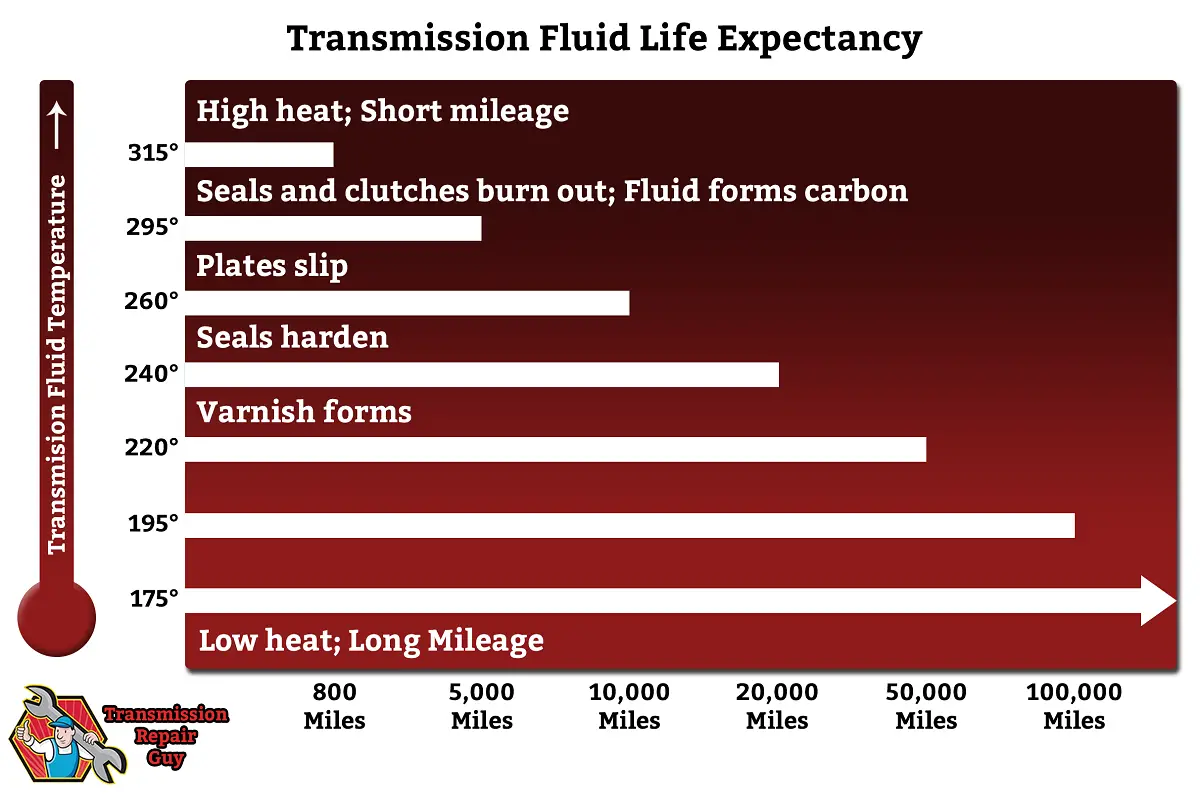
After I wrote that reply I went for a ride. 85 F out. So trans started at 85 F and it shifted the same as it did an hour latter at 168 F. I've never actually recorded the to cold to shift point but it is under 32 F before they start hanging on to a lower gear or leaving the converter unlocked. Both intended to heat fluid. Yes, brake or bake. Absolutely. Your welcome. True research ended decades ago. Field trials are still in play. There is a thing called oxidation onset temperature. This is the heat related oxidation not the O2 exposure kind. For mineral oil that starts at 140 F. So what happens after 140 F? Each 20 F cuts fluid life in half! Does using a Full Synthetic improve that? Yes! By how much? Depends on the base oil type and a few other factors. But enough to notice. Some esters are even higher. There are even synergies between types the will raise it higher than any one component is alone. Then there is "Hindered" oils. Antioxidant additives. Hindered Polyol Esters can sit at 500 F for years in a turbine. When a blender brags his oil will 'take 500 F" in service he doesn't specify for how long. Water will dance on a 500 F hot plate for several seconds. @newdude put up a chart showing the relationship between fluid temperature and it's life in an automatic transmission. Here's a version of that chart for Group III based oils. These temperatures are those in the pan as observed as 'normal'. that is you drive as you do for as long as you do under what load you ask of it and whatever that temperature is this graph applies to. Flash temperatures of a few minutes isn't what his means. Note that fluids held at a constant 240 F have a service life of only 20K miles. 220 F explains the factory exchange limit, eh? My equipment I keep under 180 F and I'm good if the cooler will hold it as low as 140 F. But that's me.

-
It added a cost layer to an already limited production supply. True that.
-
Swap costs and supply/demand balance. When a barrel comes out of the ground the entire range of products are present but not all at the same percentage. Breakdown of Refined Products The following table summarizes the approximate output from a standard 42-gallon barrel of crude oil: Product Type Gallons per Barrel Percentage of Total Gasoline 20 gallons 45% Diesel Fuel 9 gallons 21% Other Products 13 gallons 31% Most of that diesel figure is 'straight run' or cut from the barrel. Gasoline 'cut from the barrel runs 0 to 20% at the crude. So in the crude unit there is more diesel the gasoline, usually. The full refining experience however gives the tabled values. Ego there is half the diesel than gasoline after the 'first crack' That could be an FCC unit, or Isomax or.... Those units take heavy products and break the big ones into little ones. Those numbers are harder to get hold of but directionally it ends up the same. Really light products are very profitable. Ethylene and Propylene to name two. Those are cracked from slightly heavier feeds like NG and Propane and Ethane. The cracker harshness determines the feed for distillation. Those feeds come from less profitable products like diesel and gasoline. So...there is a swap cost. How much market is there TODAY and what crude am I running TODAY..... what is my process capable of always. There is this as well. The USA uses allot more gasoline than it does diesel so in the cracker the process is tilted to gasoline production which....limits supply of diesel. OTR uses the most and it has different requirements than automotive and agricultural. Limiting auto products. You are correct however. It is less refined, just less of it. Allot less.
-
Most thermostatically controlled ATF systems use a 'wax' pill just like the one in your water thermostat. They work on the expansion volume of the wax and the pill is constructed in such a way as to limit the travel to remain within that range. This means it has an opening temperature often called the 'cracking temperature' and a fully open temperature. For whatever reason oil is designated by it's fully open temperature and water by it's cracking temperature. Between the two it the "Regulating Temperature" The entire range is about 20 F from closed to open. In your example the lower limit, opening point of 145 F then has a fully open temp of 165 F and a throttling temperature of 155 F. Thing is, the throttling temperature needs two things to work properly. Enough system load high enough to reach the minimum and a heat sink (cooler/exchanger) large enough to prevent any load applied from exceeding the fully open temperature. If your system exceeds the fully open temperature it is screaming MORE COOLER. Here is the silly part of the whole thermostat system where the oil is cooled/heated by the radiator. Nothing is flowing to that system until the oil temperature reaches the cracking temperature unless it is equipped with a minimum flow bypass orifice or a bypass built into the seating surface of the plunger. That system meant to get it up to temp quicker isn't doing a thing until WORK drives if from ambient to cracking temp. One a cold winter day, like zero F, it may never get hotter than about 110 F. Sometimes not even that. People forget or are young enough to not know that until this millennia transmissions were cooled by the radiator cold tank alone and without a thermostat at all. In the 50's they weren't even cooled. OEMs learn everything the hard way. When an OEM tells you the trans "Works best" between 175 F and 220 F it means works best for THEM. The transmission thermostat is fuel play. If you watch you trans temps like I do you will learn that it may take a hundred miles if you are not towing and not driving more than say 55-60 mph on a zero F day to even reach 120 F and it might sit there all day if it's colder. Yet if functions perfectly over about 100 F. It may need to get a bit warmer for the fuel and spark maps to go without an multiplier. Worry more about too hot. Use a cooler large enough to put that thermostat in range.
-
Some Assembly is Required
Grumpy Bear replied to Grumpy Bear's topic in Maintenance, Oils/Fluids, Detailing & Rust Prevention
How many years have I pointed out every point in that link to the folks here and been avalanched with criticisms and outright hostilities at times? I ran counter to even the great CUSTOMBOSS and Lake Speed Jr and the half dozen experts on YouTube and in the final.....GM, Physics (Stribeck) backs that Grumpy old Bear. Honestly, I never said a thing engineering hadn't studied silly and laid in concrete during WWII. But I'm old, the information is old and yet, the Laws of Physics are eternal. Okay there is one exception. I vehemently disagree with their use of the word 'tolerances' when what it meant is "clearance". The clearance is the distance between two objects. The tolerance is the degree of acceptable variation permitted in that clearance. I.E., piston to bore clearance is 0.004" with a tolerance of +/- .0002" so the clearance is in specification if it lies between 0.0038" and 0.0042". Cutting that 'tolerance in half has ZERO impact on lubrication requirements. Makes for more difficulty in manufacturing. But a tighter clearance 'MAY'. Depends on finish. Anyway.... It's one of those statements made by people to make themselves look smarter than they are to convince people who are as un-enlighten as they seem to manipulate their behaviors. But hey, the blind leading the blind puts them both in the pit. -
Out and about yesterday on a long Saturday drive I passed a lot of Shell stations. My preferred, so I pay attention. Lot's of small town Illinois so not six stations in three blocks like the city. Everyone of them over a radius of say 100 miles had regular at $4.19 but one which was the one closest to home at $4.15. However Premium pricing varied greatly between 85 cents over regular to $1.50 over. I'm not counting the price of the station with the lowest regular so the reference is the same for the remainder and all within the same brand. However the spread discrepancy holds across all brands. @txab, any thoughts on that?
-
Some Assembly is Required
Grumpy Bear replied to Grumpy Bear's topic in Maintenance, Oils/Fluids, Detailing & Rust Prevention
This is going to take allot of Assembly -
There is a sign at my chiropractors office that says, "Don't quit, take a break." Sound advice. On a 65 degree day (F) I can still work pretty darn hard (I'm 72). On a 85 degree day with a good deal of humidity it takes me three days to do what in took at 65 degree in three hours. If I work to muscle exhaustion (back) it will take me days more to recover. Taking breaks to prevent that is most useful. A lift belt has been very useful in preventing both. Minister was giving a talk the other night where he was speaking of age and he used a clock to illustrate the human lifespan and it's ability to task. 1 to 45 was the second hand, scurry about. 46 to 70 the minute hand. Slower but...71 and up the hour hand...Hummm....until that talk I felt more like the minute hand. Then he says, the most useful hand on the clock is the hour hand. Without it you can't tell time. (Hour of the watch). I felt a bit better knowing we over 70 are useful.
-
Wow I'm in a pickle. (Broke down truck) and a story.
Grumpy Bear replied to Atlas's topic in The Off-Topic Bar
You are winning more than battles. You're winning the war! Nice. -
I went from every other day to about once in five since the rain abated. I'm not unhappy about that. Took most of the month for the ditches to dry enough to mow.
-
Not what I said but I can work with it anyway. Complete combustion produces CO2 and H20. When it's cold enough you can 'see' it as water vapor but it is always there and more so the better the tune up. It's physics, not an argument. In a cold motor when the cylinder jacket is below the condensation temperature the water goes to the pan and not the PCV system. Heating the oil moves it from liquid to vapor where it is removed by the PCV system. When and how much depends on temperatures. Of the air, the water and so on. It has little to with the humidity. Water is a combustion product.
-
Most say the oil temperature needs to above the boiling point of water to rid it of moisture and long enough to dry it. Many think that is about a hour at 212 F or more. Those people have never line dried cloths in a Midwest winter. Leave a pan of water sitting on the counter and eventually it all evaporates. So heat drives the time it takes. Water in oil under 175 F, the Nitration initiation temperature, is a minimum then for temperature and samples I've done that use Karl Fisher method say about a hour (in a healthy well tuned motor) over 175 F will dry it to under 800 ppm. Low enough to not be much of a factor. Motors with weak rings will take longer and the colder the air temperature the longer it takes. On a cold motor there is also the condensation temperature. Blowby gases that contain moisture are subject to that cold cylinder wall, like sweat on a glass of ice tea. But also subject to the Law of Partial Pressures. Wear studies by GM and the DOD indicate wear is a real issue below 85 F and a concern to 140 F but doesn't become a minimal factor until about 160 F. You know this intuitively when you see water vapor exit the exhaust pipe until the system gets above the dew point. It isn't magic, it's physics and it fascinates me. I know you didn't ask but....I over share sometimes. You keep the Camaro's high and tight.
-
I have thought an EV might have some practical value in extending the life of the ICE members of ones fleet. Now....I'm convinced of it. I've been letting my better half access Raven (Mitsubishi Mirage) for her needs while Dizzy has been in the shop. Being the fuel freak I am and given the fact Raven is capable of over 60 mpg in clean air on a warm day I was taken back by the wife's ability to take a car that had used a half a tank of gas that to that point had returned a value of 57 mpg and return in with a decimating 51 mpg for that same tank in that same day in a 15 mile round trip of short hop errands and a stop in the drive through at Micky D's. Trust me on this. It would take the remainder of that tank driven on the highway to return that tank to just 54 mpg. This is not a Mitsubishi issue. This is an ICE issue that is magnified in vehicles capable of such high fuel economy values. On a percentage basis your 1500 does the same thing. Short hopping an ICE consumes a good deal more fuel and in doing so provides zero additional useable outputs. That entire volume of fuel is wasted in diluting the cylinder walls oil films, creating crankcase moisture and acid content and the resultant wear. Enter the SLATE. All of that is avoided and the ICE's advantage in range and made useful at reduced wear for your ICE! Kind'a cool.