

.JPG.6537b7f00fa66f30aa51f5040da0fd95.JPG)
Grumpy Bear
-
Posts
12,857 -
Joined
-
Last visited
-
Days Won
464
Content Type
Profiles
Forums
Gallery
Events
Articles
RPO
Store
Blogs
Everything posted by Grumpy Bear
-
.thumb.JPG.2c573de60d3a3a4407c7d92298db46dd.JPG)
Super Tech oil filters
Grumpy Bear replied to Jworks's topic in 1999-2013 Silverado 1500 & Sierra 1500
I opine that the AC-Delco filter sets the benchmark for 'average lifespan'. It is, Afterall, the GM touchstone. Legal "Lifetime" of a power train is 150K. If you believe that is 'average'; that Delco will get you there. Likely take it a bit further if all ducks are in a row. -
Super Tech oil filters
Grumpy Bear replied to Jworks's topic in 1999-2013 Silverado 1500 & Sierra 1500
True! Filter area is also in play on differential pressure. You could filter with a 2 micron full flow absolute system IF there were enough filter media area, but it would be a huge filter or multiple filters. Since that is somewhat impractical those systems are employed in bypass filtering of something like 10% of the pump volume. But on the money. Fine filtration doesn't have to be sacrificed but is often. Especially in cheap filters that count every square inch of media and every gram of metal in ROI calculations. Supertech sacrifices both for margin. They are not alone. People that do this for a living weight both filter efficiency and grams of debris held to a specific pressure drop to give an overall rating for the filter. They don't often share with mortals. -
Super Tech oil filters
Grumpy Bear replied to Jworks's topic in 1999-2013 Silverado 1500 & Sierra 1500
I think penny's make dollars and yes the air filter is very important as is dilution. But it is a concert, not a single note that makes that motor sing. And yes, air filtration has a larger impact than oil filtration. But air isn't the only source of particulate matter in your oil. Amalgamation of oxidation products key. Carbon, soot and yea, GDI creates allot of soot. Diesel levels sometimes. My opinion is that it is a mistake to isolate a single element of wear as unimportant or to prioritize them by cost. Bore/rings are bearings. Linear bearings with tight clearance that run under the worse circumstances than the rods, mains and cam bearings, as you noted. Your oil pump is a vane pump with micron sized face clearance. All that said, it is your money and your equipment. I gave the opinion I was asked for but I'm not the oil police You don't need my permission and I wont' judge your decision. No hook... -
Super Tech oil filters
Grumpy Bear replied to Jworks's topic in 1999-2013 Silverado 1500 & Sierra 1500
A fair point but are you considering all the clearances in the motor or just bearings? Ring face to bore face is 3 to 5 micron and the bore is the first place a well built and maintained motor wears out. Cam lobe to rocker/lifter interface is even tighter. There seems to be an idea that if it goes 100K without issues that whatever took it far will take it ten times that far. Lets go back to the GM wear study. Note that that chart has a formula that I tagged reference to. Let see how that works. A 30 micron filter has a relative engine life value of 4. A 20 micron filter a value of about 5.2. 5.2/4= a factor of 1.3. Let say you get 200K routinely with a 30 micron filter before bore wear gets intolerable. 200K * 1.3 = 260K to the same point of wear. So the question is, how much is 60K extra trouble free miles worth to you? Now lets say you also use a 2 micron bypass filter. You can't stop a mechanical device from wearing out but you can slow it's wear rate to a snails pace. Bearings are fine with 30 micron filters. Rings and cam lobes, not so much. Oh it will go a long distance but it will go further with finer filtration by a significant amount. 30% is not a sneeze. -
$2.29 here.
-
Super Tech oil filters
Grumpy Bear replied to Jworks's topic in 1999-2013 Silverado 1500 & Sierra 1500
https://www.gmparts.com/parts/filters/oil -
Super Tech oil filters
Grumpy Bear replied to Jworks's topic in 1999-2013 Silverado 1500 & Sierra 1500
99% at 30 Micron. (not 20 micron) Not exactly a Purolator Pure One , FRAM XG or AMSOIL EA. (fine print of the right photo lowest paragraph) Purely a mid pack filter. You decide if 30% projected engine life improvement is worth the up front money. (GM Wear Study from Machinery Lubrication) See Practical Lubrication and Filtration for equation explanation) -
I don't want an oil burner/best oil to use
Grumpy Bear replied to dieselfan1's topic in 6.6L Gas V8 (L8T)
Scenario specific. I run a Purolator PL22500 on Pepper that is supposed to be good for 10K and I do 5K OCI's and yet I change filters with ever oil change. Motor has over 190K on it. Uses no oil and runs well. I put near a half quart of used oil in the system if I don't. Dizzy on the other hand has 277K on her, uses a quart in 2K+ and has since 80K AND has rings that leave 3.5% fuel in the oil in under a 1K miles which is the chosen OCI. This motor has a Hengst type cartridge filter that fully empties to the pan (thus all oil is changed) every time it is shut down so I'm not pumping a half a pint of dirt into clean oil. I change that one about every third or fourth change. Every other in the winter when moisture is an issue. Purolator Red filter good for 5K. I'm good with that too. Putting a top drawer filter in that motor or changing ever thousand miles wont give me another 300K. I got a few babbitt bearing motors that don't even have filters or even strainers that use splash oiling. Never change filters in those Point is, a blanket statement can not be made that will cover all situations or circumstances. But that's just my opinion. -
I don't want an oil burner/best oil to use
Grumpy Bear replied to dieselfan1's topic in 6.6L Gas V8 (L8T)
Most of todays motors do not use oil because the wear out the bore/ring interface but because they foul the oil control ring, plug the oil return channels and coke the land between the second and third rings or foul the PCV system or both. It will take 80-120K miles to kill the rings using OEM spec oils at OEM OCI's. OEM spec oils limit but do not eliminate fouling. The longer they are run the less effective they are at keeping it clean enough to be effective. These oils spec'd by the OEM are asked to run 7.5K or longer and they can't. 2K perhaps. 3K if pretty much a highway motor. 1-1.5K for short hoppers. 3K would be my drop dead top for non-polar oils like Castrol or Mobil; 2K more likely and only if they were committed to long haul road work. AMSOIL SS and only SS has some ester content but does have a record of keeping her clean likely due to AN usage. It is a polar oil that is 3-5K capable. Red Line HP is a very polar oil and one I've used in Pepper for almost 200K of oil consumption free use at 5K OCI's. I am shortening that to 3,750 currently but still double OEM offerings capable range. I'd expect TORCO SR-5 which is nearly a RLHP clone to perform about the same. Chevron Havoline Pro-RS (not DS) 5W30 is likely a good 3-4K offering as it is polar but not as robust in oxidation resistance at RL or TORCO and has a nice (5W40 spec) HTHS value. That said and if it were mine, when towing it would be 5W40. It's a sampling and I don't think a one of them mentioned past the second paragraph that is DEXOS 'certified' but every one on the list, hands down, is superior in real work performance. You wanted an opinion. There is mine. -
Some Assembly is Required
Grumpy Bear replied to Grumpy Bear's topic in Maintenance, Oils/Fluids, Detailing & Rust Prevention
Yes 300K is the goal. Will I make it? 276K isn't that far off so yea, I already did. That would make 3 units you know of and yea, that would make me somewhat of an expert on this piece of junk. Still has the OEM timing chain in it running silent as a church mouse. Fact is, if you heard it run you wouldn't know it wasn't new. This was not a highway motor. Only made a trip or two over 400 miles. Wife's work car and family northern Illinois grocery getter. About as horrid a service as could be placed on such a POS vent system. Most of it's life was trips of 25 miles or less. I've gotten this far in spite of Dyson's advice or any help from GM; not because of. I wouldn't let either of them service a Radio Flyer. If I had followed the book this motor would have been buried by a 100K. If I'd not enlisted Dyson I would have saved it. Hind site is truly 20/20. My only shortcoming was trusting either of them. -
Some Assembly is Required
Grumpy Bear replied to Grumpy Bear's topic in Maintenance, Oils/Fluids, Detailing & Rust Prevention
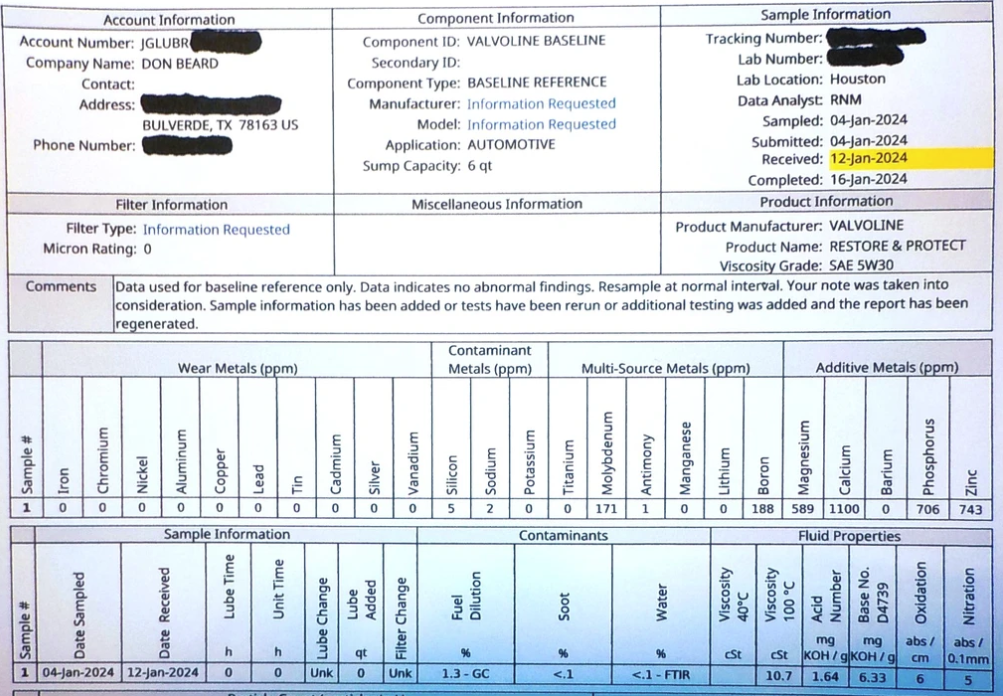
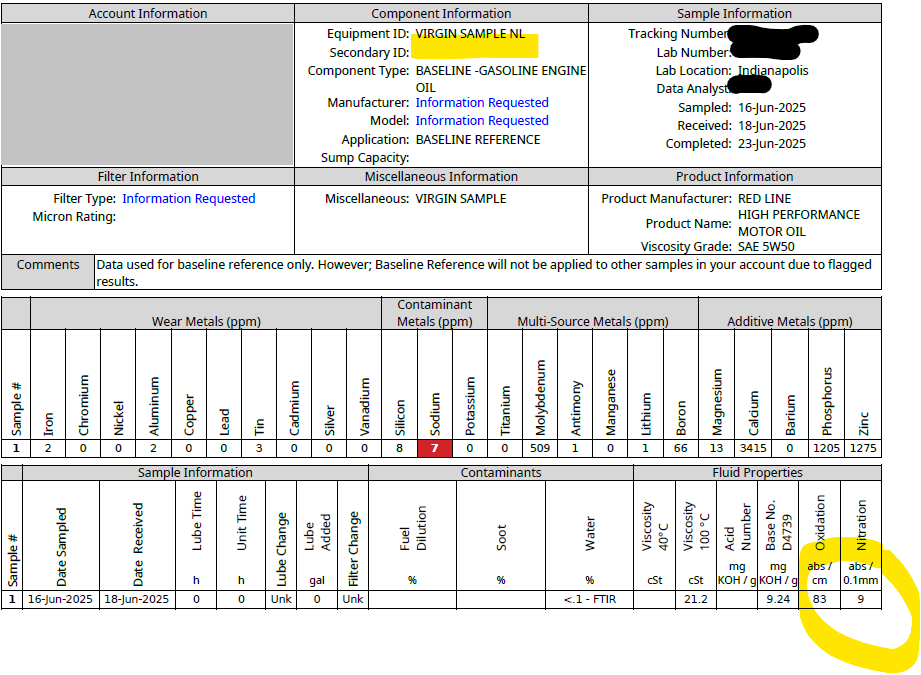
Once again, the scientific community disagrees that excluding background Nitration is an acceptable methodology. the sampling of VOA's above support that stand. Common sense does as well. The makers of the instruments that detect do as well. https://documents.thermofisher.com/TFS-Assets/CAD/Application-Notes/D10256~.pdf I'm now to the point where I let this go. I've brought the receipts. I've sounded the siren. Those that wish to believe the LIE will; and I am no longer responsible. It has zero effect on my equipment and I no longer have a reason nor a responsibility to continue this Nitration . You want to believe that one man in 8 BILLION is the only one that gets this right? You have at.....
-
But do sharks fart in the water?
-
Some Assembly is Required
Grumpy Bear replied to Grumpy Bear's topic in Maintenance, Oils/Fluids, Detailing & Rust Prevention
Assembly Tips An Ancient book note this: "Does not the ear test out words. As the tongue tastes food?" 1.) What is the source of the information you are considering? Is it confirmed by multiple unaffiliated reliable sources? Peer reviewed? Compare what you read or hear to these other reliable sources. Was that information/process or method repeatable by an independent third party? 2.) What is the purpose of the information? Is it self serving claiming unique knowledge that is unverifiable? Intellectual property that is untested by an equally qualified peer group? It is meant to draw attention for gain? To steer you away from the truth? Motive, purpose... 3.) Does it matter? What effect does this information have on your sphere of influence or responsibility? You don't have to chase every rabbit down every hole. Dad used to say, "Never be first the party nor the last to leave". -
Some Assembly is Required
Grumpy Bear replied to Grumpy Bear's topic in Maintenance, Oils/Fluids, Detailing & Rust Prevention
I've supplied numerous STLE and SAE articles and equipment vendors instructions on this topic. You can't wish a thing to be true. I'm not suppling more TRUTH from YOUR PEOPLE for you to ignore and confuse people with. Nitration levels are all over the map. 2 minutes googling others VOA samples. Background matters. It matters to the STLE and the SAE and to the people that make the instruments that measure it. You call me a liar and a fool and whatever else come to mind but it still won't make you right. Make you opposed to your own craft. Produce ONE single credible source that agrees with this fiction and I'll give it a second look. But until then...fiction it is.
-
Saw my first sub $2.90 price in a very long time around here. 1/10 under but under. That just made the spread wider as many others are still $3.39
-
Some Assembly is Required
Grumpy Bear replied to Grumpy Bear's topic in Maintenance, Oils/Fluids, Detailing & Rust Prevention
-
Some Assembly is Required
Grumpy Bear replied to Grumpy Bear's topic in Maintenance, Oils/Fluids, Detailing & Rust Prevention
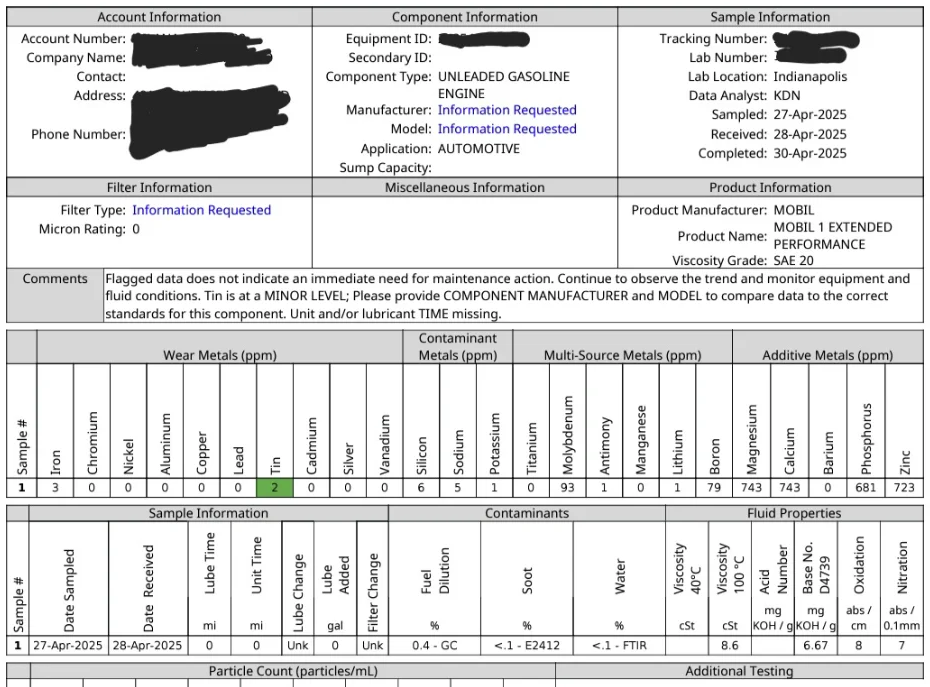
Improvement with miles just as one would expect. Oxidation and Nitration look stellar for this oil which has nearly a 10 nitration background. Oxidation, ditto, near VOA values. Good VI retention. TBN is happy on E85 and begging for some breathing room. Oil is not being stressed. Fuels is what I would expect for the fuel used vs the fuel that was. Identical to my results. -
Oil gets complicated only when one tries to distil it to an axiom. It isn't a cosmic singularity. It is multifaceted, yes, but viewed from thirty thousand feet it makes perfect sense. Every chemistry is a compromise that demands corresponding operational accommodations. OEM's and blenders attempt to convince one that no concession is required. Wishes are not reality nor can they be. By and large the result of comprises that were made before you cracked the seal on that bottle. Ones you would not have made as an owner/operator whose goal is quite different from the OEM or blender. There could be some truly exceptional choices if cost/margin/profit/greed could be removed from the equation by the OEM, the blender and the end user. If performance was the only stick of measure by all parties. that dog WILL hunt. Since we can't have a perfect lubricant we have to choose or create the perfect situation for what is available. This is going to mean NOBODY gets their best economic solution or at minimum their way, based solely on the cost of the lubricant or the margin hoped for, but the owner/operator can have a darn good mechanical result and a very happy powertrain.
-
Off topic but in the States, Gulf assets were bought by Chevron USA while I was working at the El Paso plant.
-
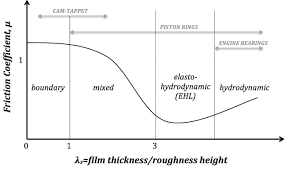
No, not what I'm saying. You either have enough to limit wear or you do not. Viscosity is a measure of the fluids INTERNAL friction. (not yelling, emphasizing). More viscosity = more internal friction = mpg loss. Less viscosity = less interna friction = mpg gain. Even this is not set in stone. You can have a oil with great lubricity that performs better in economy than a thinner oil of worse lubricity. Wear is independent of economy but not independent of viscosity. Think of it like this. Friction has two causes. Viscosity or internal fluid friction OR metal to metal contact. Getting drug across concrete. If the cause of friction is only viscosity then less friction = more economy with no to little effect on wear. IF however, the cause of friction is metal to metal contact then more viscosity = BOTH more economy and less wear. You have to know the CAUSE of the friction not just than it exists. Old time rule of thumb. If more viscosity = less bulk oil temperature then you have reduced wear by eliminating contact. IF more viscosity = more temperature then you have reduced economy with little to no effect on wear. The obverse of these conditions is also true. If a lighter oil increases bulk oil temperature then you've run afoul of contact and both wear and economy will suffer. If a lighter oil cools the bulk temperature then you increase economy with no to little increase in wear. This is only a rough rule an insist on a apples to apples oil comparison. I.E. same lubricity. This may seem confusing but if you read it a few times, close your eyes and visualize it...it will come to you. More times than I care to count, increasing viscosity lowers bulk temps and improves economy. On the rare case that this increase increases the bulk temperature it rarely lowers economy and I take the win. I'm never in a hurry to see how close I can get to falling off the cliff. In fact, I preferer this scenario. Gives me some breathing room for dilution and running hot and fast if the need presents.
-
2.7L Turbomax teardown
Grumpy Bear replied to GETGONE's topic in Engines & Drivetrain (V8, Duramax, TurboMax)
Not always. Dizzy was a 8% by GC. never smelled, never showed over full. Just quietly ate herself. Gas killed the viscosity. Who knows how long before consumption outpaced the leakage. -
Wear and oil induced friction are not related. Viscous drag is what happens to the oil. Wear is what happens to the machine. I'm not quoting the guy you quoted.
-
Sugar Bears 2015 GMC Terrain SLE-2 2.4 AWD
Grumpy Bear replied to Grumpy Bear's topic in Member Build Threads
276,000 Mile Service 444,214 km 1,000 OCI nominal 16 ounces of makeup oil 4 Quarts Mobil 1 Euro FS 5W40, 1 quart expired Red Line HP 10W40 No filter change. (Due next OCI) Gave her a bath. -
Some Assembly is Required
Grumpy Bear replied to Grumpy Bear's topic in Maintenance, Oils/Fluids, Detailing & Rust Prevention
A 0W20 or even a 5W20 can be made with a HTHS over 3.0. MTP30K, Red Line HP, Evolve EvoSyn 5W20 to name three.





-
Forum Statistics
250.5k
Total Topics2.7m
Total Posts -
Member Statistics
342,990
Total Members8,960
Most Online
-
Who's Online 0 Members, 0 Anonymous, 565 Guests (See full list)
- There are no registered users currently online