
rav3
-
Posts
1,071 -
Joined
-
Last visited
-
Days Won
4
Content Type
Profiles
Forums
Gallery
Events
Articles
RPO
Store
Blogs
Everything posted by rav3
-
2017 Silverado Front Bumper Valence/license plate holder
rav3 replied to Spencer_Waz92's topic in Modifications & Accessories
https://ebay.io/m/cTI46i -
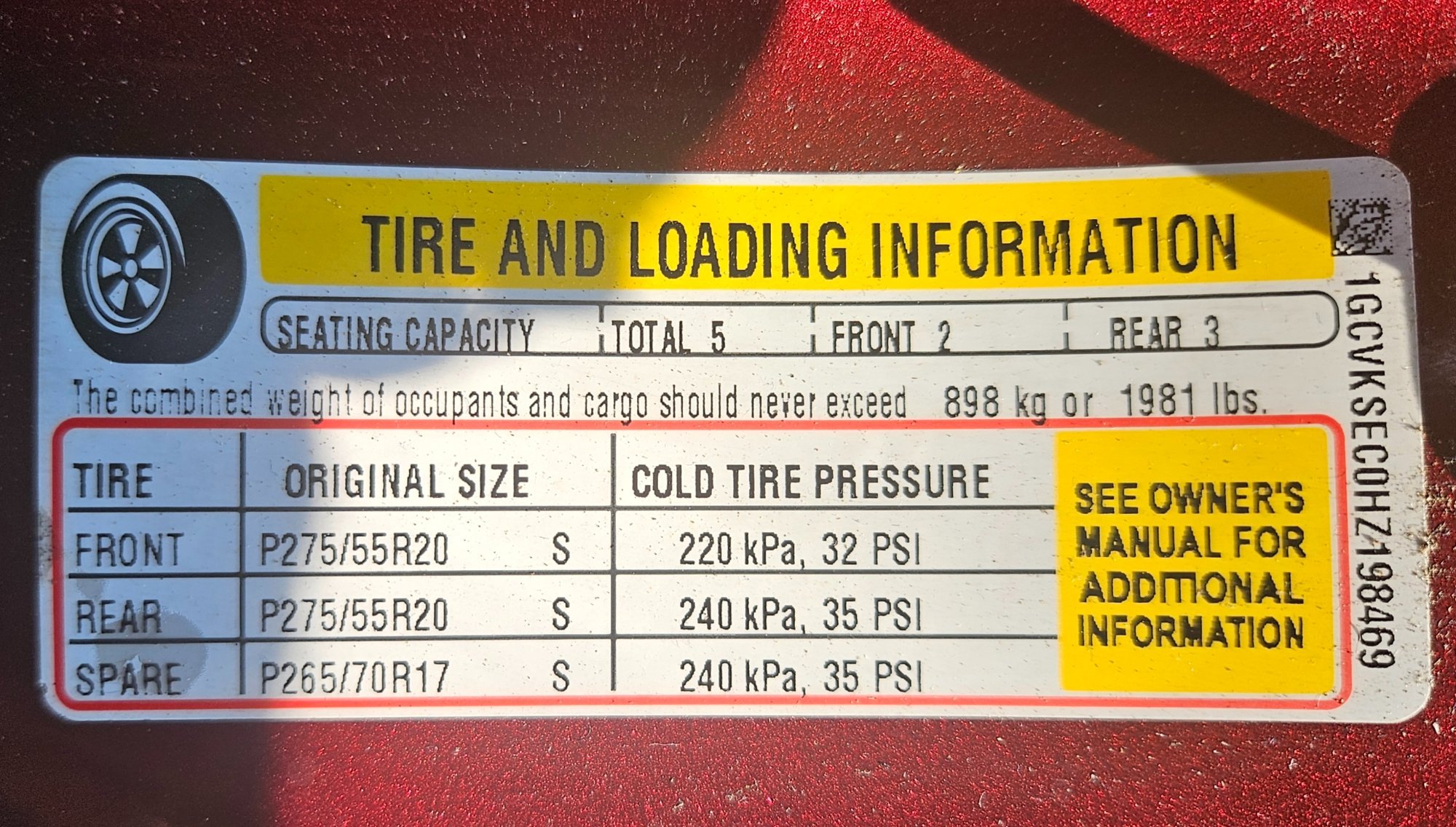
Yep, I just looked at my door sticker on my '17 1500 silverado double door & mine will carry 1981#

-
And Google AI says......... Yes, your truck can technically handle it, but you will be right at or near its maximum limit. A 2016 Chevrolet Silverado 1500 High Country with a 6.5-foot bed has a maximum payload capacity of approximately 1,770 pounds.Weight RealitiesLoad weight: Half a cord of dry hardwood weighs roughly 1,100 to 1,500 pounds depending on the wood type (like oak or hickory).Payload limit: Payload includes the weight of the wood, you, any passengers, and a full tank of gas.The math: If you weigh 200 pounds and have a full tank of gas, a 1,500-pound load of wood puts you right at that 1,770-pound ceiling.Safety TipsCheck the yellow and white sticker on your driver-side door jamb for your truck's exact payload number, as high-end luxury trims with extra features have slightly lower capacities than basic trucks.Expect the rear end to sag noticeably.Drive carefully, avoid sudden turns or stops, and keep speeds low if you have to travel a distance.
-
-
What CamGTP said BUT I would suggest doing this instead of pill flip, as heat KILLS ATF.
-
You didn't say what year it is. I have a '17 5.3 6l80e & used the Range AFM delete for a while to stay in V8 mode. Then I got a local tuner to preform a HPTune on my 6l80e & love it. He did a AFM delete, torque matching between engine & transmission, removed converter slip and mild engine tune that helps the transmission. Gears shift better, at specific speeds, no hunting for gear, no 2 gear down shifts, no spark plug miss feel. Drives like a different truck. I highly recommend it.
-
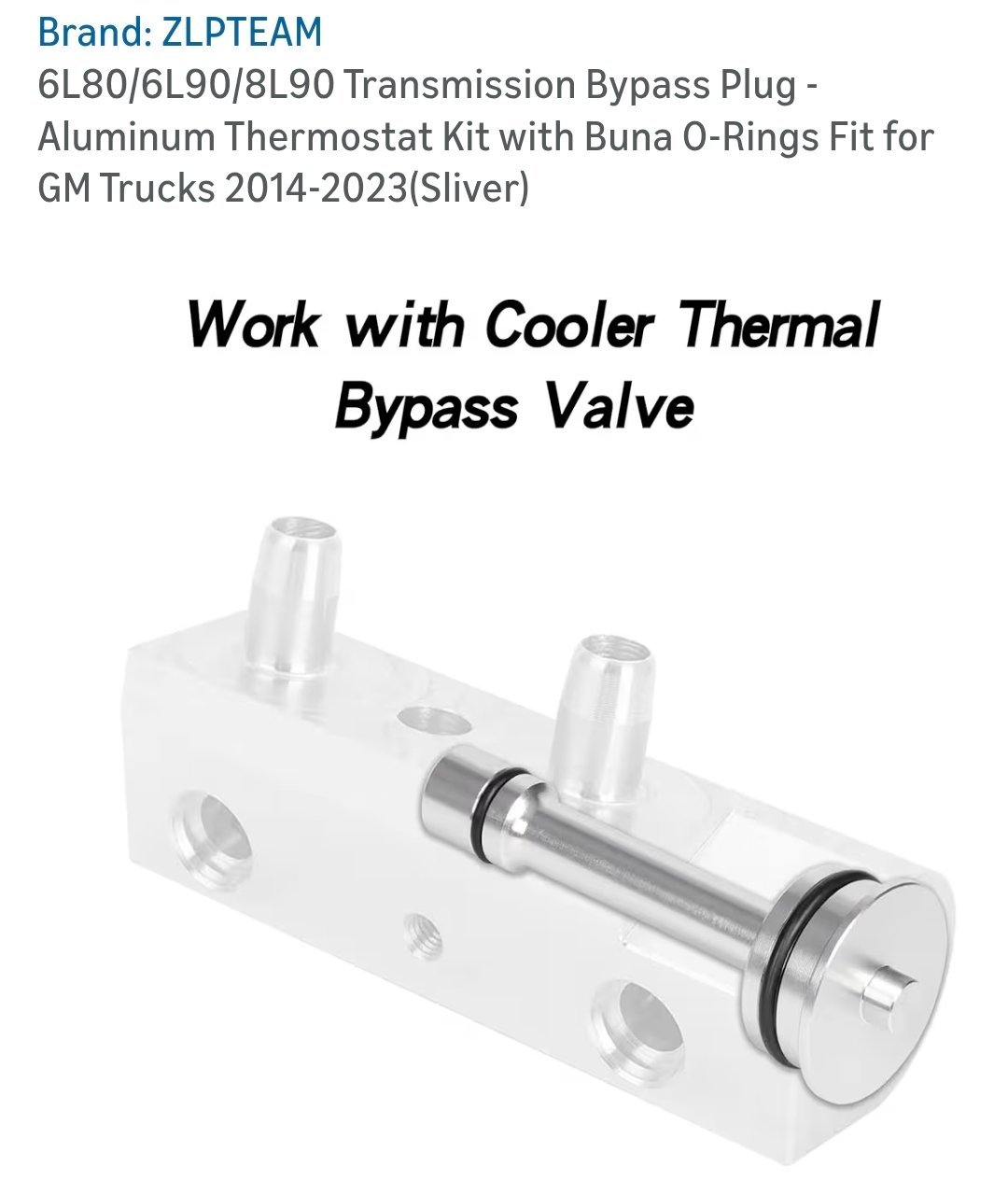
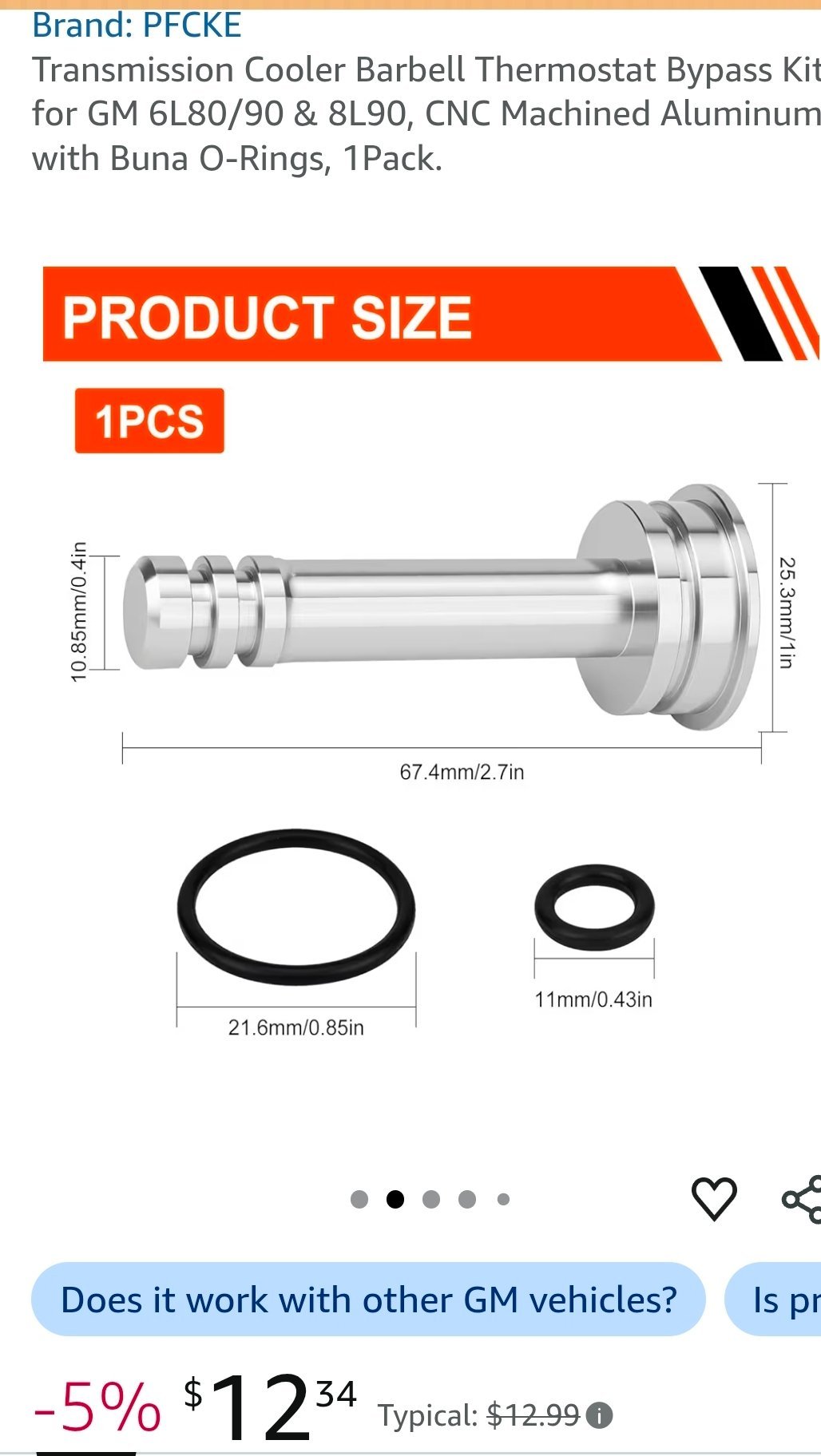
Yes, I thought so too. Cheaper & no moving parts. Actually makes it like the old 4L80E transmission. It's what I replaced my pill flip with
-
-
You might try this 1st. 1. Disconnect both transmission lines from the trans thermostat. 2. With compressed air, blow out the transmission cooler lines, blowing thru the return line with a jug container on the outlet line, and see if any debris is in the jug. I used a clear plastic drink bottle to catch the fluid & then looked to see if it caught any debris. Note from AI.....On your 2017 Chevrolet Silverado 1500 5.3L with the 6L80E, the transmission fluid flow is: Upper cooler line at the transmission = Hot fluid OUT to the radiator/transmission cooler. Lower cooler line at the transmission = Cooled fluid RETURN back into the transmission. At the radiator/auxiliary cooler, the fluid typically flows: Out of the transmission through the upper line. Through the radiator heat exchanger. Through the auxiliary cooler (if equipped with the factory towing package). Back to the transmission through the lower return line.. Then with the thermostat removed, I installed a thermometer defeat (bypass) that bought off Amazon. This one has no moving parts.
-
Did you put the transmission in neutral?
-
Check the securing nuts on the power distribution cap. I saw a video a while back where on of the power line terminals was loose causing this issue. Another thinking is to check you grounds. A couple of videos on YouTube showing them. Check the simple things first. https://youtu.be/LPiBKMJ5Lb8?feature=shared
-
5.3 / 6.2 valve covers / oil burning
rav3 replied to mdipasquale20's topic in 2014-2018 Silverado 1500 & Sierra 1500
Have you looked at your brake vacuum pump? On the 2017 Chevy 5.3L, a failing mechanical brake vacuum pump can cause excess oil consumption. The pump relies on engine oil for lubrication and a seal. If internal seals fail, the pump will draw oil directly out of the crankcase and push it into the brake booster or intake, where it is burned.Key Symptoms of a Failing Vacuum Pump. Hard or stiff brake pedal: Loss of vacuum assist makes braking effort significantly harder.Oil in the vacuum line: Disconnecting the vacuum line to the brake booster will reveal wet oil inside the hose.Noisy operation: A clicking, grinding, or loud tapping sound coming from the front/driver's side of the engine.Smoke from the tailpipe: Burning oil as it cycles through the intake. -
Exterior Rear Window Trim extended Cab
rav3 replied to grumpy56's topic in 2014-2018 Silverado 1500 & Sierra 1500
Go to that link again & scroll the picture. The black on is on the same item. Just make sure it's for your type of door. Crew cab or double door. -
On a 2014 Chevy Silverado with a 5.3L engine, Bank 2 is located on the passenger side (right side, when sitting in the truck). Bank 2 contains cylinders 2, 4, 6, and 8, with the catalytic converter/sensors often on that side.
-
Exterior Rear Window Trim extended Cab
rav3 replied to grumpy56's topic in 2014-2018 Silverado 1500 & Sierra 1500
I believe you have to buy the complete part. Another option is to have it wrapped. Chevrolet GM Genuine Parts Rear Driver Side Door Window Belt Reveal Molding | 23227178 | Chevrolet Parts -
What brand Dexron VI ATF for 6l80e?
rav3 replied to rav3's topic in 2014-2018 Silverado 1500 & Sierra 1500
@z45....yes, I agree with you. However, being a retired tooling engineer that has worked directly with the Tier 1 supplier engineers, I know how they work. If it is an "OE" supplier I will use those parts. But when it comes to fluids and I don't have the option of knowing the specs of a fluid, I default to certifications. There i know it at least meets the minimum standard. I also know how marketing words things to make you think it's OK but no data to back it up. Read the article that New dude linked about multiplieds this is above. It sort of explains my doubts. Not trying to change your mind, just wanting to explain the difference. I just don't want to take that risk at this time in my life -
What brand Dexron VI ATF for 6l80e?
rav3 replied to rav3's topic in 2014-2018 Silverado 1500 & Sierra 1500
Thanks, that was good article. Many on the Chevy forums say "Valvoline Multi Life Multi-Vehicle" ATF is Dexron VI. I'm not sure that it is actually approved Dexron VI fluid (But recommended for Dexron VI). Two different thinks. (Approved versus Recommended) I'll stick with the Approved/Certified/Licensed Dexron VI ATF. -
Front caliper sticking but releases after stopping
rav3 replied to PullMeOverRed's topic in Troubleshooting & Recalls
Your truck is 8-9 years old now with ****** miles. Lots of things can co wrong. If you haven't bled tge brakes moisture can get into the the piston area and corrode it, causing this issue. A pinched or internal collapse of brake line case cause it. No silver bullet. I'd remove caliper & remove piston & check bore & piston for crusty. Also how is the seal on it? -
As the title says, what brand Dexron VI are you using in your 6l80e transmission? Are you using AC Delco Dexron VI? FYI, I saw Valvoline Dexron VI at Walmart (blue bottle) for $6.88/qt. So what's the best bang for the buck that you found. I go by the assumption that any ATF that is Dexron VI certified is ok for this 6 speed. BTW mine is a 2017 LTZ 5.3L that has the TCM HP Tuned.
-
p2138 chevy silverado Code P2138 on a Chevy Silverado indicates a voltage mismatch between the two internal sensors of the accelerator pedal (APP), causing a "Reduced Engine Power" warning and sluggish acceleration. It is often caused by water leaking from the A-pillar/roof causing corrosion in the harness, or a failed pedal assembly. This video explains the causes of the P2138 code and how to fix it: Related video thumbnail 03:47 HVAC Mechanic YouTube• Dec 2, 2023 Common Causes & Fixes Water Intrusion (Most Common): Water leaks from the roof/antenna, damaging the body harness connector. The fix is to fix the leak and clean the harness connector with electrical cleaner and apply dielectric grease. Accelerator Pedal Position (APP) Sensor: The pedal assembly itself fails, requiring replacement (GM P/N 25830023 is common). Aftermarket Equipment: Pedal Commanders or other devices hooked into the system can throw this code. Wiring Issues: Inspect the harness for the pedal for frayed or broken wires. Symptoms Check Engine Light illuminates. "Reduced Engine Power" or "Reduced Power" warning on the dash. Weak or sluggish acceleration. Intermittent issues that may go away, then return. Troubleshooting Steps Check for Moisture: Check the passenger/driver side floorboards and under the dash for wetness (suggests a leak, perhaps from a sunroof or roof marker lights). Clean Connector: Inspect the pedal connector for corrosion, clean with electrical cleaner. Clear Codes & Reset: Clear the codes using a scanner. If you don't have one, disconnect the battery, touch the terminals together, and then try a pedal relearn. Replace Pedal: If issues persist, replace the accelerator pedal assembly.
-
Did it mess up as soon as windshield was replaced? Did they recalibrate it when windshield was replaced.
-
Question about 6L80, cooling line direction & HP Tune
rav3 replied to rav3's topic in 2014-2018 Silverado 1500 & Sierra 1500
Can you believe that AI is this quick & accurate about my question? This is crazy technology! -
Question about 6L80, cooling line direction & HP Tune
rav3 replied to rav3's topic in 2014-2018 Silverado 1500 & Sierra 1500
And ChatGPT said this...... Got it—that extra detail actually matters a lot. Short answer first: With a fill-flip thermostat mod, 77°F ambient, and a 2,200 → 5,000 ft climb, seeing ~195°F is completely normal Why your temp hit 195°F You basically created a perfect storm for heat generation: 1. Elevation climb = heavy load Going from 2,200 → 5,000 ft means sustained load The transmission is working harder to maintain speed 2. Torque converter slip (big heat source) On climbs, unless locked, the converter: Slips more Generates a LOT of heat quickly This is the #1 reason temps rise on hills 3. Fill flip mod changes behavior With the thermal bypass “flip”: Fluid is always routed through the cooler BUT: At lower temps, flow can be slightly restricted depending on setup Cooling efficiency depends heavily on airflow So: It helps overall cooling But doesn’t eliminate heat under load 4. Airflow reality Climbing a mountain = often lower speeds Less airflow through the cooler So even with the mod, cooling is reduced right when you need it most What matters most here Your temp did NOT run away past 200+ It likely leveled off around 190–200°F That means: Your cooler system is working Your fluid isn’t overheating No immediate issue Where HP Tuners can improve THIS exact scenario 1. Earlier TCC lockup (biggest gain) Reduce converter slip during climbs This alone can drop temps 10–20°F 2. Increase TCC apply pressure Prevent partial slip under load Helps eliminate heat buildup 3. Adjust downshift behavior Keep engine in a better power band Reduces load on the converter 4. Slightly firmer shifts Less clutch slip = less heat Simple test for next drive Next time you climb: Put it in Tow/Haul mode Forces earlier lockup Watch temp difference If temps drop noticeably: You’ve confirmed converter slip is your main heat source When this WOULD be a concern Watch for this pattern: Temps keep climbing past 210–220°F Doesn’t stabilize Or climbs fast even on flat ground That would point to: Flow restriction Cooler inefficiency Tuning issue Bottom line 195°F in your exact conditions = totally acceptable Your system behaved like it should The climb + converter slip explains everything If you want, I can help you: Dial in exact HP Tuners settings for cooler temps Or confirm your cooler routing after the flip (a lot of people get that slightly wrong) Just tell me -
Question about 6L80, cooling line direction & HP Tune
rav3 replied to rav3's topic in 2014-2018 Silverado 1500 & Sierra 1500
It's amazing what ChatGPT can figure out... HP Tuners can completely reshape how your 6L80E shifts—but it’s not just one setting. You’re basically reprogramming how the transmission applies clutches, pressure, and timing. Here’s a clear breakdown of what it actually does and how it fixes common shift problems What HP Tuners Changes in a 6L80E The 6L80E is a fully electronic clutch-to-clutch transmission, so shift quality is controlled by software, not just hydraulics. � MotorTrend 1. Shift Pressure (Firmness) Controls how hard or soft it shifts Higher pressure = firmer, quicker shifts Lower pressure = softer, smoother shifts This is the #1 fix for: Slipping shifts Lazy or “mushy” gear changes 2. Shift Timing (Speed of the shift) Controlled mainly by Torque Adder / Shift Timing tables Adjusts how fast the clutches apply and release Fixes: Long drawn-out shifts Flare between gears (RPM jump) On newer 6L80s, GM removed “desired shift time” tables and uses torque-based timing instead. � forum.hptuners.com 3. Shift Points (When it shifts) MPH or RPM where each gear change happens Fixes: Early shifting (bogging engine) Late shifting (revving too high) Example: Raise shift points for performance Lower for towing or economy 4. Torque Management (VERY important) Reduces engine torque during shifts to protect clutches Adjusting this: Less torque reduction = harder, faster shifts Too little = can damage transmission Important: Turning it off completely is a bad idea (can cause harsh timing issues and wear) � YouTube 5. TCC (Torque Converter Clutch) Control Controls lockup timing and pressure Fixes: Shudder Surging at steady speed Slip under load Common changes: Increase TCC pressure Adjust apply/release speeds Disable lockup in lower gears (sometimes) 6. Adaptive Learning Reset The transmission “learns” wear over time After tuning: You must reset adapts, or it may shift weird What’s Actually Happening Inside Each shift in a 6L80E is: One clutch turning OFF Another clutch turning ON If timing or pressure is off: Too slow = slip Too fast = harsh bang HP Tuners lets you sync that handoff perfectly Real-World Examples Fixing a sloppy 2–3 shift: Increase shift pressure slightly Reduce shift time (torque adder) Check torque management Fixing a harsh bang shift: Lower pressure a bit Smooth timing (increase shift time slightly) Fixing converter shudder: Increase TCC pressure Adjust lockup speeds Sometimes disable lockup in lower gears Important Reality Check This is where most people mess up: The 6L80E is very sensitive Bad tuning = burnt clutches fast Good tuning = longer life AND better performance Even stock power trucks rely heavily on correct calibration for durability. � MotorTrend Simple Summary HP Tuners fixes your shifting by adjusting: Pressure → how hard it hits Timing → how fast it shifts Shift points → when it shifts Torque management → how controlled it is TCC settings → how the converter behaves If you want, tell me exactly what your truck is doing (flare, bang, delayed shift, shudder, etc.), and I can point you to the exact tables and safe starting values for your 6L80 -
Here's the back story. 2017 LTZ 5.3 6L80 with 63k miles. I did the pill flip when I bought this truck at 32k miles & added the DOD/AFM delete at the same time. I have done 3 'drain & Fills' on ATF. The transmission has aways run about 140-150 F since I did that. Recently, I had the transmission Tuned via HP Tuner, elimination clutch slip, torque management & deleting the DOD. Last weekend as I was driving up the mountain from 2200 ft to 5000 ft, the transmission temp steadily rose up to 197 F and then cold as I descended back to 2200 ft. So, I'm wondering if the Pill Flip is not working for whatever reason or if the cooling line is restricted. So, I will be removing the transmission thermostat & taking it apart to inspect. While the cooling lines are off, I want to blow some air through the lines & flush out the ATF. Can anyone tell me which one of the lines goes to the cooler? Is this a bad idea, as there won't be any ATF in the lines when I start if back up. Let me know what you guys think


-
Forum Statistics
250.5k
Total Topics2.7m
Total Posts -
Member Statistics
342,970
Total Members8,960
Most Online
-
Who's Online 4 Members, 0 Anonymous, 1,156 Guests (See full list)