


Another JR
-
Posts
1,105 -
Joined
-
Last visited
-
Days Won
9
Content Type
Profiles
Forums
Gallery
Events
Articles
RPO
Store
Blogs
Everything posted by Another JR
-
In the “Are L8T engines noisy” thread a few days ago, lundimpact1775 posted: My 2020 L8T Silverado 2500 is noisy at 98k, has been noisy since I bought it at 89k.
-
I would have liked to order the HUD and rear view mirror camera display but I would have been forced to go to the AT4 or Denali, as you noted. That was going to add more than $5k to the truck, and it would have forced me into painted plastic bumper covers. I keep my vehicles a long time, and I wanted chrome bumpers - not necessarily for the look, but for the resistance to scratches and other damage. I didn’t seriously consider the Denali because I didn’t like the gaudy grill. I did consider the AT4 but went with the SLT with the leather buckets interior. We like it, and feel it was a good cost/features balance for us. With the GM supplier discount it was in the upper 50’s as I recall. A bonus effect of choosing an SLT is I feel it is a lot less likely to be stolen by professional thieves, put in a container, and shipped to the Middle East as happens to Denalis at a surprising rate. I suspect nobody there tells their hot car broker “Just get me an SLT - a Denali is too flashy for driving to the Lamborghini dealer.”
-
At that time 2020/2021 the block heaters were known to be defective, and dealer service departments were literally cutting the cords off at the block to prevent them from being used. I would have ordered it but it wasn’t a practical option at the time. I don’t need it in the PNW, but it would have been good to have just in case.
-
I think running lower tire pressures based on lower axle weights would be easy to defend as consistent with tire manufacturer recommendations and actually offering better traction assuming you select a weight-appropriate pressure. It would be very easy to convince a judge or jury that the max pressures are intended for the maximum load rating, reductions in accordance with the tire manufacture’s table or proportionally to axle weights in the upper 30% of the weight range is supported by physics and engineering, and is reasonable and prudent. Changing the warning also would be easy to defend as an action intended to maintain the original purpose of the warning system. Arguably not changing it such that you simply ignore a standing warning would be more of a problem.
-
Here’s a picture of my weight stickers in case that’s helpful.
-
The most accurate thing to do is go to a truck scale and weigh each axle with the truck loaded as you want. CAT scales are a widespread chain, but I haven’t used them. My local truck stop charges $12 for a weighing and that includes a second weighing within 12 hours. Once you have done it once you will find it’s an easy process as long as there is a scale close by. My truck weights were as follows: 2021 GMC 3500 cclb srw gas SLT with leather buckets, no sunroof, second battery, single 220 amp alternator, factory sprayed bed liner, full gas tank, 200 lb driver, otherwise empty: front axle 4420 rear axle 3300 The scale resolution appeared to be 20 lbs, so I assume it’s accurate to about that amount.
-
Understood and thanks for posting the info. It’s interesting how, doing the math now, taking my 3500 cclb srw gas empty axle weights and changing the wheelbase from 172 to 159 inches, the wheelbase change alone makes AndrewF’s front axle weight about 350 lbs lower than mine. Hence the 4800 lb springs. I would have guessed the effect was less.
-
Deleted
-
Going from 6000 lb bars to 4800 lbs is a big change. Are 4800 bars the base bars for your truck configuration (minus plow or camper package)? I thought the maximum addition with the plow package was two steps up in spring rating. Camper package is one step. The base spring rating doesn’t leave much room for payload (including passenger weight) before you run into the FGAWR. I wouldn’t want to go below the base spring rating. I don’t think the marked line on the front spring end means anything for orientation. I suspect it’s like a torque stripe, allowing inspector confirmation that the system was adjusted to spec by the assembler. I oriented mine putting the curvature upward. Rotational orientation shouldn’t matter.
-
Venting your catch can to the atmosphere with an overflow drain would cause its own issues, right? Mess. Unmetered air. I suspect it is not vented and just begins slowly releasing that latte-colored water into the intake.
-
Just drained 10 quarts of oil from my L8T
Another JR replied to BuckWallace's topic in 6.6L Gas V8 (L8T)
Thanks for clarifying about the levels, and for describing your check of the transmission. -
Just drained 10 quarts of oil from my L8T
Another JR replied to BuckWallace's topic in 6.6L Gas V8 (L8T)
When you say “low,” do you mean distance below the bottom of the fill hole or distance below the bottom of the specified acceptable range, which might be 1/2 inch below the bottom of the hole (don’t remember the real value)? -
Just drained 10 quarts of oil from my L8T
Another JR replied to BuckWallace's topic in 6.6L Gas V8 (L8T)
When your dealer installs the temporary license plate on your new truck with an impact driver, you don’t go back for the “free” oil change. -
Can you explain what you mean by “worried about” that capacity rating? Do you have a specific question? I stay within the ratings. I worry about the threat from vehicles around me being operated beyond their vehicles’ ratings, but there’s not much we can do about that beyond driving conservatively and defensively. If you would like to discuss what excessive pin weight can do to a vehicle’s dynamic handling characteristics that would be a good physics discussion.
-
That looks like a 1 quart jug. So maybe around 4-5 oz of fluid?
-
My trying to help you with your search should not be construed as me advocating for installation of a vapor condenser in the crankcase ventilation system. Personally I don’t think it’s necessary, but that’s just an opinion. I do not claim any specialized expertise on this. I have chosen not to install a “catch can” on my truck.
-
Here’s one
-
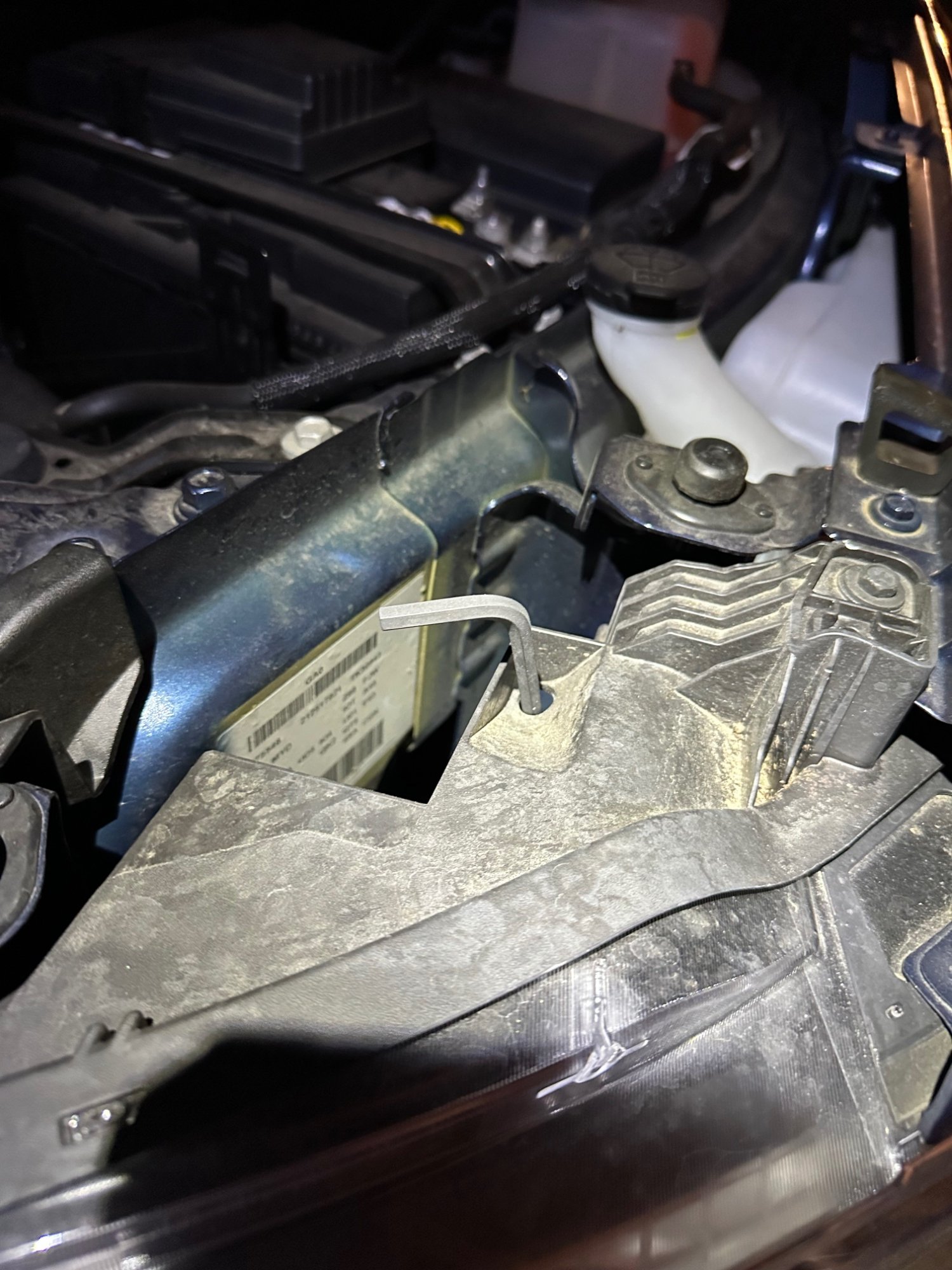
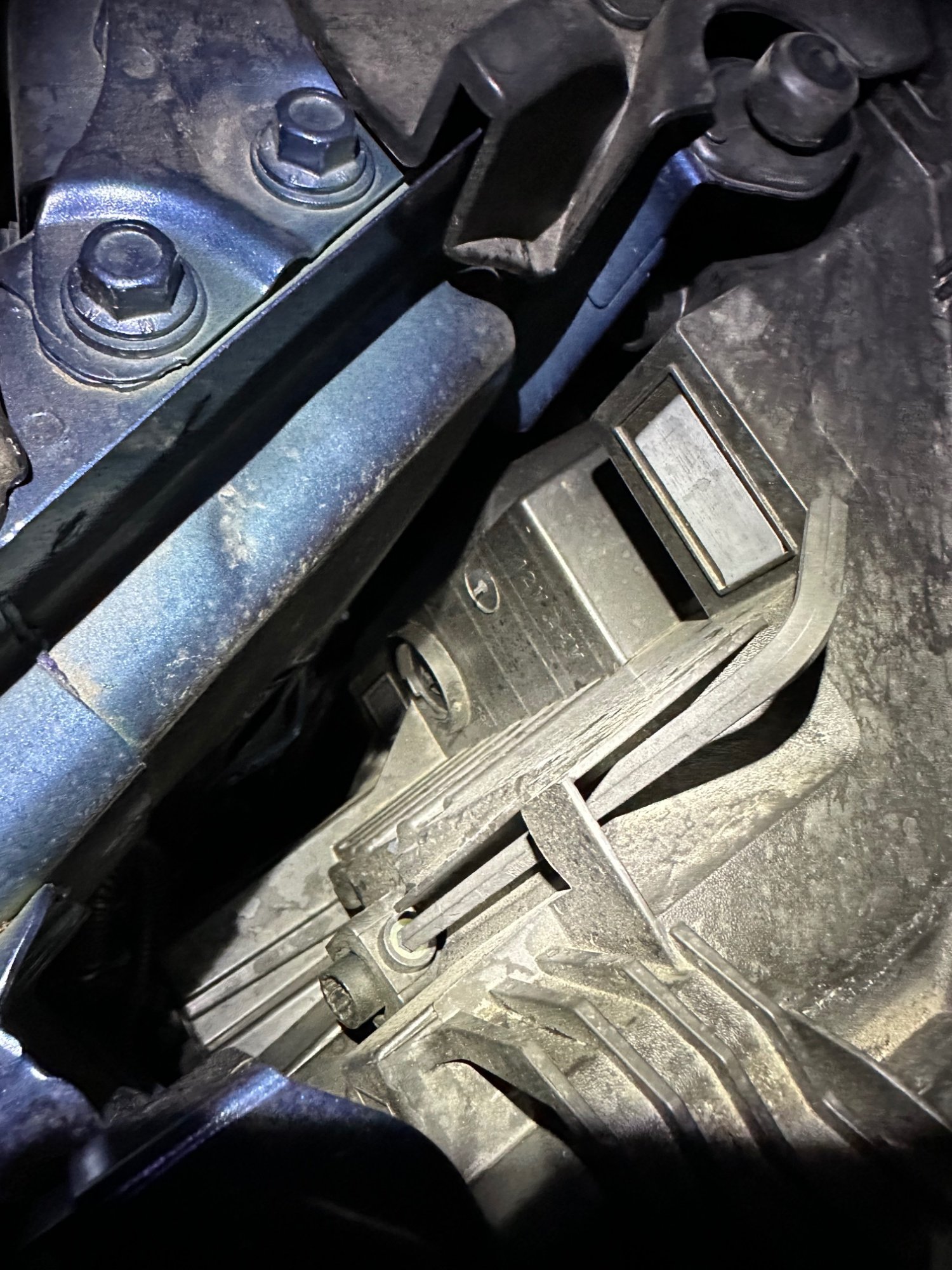
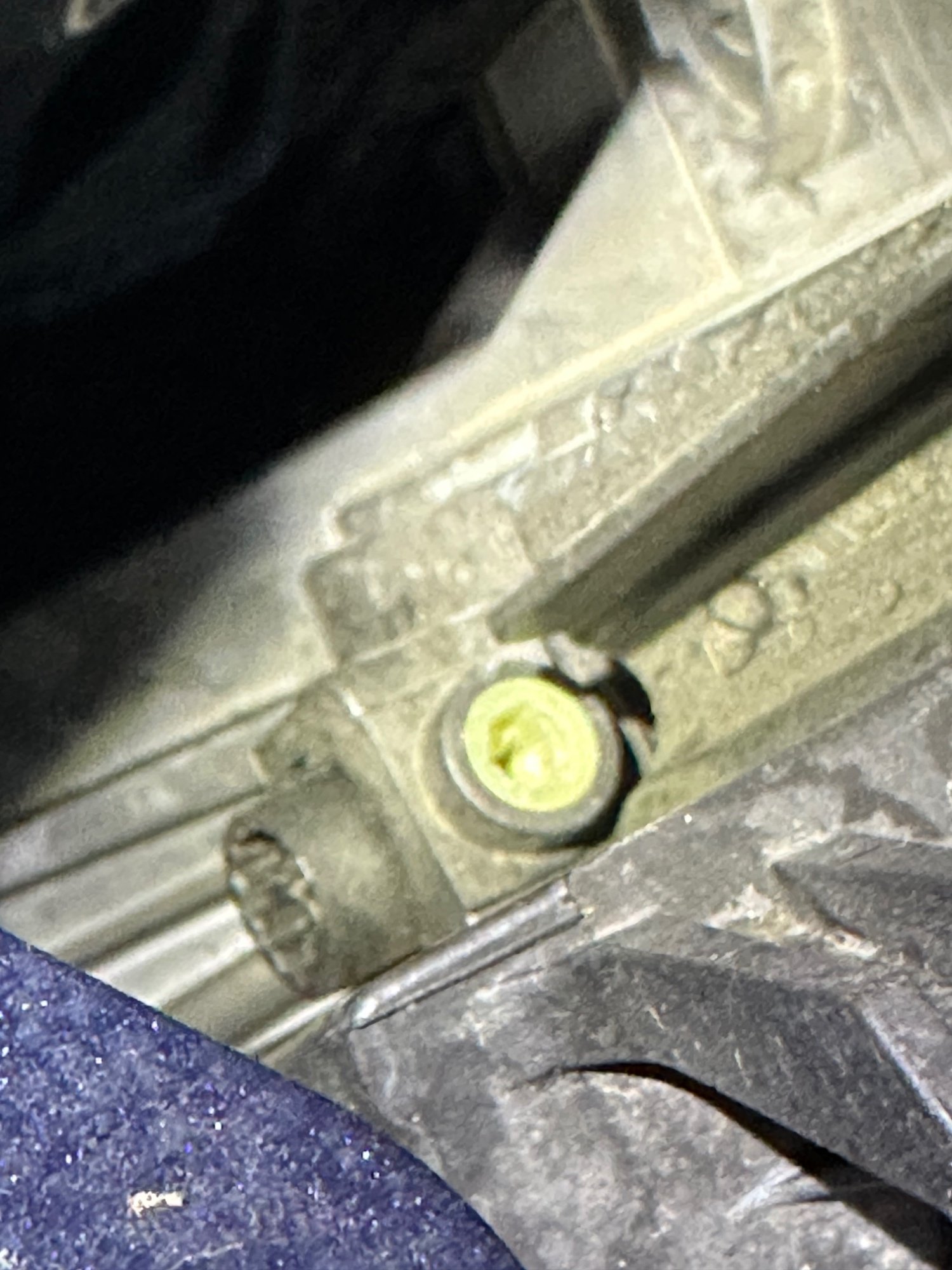
Pictures as mentioned above. The Allen wrench is a 6 mm, roughly 6 inches long.

-
After reading much of the J2807 test method and discussing the various tests with a family friend who did those tests for RAM trucks for a couple of test programs, here is my understanding. The limits that are driving that gooseneck (or 5th wheel) pin load limit are the gross combination weight rating, which limits the the trailer weight that corresponds to that GCWR, and the pin load weight percentage that GM selected to use for the J2807 testing. The GCWR is generally limited by either the acceleration test (simulating acceleration onto a highway) or the drivetrain temperature test in a specified hill climb. That and the minimum reasonable truck weight (I don’t know what defines that - full fuel plus driver?) limit the trailer weight. The fairly light 15% pin load that goes with that maximum trailer weight is kept low in order to pass the turning and quick avoidance maneuver tests for the truck/trailer combination. If the weight on the pin is higher in those tests, more lateral tire scrubbing of the truck rear axle occurs, which causes an oversteer tendency. Excessive oversteer fails those tests. So bottom line is the max pin load is driven by handling characteristics testing and how the manufacturer chose to configure the combination for the tests, but maximum truck payload is limited by rear axle/tire capacity RGAWR.
-
Sorry I’m just noticing this post now Bpcon. If you are asking a particular person a question it helps if you quote that person as part of your response. That way the person receives a notification that you posted. It’s been long enough since I did this that I don’t remember well enough to describe it. I do recall it required a long allen wrench either 5 or 6 mm. I’m at a different location tonight, but tomorrow I will open the hood and take some pictures for you with the wrench in place.
-
Yes, and those load tables are pretty much linear for psi/load in the top 1/3 of the weight range. The empty rear axle weight of my 3500 is 3260lbs, and the rear gross axle rating is 7250 lbs. No way is the truck sticker recommended 80 psi the right pressure for that 45% load. On the other hand, 40 psi isn’t the right answer for highway use either. 50 to 60 would be fine as far as heating and wear, but I have mine down against my TPMS limits at 63 or so when empty. When my 1800 lbs truck camper is on I go to 65-67. Wear is looking good on the OEM Michelins so far.
-
Thoughts on aftermarket/replica wheels
Another JR replied to Ry Guy's topic in Modifications & Accessories
I liked the ride with 18 inch wheels better than 20s when I was test driving back in 2021 to buy my 3500. Of course, the dealers tend to have everything at max tire pressure. -
Thank you for responding. I’m wondering if your response implies you see switching to Mobil One as a step down in oil quality or suitability.
-
I recently switched from Castrol full synthetic 5w-30 to Mobil One 5w-30 from Costco, primarily because of the ease and price buying it from Costco. I’m assuming that’s pretty much a step sideways in oil quality, but I’m curious about others’ opinions on that. I change at 3750 mile intervals because six months plus typically has gone by and so every other oil change lines up with a tire rotation.
-
Can I try to change the subject a little? I definitely agree with the approach of starting to shop for new tires well before getting to the wear limit. My experience has been that wet traction, snow traction, and off-pavement traction noticeably fall off in the last third of the tread depth if not before.




-
Forum Statistics
250.5k
Total Topics2.7m
Total Posts -
Member Statistics
342,920
Total Members8,960
Most Online
-
Who's Online 11 Members, 0 Anonymous, 1,252 Guests (See full list)