


Douglas Nathan
-
Posts
20 -
Joined
-
Last visited
Content Type
Profiles
Forums
Gallery
Events
Articles
RPO
Store
Blogs
Everything posted by Douglas Nathan
-

2007 Silverado Starting Issue
Douglas Nathan replied to krww06's topic in 1999-2013 Silverado 1500 & Sierra 1500
What is a DD? -
Trouble clearing sunroof drains
Douglas Nathan replied to dna9656's topic in Troubleshooting & Recalls
Thanks 'Dude! -
Transmission Cooler
Douglas Nathan replied to dna9656's topic in 2014-2018 Silverado 1500 & Sierra 1500
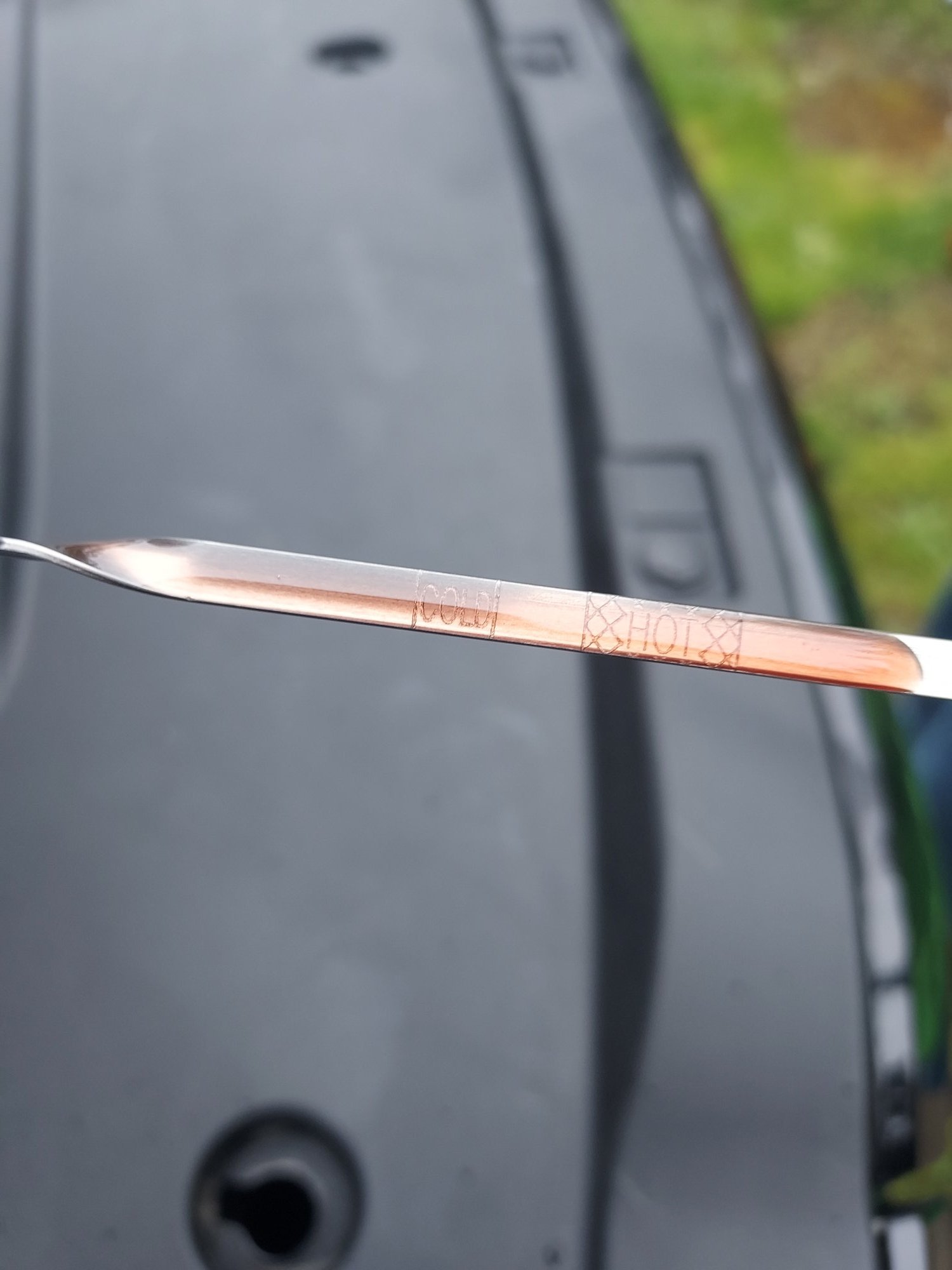
So then there's NO WAY I can have engine coolant in my tranny fluid? As you can see, I have no more white streaks. I have beautiful transmission fluid!
-
2006 Avalanche Engine Issues
Douglas Nathan replied to Daniel MacElfrish's topic in 1999-2013 Silverado 1500 & Sierra 1500
Thanks Richard, this is my son helping his Mom. She iwns my former Avalanche now, she bought it a little while back. Any assistance you can offer him is greatly appreciated! -
2006 Avalanche Engine Issues
Douglas Nathan replied to Daniel MacElfrish's topic in 1999-2013 Silverado 1500 & Sierra 1500
-
Compatible tailgate
Douglas Nathan replied to Lbarchie's topic in 1999-2013 Silverado 1500 & Sierra 1500
Yes, I am aware that part numbers change, who would know better than the MFR? I was giving a resource that could be checked and rechecked. While people here have done parts swapping that doesn't mean they didn't get lucky, as you say part numbers change, it's best to go with the mfr and the vin number or the Interchange Catalog that rely ONLY on advice from a forum, good luck! -
Sounds like excellent advice to me. It ain't 1965 no more, when the only major differences were just gaskets and bolts to level out. Back fitting newer in to older or older into newer can be a bucketful of headaches, when if you get the same stuff you're replacing us just the usual busted knuckles, sockets, ratchets and wrenches.
-
2000 silverado electrical issues
Douglas Nathan replied to Dan92's topic in 1999-2013 Silverado 1500 & Sierra 1500
Agreed, you have short of some kind (yeah, duh) but where (of course) is the question. The other guys suggested looking where the scum defeated the ignition. It's something that has B+ on it all the time (unswitched) the ignition/neutral safety switch is where I would look first. -
Will these fit?
Douglas Nathan replied to El Camino's topic in 1999-2013 Silverado 1500 & Sierra 1500
Because my 2004 S10 lists 2 sizes: 235/70/15 as stabdard and optional tire size of 235/75/15 that's why. -
2008 V6 Silverado won't turn over
Douglas Nathan replied to hgoodwiniii's topic in 1999-2013 Silverado 1500 & Sierra 1500
You always have to consider bad ground(s); when I find a ground I wire brush the ground point, fastener and the terminals on the wires that go there and apply DI-electric grease to all contact points to inhibit further corrosion. I even put the grease in those connectors with the 3 lips on them. I do not know if ANY grease is better than NO grease but I do know that any automotive grease will keep water out of the connection. The grease might be conductive, I donno. DI-electric grease is purpose formulated to protect electrical contacts from the environment. -
I would discount the battery from the issue, batteries do not target systems for sabotage; batteries either have, almost have, or don't have enough voltage to do the job. Batteries (like anything else mass produced) can have batch issues so you can't really blame AAA or the battery. I think you got a switching issue; if it's a ground issue clean the grounding point and the terminals on the wires that go there, use dielectric grease to inhibit further corrosion growth.
-
Alcohol/ ethanol just doesn't have the energy gasoline has so more will be burned. Which is better for the ecology? MORE ethanol/alcohol mixed with LESS gas or just gas? Is diluting gasoline with a lower grade energy fuel better or worse? I can't recall seeing a reliable study made by a disinterested group. The pro gas side will tell you what they want you to hear as will the pro alcohol/ethanol side will. I had a 07 Chrysler with the Mitsubishi 3.6 V 6 in it. using REGULAR pump gas that contains up to 10% ethanol. I replaced the OHC drive belt at 100k miles as required by the MFR. While aligning the timing marks for the cams debris from the combustion face of the heads fell into the cylinder in such a amount that the pistons would not pass TCD requiring the removal of the heads so the cylinders could be cleaned; a MAJOR PIA and expense!
-
Power loss and sporadic stalling
Douglas Nathan replied to noobie's topic in 1999-2013 Silverado 1500 & Sierra 1500
Fuel pressure regulator? -
Power loss and sporadic stalling
Douglas Nathan replied to noobie's topic in 1999-2013 Silverado 1500 & Sierra 1500
Clogged fuel filter/sock in the tank? -
I got my '06 rebuilt to 4L 70 E specs (it's the tranny that the SS and the caddy models used) for an additional $500.00 or so. I asked all those I trusted who the best shop around was and went there. The man told me to use NOTHING but the AC Delco tranny fluid and to get the pump in the transfer (you won't have to worry about the T case) oil pump modded cause they eat through the T case housing. I did that, and I installed a tranny cooler and a oil pan that had a drain plug on it to make future filter and fluid changes much less messy and way easier.
-
That's an "in the moment" reading it is not average mileage. Turn on the mileage readout while going down a hill with your foot OFF the gas. You get crazy reading of HUGE gains in mileage. Nobody averages the numbers you're going to see. If you want to know your average and it's not exact here's what you do: Fill your fuel tank (to the pump cutoff level) Reset the trip computer Drive until fuel is required Fill the tank again (to the pump cutoff level) Make a note of the number of gallons used to re-fill and the miles on the trip counter Reset trip Use the formula below to calculate mpg using your numbers Repeat this four or five times to give you a good average The formula to calculate gas mileage: Miles driven ÷ gallons used to refill the tank. Take the miles traveled (from the trip computer), divide that by the number of gallons used to refill the tank. For example, the trip shows 200 miles since you last filled up, and it took 15 gallons to refill the tank. 200÷15=13.34 which results in 13mpg.
-
It's the same for women, they get dolls, doll houses, doll cars, dolls that come with all of Ken's or (GI) Joe's stuff; they are called DIVORCE Dolls.... then there's houses, men have a man cave in one room in HER house maybe. A man might get the Garage....woman have the house so they got more room; they don't need the garage, and they cost more than most guys' toys... Just don't show this email to your SO, I'll get into trouble for voicing the TRUTH....
-
Socket or hammer in the hinge just bends the pillar on which the hinge is welded. I have never fooled with welded hinges much, They use some kind of registration method (a way to ensure the hinge is in the right place in space relative to the door and fender when it's welded in place) at the factory. A Mitchelle Body manual (for labor hours) may show some dimensioning (for the hinge) that shows where it goes. I wouldn't mess with it if I didn't have my own pro shop or weren't a pro. I would be sure I got the right pins and bushings and they were in the right spot. On my 04 I have 2 different sizes. It could be you got a kit that was put together wrong. You don't say how the door performs when it closes, it's plain to see that gap on the trailing edge wow! How your door got so far forward is beyond me. I'm assuming the holes for the bushings were (are)still correct and not "wallered out" in anyway even if they are I can't see them doing their job at all noting the distance your door have moved forward relative to the door opening; seems to me the holes in the hinges would be completely worn though on the forward side of the bushing hole for your door to be that far forward. If your door/fender joint functioned correctly before the pin and bushing change that means the fender position is still correct unless the fender has been moved some how (accident, attempted adjustment?) Obviously you can't fix the aft door gap by adjusting the fender. I suppose it's possible the hinges got twisted (how I don't know)in such a way that the door is now too far forward relative to the door opening. I would make sure I got the right parts, after that maybe a door from a yard to compare. Are you the original owner? Has the truck been hit, in an accident? This makes no sense at all if all parts are genuine and correct, but if they were you shouldn't have the problem that you got. You might try a "TRAM" (Trammel) gauge and compare opposite sides of the door opening, hinge placement and the door using the other door for reference. Would love to know what you learn, good luck my friend!
-
Did you serve or are you riding on your Dad's coat tails? I served 38 years and have 5 good conduct medals Nat'l Defense Service, 2 AF Commendation medals, big deal; no body cares. I learned most of what I know they easy way, listening to those wiser than I.; I also learned things on my own and the hard way by making bad choices, that's where wisdom grows, in the soil of bad decisions
-
Wow you got some attitude; prolly towards life but you directed it towards Richard, he's one of the best people here. You are obviously young and ignorant; oh, and rude to boot. Covered tires are not so well protected as you think; not so well as to not be exposed to gaseous elements that harm rubber like exhausts, and other gases, salts, etc. If you don't want your spare exposed to the elements keep it in your dark basement. If you want some wisdom about getting along , well go ask your dad; but while you're here please keep your attitude to yourself.

-
Forum Statistics
250.6k
Total Topics2.7m
Total Posts -
Member Statistics
342,997
Total Members8,960
Most Online
-
Who's Online 6 Members, 0 Anonymous, 497 Guests (See full list)