
Leaderboard


Popular Content
Showing content with the highest reputation on 08/11/2024 in all areas
-
Mobil 1 ESP 5w30 SP 19 BMW 440i 5,000 miles on the oil 2019 BMW 440i (B58), M1 ESP 5w-30 5000 OCI, 50k mi
 1 point
 -
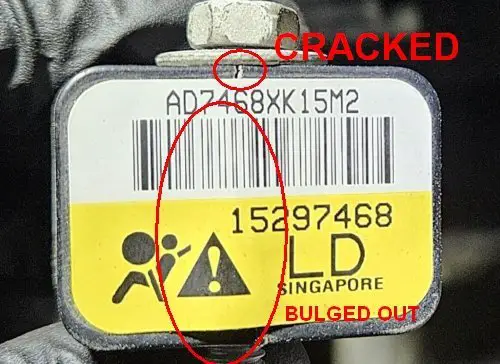
This part is no longer available from Dorman (part #590-206). BUT it appears that some of the Advance Auto Parts - Carquest family of stores still have this part on the shelves as old stock. I noticed that you can use their 20-25% coupon codes to make an online order and then pick one up at a nearby store (seems like only Carquest stores have this part) or just do a ship-to-home order for about $140. I actually spoke with Dorman tech support. This part was sourced by the OEM in Singapore and they stopped making the part for Dorman so its 100% over with. Once they're gone, they're gone. I'm not sure where WVE is getting the part from nor where ACDelco is getting them (new part #85598007 $215). I opted to go to my local U-Pull U-Pay lot and started to grab these off of trucks. Bring a multimeter to test them to make sure you're not grabbing junk. You should get some sort of ohm reading/continuity. If its open (no continuity) then the sensor is garbage. If the sensor has a bulge behind the stick or a crack, it is from corrosion and the sensor is destroyed. Another piece of free advice: the 15297468 sensor is ONLY compatible with 2007-2008 GMC Sierra and Chevrolet Silverado 1500's. Not 2500HD or 3500HD nor the SUV's. That specific part number (15297468 or 85598007) will only work with the 07-08 half ton pickups only. This is part of the system design and that is for a reason. I wouldn't screw around with Supplemental Restraint System (SRS) parts; just do it right.
1 point
-
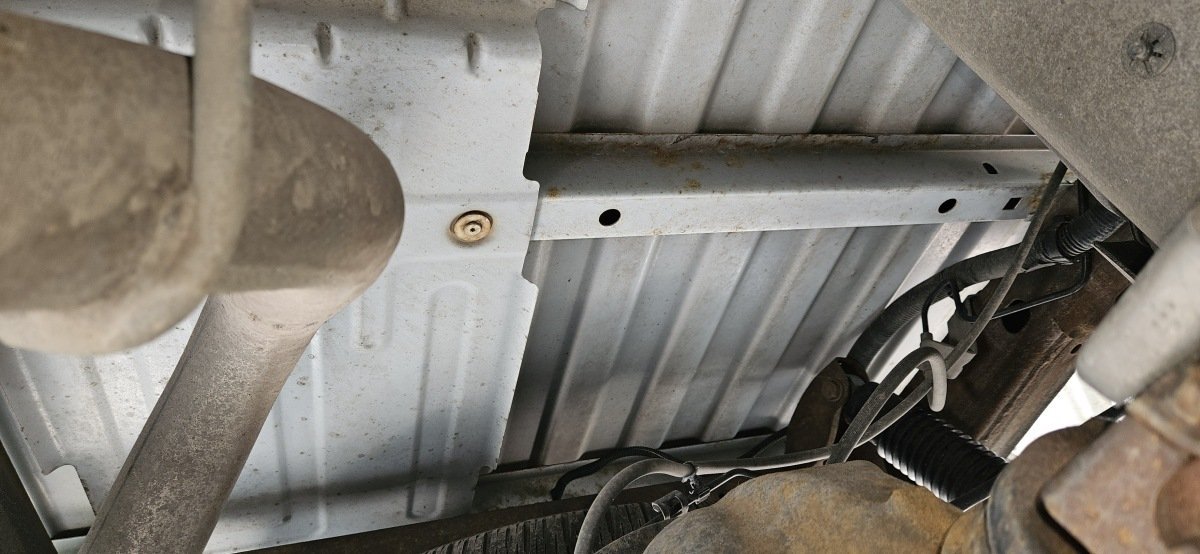
I live in the Rust Belt but I work in Colorado. They definitely get snow out here but they don't salt the crap out of the highways like in the Midwest. I recently picked up an '08 Sierra ext-cab 4x4 that was owned since new by the State of Colorado. This truck is 16-years old and has been through at least 15 winters. Frame and undercarriage are extremely clean. This was not a garage queen either. Cars can rust out here but I think that most people wash their cars frequently and the cities don't dump a million pounds of salt on the roads contributes to the lack of destroyed undercarriages. My word of advice after living in the Midwest: if you're buying a used truck, buy it from the Southwest. Make a mini-vacation out of your trip to drive it Northeast. Then hammer that undercarriage with aggressive countermeasures such as Mud Guards (to prevent the sandblasting of your rockers and body panels) and Woolwax or Fluid Film. Make sure whoever does it that will coat the inside of the cab corners and fenders. Its amazing how Canadians in Northern Ontarior seem to not have issues with rust as many do exactly what I just discussed. They spend the $120-150 or so every year to have the undercarriages, frame rails, and body panel insides coated. That technique unequivocally works.
1 point
-
It is a known issue. There is a SAE bulletin on it. Your dealer will fix it with a software update free of charge. https://static.nhtsa.gov/odi/tsbs/2017/MC-10116572-9999.pdf1 point
-
Went for a ride this morning, light rain and low 50's. 12 miles away.
1 point
-
Pay it off before I trade or sell is my only strict policy and it’s served me well. Because of that, on new cars I wind up financing only a very small amount. Then I make double or even triple payments to clear out the rest and get the title in hand, never longer than 3 years (around the time I get bored with something). The vehicles I buy used I just pay cash.1 point
-
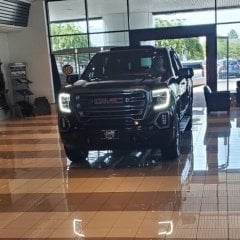
OP needs to decide if one of those trucks is equipped the way he want's it (do I buy one at any price?) and then decide of the price offered/negotiated is low enough for the area where it is being purchased. Dealer knows they've been in inventory for a long time. Dealer knows that those trucks don't have added options. Dealer knows that the 25's will be arriving shortly. If I wanted one of them, I'd probably be trying to improve the discount -- just cuz I don't expect dealers to start by offering their best deal.1 point
-
The only thing I was taught in regard's to home buying when I was growing up was its better to buy than rent. It wasn’t until I had a radio in my clearing tractor. And listening to a financial person one Saturday. I realized the same multiplier that works for you saving works against you buying a house. If you simply just making regular payments you pay 3 times or more for your mortgage. Paying 3 times the purchase price in interest didn’t make any sense when just adding more to the principal. You could cut that in half or more by doing that. Little did I know my wife was ahead of me. We paid off the house in 12 years instead of 30. We had 3 paid off houses in 30 years. Costing the same money as if we just paid normal payments to house one.1 point
-
That's my method for a lot of things!1 point
-
Condensation is moisture that has been removed from the air -- it is not something that came from inside the AC system. The amount of condensation depends on the humidity in the air that is being cooled.1 point
-
I have one, it's 54,000 pages and you can't find shite.1 point
-
9, Why HTHS Viscosity Matters (lubrizol.com)2019 Topics: Passenger Cars, On-Highway Trucks The drive to reduce emissions and increase fuel efficiency has led to significant changes in heavy-duty engine hardware design, including downsizing, down speeding and stop/start technology to name a few. With such changes in engine hardware design, engine lubricants are increasingly having to perform in high temperature high shear (HTHS) environments within the engine—notably in the camshaft, bearings as well as the piston rings and cylinder liners. Today, HTHS viscosity—or specifically “low” HTHS viscosity—is a phrase fast becoming associated with increased fuel efficiency. The focus on HTHS viscosity is gaining momentum as it is regarded as the parameter of the viscosity classification that more accurately mimics the engine lubricants behavior in increasingly severe operating conditions. HTHS dynamic viscosity is the current industry standard that best predicts fluid behavior in HTHS environments. It is designed to ensure engine lubricants maintain sufficient film strength to prevent excessive wear under engine operating conditions, while also allowing engine lubricants to have low enough viscosity to deliver fuel efficiency and emissions benefits. HTHS viscosity measures the temporary viscosity loss under these conditions: The lower the measured number, the lower the HTHS viscosity of the oil and the higher the anticipated fuel efficiency benefits. HTHS viscosity is measured in milliPascal.second (mPa.s) but is also commonly referred to in centipoise (cP). Typically, heavy-duty diesel engine lubricants have had a minimum HTHS viscosity of 3.5 cP. Lower HTHS viscosity is being pursued by an increasing number of original equipment manufacturers (OEM) to move significantly below this long-established 3.5 cP HTHS limit in conjunction with modern engine hardware designs. Lower HTHS viscosity engine lubricants are complex and require formulation changes over higher HTHS viscosity engine lubricants. The vital roles of the additive package, performance polymer and base oil mean they must work in harmony with each other, while maintaining durability and delivering improved fuel efficiency. ************************************* Know what you don't see. Test results on these 'fuel efficient' oils published in a way that puts them in the light of the reference oil they claim to be an improvement on. Even this article does not address WEAR. Not in any meaningful quantitative way. But it does point out that HTHS MATTERS just as much today as it ever has. You can't 'claim' a thing into being true.1 point
-
I have put the BAK Revolver on my last three trucks. They are leak free unlike most of the folding tonneau covers I have had. They are easy to install and use. They roll up reasonably tight to the back window and you can still see out the back, unlike with the folding covers. And if you need to take it out to use that last 6" of bed length, you remove four bolts and it's out.1 point






.thumb.JPG.2c573de60d3a3a4407c7d92298db46dd.JPG)

This leaderboard is set to New York/GMT-04:00