
Leaderboard




Popular Content
Showing content with the highest reputation on 12/13/2025 in all areas
-
I don’t think so. Another sign pointing to a slowing economy. aT LeAsT gAs iS cHeApEr2 points
-
Wouldn’t quite say out of their butt, the range is pulled from their database. But it’s basically an acceptance / normalization that practically no shelf oil ever stays in the actual J300 spec and that the owner shouldn’t care. If they cared enough to pay you already what’s a few more bucks to just get good data to work with. Makes no sense.2 points
-
It really is this simple. OntheStribeckcurve.pdf An interesting feature of the Stribeck Curve and one often missed is that wear and friction are not mutually exclusive. The lift point shown in the PDF separating friction caused by asperity contact or dirt and friction caused by increased viscosity beyond that point. PDF also made the point that acidity also wears by erosion; Corrosive erosion. Wear happens when 1.) fluid film thickness is less than asperity height, two body wear, abrasion; 2.) A particle harder than one of the surfaces and as large as the film thickness is passed trough, three body wear, abrasion or 3.) The lubricant becomes acidic or overly caustic. Corrosive erosion. Anti-wear and Extreme Pressure additives are there for conditions that prevent sufficient film thickness. Acid package and corrosion inhibitors self explanatory. This agenda that pushes the idea that the OEM's selection of viscosity will place the lubrication regime squarely at the "Lift Point" of Stribeck for all operating situations belies all common reason. It is a poor attempt to place it there under best operational scenarios and puts an abundance of reliance on the 'sacrificial' AW and EP systems. Which, by the way, API iteration over iteration are reduced. A Plan for Failure? By multiple example it has been shown that wear RATE is high early on even in the most refined machining finishes and that the RATE is a declining slope that last well beyond that required for good ring seal. In multiple cases past 50K miles. That it can be tracked (proved) with wear analysis and with fuel economy by an operator skilled enough to collect, control and process that data. It has been shown that there is noise in that signal that is common and unavoidable thus trending is demanded. Data takes time and you will never know if a 2 ppm change/1K is a problem or within the systems standard deviation until you have enough points to extract that std/dev. You will never know without the 'context' of operations if a trend breaker is the result of aberrant operation of merely the product of another factor (corrosive wear i.e., from long TIME intervals even in weak acids). It's why OCI's have both a milage and TIME specification. It has been shown that increases in viscosity beyond the OEM recommended call out CAN (not will) reduce wear rate AND increase fuel economy and that unless you test and observe you will never know. Give it the right circumstances and occasionally lighter is an improvement. It has been shown that increased viscosity does not physically harm a motor nor interfere with hydraulic function of cam phasers. It has been shown that acceptance of higher wear rates may (not will) take so long as to blind the willfully ignorant into believing one is as effective as the other. Doing what you've always done will get you the result you've always got but it can not get you a better result. It has been shown that once optimal viscosity is well in hand that OCI length extensions will, at some point, increase 'RATE" of wear, induced corrosive wear, much earlier than common belief suggests. Both are found, not specified. And it has been shown that most of what argued about in such threads has nothing really to do with the topic nor any impact in result. Just dirt in the water.2 points
-
Fortunately, I have a Doctor (GP) who gives me good advice. Anything potentially serious, he refers me to a specialist. (I have made follow-up appointments with my Doctor to get his opinion/interpretation of what a specialist has told me.) There is a second opinion inherent in being referred to a specialist.2 points
-
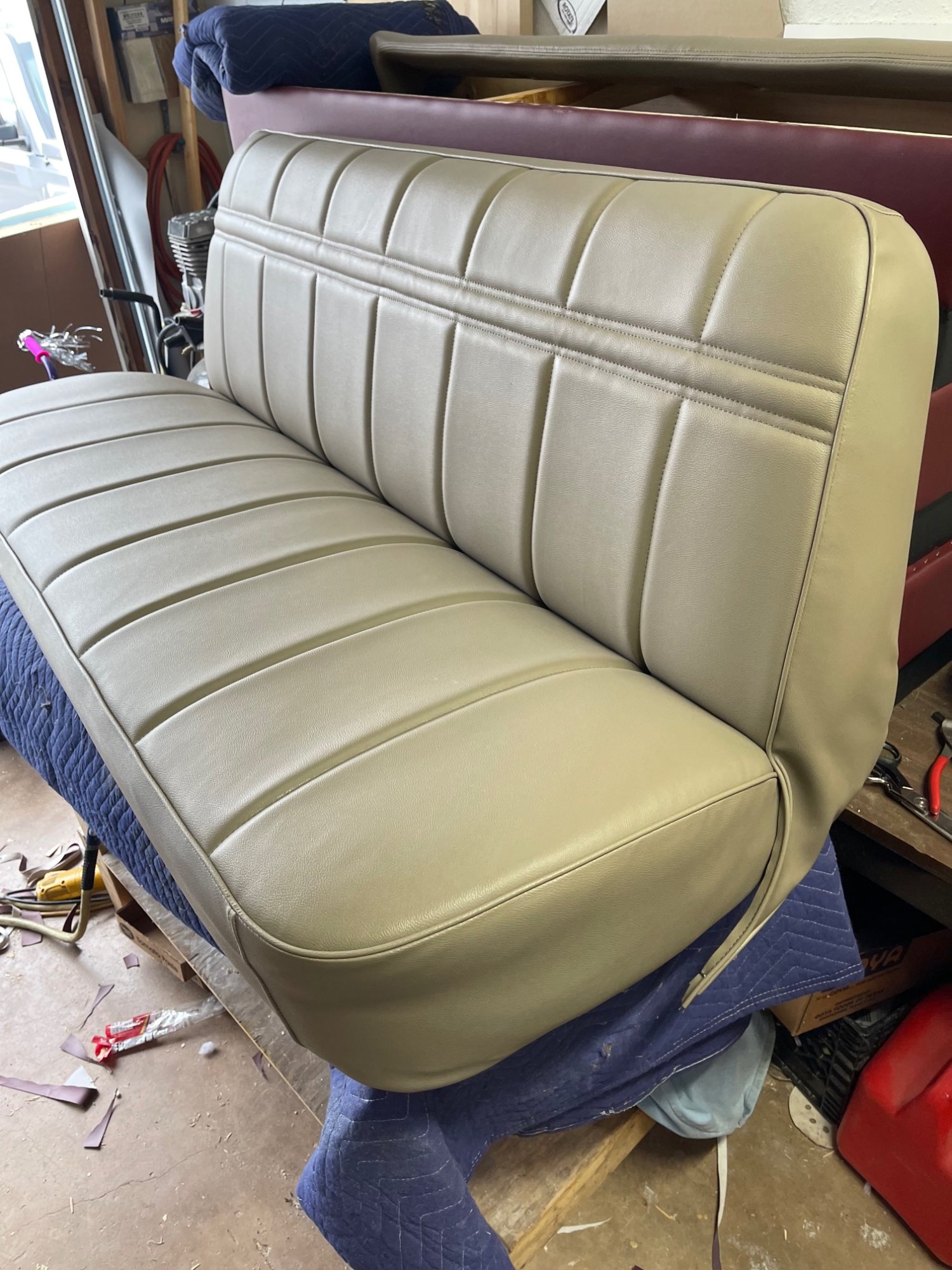
Recovered and repaired dash pad laid in. Flooring tomorrow.
 1 point
 -
1 point
-
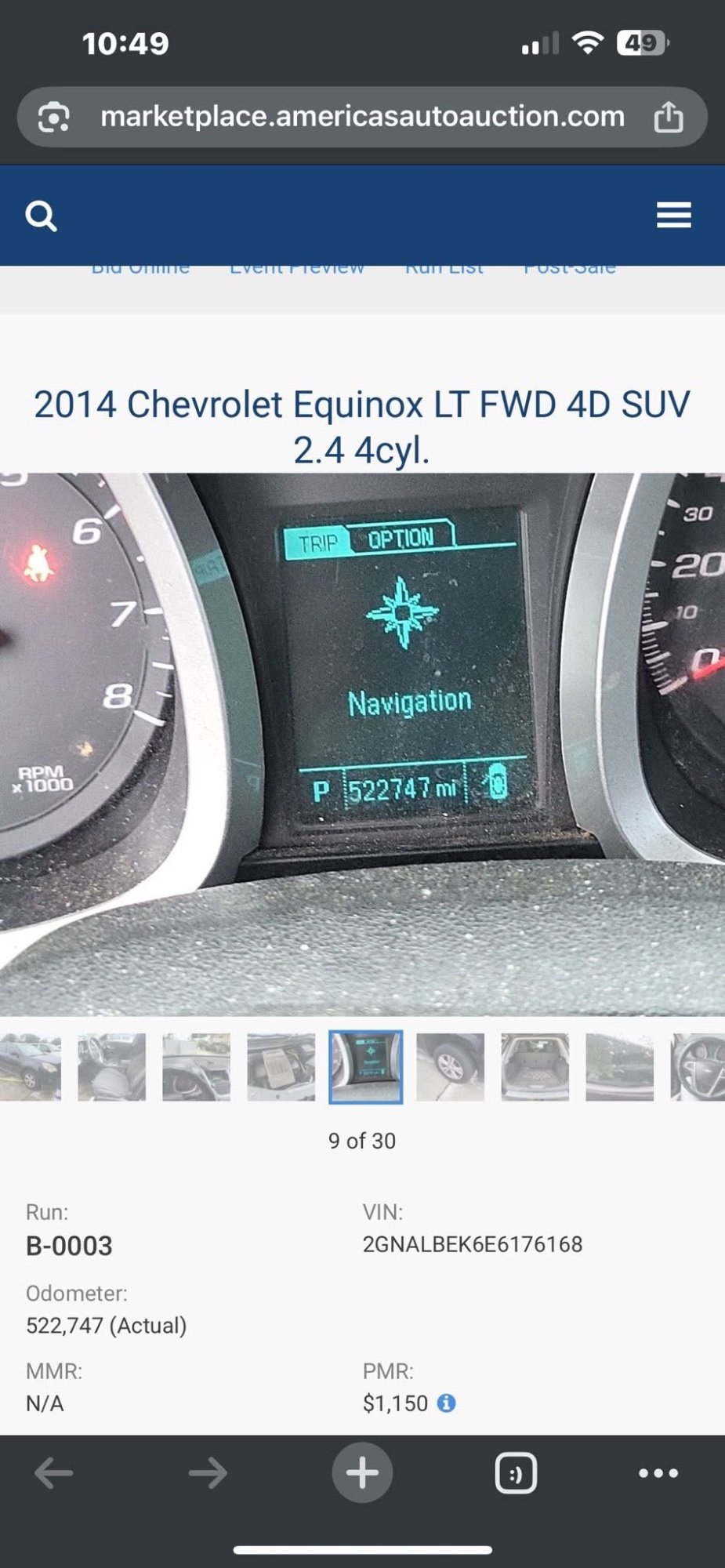
Somehow, some way…this person damn near doubled your mileage on this motor…
1 point
-
I can’t think of a single engine that HAS had issues with VVT on a higher viscosity oil. Within reason is my asterisk, as always. If changes in viscosity bricked the systems you’d expect every VVT engine to either run like ****** when cold or run like ****** when hot. Or both. Same goes for AFM/DFM/MDS systems. FWIW…-5* this morning, Red Line 0w40 in the Jeep. Happy camper. Fired right up and cam phasers didn’t even rattle. Good batteries, good oil, no problems.1 point
-
Somehow I knew this was coming. Dirt in the water. This is an example of a select point of data removed from context can create a situation outside of practical operation. And offered without context, example. A simple statement said as if it's offer in and of itself is proof. As a child grandpas Studebaker was treated to a tin of hot coals placed under the oil pan, transmission and differential for several hours to bring those mineral based straight weights cut by API Gravity alone (ISO scale) to a liquid state thin enough to pump and cling. Any effort short was an open invitation to disaster. Moving on to my fathers time, and offered more than once in these treads, are the examples of dad's business benefiting from such fool hardy operation as to require the replacement of oil pump hex shafts or even main/rod bearings when such fools ratted their motors full of 10W30 on -25 F days during the first few minutes of operation. Today 5W*** is then enough on those same -25 F days to be driven off withing only the time it takes to get oil pressure with a judicious foot and prudent operation for a few miles. Coal no longer required and the use of Group PAO's offering much lower cold temperature viscosities than even the PPD added Group II's. (Not very effective on Group III's and no where near the same low temperature performance by THOUSANDS of Cp). Automatic transmissions, primarily hydraulic devices often act funny until the fluid is up to about 60 F, can kill a CVT, then function the same anywhere between that point and fluid failure temperature. Huge difference between cold weather viscosity appropriately selected and that of a fluid operating at any normal sustained operating temperature. The 4 cSt Idemitsu/Mitsubishi vs Red Line 6 cSt CVT fluid increase is a non issue hot and a very big help cold. Several thousand cP verses 20 cP differential cold. There is more difference than five grades at normal operating temperatures than between an SAE 30 operating between 180 F vs 240 F. Keep the W number the same and any and all augments counter vanish into reality. Interestingly and as a aside. Chevy, Hudson used poured babbitt bearings into the 50's. Prewar the Stovebolt 6 manual said 20W winter for the 216 CID and SAE 30 for the bigger motors summer. Today bearing and bore life has been increased by multiples using 15W40, 20W40 and 20W50. There is not softer bearing and they don't wash out using heavy oils. This sort of counter reality comments are not helpful.
1 point
-
I don't see how the "Head in sand" comment applies here. A discussion on the benefits of a second opinion on a medical issue can be had without sharing our political views.1 point
-
I can well imagine the absolute insanity of a freeway between two major cities and like you point out the design of the freeway on and off ramps you are making use of is like a game of Russian roulette trying to beat the odds. I had taken I 10 from New Orleans to Houston but then took the ring road around and possibly what turns into highway 59 but whatever highway that was was very sedate as I drove through the countryside on down towards Corpus Christi to Padre Island. The issue was going north through CC and it was dark by then and on up to San Antonio as that freeway was fairly busy. Once I turned west towards Del Rio on 90 I was back to the sparse traffic and it stayed that way all the way around to Alpine and down to Bend NP and along the Rio Grand and back up to Marfa and finally back to I 10 again. Probably why the traffic even on I 10 was not insane was possibly time of year as it was after New Years and some of it done late at night with less traffic in crossing the south side of New Mexico and the fact I was not going on and off of the highway. But just the fact that it was over 20 years ago, I have to wonder if that played a part, different vehicles on the road then and probably not the traffic count like it would be now.1 point
-
AI bubble trade crashed yesterday another sign of the idiot in chief. Sleepy slimy bestie of Epstein.1 point
-
There’s a restaurant we frequent about twice a month. It’s just out of Conroe along the feeder road. To get back home there’s an on ramp to I-45. It’s very short. About 1/4 mile ahead there’s an off ramp to the next exit. So traffic is usually heavy in the lane to merge. I’m usually hitting 65 mph before the ramp ready to hammer down if I need to hit a gap. There’s always someone behind me. There’s been so many close calls if there’s someone in front of me I just stay on the feeder road. It’s pretty common in my travels. I don’t drive vehicles that don’t have good acceleration from 50-80 mph.1 point
-
In Texas with some short on ramps merging onto interstate 10. With the speed limit being 75 mph and everyone doing 80 mph. Ninety mph would be easier than jamming the brakes and getting rear ended by the guy behind you looking to his left. Trying to merge.1 point
-
LOL, I am going to take a guess its 90 km an hour as in 55 miles an hour since he lives right down in the south west part of BC and hence the rain that BC and northern Washington are getting that is literally drowning them as the photo captures the rain.1 point
-
My goodness while I’m typing my response you get nasty. You’re a nasty person. No more soup for you. Stick a fork in it nasty person.1 point
-
Diesel prices in Central California are way down. This is using an EFS card, representing a similar discount to what truckers might see. On the road again
1 point
-
You would think that a transmission engineer, when given data about wheel rotation speed, noise frequency, and what gear the transmission is in when the noise occurs, could use the axle and transmission ratios and gear tooth counts to identify if a particular gear set tooth meshing frequency matches the noise frequency. This kind of analysis is done for helicopters, where transmission gear meshing frequency tones are a major component of cabin noise. Planetary gear sets often are the dominant noise source.1 point
-
Doing 90 on the freeway onramp!!! Vin diesel filming fast and the furious: heavy duty! Coming to a theater near you. yeah I’d be trading that for sure.1 point
-
I recall seeing the comment on this forum about the issue of some lab results not testing properly for fuel dilution so was a guessed effort, now its sinking in as to how they used some correlation ( although I assume not very accurate ) to do one test and create a number for another test at the same time. Then that viscosity range bs, I had not grasped before if that was an industry wide acceptance of playing the numbers lower to jive with what I call the Dexos game of lowering the viscosity to the bottom of the historically created and accepted ranges for each top end numbered viscosity, but your saying its Blackstone who has shifted the numbers that they pulled out of their butt ?. It must be an amazing discovery to be able to change the laws of physics !. Speaking of fuel dilution, that was the very reason I sent out a sample some years ago from a JD tractor we had acquired and I had this suspicion that it was fuel in the oil so I sent the sample through Cat and the lab sent me the results and sure enough it was plenty high in diesel. I even called the lab and talked to one of the staff about my sample and he said that the JD engine of that series is well known to them or in the industry ( and probably similar themed engines ) to have that issue and that idling time is certainly a fair part of the culprit. Unfortunately due to the type of use scenario that is what happens when a seed tool is parked to refill the air drill tanks with product and its the tractor hydraulics required to run the auger, or when stopping to check seed depth its completely impractical to shut it off as there would have to be a cool down period and shortly after that it would be time to restart and be under load again. When applying NH3 its pulling up and being refilled by the suppliers truck into the wagon and its typically quite cool out and so idle up the engine and wait until its go time again. My only remedy and what the tech at the lab said, try to idle up when your idling and don't idle it if you don't need to and basically change the oil more often. I would have changed the oil anyway once a year regardless due to the hours accumulated relative to what I normally changed oil at on such units but in hours it was far less than the hours they claim one can run these engines at now because of the ultra low sulfur fuel content. So dumping out that accumulating diesel fuel and its got the stupid egr on it so right there is another good reason to get rid of that soot. But anyway the point is, I wanted to know if it was diesel contamination and how much, well Cat told me because they more than likely did the proper test.1 point
-
This reads like a t*ump tweet. Trailing off into dementia and arguing with the wind. Nobody said getting a second opinion is a bad thing.1 point
-
Blackstone is good for telling people what they want to hear. Like the BITOG people trying to wring every mile out of oil. Hey, TBN over 1? Keep running! Viscosity lower than the SAE J300 range for the grade? No problem, we created our own range! High cost, slow processing times and a massive blind spot by inferring fuel dilution via flash point.1 point
-
Chuck the SBC test was to show chemistry differences between these higher end oils not an engine test. Stribeck curve is theoretical calculation for formulators to use to build chemistries. Remember this was an oil comparison. Not a theoretical engine test.1 point
-
I’ve learned finally not to debate some hateful individuals. Lesson learned. I apologize.0 points
-
Navigating through our senior years is a journey many Canadiens and Americans face. Healthcare is often a political topic but please not here. "Second opinions" prompted some discussion and I appreciate this could be a cost consideration. This is worth noting and may impact whether getting a second opinion is practical. This is not the venue to debate the how and why of who pays what and when.0 points
-
The 300 million who don’t.0 points
-
Wrong. The affluent from all over come to the U.S. because the united state has the best healthcare. The poor in the USA will always have healthcare. The goal with healthcare reform is to get some of the waste out of Obama Care. Because of COVID rider the provision that about to expire covers high earners. The free market rewards doctors who overachieve to rise above the average. Parity in social medicine provides no monetary incentive for advancement. My family business has always had health insurance. My retirement with Medicare and its rider costs me 150$ per month. The most I pay is 50$. We experience little wait time for any service. I witnessed several retired servicemen deal with Veterans health care services in Fayetteville. The wait times for any procedure Is ridiculous. I wouldn’t trade for my United Methodist Health Care. Your experience is with Veterans Affairs. I’ve experience both. The United States healthcare is second to none.0 points
.thumb.JPG.2c573de60d3a3a4407c7d92298db46dd.JPG)








This leaderboard is set to New York/GMT-04:00