

.JPG.6537b7f00fa66f30aa51f5040da0fd95.JPG)
Grumpy Bear
-
Posts
12,793 -
Joined
-
Last visited
-
Days Won
459
Content Type
Profiles
Forums
Gallery
Events
Articles
RPO
Store
Blogs
Everything posted by Grumpy Bear
-
If we actually used any significant amount of that source in the USA then I'd agree but we don't. We've had that discussion before. We drill and pump more than we use. Thing is, we sell. We export. Gas and Crude. It's more profitable so any shortage here is self inflicted and LEGAL. I worked a gas plant that has multiple fuel sources available and I worked in the furnace and boiler plant in that facility. I'd had days we swapped fuel types four times in a twelve hour shift which isn't done on supply but on margin. Two of the fuel sources are internally generated. Tail gas and DAK, both of which are sold as well a consumed. We always had more than we needed to run the process but we chose the fuel that produced the best margin not bought at the cheapest price always. A good bit of math to that and back in the time that was done on a slide rule. I worked the Shale Oil Semiworks of Chevron Research and CONOCO Research in Salt Lake City. That process never went into production although it was very successful. Why? Did we lack oil bearing shale? Nope. Price of crude never made the margins work. That was in the late 70's early 80's. Remember history? What was happening then was a reaction to that situation. It didn't drive it. If so then it's easy. This isn't a supply and demand thing. This is a profit and margin thing and AI rules that now. In no refining situation that I was ever in would a bomb hitting a well anywhere in the world 'instantly' interrupt or even distress the supply. Most plants have more than a months worth of crude in the tank field and more in pumping stations. That yo-yo could play out over days, weeks and maybe months and have zero impact on plant operations. How many times has this been off and on in the last few months? These people and not stupid. These plants measure down time in hundreds of thousands of dollars per day. They are not sucking fumes or waiting on the next truckload with baited breath. Besides, as I noted, they are for the most part 'vertically integrated'. They own it from the dirt is sits in to the delivery rack and sometimes to the pump. It has a HUGE shock absorber built in. When production suffers, refining wins and when refining is winning exploration is killing. The rest of that crap in the news is a 'news cycle'. Government dipping in to reserves? Oil is stealing their milk money. There's a reason Chevron abandon Venezuela infrastructure and it had nothing to do with security of US citizens. Nationals run those plants. it has to do with MARGINS disappearing to corruption. They are in no hurry to return. Is there supply there? Oh yea. More than enough to offset what is bought in the middle east. Just isn't ???? Profitable. We have supply. There are places in Illinois you can drive a pipe into the ground and run your homes natural gas furnace on it. A refinery fire will gum up the supply works but not a localized war where the market is using a limited supply from. Now Europe, that's something other....
-
SPECULATION on the wars effect raised prices. AI is maximizing the profit. Refining is vertically integrated.
-
No movement here over the last 24 hour news cycle in pump prices. Still hovering $4 I think they are getting tired and it's to hot to worry about it right now.
-
Curious @newdude, how does this change when a 6L80 is either fitted with a billet converter OR is behind a V6 whose converter isn't a pile of junk? Oh, and are you saying in the above the 4-5-6 clutch's burning up is the result of the converter/pump induced failure or they are just fragile? Thanks in advance for any feedback you may be willing to give.
-
.thumb.JPG.2c573de60d3a3a4407c7d92298db46dd.JPG)
Wow I'm in a pickle. (Broke down truck) and a story.
Grumpy Bear replied to Atlas's topic in The Off-Topic Bar
Why does that not surprise me? It is more creative that a crowbar on a kneecap. Did it come with the mounted overhead lighting? -
OCI, not when but why?
Grumpy Bear replied to Grumpy Bear's topic in Maintenance, Oils/Fluids, Detailing & Rust Prevention
Unless you are using a bypass filer system with a Beta of 1000 at 2 micron the commercial filters we have access to, even the very best of them, are poor at the 5 to 10 micron range the typical UOA test can 'see'. Point is there are some truly awful filters being sold A 45 micron Beta 75 filter is what Dyson used to call a screen door on a submarine. That leaves wear metals disconnected from filtration unless particulates are larger than the test can 'see' and yet captured by the filter...which is its job. If that is true then you have a major issue screaming at you. The graph isn't mine. It belongs to GM and their study on this area. I looked up those studies and provided those SAE tech paper addresses multiple times. Machinery Lubrication displayed it and confirmed it. So if you have doubts about the study you'll have to take it up with GM Engineering. Just like you would have to take up a difference in opinion about the meaning a word with Webster or the length of on inch with the National Institute of Standards and Technology. Most manuals have two schedules. "Normal Service" and "Severe Service". On it's face it tells you that oil in severe service is more highly stressed and doesn't "Last as Long". The item to bore in on is LAST...what does that mean? It's the same question one asks about how long to toast bread. What are the inputs? Bread type? Wattage of the toaster? Distance from the elements? What is your preferred level of done? So lets paint this with a broader brush. Oil is made up of the base and the additive package. The first is altered by heat and oxygen and later is sacrificial with a finite life subject to inputs toward that end. Resistance and supply. It is the reason an OEM's OCI's are determined by 1.) the specifications of the recommended lubricant and 2.) risk management toward the bottom line. Those lubricants are also subject to cost effectiveness for the OEM. There is a tendency for most people to believe that the OEM recommended oil rest on the top shelf and that anything other is lesser than. Truth is there are more oils on higher shelves than those on the lower shelf below the OEM's. They make that choice on COST TO THE OEM. Testing is incidental to the margin. GM makes MONEY, the car/truck is a TOOL to leverage MONEY. Insert whatever car brand you like. Until you forking over a million plus COST not quality is the driver. Thus it is by DESIGN the recommended OCI's and oils fall well short of 'best practice protections'. Proof isn't hard to find. GM Ecotec I-4 2400 breather system and cold start PCM tuning has killed more motors and resulted in more litigation for those that used the 'recommended' practice than GM could bear. What was their response? SHORTEN THE OCI. TWICE. I don't know how long to leave oil in an I don't know how the oil will respond to MY circumstances and because I don't and can't blanket statement or anecdotal evidence my way out of it.....I TEST and FIND the right OCI for the oil I CHOOSE. There is no shortcut but there is blind allegiance. I don't blindly trust anything. People hear the word 'detergent' and believe that in the context of oil it means the same thing as laundry soap... Only in the most rudimentary way. It's the first additive to give up on you and they are putting less and less with each new API standard. Solvency can be used but it cost. Some unique undisclosed chemistries can be used. Valvoline R & P in example. OEM's haven't an interest in anything they see as limiting market participation. Whatever. -
OCI, not when but why?
Grumpy Bear replied to Grumpy Bear's topic in Maintenance, Oils/Fluids, Detailing & Rust Prevention
The filtering to wear relationship goes like this: 'Relative Engine Life "Factor" new divided by the factor old. So 8/3= 2.67. That result is the multiplier thus if a motor had an effective life of 100K using a filter with a 45 micron rating at a Beta ratio of 75 then a filter with a micron rating of 10 at a Beta of 75 would improve expected engine life to 267,000 miles. Wear metals are an indirect indicator. Less is better and the motor lives longer but there isn't a multiplier like there is for filtration so well documented. Most of that has to do with the sensitivity of the wear metals tests themselves. They read a 'slice' of the spectrum but not the absolute values for the entire spectrum. So a general indicator that is used WITH the results of other tests. Two others considered in this post. Trending is very important. There is also the influence of corrosive wear which may be seen in the wear metals but separate from load based or viscosity mitigated indication. It's a small graph but the gray line is wear vs the TBN/TAN crossover. Not as useful as it used to be as there are now new chemistries for acid remediation that don't show up in standard UAO testing. They will catch up or be found liars. Only two possible outcomes, eh?
-
You got'a be cooking right now. Just looked at the weather map. Yuck! We are right back to $4 today.
-
Wow I'm in a pickle. (Broke down truck) and a story.
Grumpy Bear replied to Atlas's topic in The Off-Topic Bar
I'm free and FREE to do that root canal -
ticked down about a dime this week.
-
Some Assembly is Required
Grumpy Bear replied to Grumpy Bear's topic in Maintenance, Oils/Fluids, Detailing & Rust Prevention
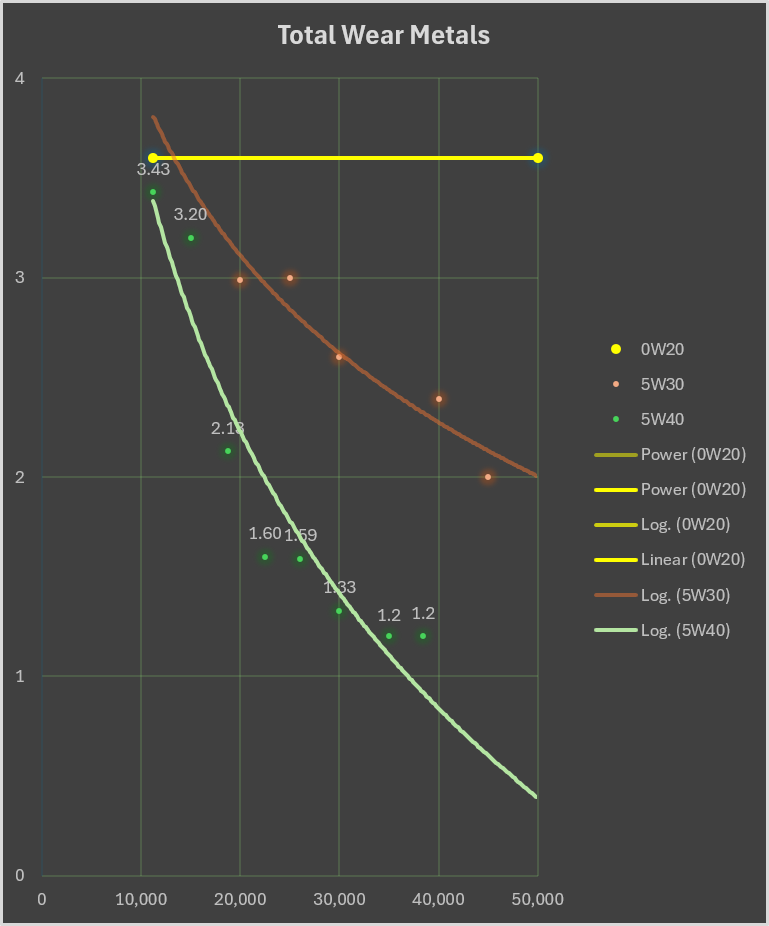
Linear? No, you are correct. Not linear but it is measurable. Here is my latest project. The yellow line is the entire Blackstone Historical Universe for this motor platform on the OEM recommended 0W20 oil. Results fall well below the Industry standard (after break-in) of no more than 5 ppm total wear metals. Thus one could reasonably expect this motor to last quite some time on this weight and evidently most do. One the web site for this platform enthusiast holding on to that warranty report making 200-300K miles but with a good deal of engine issues, heavy oil consumption (by as early as 80K), multiple timing chains and noisy valve gear. So yes, 0W20 will get you there and then to the bone yard. Longest one lasted 400K miles and was on display at White Bear Mitsubishi. The Orange line is a fellow enthusiast, one I am familiar with, experiment into the heavier grade lubricant of 5W30. He's a Mobil 1 fan changing oil at 5K miles. He's passed 200K with the same timing chain, fairly quite valve train and light use of oil. Something like a cup between OCI's. His compression test are within 2 psi of new. Note lower total wear metals v the 0W20. There is a second fellow on that site with a bit less documentation that just did 300K on 5W30 in this platform that just published his compression tests at 5-8 psi under new. I think there is good argument there that at minimum bore and piston skirt wear is nicely abated by this heavier choice. He still 50 psi above the factory minimum and very in balance hole to hole. Light green in Raven, my unit. 5W40. Jury is out on how long it will last as it just passed 50K in under two years. However wear metals are once again vastly reduced. It uses no oil yet and the mechanical valve train is amazingly quite and it runs exceptionally cool. I would be hard pressed to believe that such a drastic reduction in measured metals does not equate long term to a longer lasting motor. I only offered the examples I have DATA for and people I actually know and trust. So once again, I'm not telling anyone what I THINK happens. I providing the RESULTS and the context. My batting average would have most testing me for performance enhancing chemicals...wait!...I am! Now I've ran every Honda with 5W20 but again a high polarity oil with an exceptional HTHS value. High enough to exceed the SAE 30 minimum. I just ran across an 5W30 with a HTHS value of a SAE 40. And there in Atlas lies the key. It isn't the SAE grade but the actual HTHS values and shear stability index results. Looking for other outliers we could include those oils so light as to not support Stribeck but work due to enhanced AW chemistries. If you lean on these then the OCI needs to be short enough to not deplete their effectiveness. The Toyota Crown calls for a 0W8 but as it is not yet sold here in any volume Toyota has cleared weights as high as 0W20 for warranty enforcement. A testament to the absurdity of 'heavy oils damage motors'. Yes there are a few weird Spray Bore motors that don't like heavier oils due more to the hone finish. Special cases so no blanket statement will stand.
-
Some Assembly is Required
Grumpy Bear replied to Grumpy Bear's topic in Maintenance, Oils/Fluids, Detailing & Rust Prevention
Average Assembly 4.8% That's the likelihood of a light duty vehicle reaching 250,000 miles. Link below has the stats on this. Among pickups the 350 series (Dodge) and higher (450 Ford) are most likely and nothing American built in the lighter trucks pegs a number higher than the overall average. 200K and up is the stomping grounds of Asian vehicles. Toyota Sequoia the leader at 39.1% probability. https://www.autoweek.com/news/a68886903/vehicles-most-likely-to-last-over-250000-miles/ Likelihood drops dramatically at 100,000 miles of reaching even 150,000 miles. 250,000 is deep in the tail of the curve. I've been told by the 'experts' that I don't need oils of the caliber I use. My high viscosity is damaging my motors. Ash content is to high and WILL foul plugs and kill cats and O2's. I don't need that much ZDP; my choice is over added and not cutting edge. I change it to often. I baby them to much. Three Honda's reached 200K + and none used oil. All Red Line motors. All sold to friends or family. One Toyota reached 300K using oil, Pennzoil. Dizzy 300K using QSUD until it cashed the rings at 80K then whatever but often ever since. Did you know this engine still sports the OEM timing chain and is dead silent? Pepper spitting into the wind short of 200K, Red Line and changed often. Uses zero oil. A HPFP and a pinion seal. Still using most parts it left Fort Wayne with. So 50% of my vehicles have gone past 250K and 100% of the last half dozen past 200K. Of these two using "shelf oils' did so using abnormal oil and the four that used a premium boutique oil did not. There might be something there the experts have missed. -
Some Assembly is Required
Grumpy Bear replied to Grumpy Bear's topic in Maintenance, Oils/Fluids, Detailing & Rust Prevention
Yea..... -
Wow I'm in a pickle. (Broke down truck) and a story.
Grumpy Bear replied to Atlas's topic in The Off-Topic Bar
Is that starter old enough to have a mechanical external engagement Bendix Solenoid? You really like this vehicle. I would too. Labors such as these are not done for profit. Affection is much closer. Love it to death young one and enjoy the fact you still can. I'm jealous. Not of the vehicle, although I do like it, but of the focus, energy and commitment. You da man! -
Some Assembly is Required
Grumpy Bear replied to Grumpy Bear's topic in Maintenance, Oils/Fluids, Detailing & Rust Prevention
Assembly Turorial https://www.msn.com/en-us/autos/news/here-s-how-cruise-control-actually-impacts-fuel-consumption/ar-AA1MJ3a4 Take the time to read the link and the document linked note how the writer parses the wording to reach unspoken information that is just as important as the information presented on face. Same procedure works for marketing presentations. Maybe you might wish to reconsider; 'Critical Thinking'. -
On mine? Yes. But I did it rather expensively. I had Deaver Springs make new rear springs with a 2" lower arch and then removed the nearly 2 inch thick spring to axle spacer. The front is Bell Tech 2" drop knuckles. Rear shocks, stock, were several inches over mid stroke so when I bought the King shocks I used the OEM length with the drop to put it at dead mid stroke. Fronts are King Coil Over OEM replacements with 600# springs. Again sits mid stroke. Deaver, King Suspension and Ben at Filthy Motorsports were all involved. Lots of measurements and lots of conferences but it came out spot on first time around. The 2" I link I sent you would use the factory shocks and coil overs or any other OEM type replacement units you like. I assumed from your thread that keeping the factory feel and ride quality was likely. My project intended to change the very nature of the beast and it did.
-
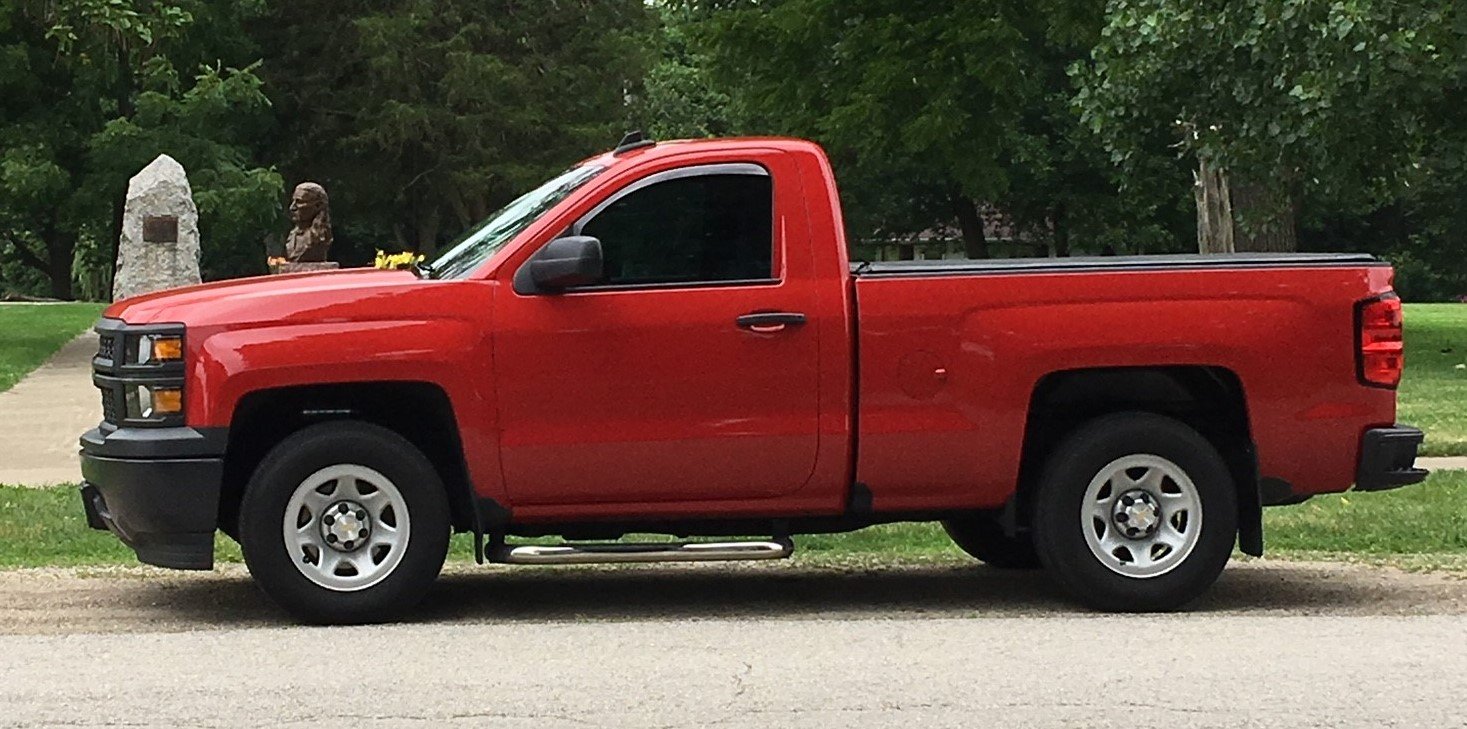
Two inches lower, same rake? https://www.belltech.com/categories/lowering/components/?Year/2026/Make/Chevrolet/Model/Silverado-1500/Submodel/WT/Drive/4WD/Engine/2.7L/EngineFuelType/GAS/BodyType/Standard-Cab-Pickup Mines a 2/4 drop. Gold Bowtie is nice. Love red trucks. Especially SCSB units. Nice thing about a knuckle drop is a no muss no fuss alignment without special A arms and no stress on the half shafts.
-
Some Assembly is Required
Grumpy Bear replied to Grumpy Bear's topic in Maintenance, Oils/Fluids, Detailing & Rust Prevention
Disassembly may be Required! Every blender makes claims but do you ponder those claims? What was really said? Was it true? Motive for saying it? What does in infer? Is that inference true? Let's do one. Claim: Made from shear stable base oils. What was said: Base Oils are shear proof. Was it true: Yes. ALL base oils are Newtonian. Motive / Inference: To imply the fully formulated product is Shear Proof. Is the Inference true?: Most fully formulated multigrade oils contain Viscosity Modifiers or VM's, sometimes called VII or Viscosity Index Improvers. There are four types. One is in fact shear proof but it also has a bad effect on extreme cold flow and is restricted to use in specialty oils. A second has limited shear called a 0-5 SSI polymer. Meaning its shear is limited to a range of zero to five percent as reported by the ASTM D6278 Shear Stability Index test. A few high end oils, like Torco SR-5, use them and brag about it profusely. Actually all that use it point it out. The last two shear dramatically and are often marketed as a 'feature' of the product aiding the oil to meet fuel standard requirements of ever stricter rules. One shears more than 5% and the other up to 20%. As you make guess, cost is directly linked to shear down and as such the majority of oils use the cheapest organic polymers sold to make grade and pass stringent tests. PPD's or Pour Point Depressants also shear a bit, only a few percent and hide inside the 0-5 SSI capabilities. The blender knows he can not out engineer Stribeck. Physics is not a suggestion. But he can wordcraft the unsuspecting toward believing a false claims INFERENCE. This is LEGAL. It is COMMON, and it is EFFECTIVE. -
HighMileage oils or stay with Dexos 1 ?
Grumpy Bear replied to Jworks's topic in 1999-2013 Silverado 1500 & Sierra 1500
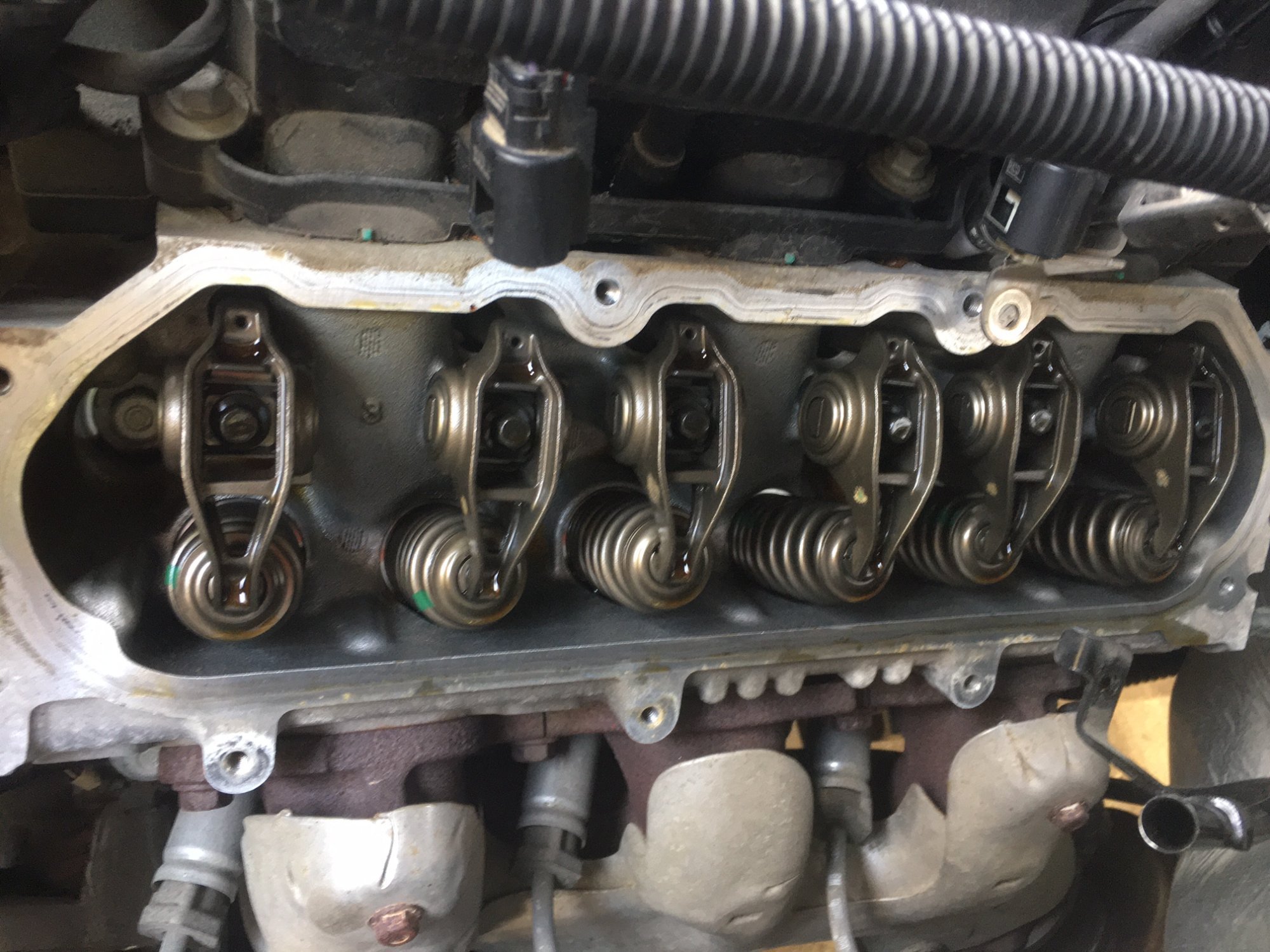
Engines wear. It is unavoidable. So the question isn't if it will wear out but rather WHEN it will wear out. That question is about rate and RATE is a HUGE problem for almost everyone; but not in the way we may think. Unless there is something drastically wrong with your powertrain, wear is exceedingly slow. It doesn't wear out in minutes or hours or days or months but in years or even decades. Ditto sludge and varnish. Humans are an impatient lot so to see the benefit of a truly superior product you may have to wait a very long time. Most will get bored first and trade before they reap the benefit. Humans are not companionate creatures when it comes to those we do not know. We don't care what happens to the second or third owner as long as it doesn't happen to us or someone we know and actually like. Sad commentary on humans but it is what it is. That thus, then, there is no advantage...to or for you if the above paragraphs adequately describe you. BUT if you are a buy and hold type and patient enough to reap the rewards of your labors then that thing that is happening that you haven't yet seen, but will; can be abated by such products. Seals harden and leak with time and lots of it. Rings stick after thousands of miles of a slowly building plaque of varnish. Then there is this. This didn't happen over night and this poor fellow knew when he removed the cover and not one second before. Not "aware' isn't the same thing as "isn't happening". The above was typical of the Ford 361 and 391 bus motors on Bulk Pennzoil Mineral Oil products on 3K mile OCI's at about 60K miles back in the 60's and 70's at the Anamosa School District when my Uncle took over their maintenance program. This is Pepper at @ 165K on 5K OCI's using Group IV/V Full Synthetics. HM oils will help the first but not the second. Then again if one used..... ah, ya know.....
-
HighMileage oils or stay with Dexos 1 ?
Grumpy Bear replied to Jworks's topic in 1999-2013 Silverado 1500 & Sierra 1500
https://www.lubesngreases.com/lubereport-americas/10_07/survey-russian-drain-intervals-drop/ -
$4 a gallon. Well news to pump didn't take long. 36 cent a gallon jump in five seconds after the news broke.
-
HighMileage oils or stay with Dexos 1 ?
Grumpy Bear replied to Jworks's topic in 1999-2013 Silverado 1500 & Sierra 1500
This biggest difference in a HM oil is in contains some "Seal Conditioner". DEXOS oils and most shelf oils are "Dry" oils which over time harden seals. "Seal Conditioner" is more times than not, an Ester. Addition will soften the seals over time but will not repair one that leaks or has cracked. Esters also provide some cleaning but these HM oils don't contain enough to solve out hard deposits. Just the soft stuff. Also a function of an Ester. Ester's are not 'allowed' as a 'co-base" by license. Weird, right? A certain amount is allowed as an additive. Bunch of game playing is what it is. It's why HM oils don't have a DEXOS approval. DEXOS is a license 'with' a specification but is not a specification. Never was, never will be. It's GM's slot machine always paying the house. Use what you like. -
We have a deposit on one. Dizzy is going to need a replacement sooner that later. We live equidistant from two towns 40 miles apart and the range of this the vehicle is in that sweet spot. Plus it's plastic and sans paint! I have 220 V in the garage so a station is not much of a lift. Wife wants the square back SUV variant and I want the extended battery. No frills salt truck for those mindless runs to town that eat up fuel economy on the gas burners and waist them away in winter salt. Plus I can sit my beer on it without worrying about a scratch. No midwinter, on my back in the snow oil changes. I figure it is the cheapest way into dipping a toe into the EV market. Plus it serves a utility.
-
Wow I'm in a pickle. (Broke down truck) and a story.
Grumpy Bear replied to Atlas's topic in The Off-Topic Bar
Hey Atlas, thanks for taking us along. I love this stuff. -
Six inches of rain over three days. That's our average July total! We got half that in about ten minutes yesterday. Ground is soaked and every sprinkle turns into a river. Sump pumps are getting a workout. If you want some, bring a bucket, bring a barrel. Bring a truck.




-
Forum Statistics
250.5k
Total Topics2.7m
Total Posts -
Member Statistics
342,894
Total Members8,960
Most Online
-
Who's Online 6 Members, 0 Anonymous, 1,223 Guests (See full list)