

.JPG.6537b7f00fa66f30aa51f5040da0fd95.JPG)
Grumpy Bear
-
Posts
12,861 -
Joined
-
Last visited
-
Days Won
465
Content Type
Profiles
Forums
Gallery
Events
Articles
RPO
Store
Blogs
Everything posted by Grumpy Bear
-
.thumb.JPG.2c573de60d3a3a4407c7d92298db46dd.JPG)
2014 - 2018 5.3 6 speed downshift jerks
Grumpy Bear replied to nluchau's topic in 2014-2018 Silverado 1500 & Sierra 1500
Line pressure has less to do with it than clutch release/apply percentages and timing. -
A thought that will make you smile Doublebase. I've used these products nearly 30 years and my standard change interval was always 7,500 miles. GDI being new to me and being a human I pay attention to the issues surrounding this tech and made a decision to shorten my intervals to 5,000 miles based on nothing but my gut and fear of the unknown. No big "S" on my chest. Did a workup once, it's here on site somewhere, that showed that a $30K trucks cost over 5 years was $90-$100K ALL UNAVOIDABLE cost considered and left a residual value of $5k. I can buy a lot of oil and filters and antifreeze and gear oil and, and...and for the difference. If it will double the life of my equipment, and it has repeatedly, that saves another $100K. BTW, if NOACH is your primary concern you could use Amsoil SIGNITURE SERIES as well. Another oil that I would consider. Likely can buy it cheaper from Nick right here on this site too. He's a supporting vendor who gives of his time knowledge freely.
-
Please excuse the heavy editing of your post. We are looking at two different issues here. Correct? 1.) Valve deposit build up on the manifold side and 2.) stuck rings. Never said build up was not an issue. Never said stuck rings was not an issue. I said it hasn't been an issue in my vehicles. Two of these well past the OMG it's gong to drop dead any minute 30K maker. The question no one is asking is...…..????? dyier2 gives a clue: Did you read my post titled Omeprazole? In one of the off topic threads I started. It was on the misconceptions people have about almost everything in their lives about products with the ability to alleviate some condition they find objectionable. In short, people don't take omeprazole to alleviate heartburn; it's taken so they can continue doing what their body is telling them is harming them. There's a Zantac commercial running as we speak telling people to take their product to prepare for heartburn taco night. Idiots! It's no different with how we use machines or care for them. We want what we want regardless of the evidence that tells us otherwise. While you, Doublebase, and I and many others are exacting in our maintenance habits the vast majority of owner/operators are not and it is from that pool of the ignorant and arrogant that the reality of the rumor becomes a fact. I don't just use the best oil and filter I can afford. I change it like it's cost is irrelevant. I take Omeprazole and then add an additional layer of protection by staying away from those things that was hurting me to begin with. I use good oil and treat it like it isn't and drive like it's the last truck/car/bike/lawnmower I will ever buy....because.....it just might be. Guess what? It works and has for five decades. My method and my choice of products is not the only answer. dyier2 gets great results using oil and filters that cost 1/3 of my cost and yet changes it almost twice as often. He enjoys the task, I do not. I can see the draw to a catch can. But I also know that they do nothing for the rings. I also know that I don't have to trap what I don't allow to get in the manifold. My habits prevent as much 'gunk' as the device does. I know oil burner ring issues are soot related not GDI related. I also posted a video at one time on GDI and how the newest generations of the architecture time the injection in a way that vastly reduces valve backside build up. The majority of the carbon build up comes from chamber side...not the manifold side. A condition called reversion the can boys don't talk about. ALL ICE motors suffer from it. Dry runner injection aggravates it but isn't the cause. It got laughed off and dismissed by those who need a reason to justify taking tummy pills and eating battery acid together. Whatever. Quit the worry about being laughed at. Tongue in cheek go about your business. You will have the last laugh. Patients grasshopper.
-
Okay those wont work with 17" wheels. What's the minimum wheel diameter to clear them?
-
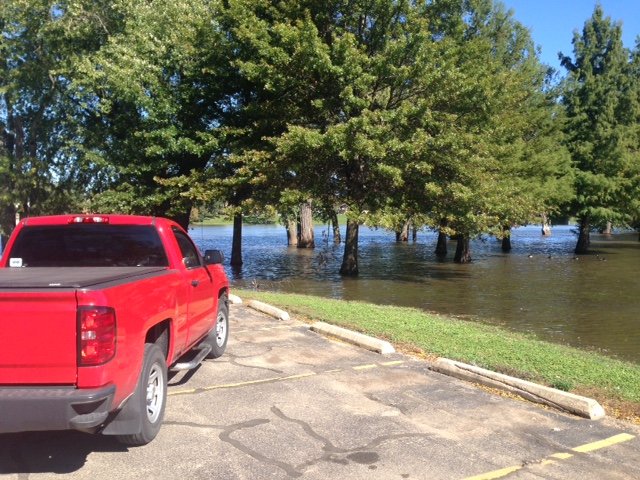
If it doesn't stop raining soon I'm going to build an Ark and gather some animals.

-
2014 - 2018 5.3 6 speed downshift jerks
Grumpy Bear replied to nluchau's topic in 2014-2018 Silverado 1500 & Sierra 1500
I am not doubting you Josh and it may indeed have some issue. Please, have it checked out. This whole statement of mine is more of a comment to the masses that think Zebra instead of Horse every time they here hoof beats. That said a couple of ideas. Trucks will never be as smooth as cars. They are heavier and built overall looser for a variety of really good engineering reasons. Not just curb weight but rotating weights. They are stiffer and that translates into a more direct 'feel' of the vehicle. Gearing overall is normally much lower and the lower it is the more you feel the gear changes going down. There are others but I just wanted to present some other reasons besides mechanical damage. Your other vehicles are cars? Smaller trucks? Are you geared 3.42? Slightly rolling terrain or light on/off pedal? That's about 5 mph slower than my 3.23 geared truck will on occasion have the AFM and the transmissions search for 4th or 5th gear freak the TCM out a bit. Especially if I have it in cruise control and tap it back in when I match the speed limit. This is where there are three systems trying to be top dog. Happens on the same road entering the same town every time. . Moving my set speed up just 1 mph stopped it. People...we are the biggest difference. -
2014 - 2018 5.3 6 speed downshift jerks
Grumpy Bear replied to nluchau's topic in 2014-2018 Silverado 1500 & Sierra 1500
There are just under 8 BILLION people on this planet and each is unique. There is no program that can dynamically manage that. There are millions of 6L80E's in service. For any given service year they are identical in programing. A bit different in build due only to manufacturing and assembly variances common to all things man made. The real differences lie in the users. There is no 'reboot' or 'reprogram' for that. This is why companies like Black Bear start with data collection directly retrieved from YOUR truck with YOU behind the wheel and go from there. GM, Ford nor Dodge can not do that in a cost effective manor. They do their best with adaptive learning algorithms. You're simply expecting to much. No worries. -
2014 - 2018 5.3 6 speed downshift jerks
Grumpy Bear replied to nluchau's topic in 2014-2018 Silverado 1500 & Sierra 1500
I'm not picking on you Josh. Your post was just a good example that included the jest of most others comments. What do you all believe a 'normal' downshift should feel like? I'm not talking to those who have actual mechanical issues...broken parts A feeling like "a tap on the brakes"..."a tug"...especially with mild noise, clunk, is not an issue. Can you drive a manual? What does it feel like when you let the clutch out on the 3-2 shift? Go back to the days of the vacuum/governor operated automatics like the TH-350 or C4 or Torqueflite 727. People complained that they did not down shift to the 'proper' gear holding on to high until just before coming to rest or down shifting from 3 to 1 upon light acceleration under 10 mph feeling it abrupt and that it should already know the road speed and be "waiting' in the correct gear. It should know to go to a lower gear under high vacuum that signal a more rapid deceleration. Well they complicated it to no end and gave you what your were screaming for and now we are going to complain that it isn't Ferry Godmother pillow soft and totally unnoticeable? Tough crowd. Well they made a gear box that is truly seamless and always in the proper ratio. It's called a CVT and guess what. People complained that they could not feel the gears at all and that it felt 'weird' for a motor to remain at nearly a constant rpm regardless of speed. So they programed speeds into it and now we are complaining about that too. You seeing a pattern here? There is clearance between yokes and splines and gears so that parts can move at all and when you change load direction on something that isn't press fit tight there is a bit of mechanical noise as on piece of metal strikes the other and a sensation, which is REAL that there has been a change of speed between assemblies. Just like your inability to apply your brakes without feeling the sensation of deceleration. -
I would be interested in your observations please. 0W20 but if I were not running extra cooling (180 F thermostat) it would be 5W30.
-
Red Line High Performance.
-
Yes.
-
WOLF! There are three GDI motors on this property. All GM and all 2014 or newer. Two with over 75K on them. Yes I had a look inside and down the runners of the 4.3 around 50K as saw nothing I haven't seen in those same places in healthy motors for the past 50 years that I routinely drive to a quarter million. So here's what I'm saying: "Known to be an issue" is not the same as "Know it WILL BE an issue". Well...and I'm doing something obviously wrong if I don't have the same issues that are certain to happen. Wonder what that might be?
-
Know what you call a motor that uses that much oil with todays ring and valve seal technology? JUNK! Yea, yea. GM says a quart in a thousand is NORMAL. Use to be during the days of the 454 they denied motor claims until it got worse than a quart in 400 miles. that was normal too. A quart in 10K before and he sees no issue? I wonder what it would take to get his attention?
-
Because the fuel doesn't do much cooling. The air does. The heats your eluding to happen on the combustion chamber side of the valve. Most of a fuels ability to cool comes from...vaporization....which doesn't happen to any significant degree in a carbureted or port injection motors until after entry into the chamber. To that point it's a mist at WOT and at PT even though MAV is high the amount of fuel is low. Heat of vaporization. Ever see a "wet" flow bench? Russ Collins, sort of a fuel injection expert, pioneered them for this purpose. FYI motor fuels end point is 430 F. That's the point the heaviest ends evaporate. Under heaviest loads then (WOT) the fuel which is at atmospheric pressure can't fully vaporize. At part throttle the load is so low there isn't enough sensible heat available to drive the valve temperatures very high. A point made in that post. Vaporized liquids are what make swamp coolers work. Your AC or Frig. Swirl and tumble got to be a big deal because fuel doesn't vaporize well in the intake system. It's the reason GDI pressures are so high. Thousands of pounds. Truth is less than 40% of the fuel is a vapor before entering the chamber and it is in the minority. NOACK and oil 'burning' on valve backs. You do know this happens to carbureted motors as well right? Seen in at it's worst in motors with guide wear and/or shot seals that draw raw oil in past the inlet guides. Motors that smoke when you lift. Less a function of PVC systems. They continue to run for decades. Here's the bottom line. IF NOACK was the issue then we would be saying that the vapor temperature (PCV introduced at the valves back side) at the bulk oil level is above 482F and in that case NOACK and valve deposits are the least of our worries. Your talking about oil in the vaporized state, right? Not a mist but literally a vapor like steam is to water. Above the boiling point of the lightest ends at that pressure. Not likely in NORMAL service which brings me to the last point. People that write that drivel making a worst case statement and leaving that little fact out. It is worst case. I saw a 'news' story the other day on CNN. Quote" Will Cosby get the full 30 years?" News doesn't end with a question mark, sensationalization does. Your motor will die if you run unleaded gas in a motor with iron seats was a bust too. Only in extended high load conditions did it have ANY effect at all. For Joe Average is was a non-event. Sold allot of cars and useless machine work however.
-
Yikes!!!! 40,000 changes? Interesting read too. By pass filters and pre-lube pumps. My dad is 90 now. Still trading cars like baseball cards. Puts in a garden every year. One that would kill a man of 20. Mows his own acre lot by hand. Works on cars and trucks. You get the point. His sister a few years his junior can't get out of bed. Big difference between high mileage and good health. If you have them both your still useful.
-
I want great oil performance but do not want to pay for it. I don't want to pay for the product and I don't want to change my oil. I've been lied to by the oil companies and their lawyers until the truth is unrecognizable and know it but their marketing and advertising are what I want, no..."need to hear" so I'll keep doing what I've always done. Believe the liar and trade so often it won't make a difference. I get it. Really. We can bang numbers and trade write ups till pigs fly OR I can just believe my eyes. There is a difference between driving a vehicle for say 250K with out a noticeable issue, never having a peek inside, and taking the thing apart, putting it to the band saw and measuring every part that touches oil. As long as I can take a motor down with that many miles on it and have it look like new inside right down to the color of the alloy castings....I'll keep using my self proven choices for lubrication products and my change intervals and filters. The more complicated these motors become and the higher the power density becomes the tighter I will cling to those choices. No I'm not afraid to waste a perfectly good 250K motor to a band saw if I can learn what I need from it. (and the body is junk LOL) That does not mean I have but one choice. If I still had a 200 Ford six in my 67 Mustang I'd still be using Trop-Artic 10W30 and Motorcraft filters changed every 2,500 miles. But as it is what it is; it's Red Line and WIX every 5K until Red Line lies to me or it no longer works. (I would have no issues running Amsoil either).
-
Then this should amuse you. http://www.sbintl.com/tech_library/articles/tlc_of_your_valves_temperatures_loads_and_corrosive_environment.pdf (quote) Normal temperatures on intakes range from 600° to 800° F in the center of the head of a light duty job to 800°-1000° F for a heavy-duty application. At the seat face, those temperatures range from 200°-400° F on light duty engines, to 400°-600° F on heavy-duty engines. As with seat faces, the under head areas are relatively mild on both types — about 200°-300° F on light duty to 300°-400° F on heavy-duty jobs. (end quote) We are not worried about the combustion side and as for the plenum side...well...not tough duty for Amsoil or Red Line. Many on this site claim no concern at all for bulk oil temperatures over 235F. Which is it? Deal or no Deal? http://www.sbintl.com
-
Red Line High Performance 0W20 NOACK 9 Red Line High Performance 5W20 NOACK 8 Red Line High Performance 5W30 NOACK 6 Red Line High Performance 10W30 NOACK 6 Question. When do you run your oil at 482 F for an hour? Fresh info. Have a nice day.
-
Coolant flush drain
Grumpy Bear replied to afireinside7444's topic in 2014-2018 Silverado 1500 & Sierra 1500
Works for me. I also check the strength. Not all 50/50 is actually 50/50 it seems. Shelf life is based on the additive package...maybe Briggs & Stratton is on a kick now recommending that you never need to change your small engine oil. I haven't done the math on the above but it seems enough to keep the additives in check. There are test kits for that if you like. Or use to be anyway. -
6L80E holds 12.5 quarts and uses 6 quarts for a dump and fill that includes a filter change. 6.5 qt. of old fluid and 6 qt. of new fluid = 48% new fluid. Install a PML pan that holds 2.5 extra quarts. For the second change 6.5 qt. at 48% = 3.12 qt. + 8.5 new qt. + 11.62 qt. new out of 15 qt. total new capacity or 76.7% new fluid. On the third change 6.5 qt. at 76.7% = 4.98 qt. + 8.5 = 13.48 / 15 = 89.9% new fluid. Call it 90% It takes 10 changes like this to replace 99.97% of the original fluid. 22.5 quarts in this scenario to change 90% of the fluid. In a flush situation the amount to replace 90% of the fluid is near a full barrel of oil! 42 gallons!!! 13% of the flush oil it takes to replace the equivalent amount of dump and flush. At $12.50 a quart that math is easy. Converter takes care of itself. Drop and fill coming up. 90% Red Line, 10% Delco. Out with the Group III and in with the Group IV/V. I love esters.
-
Red Line (non-race) I just had confirmed has a 10% add pack. It isn't ANY motor oil. If fact a high percentage of it isn't mineral oil at all.
-
First bar: 45 mph over hilly terrain, cruise control on in tow mode M6 which holds the trans in 5th gear and the AFM is active. Grade logic off. East against same wind as below. 2nd bar: 45 mph over level ground, cruise control on in tow mode M6 held in 5th gear with AFM active. Grade logic on. 3rd bar: 45 mph level ground, cruise on in M5. AFM OFF. Grade logic ON. 4th bar: 45 mph level ground, cruise on in Drive and Grade logic ON. In 5th gear the rpm was right at 1420 rpm. In 6th gear 1148 rpm. Both numbers are a bit high for the math but the clutch lock up isn't active this far below converter stall. There is roughly 100 rpm of slip. 5th bar: 57 mph in drive with a 8-12 mph ESE wind north on I-39. This speed is the same rpm as 5th gear at 45 mph. Runs for bars 2, 3 and 4 were 18.4 mile round trip loops on the flattest, straightest section of secondary highway in my area. Runs N/S and we had a 8-12 mph SE-SSE wind. 72-75F and 93% humidity with a BAR of 29.90. I chose 45 mph as it is a speed the trans will stay in 5th gear with the AFM on or off, my choice, and still allow a sane speed in 6th gear for the same rpm. 50 mph in 5th gear AFM active is above the converter stall speed and it actually does a bit better between 48 and 50 mph in 5th with the AFM active WHEN into a headwind over hilly terrain. The round trip numbers are the total average for that run. The spreads between into the wind and the wind at your back was interesting to observe although I did not jot those numbers down. For instance on the flat and into the wind 5th gear AFM active did a bit better than 6 gear. With the wind at ones back the opposite is true. 6th gear is more efficient. As one might expect the shorter gearing gave a lower difference between into vs at your back wind conditions. The more direct the wind to ones 12 or 6 the more pronounced the effect. No real surprises here directionally. Specifics however help me make better choices of route and run set up. Note: AFM in this test sequence netting a 7% gain under the days conditions in round trip 45 mph runs. Under these conditions the AFM when active was off ONLY during the period of time it took to turn around and reacquire cruse speed. The distance was chosen in part for the fact the time period is to short for the ECU to shut the AFM down due to time-out alone.
-
As a matter a fact it is Cliff. Nothing subjective about it and still mind numbingly low. Why? Red Line (non-race) is a blend of PAO and an Ester. A good percentage of the can is an ester. It also has no more trouble holding the add pack than the original Mobil 1 which was 100% PAO or Amsoil Signature Series, also and still a full PAO. (both minus the add carrier oil) There is very little VI suppression in a Red Line 0W20, again due to the high loading of esters which also account for the high VI. Low total add percentage. My post and reply to Red Line below FYI: Marty, The ASTM CCS test procedure is D5293. The test procedure isn’t included on the data sheet for space consideration, when referring to the cold cranking simulator that is the procedure referenced. I don’t currently have an “A” for sale, we now have a total of 4, though ocassionally hear about one available locally. Regards, Dave Granquist P: (+1) 707.751.2914 | O: (+1) 707.745.6100 | 6100 Egret Ct | Benicia, CA 94510 Red Line Synthetic Oil Check us out at the industry’s biggest trade shows! Click links to see show floor plan AIM Expo, Oct 11-14 in Las Vegas: Booth 2549 SEMA, Oct 30-Nov 2 in Las Vegas: Booth 22525 PRI, Dec 6-8 in Indy: Booth 1709 From: Marty N <[email protected]> Sent: Saturday, September 22, 2018 6:32 PM To: Granquist, David <[email protected]> Subject: [EXTERNAL]Test question: That Redliine CCS is not a number derived from the industry standard ATSM D5293 cold crank simulator testing protocol. It really means little in terms of comparison. A 172 VI is nice but many other oils have VI's in that range. Pour point is good, but it is the CCS that really is more important. And without showing the ASTM D5293 testing number of that CCS, "mind numbing" is purely subjective. Dave: I got the above in reply (in part) to a post at GM-Trucks.com I made on lubrication. I note that the data sheet does not actually site the ATSM test sequence used. That said I can’t imagine the fellow making this reply has inside information. I can also not imagine Red Line pencil whipping a non-standard test method. Could use your help on this one if you please. Side not on a different topic. Last time we exchanged post I was talking about an “A” I was looking at and it didn’t occur to me until sometime later that your reply might have indicated you might be parting with yours? Did I miss that? Is yours for sale? Regards Marty
-
Where are you getting that information?
-
This is by month over 2 years. All down hill from here. About time to get the fall detail and sealing done.


-
Forum Statistics
250.6k
Total Topics2.7m
Total Posts -
Member Statistics
342,995
Total Members8,960
Most Online
-
Who's Online 7 Members, 0 Anonymous, 241 Guests (See full list)