

Gangly
-
Posts
1,333 -
Joined
-
Last visited
-
Days Won
8
Content Type
Profiles
Forums
Gallery
Events
Articles
RPO
Store
Blogs
Everything posted by Gangly
-
 Be careful, service plans will sometimes approve the replacement of the damaged component with a used, but in good condition component if its cheaper than the repair of the original component. I had a radiator replaced that way without my knowledge until it was too late. In your case, it would probably be cheaper for the service provider to purchase a used rear end from a salvage yard than to pay the dealer for the rebuild of the one you have. Be wary, trust but verify.
 -
160K, mine are good. If you have a 2wd truck, I can guarantee you that your camber is off if your still on your original shocks. There isn't a 2wd truck on the road running factory suspension that isn't wearing out the inside tread of their front tires. Take a look at any stock suspended 2wd truck that has more than 20K miles, and the camber is noticeable even when parked. You can actually see it on some of the 2wd's that are brand new on the dealer lots.
-
Not a 6.2, but a 2020 5.3 with 160k
-
2015 Silverado cylinder 7 misfire
Gangly replied to Cleanchvy70's topic in 2019-2026 Silverado 1500 & Sierra 1500
Nope. I wanted everything to be factory/OEM and that was the price quoted. I walked from the service department to the parts department and purchased most of the parts I needed right then. They didnt have all of the parts, so I drove to another dealership for the remaining components. -
I would love to try out the 3.0L, but it does not fit my driving style, to the point where I believe it would actually be detrimental to the 3.0 diesel engine. Although most of my miles are highway miles, the drive from my house to my office is about 3-5 minutes MAX. I make that trip 3 times a day if I’m not on the highway, and each time I make that trip the diesel would never get a chance to warm up before shutting it back down again, and that’s HARD on a diesel engine. Again, I would love to give the 3.0 a try, but I believe my incredibly short daily commute would kill it over time.
-
5.3 vs 3.0 longevity
Gangly replied to ryanm33's topic in Engines & Drivetrain (V8, Duramax, TurboMax)
SCR, DPF, etc. HAVE been a thorn in the site of large diesel manufacturers since Tier 4 regulations, but the real issues stem back to Tier 3 with the introduction of mandated EGR systems. Diesels by themselves are not any less reliable than before, but the required accessories attached to diesels have created substantial issues, primarily the EGR system. The amount of diesel engine failures resulting from an EGR cooler failure are substantial, to the point where next gen diesels will most likely run without EGR's and rely on elevated engine temperatures to run cleaner. Elevated diesel engine temperatures bring about a whole new bucket of issues, but the manufacturers are more inclined to deal with those issues than the current situation they find themselves in. Regardless, in 2027 model units, the SCR, DPF, etc. systems will lose a lot of their bite since the EPA is drastically reducing penalties for improper operation or delinquent DEF fluid refills. Your diesel will no longer go straight into limp mode if you don't have DEF fluid in your reservoir for any reason, and you can continue to operate for a designated distance without cussing out your vehicle. -
How much coolant loss is normal?
Gangly replied to ExYukon's topic in Engines & Drivetrain (V8, Duramax, TurboMax)
I have had to add a little coolant every 30k - 40K miles since new. I will get a waterfall/gurgling sound behind the dash when it gets a little lower than full (nowhere near the low indicator on the tank), so I add enough coolant to get a little above the "high" indicator, and the sounds go away for another 30k - 40k miles. -
Bilstein 5100's on stock LT Trail Boss?
Gangly replied to Atlas's topic in Modifications, Wheels & Tires
I would steer away from the 5100's, not because they are bad, but because there are better options nowadays. Check Eibach out. I swapped my Eibachs out with another set of Eibachs after having over 100K miles on the first set, and they were still in good shape. -
Grumpy, The FRAM Synthetic Endurance is a relatively new filter, but I would love to hear your thoughts on it, if you have any.
-
I prefer FRAM's new Synthetic Endurance. I would never use their base filters, but their new Synthetic Endurance, and their Ultra Synthetic are very good filters from what I can gather. The Synthetic Endurance is rated for 25,000 miles, but I swap them out every oil change which usually around 7,000 to 7,500 miles according to the OCI light on the dash. The oil generally has a slightly darker amber tint to it when it gets changed, which is significantly cleaner/clearer in appearance than any oil change I ever did with the OEM filter (dark as coffee).

-
2015 Silverado cylinder 7 misfire
Gangly replied to Cleanchvy70's topic in 2019-2026 Silverado 1500 & Sierra 1500
The engine most likely doesn't need to be replaced, but he is correct that it still might be cheaper to replace the engine. If I remember correctly, the dealer wanted 11K-12K to swap out my lifters and cam. My engine didn't need the lifters or cam replaced, I just wanted to swap the lifters because of the truck's mileage and to avoid any potential reliability concerns in the future. I went ahead and purchased the lifters, trays, pushrods, etc. and did it myself over the weekend for a little over $2,000 in parts, replacing everything with OEM parts, bolts, gaskets, etc. You could probably save a bunch using aftermarket components, but I stuck with OEM and have put an additional 40K miles on it since then. Out of curiosity, I asked the dealer what a brand new engine would cost and it was around 7K if I remember correctly. But that was just for the engine, no labor. If you are willing to do the work, or have a good mechanic that is cheaper than the dealer, a new engine might definitely be cheaper than the cost of having the dealer tear into the old engine to replace the cam and lifters. With my truck sitting at 160K miles right now, I know that if I ever do have lifter issues, I'd probably just buy a new engine and install it myself since my miles are getting high. -
2015 Silverado cylinder 7 misfire
Gangly replied to Cleanchvy70's topic in 2019-2026 Silverado 1500 & Sierra 1500
Yes, the lifters can turn in the trays and cause damage. If you are going to replace one lifter, you might as well replace all of the lifters and trays since 95% of the work is already done. If one lifter has already failed due to mileage, type of usage, maintenance intervals, or whatever, I would assume the others aren't too far behind since they have experienced the same usage and wear. I think its something like 10 head bolts to remove the head if you've already removed the other side. And don't forget to replace your high pressure fuel lines while your at it. -
2015 Silverado cylinder 7 misfire
Gangly replied to Cleanchvy70's topic in 2019-2026 Silverado 1500 & Sierra 1500
Yes, necessarily. If you want to say you can replace the head bolts without removing the head, you are correct, but the steel bands of the head gasket are deformed if they are leaking, and deposits are being created between the steel layers. LS/LT gaskets are MLS gaskets, and if you have coolant leaking into the combustion chamber through that head gasket, regardless of cause, then you now have deposits and moisture between the mating surfaces of the steel layers which are now warped due to improper clearances associated with improper torque specs and heat cycling. That requires the head to be removed and the gasket replaced, otherwise you will have the same problem a few miles down the road, regardless of whether you removed old head bolts and installed new ones to proper torque. If coolant is getting into the combustion chamber, the head needs to pulled, period. At best, all you will need to do is pull the head, clean the surfaces, replace the head gasket, and use new head bolts. At worst, you have to mill the heads due to warpage from heat cycling under improper torque and heat cycles. You can bootleg it if you want, but coolant in a combustion chamber is a ruined head gasket and that requires a head removal for effective long term use. -
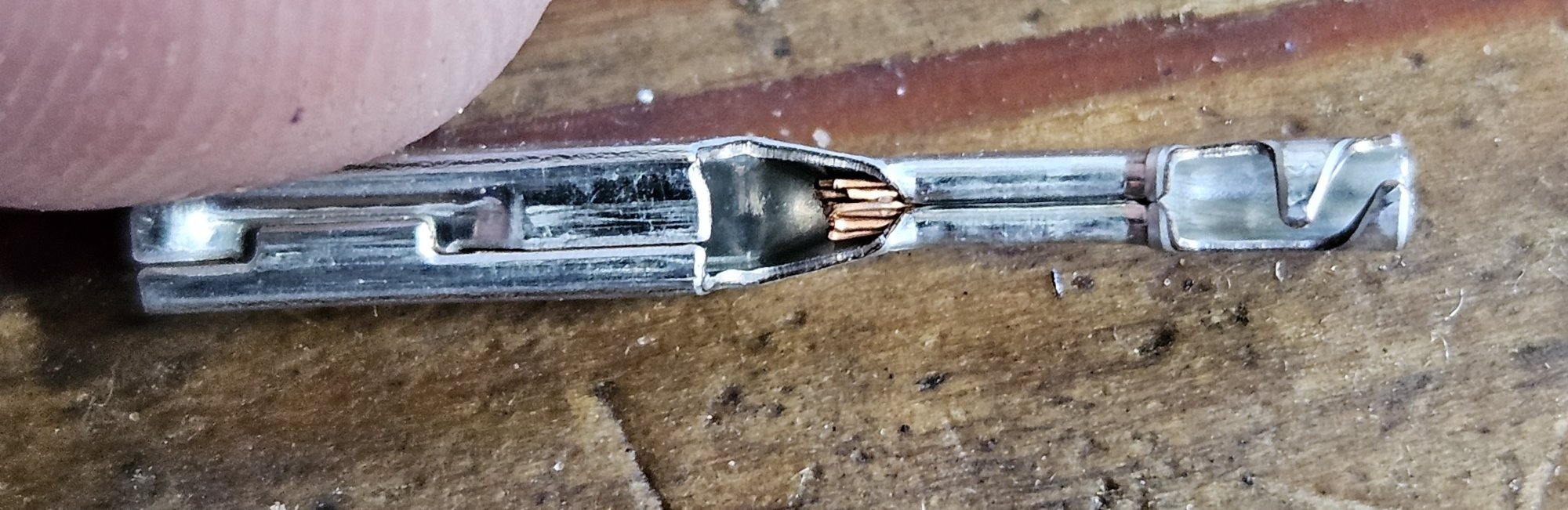
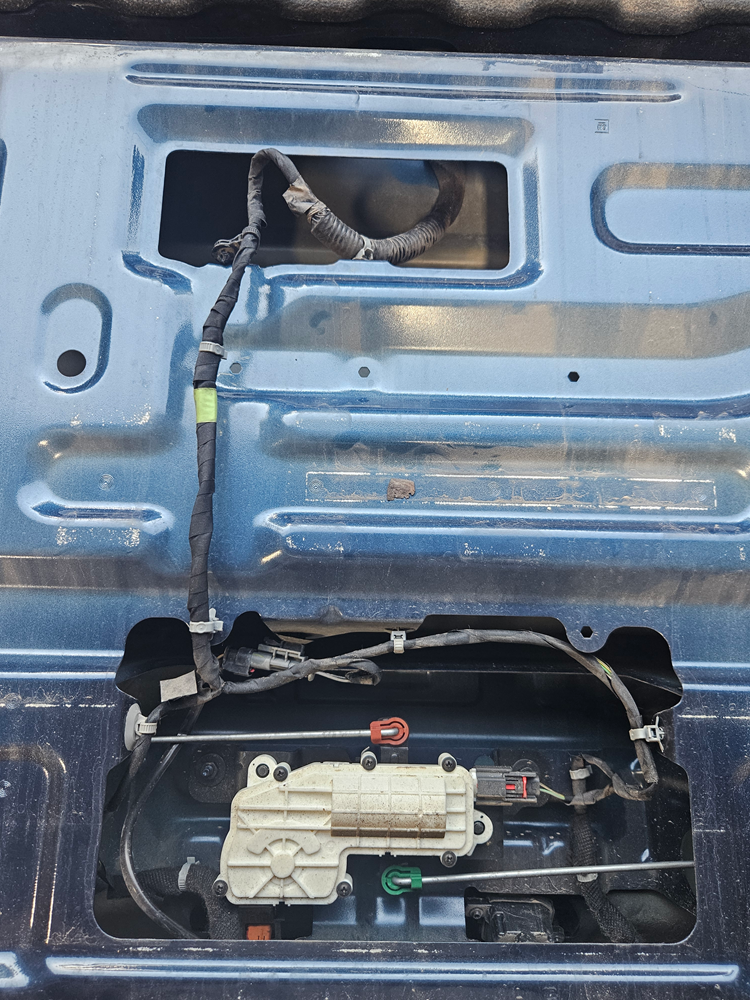
I believe it might be a Molex MX150. That's the pin type for what's used in a connector at the rear of the truck that I had to re-pin.
-
2015 Silverado cylinder 7 misfire
Gangly replied to Cleanchvy70's topic in 2019-2026 Silverado 1500 & Sierra 1500
Either way, your pulling the head off the engine. -
2015 Silverado cylinder 7 misfire
Gangly replied to Cleanchvy70's topic in 2019-2026 Silverado 1500 & Sierra 1500
White smoke out the back is coolant being combusted, you most likely have a blown head gasket. -
Rear camera cuts out in reverse
Gangly replied to Crambone's topic in Troubleshooting, Warranty & Recalls
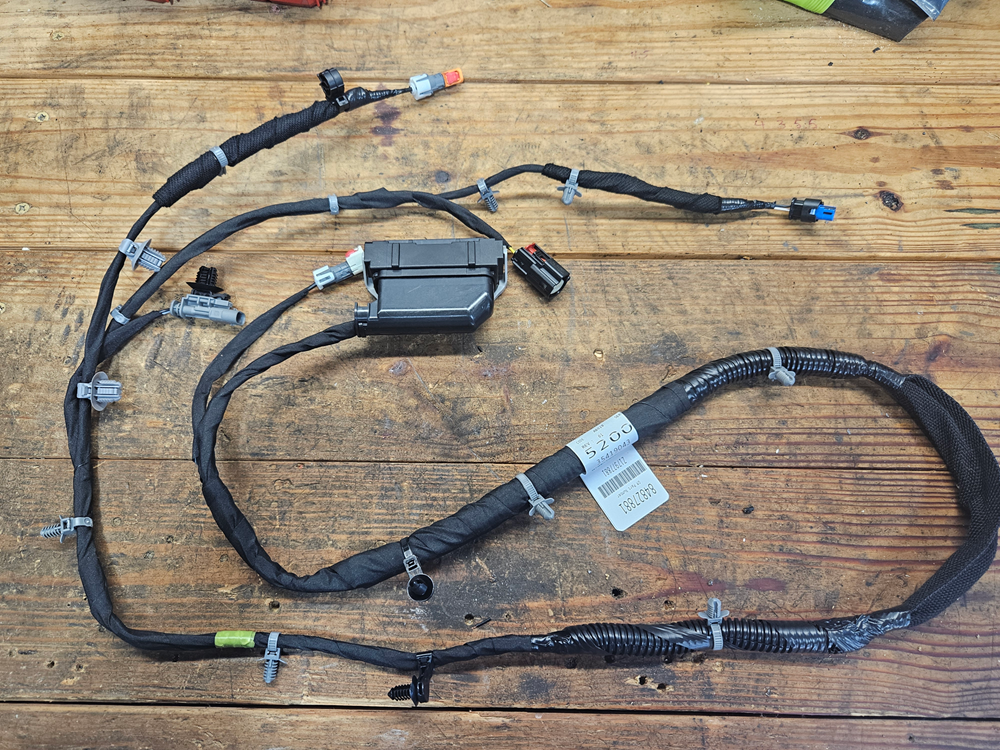
I was getting the black screen whenever I put the truck in reverse as well. I found damage to the coaxial cable between the rear camera and the connector located on the drivers rear of the vehicle, as well as some damaged connectors elsewhere where conductors had detached from the connector pins. I re-pinned the connectors, and since the coaxial cable couldn't be purchased individually, I purchased the entire rear harness which was about $120, and replaced it myself. Upon inspection of the pins, I believe them to be Molex 150MX pins. They installed seamlessly and worked perfectly in the connectors. No issues since replacing the harness and re-pinning a circuit.
-
25' L84 Lifter failing @ 2800 miles.
Gangly replied to 20L8TSierra24's topic in Troubleshooting, Warranty & Recalls
When my 2020 Silverado 5.3 hit about 120k miles, I pulled the heads and swapped lifters and pushrods "just to be safe" since I needed the truck to go 200K miles. At that time, I also switched from 0W-20 to 5W-30. Upon first startup, it immediately sounded quieter and ran smoother than it ever did on 0W-20, even when new. It now has ~160K miles on it and continues to go strong, knock on wood. I'll be looking to purchase a new Silverado in the next year as I approach the 200K mile mark, and it will start off Day 1 using 5W-30, regardless of what the dealer says. -
2024 Sierra Front License Plate Bracket
Gangly replied to MidTNDenali's topic in 2019-2026 Silverado 1500 & Sierra 1500
The factory bracket mounts to the plastic fascia of the bumper. -
First things first, get the codes read. It might be something as simple as a bad coil pack, fouled plug, bad 02 sensor, etc. I would hate to assume I have to tear down an engine without even knowing what's causing the issue. If you do wind up tearing it down, its an easy enough job, you can do it in your garage with the engine in the truck if you have a decent tool set.
-
I have approximately 160K on my 2020 and I have 50% life left on the rear pads, but it sees primarily highway miles. This is the first I have heard of rear pad issues, but I haven't kept up to date on these trucks over the last year or so. Differentials will usually hum under load, but not coasting. If you hear a whine while accelerating or driving at highway speeds, but it goes away when you let off the gas, definitely check the front and rear diffs. If the noise lessened when you replaced the hub, check the other side as well and see if that's causing the remaining issues, especially if its occurring while turning. Good luck.
-
STRETCH DRIVE AND A/C SERPENTINE BELTS
Gangly replied to SIXFOUR's topic in 2019-2026 Silverado 1500 & Sierra 1500
I'm at about 160K miles on my 2020 5.3, and it likes to shred a belt about every 40K miles on the dot. I do not believe that to be a belt issue, but more of an idler pulley issue and alignment. I keep a NIB spare belt in the truck, as well as heavy duty zip ties, and I use the zip ties for getting the new belt on in an emergency. I purchased a cheap tool to replace the belts, but it was more trouble than it was worth so I just use the zip ties now. -
Waxed Chassis Rust Prevention
Gangly replied to AmericanPie's topic in 2019-2026 Silverado 1500 & Sierra 1500
First this... Then this... Then apply the OEM wax coating... -
Front Differential Gear Oil Change
Gangly replied to Jacob Szymanski's topic in 2019-2026 Silverado 1500 & Sierra 1500
I thought there was a drain plug, guess I was wrong, haha. -
Data Storage from OEM Cameras
Gangly replied to Holy Smokes's topic in 2019-2026 Silverado 1500 & Sierra 1500
There is software used in the accident reconstruction arena that is able to extract images from your vehicle if you are involved in a crash. This is entirely dependent on what safety features your vehicle has, but if you have 360 view on your vehicle, the cameras ARE storing images.



-
Forum Statistics
250.5k
Total Topics2.7m
Total Posts -
Member Statistics
342,953
Total Members8,960
Most Online
-
Who's Online 7 Members, 0 Anonymous, 931 Guests (See full list)