


Sqrls
-
Posts
91 -
Joined
-
Last visited
Content Type
Profiles
Forums
Gallery
Events
Articles
RPO
Store
Blogs
Everything posted by Sqrls
-
Advice on model selection for towing
Sqrls replied to Rozz522's topic in 2019-2026 Silverado 1500 & Sierra 1500
Payload on my 2020 3.0 Duramax RST CC STD Bed is 1808lbs and 920 max tongue weight. GM did say they were increasing towing capacity (maybe payload as well) for the 3.0 for 2021 so they may have some with even better numbers. If you are looking for more stability and control in your truck for towing, go for a 2500 to get a noticeable difference. With a 1500, it will just have more power than your current 1500. I would avoid the 8 speed as many have had problems with them and the 10 speed has only had great reviews. Going with a 6.2 or 3.0 you will definitely notice more power for towing and hills will be a lot easier than your current setup. -
3.0 duramax oil change
Sqrls replied to TheRealZatarra's topic in 2019-2026 Silverado 1500 & Sierra 1500
One dealer near me charged me $92 for 7 quarts + filter (first change). I knew this dealer is a crook but didn’t have time to look around. Another dealer gives me a discount (I just walk in, no account or anything, maybe because I have to give them the part number every time) and only charges me $42 for 7 quarts + filter. However, lately the availability on the PF66 oil filter has been pretty scarce. I checked 5 dealers, Oreillys, advance, and autozone and only 1 GMC dealer had 3 filters so I got them all. -
Any good sealant should pretty much fix the leak for the life of the truck as long as it’s applied properly. RDI HVAC silicone sealant I use for work holds up on outdoor and rooftop units sealing different material types together for 15-20+ years being exposed to sunlight and all elements. $5 a tube, -60f to 400f service temp, 25% joint movement. 95% of contractors cannot lay a decent bead of caulk. I do not think this average is much different than dealer service techs. I agree the fix not holding is most likely tech error.
-
2019 GMC AT4 w. empty trailer bottoming out!
Sqrls replied to 21STCMC's topic in Troubleshooting, Warranty & Recalls
What is the payload rating on the door for the people having issues with sag? I’ve seen ranges from 1000-1900 which all still technically allow for 930lbs on the hitch, but I’m sure would handle the hitch weight differently based on the payload. -
Does anyone else think that 350 mile range under ideal conditions is pretty low for a truck considering that any off-roading or pulling of trailers will easily cut the range in half or more? A 175 mile range while towing isn’t great at all, and no matter what features your truck has, 2 hour run time is severely lacking.
-
Extended Warranty on the 3.0 Duramax?
Sqrls replied to Olympus's topic in 2019-2026 Silverado 1500 & Sierra 1500
I would check the oil pan gasket and the connections to the oil cooler lines. A lot of the v8 Silverado/Sierras have had issues with disconnecting cooler lines. My 3.0 has a leaky oil pan gasket, not enough drip or lose any noticeable amount of oil, but the gasket definitely lets out enough oil to get wet. -
Highest 3.0 Duramax odometer
Sqrls replied to Z71RAD88's topic in Engines & Drivetrain (V8, Duramax, TurboMax)
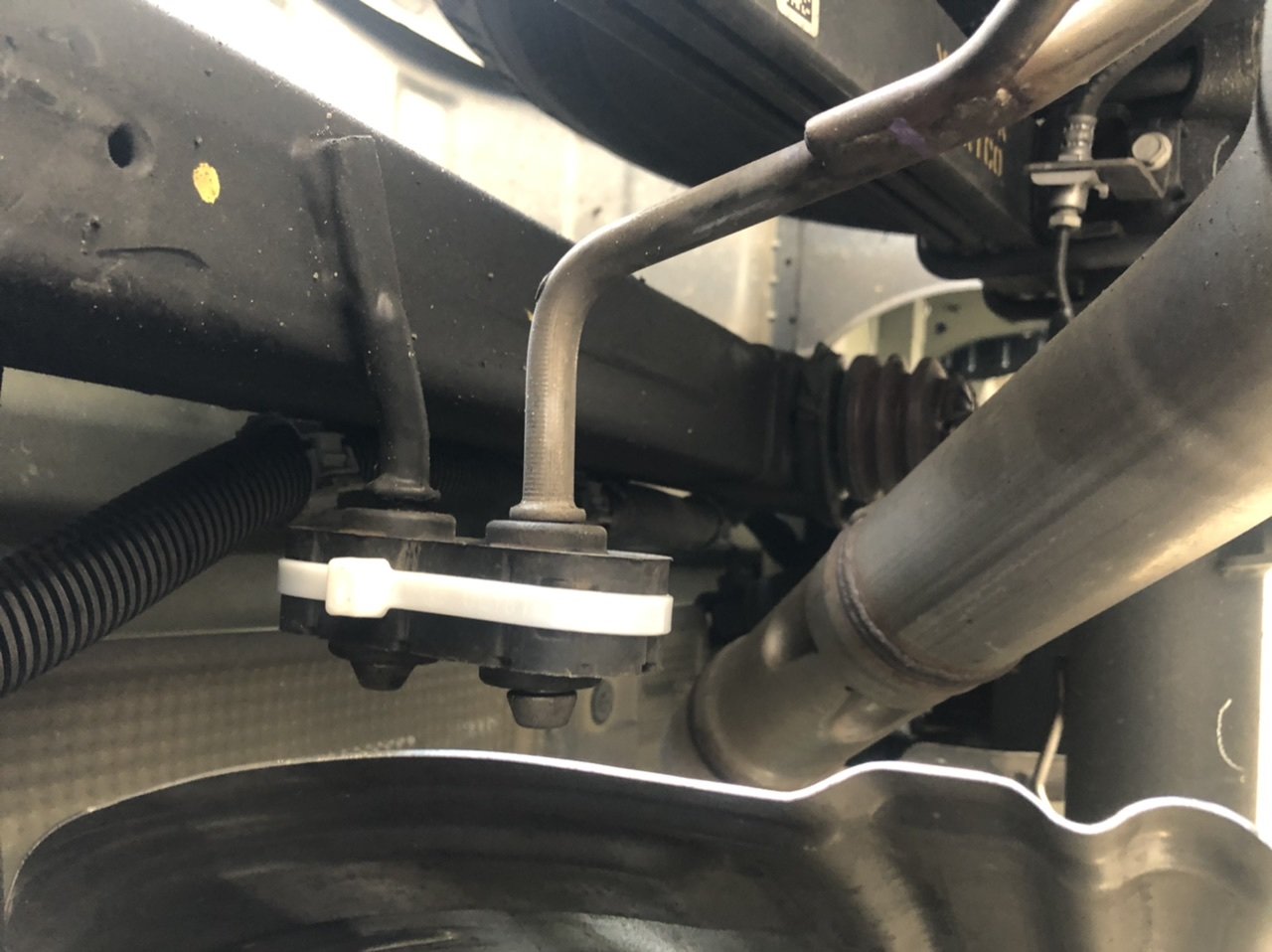
Purchased 5/3/20. Crew cab standard bed RST shadow gray metallic, 1808 lb payload. Currently at ~16,500 miles. Average mpg at 65 is 30-34, at 75-80 is 27-29. Mixed Highway/city with 1000+lbs in bed is 23-25. No recalls, ~6,000 miles per 5 gal def. One check engine light that went away by the time I got home, no saved codes I could see. Remote start was still working with check engine light on. Oil changes @ 1,000mi, 4,000mi, 9,000mi, & 14,000mi. Fuel filter changed @ 15,000 miles. Slight exhaust rattle at idle & when coming to a stop, fixed with strap on exhaust isolators (annoyed the piss out of me but no time to leave at dealer for a couple weeks - work truck). -
On the 3.0 diesels in the 1500, there are no mufflers, no resonators, or any sound control devices past the DPF which is right next to the trans. Past the DPF is a flex connector, followed by a particulate matter sensor (can’t modify exhaust until after this sensor), and then straight pipe out. The DPF is pretty much all the sound deadening modern diesels require.
-
My regen interval is nearly exactly like yours. I always have at least 1000lbs of weight in the truck so my mpg is a little lower, but that’s about right. With normal use, about 2 regens a tank. When towing, my mpg goes down obviously but still about 2 regens a tank (I do not tow long distance). The only time it really changes and it surprised me was on long highway trips, about 3 regens a tank. I do have lots of city driving mixed in with my average use but I also don’t worry about mpg and don’t baby the throttle. Somehow, I’ve never had a tank average under 20mpg though compared to my 2018 5.3 getting 11-15mpg.
-
Surprisingly, I’ve seen older carbed small block chevys run with 1-2 plug wires disconnected just fine (relative term) firing just off of compression. However, in general, engines do not like to idle and it’s the hardest engine speed to maintain properly. Most engines will never reach an ideal Air:Fuel ratio at idle. Adding cylinder deactivation only adds variables and greatly increases the chance of misfires, check engine lights, and customer dissatisfaction in order to save fuel in one of only 2 engine states where fuel economy has no standards or requirements. It would hurt warm up time (which burns extra fuel) as well as cabin warm up time which does have specific requirements.
-
Passenger side ticking sound. What is it?
Sqrls replied to Tjeli's topic in 2019-2026 Silverado 1500 & Sierra 1500
Mine sounded exactly like a rattle/exhaust leak, maybe even a heat shield rattling against something. It actually sounded loudest as if it was inside the DPF. I had no check engine lights and when I floored it or even just got on it, I did not hear it. Only at idle or very light throttle. Until I actually moved that flex connector around, I did not suspect it to be the cause, but even a little movement makes the sound come and go away. Just pulling/pushing up on the exhaust tip gets rid of the sound, I think it has to do with the alignment of the exhaust. Here’s some pictures of what I did.
-
Passenger side ticking sound. What is it?
Sqrls replied to Tjeli's topic in 2019-2026 Silverado 1500 & Sierra 1500
I have/had this on my 3.0 diesel. I got under the truck, remote started it and moved my exhaust around. I think the noise is from the flexible connector on the exhaust. I did manage to get rid of the noise by putting 175lb tension duct straps around the exhaust isolators towards the rear of the truck to tighten them up. The noise instantly disappeared and has not been back since. The noise very slowly got worse until I did something about it, so I’m guessing the isolators start to loosen up and sag over time which allows the exhaust to vibrate just right to rattle the flex connector. Also worth noting is that the isolators themselves feel to be made from a softer rubber than others I have seen in the past. -
Catch can would probably help keep some of the oil out of the pcv lines as would changing pcv valve (should only be a few bucks) and cleaning the pcv hoses. The baffles on the inside of the valve covers could also become clogged, but I have not personally seen how they are designed or if it would even be an issue
-
3.0 Duramax engine stoppage.
Sqrls replied to Kaze Morrissey's topic in Troubleshooting, Warranty & Recalls
It seems like they are very interested in your particular problem so hopefully that will bring you good luck in convincing them to just send the whole truck back to gm and getting you a replacement. I wouldn’t want them to just replace the engine if it was my truck... who knows what crap it sent into the emissions stuff and what problems can arise from it in the future. -
GMs calculation will technically show high idle hours on almost any vehicle that’s not strictly highway. A lot of city speeds are stop and go with 25-45 mph speed limits so even with no active idling, can give you a result that’s under a 33/mph average. However, 439 idle hours out of 848 is a lot. The GM memo only publishes this as an aide in diagnosis, not as a basis for warranty denial (I think the whole memo might be oriented towards diesels regardless). My guess with a gasser would be clogged PCV system from excessive idling, especially at the kinks on the pcv breather tubes or pcv valve. This can lead to other failures from excessive crankcase pressure.
-
3.0 Duramax engine stoppage.
Sqrls replied to Kaze Morrissey's topic in Troubleshooting, Warranty & Recalls
No. Check engine is not normal. Regen or not. When warm idle is normally ~400 rpm, during regen or cold start/warm up, usually closer to 600rpm. Also sounds more like a big rig during regen. It will usually run a bit hotter than normal on temp gauge for a minute or two when regen is first starting.



-
Forum Statistics
250.4k
Total Topics2.7m
Total Posts -
Member Statistics
342,759
Total Members8,960
Most Online
-
Who's Online 12 Members, 0 Anonymous, 1,839 Guests (See full list)