


Doug_Scott
-
Posts
3,875 -
Joined
-
Last visited
-
Days Won
8
Content Type
Profiles
Forums
Gallery
Events
Articles
RPO
Store
Blogs
Everything posted by Doug_Scott
-

2007 GMC Yukon XL Denali, 6.2L Stalls When Warm
Doug_Scott replied to anonom2's topic in Ask A GM Technician
We're the parts replaced because they were properly tested and failed, or you used the highly ineffective "by guess by golly" method. The problem you now have is one of those parts you replaced may have been defective(that's why new parts come with a warranty). As already asked, you should post a list of the parts replaced. If you don't touch the traction control button, does the truck behave the same way? How did you decide to try pushing/holding the button while cranking? -
You are likely confusing the parking lights with the turn signal lights. They do both use the same bulb, but, they use their own filament inside each bulb. First thing to try is to remove all the signal bulbs, at both ends of the truck, and then look inside the socket for damage or green crap. If all is good, put 4 ways on and put bulbs back in, one at a time, until the fuse blows. If the fuse blows right away, you are in for a lot of work, unless you get very lucky and find it right away. You already know it is on the left side, so that removes half of the wiring. A "short" is a lot easier to locate compared to an "open". A short means the wire is touching ground at some point. Look for spots where the wiring harness is rubbing against metal, or where it is next to the sharp end of a screw. Do not pull at the wiring until you find the area the short is in. If you twist and pull at the harness you may "fix" it, but only temporarily. You want to find the short to fix, not have it go away for an hour or so. Pay attention to spots in the harness where it attaches to the body with straps or zip ties.
-
Would you buy an electric Chevy today? What about an electric GMC?
Doug_Scott replied to Zane's topic in GMC HUMMER EV
We already have a valid example of what it could look like to drive a 100% electric vehicle across the country. Tesla. They have their own recharge network, and if you look at their system you will see it currently costs 1/2 to 1/3 the cost of gasoline to refuel their vehicles. People are reacting to this poll as though it meant they were going to announce today that tomorrow all electric would be the only thing available. If you think being forced to pick a brand when you chose Never skewed the poll numbers, looking at this poll as though there was no thought given to all scenarios skews the numbers more. It wasn't that long ago that electric vehicles were lucky to get 60 mile range, with recharging taking 4 or 5 times longer that what you got in travel time. Tesla has shown that we are now at an acceptable distance/recharge rate. Going forward we will need to create storage cells (batteries) that are 100% rebuildable and all components be recyclable. Have light diesel engine(engines for pickup trucks) manufacturers corrected the high cost of maintenance/repair of the injection systems yet? It seems that just about everyone knows of someone who has been hit with a $5k+ bill to repair injection pumps or injection systems at 100,000 miles. I would switch to electric if the pricing was more in line with reality. The current return on investment is too upside down for me. I am at the age where realistically the next vehicle purchase will very likely be the last new vehicle purchase for me. I have not been a fan of purchasing used vehicles for many decades, being a mechanic has meant no vehicle repair costs beyond the parts for me, but even that got old. My current truck is the oldest vehicle I have owned, ever. And it has just turned 10 years old. New vehicles come with warranty. -
Please Help: V805.1 Navigation SD Card Error
Doug_Scott replied to dbs600's topic in 2015-2022 Colorado & Canyon (2nd Gen)
That "switch" is the write protect tab. The error message you were getting should never be cryptic for something so basic. Have you gone through the manual since fixing it to see if they have it there, but written in such a way that you would have needed to know the answer in order for the message to be meaningful. That's one of my pet peeves. It's real common for tech support for computer software. You tell then you are new, you have no idea of how it works, and you ask your question. The first answer you get reads like it was a multipage answer, and they didn't send the first page. Or they use non-specific terms for parts names, and the rest of the response is written like you already know the answer. If this ends up fixing your issue you may want to send off a message to the service manager of the dealership that couldn't fix it so maybe the next person with the issue gets it fixed right away. Don't know if manufacturers still send out service bulletins or not, but if they do that fix should be documented. When I was a mechanic at a Chrysler dealership, every mechanic got a package every month with all the new service bulletins. I still have a big box of them somewhere. -
Instead of catch can, why not delete PCV?
Doug_Scott replied to SquireSCA's topic in Engines & Drivetrain
To the naked eye it does. All cylinders will go through the required 4 strokes every 2 revolutions. 800 rpm would mean there are 400 full cycles per minute, which is about 6.667 full cycles per second. -
Instead of catch can, why not delete PCV?
Doug_Scott replied to SquireSCA's topic in Engines & Drivetrain
There is never a vacuum ABOVE the throttle plates. Just not possible to pull a vacuum in the air filter housing, provided you are not holding you hand over the air filter housing snorkel. Chryslers had their PCV into a grommet on one valve cover, with the line going to either the vacuum tree behind the carb, or the base of the carb, below the throttle plates. The other valve cover had a large vent cap that had a hose running to the air filter. Fords were very similar, GMs were the same concept as well. You are not reading the lines "Most PCV inlets are now via a hose to the valve cover from the air cleaner. Sometimes the air cleaner has a separate filter for the PCV inlet hose" on your reference site incorrectly. The PCV inlet that site talks about is the cap with hose to the base of the air cleaner assy. That is where the air enters the crankcase. -
Instead of catch can, why not delete PCV?
Doug_Scott replied to SquireSCA's topic in Engines & Drivetrain
I think what he is trying to say is that water in a vacuum will boil at room temperature. Oil won't boil at room temperature in a vacuum though. I don't know how they figure that direct injection is part of the problem though. Crap building up on back of intake valve has been an issue since they started overhead valves. If you go back to the 80s and older, small block chev engines used on o ring on valve stems that was not that effective at controlling oil. They were better than nothing, -
Instead of catch can, why not delete PCV?
Doug_Scott replied to SquireSCA's topic in Engines & Drivetrain
I was referring to the venting to atmosphere part. I have been running a catch can for 10 years, and it will catch 6 or 7 ounces by the time it is due for oil change. Running a q-tip inside the manifold hose at the cannister comes out clean and dry. Probing the other line doesn't soak or show much more than dampness. The oil hard clumps of crap on the intake valve stem won't cause detonation simply because it is not in the combustion chamber. A WOT run up to the highway speed limit will do wonders for any carbon deposits in the combustion chamber. PCV systems on Chevrolet small blocks with a carburetor would pull enough oil it would rot the inside of the PCV line where it attached to the front of carburetor at the base. I started my apprenticeship in the early 70s, with the move to unleaded fuels started shortly after that. To this day I have never been asked to, and do not know of anyone being asked to install hardened seats. Even race engines that I saw being built did not bother with hardened seats. Speaking of selling fear, in Canada we got air pumps (AIR system) on some engines, mostly manual transmission vehicles in the early 70s. Straight away many younger new car owners would cut the belt while car was under warranty, and then remove the entire system. The most common reason I heard was that the air pump took hp to run. Air pumps had the lowest drag on the engine of all the accessories. The water pump used more hp to drive compared to air pump. Every time manufacturers made a change, owners would do their damndest to disable it. The first thing sons would do to the family GM car was flip the air cleaner lid. Back then there was no internet. It was pretty impressive how fast the new mods spread. There was a lot of bullshit back then as well. -
Instead of catch can, why not delete PCV?
Doug_Scott replied to SquireSCA's topic in Engines & Drivetrain
If you vent to atmosphere you will notice a strong oil smell in the cabin. I don't understand what you are trying to accomplish in venting to atmosphere. Why not just drill a large hole in the plate under the intake and bolt in a road draft tube? -
Instead of catch can, why not delete PCV?
Doug_Scott replied to SquireSCA's topic in Engines & Drivetrain
It is very easy to tune an engine that has zero emission controls. Decades ago I got stopped in my pro street 78 Mustang that I put a 71 boss 351 with a tunnel ram, 2 Carter competition series 750 cfm carbs, high lift long duration camshaft and no catalytics. The cop sent me to the ministry of environment for emission testing and inspection. Before going to the test site I brought the car into the shop and made changes to the carbs jetting and metering rods, as well as raised the idle a bit. I got the emissions down to below max. Car drove like crap. Car passed both inspection and the 2 specific tests that they could test for back then. The only thing that should have been looking for was oxides of nitrogen. Oxides of nitrogen are created by hot combustion. Race engines kind of depend on high temp in combustion chambers. Manufacturers have been using EGR systems to help cool combustion chambers thereby reducing oxides of nitrogen. Your race engines with zero emission controls installed cannot pass the complete emissions test with a 5 gas test machine. -
Instead of catch can, why not delete PCV?
Doug_Scott replied to SquireSCA's topic in Engines & Drivetrain
They did it the same way for decades. They ran a vacuum line from the base of the carburetor or from the intake manifold to either rocker cover, that had a pcv valve to connect to. You are simply confusing the vented line that went to the air cleaner. Think about it, have you ever had the air cleaner off of an engine? How could it run with that enormous vacuum leak? There is no vacuum above the air horn on a carburetor. -
Instead of catch can, why not delete PCV?
Doug_Scott replied to SquireSCA's topic in Engines & Drivetrain
The PCV valves back in the 60s were a simple one way check valve that did two things, it allowed the engine to draw air from the crankcase by way of a large vacuum port on the engine, and it also prevented backfires from reaching the crankcase. Most mechanics back then would pull the valve from the rocker cover and shake it, listening for a rattle and secondly, they would look at the crankcase side for crap. When PCVs first came out, pcv manufacturers would send out their sales team to show mechanics what to look for. The big thing was not the pcv valve, it was the breather on the other cover. That breather is what you are referencing, they ran a line to underside of air cleaner so that clean air would be drawn into the crankcase by the vacuum being applied to the other side of the crankcase. The breather would have a negative air pressure on it only if the engine was so tight there was no leakage around the rings. Saabs from the 80s had their crankcase under a vacuum when running, and their fuel injection system would not allow the engine to even start if the oil dip stick was not inserted. We had a regular customer who always had a Saab for company car that loved to trick the new oil change kid with it. He would run a big tale to the kid about how careful he had to be with everything, don't touch this part or that part, he had this story down pat. When the kid was nearly finished, just had to start it to check for leaks as well as check the level again afterwards, the customer would watch, and if the kid left the stick out, about half oil change kids leave the stick out for whatever reason, or if he didn't the customer would reach in pull the stick out about an inch and just make some comment about a finger print or a spot of grease, whatever it took to cover the stick being lifted. When the car would not start, the kid would keep trying. Their faces would start to go red and he kept trying. He would come out and check everything he thought he had touched. The kid would be talking the whole time about how he only did this or that, with the customer adding more bullshit to the story. As they were both looking around the engine the customer would push the stick back in as he reached across the engine. He would end the hoax by grabbing the kids hand and asking him if he wiped his hands really well, the kid would insist he had, he would ask the kid if it was a clean rag, and the kid showed him the rag. The customer told the kid that rag wasn't clean enough, so the kid got a fresh rag wiped his hands well, reached in and the car started right up. Nobody would let him off of the story until the customer brought his car back in 2 months later. Somebody would ask the kid if that was the car he had a hard time with, knowing full well he remembered. The proof of that happened when the kid was going around looking for a new rag so he could start the car. -
07 Sierra brake booster problem
Doug_Scott replied to Chuck Youngblood's topic in Ask A GM Technician
He means the compensating port was covered and not allowing the brake fluid back into the master. Usually occurs when brake boosters are replaced and the adjustment is not made correctly. Don't know for sure, but I think it was one of the suggestions made earlier. -
Please Help: V805.1 Navigation SD Card Error
Doug_Scott replied to dbs600's topic in 2015-2022 Colorado & Canyon (2nd Gen)
Its a 2019 model year vehicle, it must still be under warranty. Take it back to dealer and let then handle it. Do that before trying any "fixes" you get from an anonymous internet poster. Todays electronics are too complex to fiddle with. -
Instead of catch can, why not delete PCV?
Doug_Scott replied to SquireSCA's topic in Engines & Drivetrain
Had you entered "oil catch can" in their search engine it would have returned more results than I cared to see. Sometimes it is better to try the search before asking someone else to do it for you. -
What you need to do is prove more that 1qt in 1,000 miles. Did the 2 quarts get oil level to full, or just put oil on the stick? I think that "certified used" is what you need to push. You also may want to get the service history on the truck. See if the oil consumption was an issue for original owner, also see how many prior owners there have been.
-
Instead of catch can, why not delete PCV?
Doug_Scott replied to SquireSCA's topic in Engines & Drivetrain
Can you not see what is included in the package from Callaway? -
Why do you say "dealer and manufacture"? Don't know why, but it just does not sounf right to me. I think you will find that one quart every 2500 miles is considered acceptable. Does not matter what anonymous internet posts claim to get out of 1 quart/litre. Have they run the oil consumption test? Is your truck nearly approaching the end of warranty, and this is the first you have mentioned oil consumption to the dealer? How do you still have 5years left on a 4 year old vehicle? Did you purchase this truck new or used?
-
I reread thread and the OP already knew why none of the gears engaged, he just didn't know it. About three or four posts later he says the torque converter bolt pattern was so different none of the holes lined up. If that was true, then that was why the transmission was not working. Torque converters also drive the oil pump, so, no connected, no go.
-
07 Sierra brake booster problem
Doug_Scott replied to Chuck Youngblood's topic in Ask A GM Technician
When you say "applying the brakes itself" exactly what do you mean? -
07 Sierra brake booster problem
Doug_Scott replied to Chuck Youngblood's topic in Ask A GM Technician
You won't get engine oil pulled in simply because it is the engine creating the vacuum. You can get brake fluid pulled in, and it is usually very easy to see, it will usually leave a trail down the front of the booster as long as the booster/master are somewhat level. I have not seen brake fluid hurt a booster though. I have far more Chrysler experience than GM, that maybe why. -
IMG_4974.JPG
Doug_Scott commented on HighCountry MP's gallery image in 2019+ Chevrolet Silverado & GMC Sierra 1500 (T1XX)
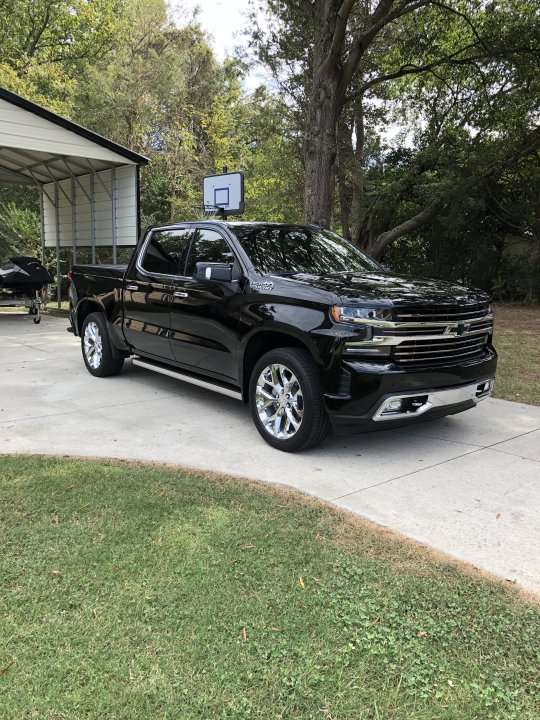 Nice truck, congrats.. why do I feel like watching that Chevy Chase movie "National Lampoon's Vacation" now?
 -
07 Sierra brake booster problem
Doug_Scott replied to Chuck Youngblood's topic in Ask A GM Technician
If it was me I would have taken a look at the brake pedal hanging up under the dash, or the adjustable length drive pin that goes between the brake pedal and the brake booster being adjusted too long in length and not allowing the master cylinder to fully release. I have seen that happen, but even then it was not the original problem, original problem was some weird issue with the bushing on the brake pedal rotating. Maybe I have lived a sheltered life, but I have never heard of a brake booster ever actually failing, and now you apparently have seen two, on the same vehicle no less. I have seen brake booster diaphragm (when the hell did spell check start sticking a "g" in diaphram) leaking so bad you could hear the vacuum leak in the passenger compartment, and still give what appeared to be full assist on braking. Car was a two stepper at idle though. -
Whatever became of the OP? His thread got hijacked by so many people that it should have been shut down. That is likely something the OP needs to complain to admin about before they will shut it down. Did he get the girl or not?
-
You must not read Stephen King. More scary shit happens just outside Bangor Maine than anywhere else. I think it takes the first 3 places as well.



-
Forum Statistics
250.4k
Total Topics2.7m
Total Posts -
Member Statistics
342,824
Total Members8,960
Most Online
-
Who's Online 7 Members, 0 Anonymous, 519 Guests (See full list)