Jump to content

Radar detector direct wire into mirror?


Recommended Posts

Posted

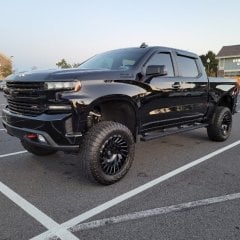
I have a 2018 Chevy silverado with power to my rearview mirror but only for onstar (not power dim).  I am trying to direct wire my radar detector (Uniden R3)  into it but I am only finding 10V of power power (pin 8 ground and pin 10 power).  Does anyone know if this all the power that I will get from this location and if so, if it's enough to power the radar detector?


Thanks,


Craig

Posted

Craig,  I can't answer question directly, but I would suggest installing it and see if it powers the detector.  You might also check the specs for the detector and see what the power requirements are.


I just got my '18 and I've ordered power taps from Amazon, but haven't received them yet.  I'm wondering how you identified pin 8 for ground and 10 for power.  In past vehicles, I've ordered Blendmount mirror taps and they provided instructions and identified pins for the specific vehicle you were installing them in.  The Amazon items are generic though, and I don't expect much in the way of that kind of support.  If you went through someone like Blendmount who told you to use those pins, I'd expect they know what kind of power is being supplied.  Also, if these are the pins they recommended, then I know where to put mine ?.


I'm also thinking about tapping into the large connector for the roof console.  I just received one with Homelink, but haven't done the swap yet.  It's plug and play and the wiring harness plugs into a large connector with what looks like at least a couple dozen pins.  Some have to be ignition switched, because they power things like the sliding rear window, sunroof, etc., if equipped, that are only functional with the ignition or ACC on.  I need to find the pin-outs for that connector.


Posted

Thanks Neroado.  No bueno.  I tried and it won't power it up.  Just seems strange that they drop to 10v into the mirror.  I was able to find a 12v wire (a couple) in the overhead console.  15BlueSilverado, i picked one up and it gets here this week.  I will direct wire it into one of the leads in the upper console.  Thanks for the feedback.

Posted

My mirror tap arrived today, I hope to install it tomorrow.  I found a post on the forum and a few YouTube videos that all talk about using the purple and black wires in the mirror connection for positive and negative.  They didn't mention pin numbers. 


Can you tell me what color wires you found ignition switched in the overhead console connector? 

Posted

Hi Neroado,


I could not find a pin that works directly with the ignition.  But I did use pin #4 for the Ground and #7 for the power.  #7 is labeled as inadvertent Power Control.  It shuts down ~10 min? after engine turns off.  And fires back up when the ignition is turned over.  I am not 100% sure what this pin is for so I'll just monitor it to make sure it is always on when the ignition is turned over.  Also, the 15" wire was not long enough to reach the overhead console pins so I had to extend it with some additional wire which I did butt connectors and shrink tube.


Craig

Posted

I found that my mirror connection didn't have a black and purple.  The no-name brand mirror taps that I got on Amazon were junk - cracked off with very little pressure; they're going back. I should have gone with the Blend Mount items. 


I ended up wiring my detector as well as my dash cam from the driver side fuse panel.  Having the roof console out made it really easy to fish the wires, and provided plenty of room to store excess wire; I used a pre-made detector wiring package that I had purchased for another vehicle but never used, so there was more wire than I needed, and I didn't want to bother with cutting the length, moving the fuse, etc.   Overall it was a very easy and clean install.

Archived

This topic is now archived and is closed to further replies.

  • Latest Articles

  • Posts

    • Yesterday we brought home a 6yr  old Havanese dog from a nearby SPCA.  We've had her for 24 hours and we are delighted with how well she is adjusting to her new home.  It  was a huge decision to adopt a dog at this stage in our lives but we believe we made the right choice!   it was reported that her first 6 years were ones of neglect.  I think she's already realizing her life is going to get a whole lot better...  so is ours!    
    • I thought I was building a HD 3500 srw, maybe I was lost.
    • No doubt, I definitely agree with you. However, considering the 6.2 and 3.0 have been catastrophically failing with very little miles, I figured I would put trouble free. I’m at 18,4xx and still not a single issue.  
    • It’s never dry here but it gets hot. My 4 vehicles I keep at home drive an 18 mile loop. One 6 days a week. Two about 3 days each and one once a month. Only one goes on trips about 4 times a year 1000 to 2000 miles each time. One 26 years old gets driven once a month for 22 years. One 14 years old goes 6 days a week. The other two are recent at 2 and 4 years. All are performing normal no extra service other than that would be half of recommended or severe service in the maintenance manual. No extra water or steam out the exhaust or premature plug wear. I would consider an 18 mile loop would be enough. So apparently once a month at 18 miles for 22 years has kept the collector car running well. About 45 minutes a month. 
    • It is working as designed.  NHT and non NHT trucks have the same exact transmission cooling setup.  NHT just gets a larger radiator.     The transmission cooler loop on these is as follows.     -Transmission out goes into an oil to water heat exchanger (item #1 in the first illustration below).  This exchanger has engine coolant opposite the transmission fluid and uses engine coolant to warm and then regulate the transmission fluid temperature when its in the operating window.   - From the cooler it goes to a thermal bypass valve (item #11 in the 2nd illustration below).  If the ATF has not reached the temp to open the bypass (194F), it loops back.   - When it reaches 194F, the thermostat opens and ATF then flows out to the oil to air auxiliary cooler (item #17 in the 2nd illustration) at the front of the truck.  From there it goes back to the transmission.     Your only fix would be to swap for the PPE thermal bypass delete block which will open the loop to the aux cooler all the time.  It will STILL run warm, probably 170-200F, but that's as low as you'll get it as its still flowing through the oil to water exchanger.      
  • GM-Trucks.com Clubs

  • Popular Contributors

×
×
  • Create New...