

-
Recently Browsing 0 members
- No registered users viewing this page.
-
Forum Statistics
250.5k
Total Topics2.7m
Total Posts -
Member Statistics
342,971
Total Members8,960
Most Online
-
Latest Articles
-
Posts
-
 A little girl said her prayers every night before bed and she asked G d to watch after each person she loved. One night she forgot to pray for her babysitter and her babysitter died. A few days later she forgot to pray for someone else and they died. The next night she forgot to pray for her dad. The next morning her dad was terrified. A bus almost crashed into him. He almost fell off a fifty foot ladder and almost wrecked on the way home. When he arrived home, he said I had a terrible day. His wife replied, “You think you had a bad day? My aerobics teacher died during class.
 -
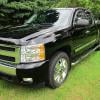 Nice! I had one here, once. The car dealer I used to haul for stopped by with it. That was over 10 years ago now. Those are SUPER rare these days, especially up here! Never even see them at car shows anymore. https://postimg.cc/0rvcNZ1W
 -
 I remember watching one of the auctions on TV. It just happened that they had two little red express trucks. My brother bought one new in 1979, still has it. So I hung on to watch them cross. The retro redone example brought more bids and went for more money than the original one did. My brother has redone his 3 times and raced it. He’s now in the process of making more tame for cruising.
 -
I always upgraded the suspension and steering components - bushings and ball joints, and had older cars that I could out-corner ANY modern car with. I used to be able to take my '78 Cutlass on off-ramps at stupid speeds and make the sharp MA corners without even squealing the tires. So much fun. My '72 El Camino must've had work done by the previous owner, since that thing seemed to handle even better than the '78. I think the suspension & steering on the '72 was much more advanced than the '64, so that probably just made a good system even better. I'm the same way with vehicles. I hate having to worry about the paint on my '93 W250 Cummins. I'm not used to that, lol. https://postimg.cc/mzKr55sY
-
BEAUTIFUL!! That a Cutlass F85? Or 442? My side-ID skills are lacking thanks to failing memory, lol. Love that color & year, too! Yeah I was never big on entering my own stuff, but I always liked seeing what everyone had, the rare models, and what's been modified. That was always fun. These days I have barely enough time to do what needs to be done at home. Oddly enough, here in MA there are more car shows than ever in history! You'd think up here it would be dead, but it's bigger than EVER! Took the 940 for its maiden voyage with the carburetor. At first I couldn't get out of the yard! This originally had the "Bosch" system (our other 940 has Regina - single fuel pump in fuel tank, and space-age-looking ignition coil on driver's fender) - that has dual fuel pumps. One in the tank, and one under the center left of the vehicle. I had unplugged the external one thinking I wouldn't need it with the carburetor ... but the way I have the pressure regulator hooked up, 90% of the fuel volume is going back to the fuel tank, so cranked all the way down, the regulator is only supplying a hair above 3.5 PSI to the carb. Turns out the in-tank pump (15 PSI alone, instead of 45) couldn't handle the load. Plugged it back in and went for a rip. Ran great! Throttle response is always amazing with carburetors. ZERO delay that no FI system can reproduce. Also fires up in half the crank rotations as before. Low end power was DRAMATICALLY improved. There was an ongoing lean issue with the FI that I got tired of figuring out, so this is a MASSIVE improvement! Above 50 MPH on hills it feels SUPER weak, though. This is more than likely due to the timing not being advanced enough by the computer, since it believes there are multiple failures. I can live with that through the winter. Will keep me from passing slowpokes where I shouldn't and getting speeding tickets at least. 😁
-
-
GM-Trucks.com Clubs
-

Black Truck Club
Open Club · 613 members
-

White Truck Club
Open Club · 381 members
-

Canadian Owners Club
Open Club · 282 members
-

Red Truck Club
Open Club · 158 members
-

diesel 3.0
Open Club · 281 members
-

Texas Owner's Group
Open Club · 371 members
-

NorthSky Blue Club
Open Club · 118 members
-

Midwest Owner's Group
Open Club · 213 members
-

2015 Custom Sport Club
Open Club · 5 members
-

GM Snow Plowing Club HD
Closed Club · 14 members
-
-
Popular Contributors
-
.thumb.JPG.2c573de60d3a3a4407c7d92298db46dd.JPG)



Recommended Posts
Archived
This topic is now archived and is closed to further replies.