

.JPG.6537b7f00fa66f30aa51f5040da0fd95.JPG)
Grumpy Bear
-
Posts
12,855 -
Joined
-
Last visited
-
Days Won
464
Content Type
Profiles
Forums
Gallery
Events
Articles
RPO
Store
Blogs
Everything posted by Grumpy Bear
-
Order of Events https://www.intechopen.com/chapters/58293 Sections 4.4 to 4.8 are of peak interest. But first the setup: [quoted below from article] Abstract Oxidation is a chemical reaction that occurs in lubricants upon exposure to an oxidizing agent such as oxygen and can be catalyzed by copper and iron. Antioxidants are a group of chemicals that can be used in the formulation of lubricants to stop or reduce the rate of oxidation. Based on the mechanism of action, antioxidants are categorized as primary antioxidants (radical scavengers), secondary antioxidants (Peroxide decomposers), and metal deactivators (complex-forming or chelating agents). Selection of the antioxidants in a formulation is a critical decision that depends on the base oil, application and other ingredients in the formulations. Presence of some other ingredients in the product with antagonistic behavior may suppress the role of antioxidants; however, optimal application of antioxidants with synergistic behavior would increase the stabilization impact of the ingredients on the base oil. 1. Introduction Oxidation is an unwanted process which results in degradation of lubricants (containing hydrocarbons C20-C70) and generation of degradation products. Oxidation can start with the presence of oxidative agents such as oxygen to form a wide range of oxidation products with higher or lower molecular weight relative to the original oil depending on the progress of the process. Generation of lacquer and varnish, viscosity increase, sludge and deposit formation, and corrosion are some important consequences of oxidation. Copper and iron in metal parts, and harsh conditions such high pressure, high temperature, high friction and high metal concentration are factors that accelerate lubricant oxidation. In combustion engines, the generated heat from combustion process would be high enough to oxidize the lubricating oil unless antioxidants present in the formulation inhibit the progress of oxidation and the formation of degradation products. Antioxidants are a group of additives that have the potential of prohibiting oxidation of base oil in the lubricants and the inhibition of oil breakdown and thickening [1, 2]. [Close quote] I read tons of materials like the above. Each ends in: [Quote from link} In the future, along with improvement in lubricants performance, the service change lifetime also is intended to be extended. Polybutenes play a key role for control the viscosity in an extensive range of automotive and industrial lubricants. The disadvantages of using low-viscosity polybutenes are due to restrictions in volatility and oxidation resistance limit for base oil applications. ZnDTPs, hindered phenols, alkylated diphenylamines, organomolybdenum compounds and dithiocarbamates are antioxidants that are used for the protection of lubricants against oxidation. On the other hand, future antioxidants should be developed with consideration related the to environmental and emissions concerns, improved fuel/energy efficiency, higher performance standards, and new base stocks [Close quote]
-
.thumb.JPG.2c573de60d3a3a4407c7d92298db46dd.JPG)
Some Assembly is Required
Grumpy Bear replied to Grumpy Bear's topic in Maintenance, Oils/Fluids, Detailing & Rust Prevention
Would ACCESS be Important? https://www.sciencedirect.com/science/article/abs/pii/S0301679X19304608 A few issues with Cu-DDP nano-particles. (Above) Studied for the last 26 years and zero commercial products anyone named "Joe Average" can buy. Read the details! I live in the world he have...not the one I wish I had. Pipe on Pied Piper. Oh, I have a cure for a condition no one is suffering from! -
Some Assembly is Required
Grumpy Bear replied to Grumpy Bear's topic in Maintenance, Oils/Fluids, Detailing & Rust Prevention
Some Assembly Required When you don't have data, you generate it. When you do have it, you use it. When you have enough you trend it. Question is; When you see the results will you believe it? (5w40 Study) I think I will. First point had already shown me than 5W40 (Increased HTHS) produced lower wear than the OEM recommended 0W20. Second point confirmed it. Not enough data yet to assure it will be an improvement over 5W30. On this last sample I added enough ZDDP to reach API SH. What I was expecting: Slow the rate of oxidation. What testing showed. 1.) Lighter color at end of run. Two Gardner Units 2.) Less depletion of Calcium. (Higher residuals) 3.) Higher TBN (slowed depletion). Did it have any effect on total wear metals? Unknown as the units trend is falling reduction could also be just running in. -
Not down to our recent lows but under $3.20 in enough places to make the look worth the while.
-
MPG Accuracy There is calibration to the fuel economy that is a two step process. When the unit was initialized this vehicle (Raven) the first tank showed there was a 5.58% error. Reading 2.9 mpg better than it was. On the second fill, after the 0.35 gallon correction was entered on the first fill, the error was down to 0.02 gallons or just 0.36% on 3/4 of a tank fill. 2.5 ounces! 2/10 mpg over 300 miles. There is also a speed correction possible. Adjusting it by referencing GPS; I found the speedometer slow by 1%. I noted that the ECU odometer was a few miles ahead of the DIC readout over its first 16K miles. This will not fix that. Just something I noticed. Perhaps 10 miles in a 100,000. As I am already well trained by the Scan-Gauge II unit the increase in mileage is not as dramatic as it was when I was first introduced to these instruments but my tank to tank consistency is greatly improved by the live graphs giving real time feedback and cancelation of tank to tank fill error. It cost twice as much and is delivering more than that in returns. IMHO.
-
Wear me out. https://www.slideshare.net/slideshow/wear-mechanism/39226650 Anyone but me find it funny that hydrogen wear, something with little study and no response to from the lube oil industry is now the most dangerous thing there is to your motor AND we have a cure for what never ailed you?
-
Well done. Clyde LIVES!!! Question on the old motor. Did bore inspection show any polishing?

-
That is usual yes but this time it's tariffs. Most of our crude is Canadian. They don't have much to say when I mention crude is down double what the tariffs added. Just greedy little whippersnappers.
-
$3.55 here today. Guess I live in a different country. Or my area is just extra greedy.
-
2016 Silverado Trans temp issues/solutions?
Grumpy Bear replied to 53boy's topic in Modifications & Accessories
Try these guys. Call them. https://www.improvedracing.com/ -
2016 Silverado Trans temp issues/solutions?
Grumpy Bear replied to 53boy's topic in Modifications & Accessories
Problem is a lack of airflow over the cooler. Fan kit? -
What do these have in common? I = P/V James Watt F = MA Isaac Newton. Also Newton Michael Faraday Mayo D. Hersey. E=MC2 Albert Einstein. They are not suggestions. They are LAWS! They are immutable. IMMUTABLE!! Not subject to change. Why? Because these equations are only possible if what they are based in is UNCHANGING. When some joker tells you that VISOCISTY (Hersey Number) no longer matters..... He is also saying everything you learned in school was garbage. I t doesn't matter how many letters he has behind his name. How many years experience he has, or how loud he screams or how successful his business was. The sun will not rise in the west just because someone says it will based on some "new science" or some "revelation", some "Alternative Facts".
-
Gap narrowed. $3.29 to $3.49. We must live in a vacuum. We are a buck a gallon over Texas. That isn't supply and demand. That's Grab and Greed. LOL.
-
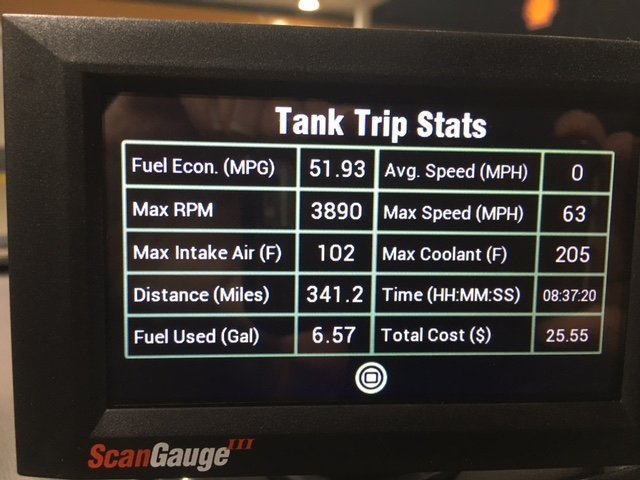
I have two Model II units and like them but this III model is a much better way to skin that cat. This is the summary page from my first calibration tank. This (below) is one of three screens you program your gauges into. The other two I'm still building but you can load between 4 and 9 per page plus this graphing page. When you initialize the unit to finds what is available and loads pages you choose from. It also detects protocols to there isn't any fuss nor muss. There are even more X Gauges that can be loaded or sought out with the device. Also reads and clears OBDII trouble codes.
-
How are you? A simple question asking your state of being that shows their personal concern for you. How sweet. What would you like for breakfast? Asks preference. A question asked when in doubt to enlighten as to a specific when the possibilities are already known. What's your name? An I'd like to know more about you question. Friendly most of the time. How does that work? A question we ask to learn from the person we are asking which shows humility and eagerness to learn. May have some of those? Permission question. Questions are part of our communication set. We are curious beings. But there are also less noble questions asked in less noble ways. A lawyer questioning you on the witness stand my ask a question he already knows the answer to in a effort to explore your honesty, trap you, shame you, discredit you. In the courtroom setting where truth is required by the witness under penalty of perjury consequences can be severe, you are forced to face the truth or the consequences. Done to get at the TRUTH. More noble that then next. You may be asked a question in a forum setting where the person asking knows the general audience has little to no depth of knowledge about the subject. Handy for the disingenuous. Any answer you may give can be called false no matter how truthful it may be. The one asking isn't looking to learn, not looking to enlighten others, not seeking clarification, not trying to learn anything about you. They are looking for "Position". A height to look superior from. To discredit you in the eyes of the under educated or otherwise unfamiliar with the topic. They are looking for opportunity to advance a false agenda by moving truth aside. What ever the reasonings....it isn't honest. What it is, is Bait and Bat. Clubbing baby seals. No regard for the truth. To withdraw is just good common sense.
-
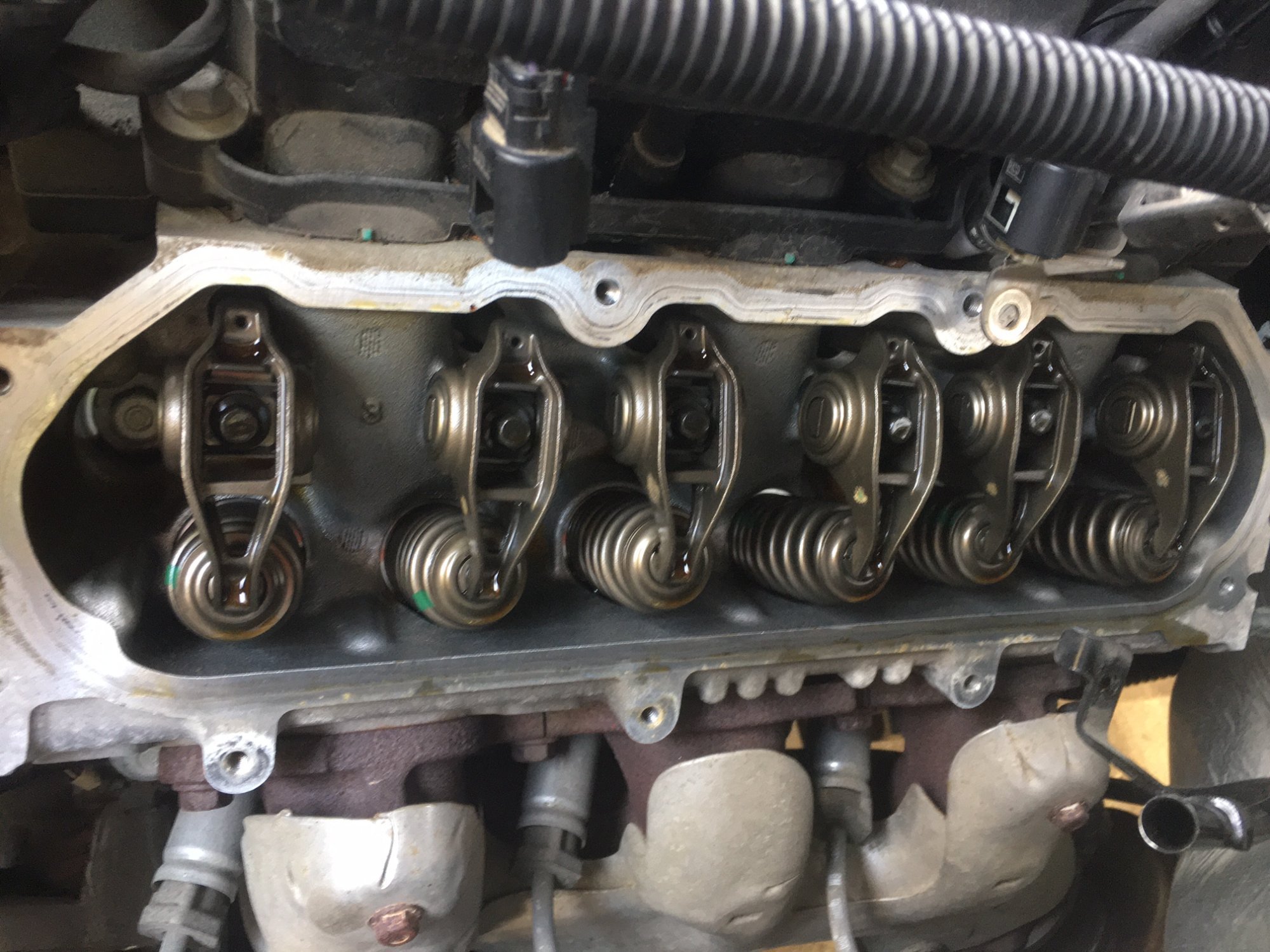
Pepper is at 185,000 and uses no oil and the AFM is working perfectly ignoring the OEM recommendations for OCI and oil spec. Yes, yes.... you'd be right....Question still hanging is; for how long. I can't read the future, but I can read a rocker box and a compression gauge and at somewhere around 165K it looked new: Not a brag...A result.
-
$3.29-$3.49 here for 87. There are a few non-Top Tier stations at $3.19.
-
Oh young one science is all I do. That 'chicken blood and bat wing crap you do' you call 'art' is neither art nor science. Wasn't my ego that had me leaving. Your bait and club style of expression. You are the reason I withdrew. Self aware you are not. Congratulations. You've turned your new Forum into another BITOG in record time. I didn't joint there because I got a gift there I didn't get in yours. A preview..... Last thought. You are blocked and you know it so this hit and run BS on my persons is straight up cowardly. Grow up and get a grip.
-
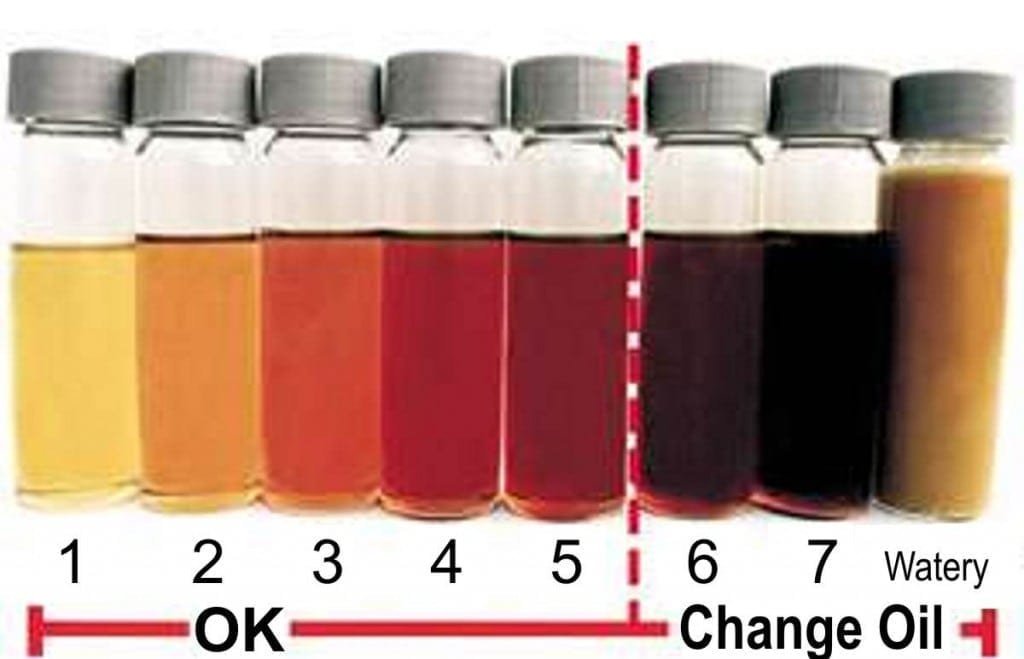
Raven 15,000 Mile Service 4/3/2025 2024 Mitsubishi Mirage G4 Sedan 1.2 liter triple MPFI Solid roller. JATCO JF015E CVT transmission. 14,997 actual 3,748 mile OCI (3,750 nominal target) 3 quarts Red Line HP Euro Series 5W40 2 Oz Red Line ZDDP additive 1 Purolator PL14610 PURE ONE filter Sample for UOA pulled. Installed Linear Logic Scan-Gauge III monitoring system. At this interval 4/5 in color. A bit lighter than last change. 3,750 miles is the OEM recommended OCI on the "Severe Schedule".
-
I saw futures drop like 7% ($5) and yea, that made my head spin and then I thought....most of our Midwest crude comes from? Canada! (10%) So I think there is a bit of a knee jerk and yet directionally..... Like you say, wait it out. What else can we do? txab and his locally sourced Texas Crude. I'm jealous.
-
Your response is reactive. You know it is. You waited until you had a problem before you took action, REACTIVE! Ya dropped your coffee cup and now think you can make it whole again with honey. 99% of people follow this pattern. You even admit that in, "GM recommends a certain oil for certain reasons... see results(?) - oil consumption.(!)" And almost everyone thinks it's a one item on the checklist issue. Let me guess, Viscosity. Well, yes and no; and it depends. On what you say? On the DAMAGE DONE THAT IS CAUSING THE OIL CONSUMPTION. Did a lack of dispersancy and detergency plug the oil ring land returns and flood the scraper rings? Did overly long OCIs do the same? Did a lack of VISCOSITY wear out the bore/ring interface? Did a lack of sufficient AW additives get overwhelmed by overly long OCI's killing the bore/ring interface? Did a lack of polarity dry out the valve seals. Did a lack of detergency and dispersancy plug up the oil separator and PCV system? BEFORE you have an issue, use more viscosity than you think you need or the OEM says and with an oil that has enough AW/EP to be effective and makes the EPA cry and change the oil sooner than to book says by a bunch and find one with enough polarity to enhance cleanliness so you don't have to be REACTIVE. Problem with common sense it isn't commonly used. A guy sees this situation repeat itself over and over and thinks it will be different next time. A lack of common sense thinks the OEM and those PROFESSIONALS following the lead of the EPA and C.A.F.E. are gods that have their best interest in mind. Heck, they have allot of letters behind their names so yea, they must have it bagged. And yet you're fighting a problem and plugging your ears. . Tis why I withdrew from that club. People more interested in being right than doing right. Trying to do the wrong thing right. Second rat gets the cheese. You may be able to prevail if there is little mechanical damage (loss of crosshatch and seal face integrity) with a effective cleaning of the rings and lands, and you will have no chance if there is, not matter how heavy the oil is.
-
Regular jumped from $3 to $3.30...BOOM!
-
Straight up 10% increase to day. Up on Premium $3.999 to $4.349.
-
Man am I STUPID! I don't have to be just right. I have to be someone else saying it. https://www.machinerylubrication.com/Read/518/motor-oils Motor Oils - Fuel Economy vs. Wear Blaine Ballentine, Central Petroleum Company Conventional wisdom states that engine oils that increase fuel economy allow less friction and prolong engine life. The purpose of this article is to challenge conventional wisdom, particularly concerning modern (GF-3 ILSAC/API Starburst) engine oils. Fuel Economy: Does Anyone Really Care? First, we should face the fact that the American consumer does not typically care about fuel economy except during difficult economic times. The No. 1 selling passenger vehicle is the Ford F-Series Pickup. Five of the top 10 best-selling vehicles are trucks, and trucks outsell cars. Some of the trucks are called sport-utility vehicles, otherwise known as SUVs, because their owners don’t want to admit they are trucks. The mass (size, weight) of these vehicles is not conducive to great fuel economy. Figure 1. Bearing Wear Additionally, consider how most vehicles are driven. Anyone accelerating slowly or driving at the speed limit to conserve energy is a danger to himself and other drivers who are in a much bigger hurry. Auto manufacturers, on the other hand, are concerned about fuel economy. The manufacturer faces big fines if the fleet of cars it produces falls short of the Corporate Average Fuel Economy (CAFE) requirements imposed upon them by the federal government. The March to Thinner Oils Thinner oils are being used these days for three reasons: They save fuel in test engines, the viscosity rules have changed, and manufacturers are recommending thinner grades. The Sequence VI-B is the test used to evaluate fuel economy for the GF-3 specification. The VI-B test engine is fitted with a roller cam where the old Sequence VI test used a slider cam. The old Sequence VI test responded well to friction modifiers, but the Sequence VI-B responds to thinner oils. The test oil’s fuel efficiency is compared to the fuel efficiency of a reference oil in the Sequence VI-B test. To pass, the test oil must improve fuel economy one to two percent, depending on viscosity grade. SAE 5W-20 must produce higher relative fuel efficiency than SAE 5W-30. It is interesting to note that the reference oil is fully PAO synthetic SAE 5W-30. To qualify for the GF-3 Starburst, ordinary mineral oils had to beat the fuel economy of the full synthetic reference oil. (It seems there is more to fuel economy than a magic base oil.) Another factor in fuel economy is temporary polymer shear. These polymers are additives known as viscosity index improvers (or modifiers). Polymers are plastics dissolved in oil to provide multi-viscosity characteristics. Just as some plastics are tougher, more brittle or more heat-resistant than others, different polymers have different characteristics. Polymers are huge molecules with many branches. As they are heated, they uncoil and spread out. The branches entangle with those of other polymer molecules and trap and control many tiny oil molecules. Therefore, a relatively small amount of polymer can have a huge effect on oil viscosity. As oil is forced between a bearing and journal, many polymers have a tendency to align with each other, somewhat like nesting spoons. When this happens, viscosity drops. Then when the oil progresses through the bearing, the polymer molecules entangle again and viscosity returns to normal. This phenomenon is referred to as temporary shear. Because the Sequence VI-B test responds to reductions in viscosity, oil formulators rely on polymer shear to pass the test. A shear stable polymer makes passing the GF-3 fuel economy test much more challenging. New rules defining the cold-flow requirements of SAE viscosity grades (SAE J300) became effective in June 2001. The auto manufacturers were afraid that modern injection systems might allow the engine to start at temperatures lower than the oil could flow into the oil pump. Consequently, the new rules had a thinning effect on oil. The auto manufacturers now recommend thinner oils for their vehicles than in the past. Years ago, SAE 10W-40 was the most commonly recommended viscosity grade, later migrating to SAE 10W-30. SAE 5W-30 is most popular now, but Ford and Honda recommend SAE 5W-20. It is likely that more widespread adoption of SAE 5W-20 and other thin oils may occur to help comply with CAFE requirements. Because of the change in cold-flow requirements and the fuel economy test pushing formulators toward the bottom of the viscosity grade, today’s SAE 10W-30 oils are more like yesterday’s (GF-1 spec) SAE 5W-30 oils. On top of that, there is a trend toward auto manufacturers recommending thinner grades. This seems ridiculous. SUVs and trucks, with their inherently less-efficient four-wheel drive and brick-wall aerodynamics, need powerful, gas-guzzling engines to move their mass around in a hurry. In response, auto manufacturers recommend using thin oils to save fuel. Incredible! Viscosity and Wear Thinner oils have less drag, and therefore less friction and wear. Right? Perhaps in the test engine or engines that experience normal operation. But somewhat thicker oils may offer more protection for more severe operations such as driving through mountains, pulling a boat, dusty conditions, short trips, high rpm, overloading, overheating and overcooling. Figure 2. Ring Wear Any abrasive particles equal to or larger than the oil film thickness will cause wear. Filters are necessary to keep contaminants small. The other side of the equation is oil film thickness. Thicker oil films can accommodate larger contaminants. Temperature has a big effect on viscosity and film thickness. As a point of reference, one SAE grade increase in viscosity is necessary to overcome the influence of a 20°F increase in engine temperature. At a given reference point, there is approximately a 20°F. difference between viscosity grades SAE 30, 40 and 50. SAE 20 is somewhat closer to 30 than the other jumps, because SAE 30 must be 30°F higher than SAE 20 to be roughly the equivalent viscosity. In other words, an SAE 20 at 190°F is about the same kinematic viscosity as an SAE 30 at 220°F, which is about the same viscosity as an SAE 40 at 240°F. This approximation works well in the 190°F to 260°F temperature range. One might be surprised at the slight amount of difference between straight viscosity vs. multiviscosity oils with the same back number (for example, SAE 30, SAE 5W-30, and SAE 10W-30). If an SAE 50 oil at 260°F is as thin as an SAE 20 oil at 190°F, imagine how thin the oil film becomes when you are using an SAE 5W-20 and your engine overheats. When an engine overheats, the oil film becomes dangerously thin and can rupture. Ford is bumping up against its CAFE requirements and recommends SAE 5W-20 oil for most of its engines in the United States. It claims SAE 5W-20 is optimal for fuel efficiency and wear. To determine if SAE 5W-20 oils provide the same level of protection as SAE 5W-30 oils, Dagenham Motors in England, one of the largest Ford dealers in Europe, was consulted. SAE 5W-30 is required for warranty purposes in England, and SAE 5W-20 is not even available. If SAE 5W-20 were better for both fuel economy and wear, why would Ford not recommend it for its same engines in Europe? Antiwear Property Changes Another change that occurred in passenger car motor oils with GF-2 and GF-3 is a more stringent limit on phosphorus, which is part of the zinc phosphate (ZDDP) antiwear additive. The auto manufacturers are concerned that phosphorus will deposit on surfaces of the catalytic converter and shorten its life. This is a complicated issue, and the deposits depend on the specific ZDDP chemistry and the finished oil formulation. The industry was unsuccessful in designing an engine test for an oil’s catalytic converter deposit forming tendencies. Therefore, the auto manufacturers set an arbitrary limit for motor oil of 0.1 percent phosphorus. Anti-wear additives are important in the absence of a hydrodynamic film, such as in the valve train. The anti-wear additives are activated by frictional heat, which causes them to react with the hot surface and form a chemical barrier to wear. The mechanism by which phosphorus deposits form on catalytic converter surfaces is not fully understood. It does not correlate directly with oil volatility or oil consumption. On the other hand, if engine wear causes oil consumption to increase, the risk of forming phosphorus deposits in the converter would increase dramatically. It seems that preventing wear and oil consumption should be a priority. In the past, oil formulators could make a premium product by simply adding more ZDDP. A similar move today would result in an oil formulation that would not support new car warranties. Short-term Thinking As wear increases, the efficiency of an engine declines. Valve train wear slightly changes valve timing and movement. Ring and liner wear affect compression. The wear hurts fuel efficiency and power output by an imperceptible amount at first, but then the difference in fuel economy between an SAE 10W-30 and SAE 5W-20 is hardly noticeable. Efficiency continues to decline as wear progresses. Perhaps optimizing wear protection is the way to reduce fuel consumption over the life of the engine. Certainly engines that have experienced significant ring and liner wear benefit from thicker oils. Thicker oil use results in compression increases, performance improvements and reduced oil consumption. High-mileage oils are a relatively new category of passenger car motor oils. These products typically contain more detergent/ dispersant and anti-wear additives than new car oils. They typically contain a seal swell agent and are available in thicker viscosity grades than most new cars recommend. “High mileage” seems to be defined by “as soon as your car is out of warranty.” What To Use Although thinner oils with less antiwear additive outperform more robust products in the 96-hour fuel economy test, it is not clear that such products save fuel over the useful life of the engine. Every fluid is a compromise. Oils recommended by the auto manufacturers seem to compromise protection from wear under severe conditions to gain fuel economy and catalyst durability. It is important to recognize that to use a product that offers more protection from wear will most likely compromise your warranty. Thicker oils also compromise cold temperature flow, which may be of concern depending upon climate and season. The best protection against wear is probably a product that is a little thicker (such as SAE 10W-30 or 15W-40) and has more antiwear additives than the oils that support the warranty. The best oil for your vehicle depends on your driving habits, the age of your engine and the climate you drive in, but it is not necessarily the type of oil specified in the owner’s manual or stamped on the dipstick.
-
Psst! I don't care! I made my case. I provided ALL receipts. Said everything I have to say. I've shared every failure and every triumph and there have been far more wins than losses. I've hidden nothing. Iied to no one. Mislead no one. Demanded nothing from anyone. Fact is, anyone who has read my scribblings for any length of time would have seen some fairly systemic shifts in what I write as my knowledge morphs. I'm not ashamed to be wrong nor to learn from others. Helped those I could. Learned from those kind enough to teach. I don't sell anything. I don't profit from sharing. I profit from the research I use to share here and I don't have to publish to profit. So when I get flack from some self promoting "hand wavers" I just don't care. Not a single word said, not a lie told, will impact the service life of my equipment. Put a single dollar in my bank account nor take one from it. Keep me from dying or put me to death. Be my spiritual salvation nor judge me in any meaningful way. Place food on my table or heap famine on me or take a single thing from me I care about I won't get back a hundred fold. Honest hearted people will understand that and know I'm but a PM away. I left your 'club' and will no longer contribute there. I'm going back to journaling.





-
Forum Statistics
250.5k
Total Topics2.7m
Total Posts -
Member Statistics
342,987
Total Members8,960
Most Online
-
Who's Online 6 Members, 1 Anonymous, 606 Guests (See full list)