Jump to content

Po420 Code Is Back! Arrgghh!


jseabolt

Recommended Posts

Posted

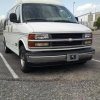
I hate to keep throwing money at this van until the problem goes away. The check engine light keeps coming on and I keep clearning the code. It may go off for a week or come right back on with a couple of minutes.


It's the same nagging code PO420. O2 threshold to low.


So I ask the guy at Advance Auto does this code mean the O2 sensor is bad or is something upstream is setting it off and the O2 sensor is picking up on something?


He says one of the front O2 sensors are bad. So I change those and clear the codes. Well the van seems to run better and the light stayed off for a week. Now it's back on.


Dad says the van is getting 13 mpg on the highway and got around 20 when he bought it 10 years ago.


I asked this question the other day but didn't get much feedback. What is the normal operating temperature for a 98 Chevy van 350 small block engine.


Our 98 S-10 pickup at work appears to have the same temperature guage. It reads 210F at normal operating temperature. Dad's van reads at the quarter mark at normal operating temperature.


I'm thinking 210F is the normal operating temperature for a GM vehicle of this era and this van is running too cold. The heater seems to work fine.


Will a thermostat that is causing an engine to run at a too low a temperature set of a PO420 error code because it's using too much fuel because it never reaches normal operating temperature?

Posted

P0420 is a catalytic converter code - more than likely, the cat is smoked ... but there is a SLIM chance of the post-cat sensor being out of spec.


Misfires or rich conditions are cat killers. Seeing that your not throwing any misfire codes, this may have happened years ago .... or you've had that rich code for a while (13 mpg would indicate that) - excessive unburnt fuel, whatever the source, causes the cat temp to go so high that it melts & stops doing it's job. My money is on the cat. SORRY!

Posted
P0420 is a catalytic converter code - more than likely, the cat is smoked ... but there is a SLIM chance of the post-cat sensor being out of spec.


Misfires or rich conditions are cat killers. Seeing that your not throwing any misfire codes, this may have happened years ago .... or you've had that rich code for a while (13 mpg would indicate that) - excessive unburnt fuel, whatever the source, causes the cat temp to go so high that it melts & stops doing it's job. My money is on the cat. SORRY!


I didn't want to repeat myself (unless you have been keeping up with my posts) but a month ago the van appeared to be dumping an excessive amount of fuel into the exhaust. The code reader said random misfire. I was stumped so I decided to just take it to a GM mechanic. They diagnoised it as a bad distributor cap and rotor button. They said it was missfiring on #3 and #7 cylinders.


After the van was fixed the check engine light was kicking on.


So is a PO420 code in relation to the sensors before the converter or after? I'm getting allot of conflicting information on this PO420 code. Someone said if you get a PO420 code pertains to one of the sensors before the converter.


If the sensor after the converter reads the same as the front sensors, then it throws up a different code.


I wouldn't think a bad converter would cause an engine to run rich. It was my assumption this sensor just checked the performance of the converter. The front two sensors was what monitored the engine efficiency.


I talked to a guy I work with who has a 90s Chevy truck V6 and he says his converter went bad and was causing bad fuel economy but he says it was throwing a "cat converter" code. He recommended taking it to a muffler shop I've frequented in the past who can actually test the converter.

Posted

The misfire probably melted your cat. The code will keep re-appearing until the cat is replaced - that's the way they designed it. Upstream o2 sensors have no bearing on the code. The code is thrown when the post-cat o2 sensors voltage begins to vary, much like the 2 sensors before the cat. With a functioning cat, the voltage should be steady, with no variation. When the voltage begins to vary due to unburnt fuel in the exhaust, it throws a P0420.


I agree with Fred, but doing that all depends on where you live. Here in the republic of MA, if the check engine light is on, or if you clear the codes & the monitors have not run & you try to get an inspection sticker, you fail .... then you get harassed by the cops who essentially have become "hidden tax collectors" for a state that cannot control it's spending. :lol: It's all politics. I had asthma before they required cats on all vehicles .... and I still have asthma with all the "feel-good" environmental laws pertaining to motor vehicles in place. Just another way to unnecessarily extort money out of you .

Posted
The misfire probably melted your cat. The code will keep re-appearing until the cat is replaced - that's the way they designed it. Upstream o2 sensors have no bearing on the code. The code is thrown when the post-cat o2 sensors voltage begins to vary, much like the 2 sensors before the cat. With a functioning cat, the voltage should be steady, with no variation. When the voltage begins to vary due to unburnt fuel in the exhaust, it throws a P0420.


I agree with Fred, but doing that all depends on where you live. Here in the republic of MA, if the check engine light is on, or if you clear the codes & the monitors have not run & you try to get an inspection sticker, you fail .... then you get harassed by the cops who essentially have become "hidden tax collectors" for a state that cannot control it's spending. :lol: It's all politics. I had asthma before they required cats on all vehicles .... and I still have asthma with all the "feel-good" environmental laws pertaining to motor vehicles in place. Just another way to unnecessarily extort money out of you .


Well a new converter will for itself in fuel consumption if that's the problem. Just like that day I borrowed dad's truck to take some bumpers to get rechromed which was 30 miles from my house. I knew the thermostat was not stuck open so I took a blanket with me. By the time I got home I had used over half a tank of gas. I figured I was getting 4 mpg. A new thermostat would have paid for itself from that trip alone.


If the conveter has melted/collapsed then looks like the van would run like it's got a potato shoved into the exhaust. It seems to run fine otherwise.


There is no inspection system where I live. Dad asked if I could gut the converter but I don't know if that would fix the fuel consumption issue. Or by OBD II's design is poor fuel consumption just a way to getting your attention to swap out a new converter when it goes bad?

Posted

You have to fix the rich condition first .... unless you own stock in a cat manufacturing company. :lol:


If the misfire/rich condition is not fixed, you'll have another P0420 .... and you'll have just flushed a few hundred large down the toilet.

Posted

Have you check for a vac leak. If there is a vac leak the computer will increase the amount of fuel to correct the lean condition. I would start looking on the side where you had misfires on cyl. 3 and 7. Also your temp should be around 212º . Most car makers like their engine to run above 212º . The reason for that is so any moisture in the engine turns into a vapor and is cycled thru the engine via the PVC system. If the engine runs cooler than that the moisture will cause a sludge build up inside the engine. That being said the temp gage might not be accurate. If you find that the gage is accurate then install a new thermostat.

Archived

This topic is now archived and is closed to further replies.

  • Latest Articles

  • Posts

    • I certainly could be wrong but I hear of pickups far newer than that 2007 cutoff which may not be going to the wrecker but are having engine work done and be that a reman engine or new engine or trying to repair the existing engine. Some of it would be design issues as per the cylinder deactivation system that GM has and one of those lifters wiping out the cam and the question of oil changes moving the needle or not on that whole mess, or in the case of Ford pickup engines that have the long timing chains and wearing them out and the roller followers and phasers and some of that certainly goes back to oil change intervals. But in those various cases the truck has all sorts of life left in it and so the unfortunate owner and may be original owner or used market owner that is pouring money into repairs so the truck is not seeing the salvage yard yet but damage is happening by infrequent oil changes. A friends son had bought a 2018 I think it is half ton GM and it had some sort of extended or used dealer warranty on it and of course the lifter issue bites and its rattling and so the dealer had to swallow the bill and was at least 7000.00 and I think they only replaced what they felt they had to replace so yeah, I can see that being a ticking time bomb in the not too distant future. Would frequent oil changes cure all these engineering "marvels", probably not but some engine designs have shown that they do much better if the oil is changed a lot more often then if the manufacturer service claims are followed. New trucks cost so much that there is an incentive to keep the existing truck on the road by repairing. 
    • get a good code reader, and find out what problems the truck has noticed by reading codes. cheap ones can only get basic engine codes, you may want to get one that can get codes from all the computers in your truck.
    • This is sort of my point, salvage yards aren't overflowing with all these 'poorly' maintained trucks - excellent/good/servicable condition otherwise, salvaged only as a result of a bad engine from poor oil change regiment.    In my area, there are no 2007 to newer gm trucks/suvs in any salvage yards. A few are in the 'recyclers' with very obvious reasons for being there - wrecked.
    • Stabilitrack was a stability control, traction control system, that functioned independently from the transfer case.   Z-71 has nothing to do with the transfer case or differential.   If it does have an AWD system, my memory recalls this being specific to the Denali trim, converting won't be as simple as swapping out mechanical parts like differentials and transfer cases. It will require reprogramming at a minimum. Long story short, not likely worth it.   Pulling a fuse, may disable the AWD system, it might also prevent any other transfer case functions.   However, the AWD case was generally based on the same transfer case you refer to in the 2006 Suburban. If it still has a 4-High and 4-Low where the transfer case locks and splits power 50-50 front to rear, what are you gaining by changing anything? A true-rear wheel drive only, what good will that serve? Not enough to go through the trouble of changing out all the parts.    Generally, all the factory systems will handle a 33" tire and re-gearing. Probably a 35" tire too, if you aren't driving like a caveman. If 35" tires are in the plan...   If you do plan on driving like a caveman or are fully committed to 35" tires, an entire re-think of the build is probably in order. Starting with square one, an IFS front end isn't going to be the best starting point for 35's and caveman driving. 
    • 1/2 qt over full ain`t gonna hurt $h!t. Most times, a whole qt won`t either. Most have windage trays now. As long as the crank isn`t slapping itself in the oil, it`s not the end of the world.   We used to overfill 1 qt at the track, at race time. Better to have it over full than having the pan sucked dry at 6500 rpm`s.
  • GM-Trucks.com Clubs

  • Popular Contributors

×
×
  • Create New...