
Leaderboard



Popular Content
Showing content with the highest reputation on 03/17/2025 in all areas
-
FWIW My truck started burning oil at about a yr old, 25-30,000 mi. And yes it was about what the ridiculous GM spec says, 1 quart / 1000 mi. Was always using cheap oil and filter. After reading you guys argue oil and then talking to my mechanic friend, started on M1 oil and filter, and reduced down to 4000 interval. Never burned oil again. 65,000 mi now.4 points
-
I have always used Mobile 1 full synthetic and a mobile 1 filter. here is a screen shot of my maintenance log and fuel log for reference.
 2 points
 -
Yes, my fault on lack of detail. 99k Saturday morning on the odo when message flashed. I change my own oil and keep detailed records. Last change was 7.5 qts out, 8 qts in. Kirkland 5w-30 full synthetic, Delco pf63 filter. No leaks anywhere. Was cold here and I probably spent more time idling in the last 2 months than I normally do, however nothing excessive or abnormal for a truck that is intended for use in a fleet/ work application. In January I towed 2 snowmobiles 500 miles round trip, which is something we could do with a car so not overworking the thing by any means. Taking a road trip from western wi to Fargo in a few weeks, going to change oil immediately before and monitor. Same at the end of April driving to Chicago (maybe it'll get stolen there and spare me the pain of more troubleshooting lol)2 points
-
I have been running GM D1G3 labeled full syn since new and at 10,000 miles just got back from a 4000 mile trip with about 60% of those miles pulling a 5tth wheel and hauling 13000# I added about 8 ounces to top it off while arguably towards the top of the full mark.2 points
-
They are just plastic clip-on things that pop right on. The u-bolts wouldn't but the block just sits under the lowest leaf between the leaf and the axle perch. Would prob just need to source longer u-bolts from somewhere. I can measure my block if you need to know exact lift. If the 3500s are already 1.5" taller in the rear from the different spring packs, then it's a wash anyway. Rear ZR2 lift is only needed for those who want the stock rake or just to say they have the full lift. Those just looking for the factory "level" can leave the rear stuff out.1 point
-
Yes but it is a different RPO code due to there being a smaller turbo, different fuel injectors and different state of tune. Prior generations carried the same RPO code as the pickups and de-tuned but LBZ was skipped. They used the LB7 2003-2004, the LLY 2004.5-2006 and then went straight to LMM for 2007-2009.1 point
-
There's no consistency with this generation, so check it out closely and look at the repair history. I know someone who's had '19, '22 and now '24 6.2 trucks with minor warranty issues, and then another who had a '21 that blew two 6.2 motors. My '21 5.3 was in the shop more than I drove it for the first few years with multiple rear window leaks, camera issues repeatedly, mirror replacements, several parking sensor failures, check engine lights, wiring harnesses under the hood and in the rear, stereo/touchscreen failures, coolant leaks and more. All GM gave me for my "trouble" was a small discount on a new truck if I bought before the end of '25.1 point
-
Well HEB is out of my usual morning travels. My walking spot and car wash is in a different location. I even have a Kroger card that gives me discount on groceries and gas. My wife usually shops at Aldies. A local neighborhood website had a piece about the egg prices there. So the wife sends me there just for eggs. So it is probably a lost leader to get people in. It’s usually pretty busy there. I’ll usually pay a little more to avoid the nonsense. But when the wife asks me to go I figure I better go, if you get my drift.1 point
-
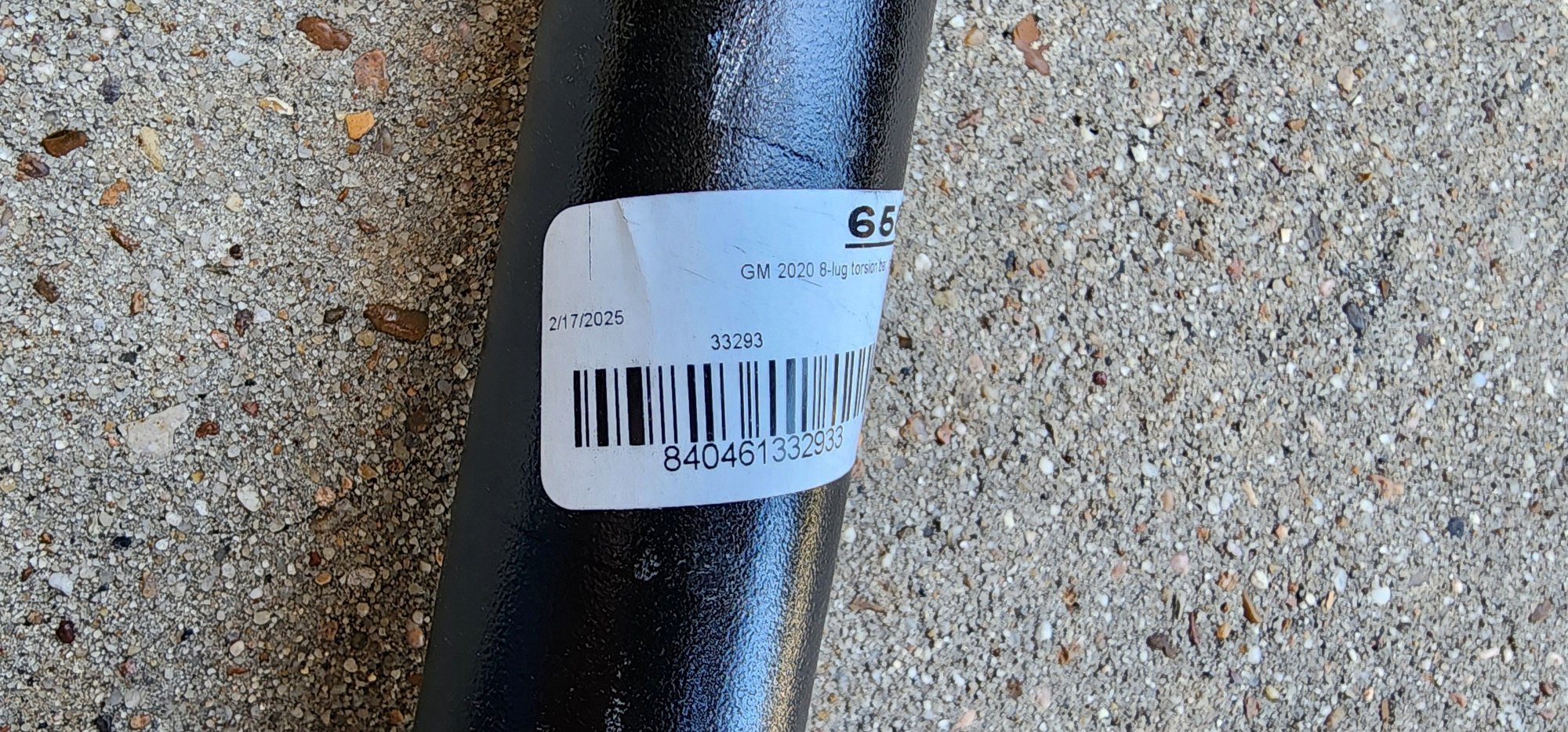
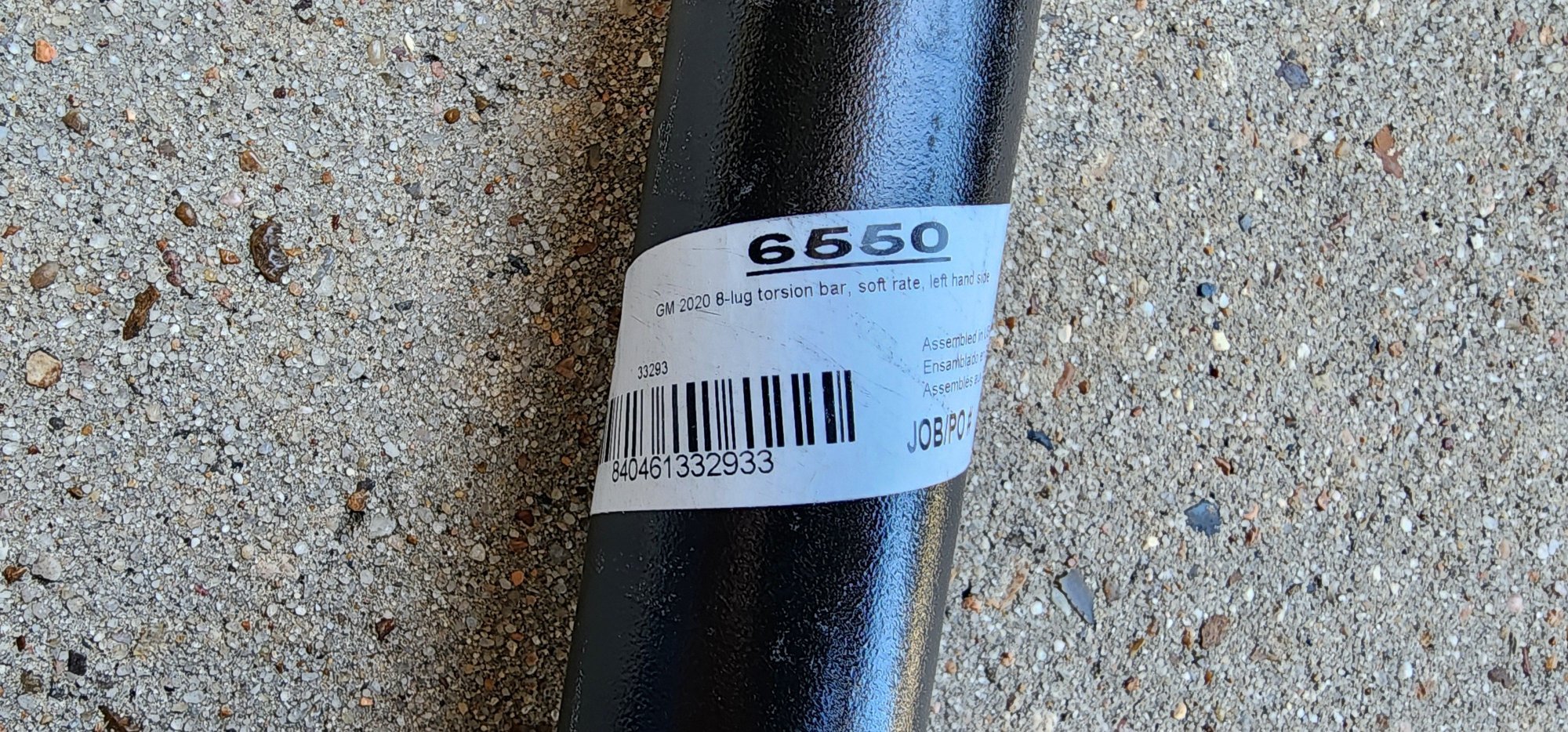
Here's the other images of the Cognito sticker. Nothing really helpful to identify the spring rate.
1 point
-
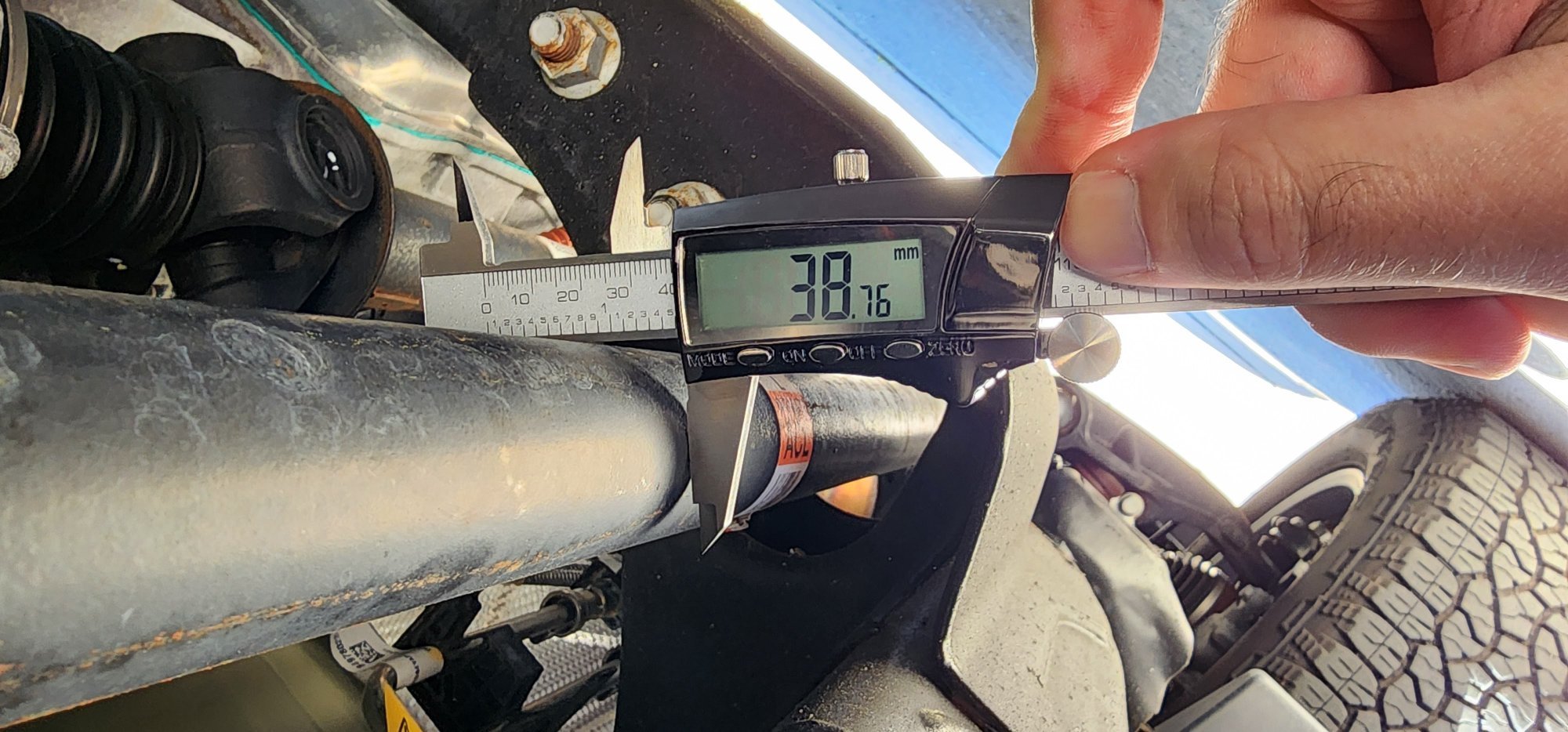
Confirmed that my truck has the 4,800lb bars installed. I took photos of both the Cognito and stock bars. The Cognito bars only had a single sticker that was wrapped around them. I had to take 3 pics to get the whole thing. The Cognito bar is 1.02mm smaller than the stock bar.
1 point
-
I too am NOT a mechanic, I would classify myself as a youtuber DIY. Most things I understand but there is ALOT that I do not. I say this because I often go by what a manufacture recommends unless I have compelling reasons not to. In the case of the K&N filter, The manufacture recommends service intervals of 100K. I have also read on forums that servicing it often will lead to filter oil being "bled" into the intake which is not good. I have also read that if you can see the filter wire, then service is not required. I do check mine for leaks but I have not clean and re-oiled it. Being half-way through the recommend service internal I see no harm if cleaning it early and may do so this weekend.1 point
-
Both the Chevy and International versions of the joint venture trucks use the current Duramax.1 point
-
I would be willing to wager if a 6.6L is made available in the 1500's it would be an aluminum block engine similar to the current 6.2L, not an iron block derivitive of the L8T. I wonder if the 8.3L Duramax would have some commercial applications beyond GM trucks.1 point
-
https://imgur.com/QRCjmRt1 point
-
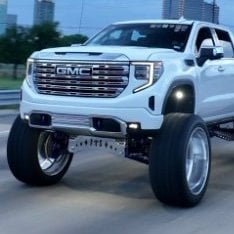
Long time no update! Well a few weeks back I hit a deer. I figured I would take this opportunity to do something I have been thinking about for awhile. A 16+ front end conversion! Here is a great write up I used to gather the parts I needed. It is still not fully assembled but getting close! Here is the truck that inspired me. I do also plan to switch up the wheels soon1 point
-
Interesting that they are going back to a '350' engine. When the 5.3 came out I was puzzled as to the reduction in displacement.1 point
-
Damn that got me a little excited, gonna go find the wife.1 point
-
Took the 26s off due veryyyy bad shaking (bad tires) got these stocks for 350$ ride is smooth now. Need get bigger tires asap
1 point
-
Plenty of clearance on my '21 6 speed to get the factory pan off and install a cast aluminum pan.1 point
-
I haven't been outside to look at my truck. My guess was 4,600lb on the stock bars, but you're probably correct with 4,800lb. My torsion bars are the lightest available from GM whatever that is. I have a digital caliper and will measure the Cognito bars tomorrow afternoon for you.1 point
-
Yup I'm still here, watching and waiting. I keep meticulous records of maintenance and gas mileage and ONLY have oil consumption when towing. My travel trailer is not heavy but does catch the wind like a sail and makes this engine work. Still, even under a heavy load I didn't expect this but not much I can do at this point. Currently at 59,453 miles and no other major issues. Just towed my camper over the weekend at was getting 4mpg at 71MPH driving into the wind. Really sucks1 point
-
1 point
-
The purpose of this bulletin is to help explain the operating characteristics of 4WD/AWD systems. For specific operating instructions for individual transfer cases, please refer to the Owner Manual or Service Information. DEFINITIONS AWD vs. 4WD The very basic difference between AWD and 4WD is the intended usage of the systems. AWD is usually intended for on-road use in inclement weather conditions, while operating smoothly on dry pavement by allowing for a difference in speed between the front and rear axles while turning. These systems are not selectable and do not have low range gearing for the transfer case. These systems can be found in cars or trucks. 4WD is primarily found in trucks and can be broken down into Part-Time, Full-Time, and Automatic Transfer Cases. These selectable systems have modes intended for on-road use and other modes intended for off-road or low traction situation usage. All current GM 4WD systems have a low range available in the transfer case. CHARACTERISTICS Disclaimer: Even though a certain amount of noise or feel can be expected, GM may offer service procedures or components, or change vehicle design, which may reduce perceived noise levels in the interest of customer satisfaction. AWD There are two different categories of AWD systems. The first category is full-time AWD. This type of transfer case delivers torque to the front and rear axles at all times. This ratio can vary depending on the system, but is usually about a 30/70% front to rear split but also can vary depending on traction conditions, up to 100% front or rear. This type of transfer case can have a viscous coupling for low traction conditions along with a planetary gear set to allow for difference in speeds between the front and rear axle, or an open type of planetary gear set differential, which uses brake based traction control for low traction conditions. An example of a vehicle with an open differential/traction control type of transfer case is a 2003 Escalade. RPO codes for these types of transfer cases are NP3 (NVG 149, BW 4473 viscous clutch) and NR3 (BW 4476, 4481, 4485, open differential) or NR4/NR6 (BW 4493, 4494 open differential). The second category is an on-demand AWD. This type of AWD basically delivers torque only to a primary driving axle unless reduced traction is experienced. At that point, the system electronically or mechanically will apply torque to the other axle. Depending on the type of system, this can provide up to 100% of the torque to the axle with traction. These transfer cases use an electronically actuated clutch pack, a hydraulically actuated clutch pack, or a viscous coupling to allow for a difference in speed between the front and rear axles. An example of an electronically controlled version of the On-Demand AWD is in the Smart Trak system in the 2003 Bravada. An example of a hydraulically operated On-Demand AWD is the Versa Trak system in the Aztek, while a viscous coupling is used in the Vibe. The RPO code for the Bravada is NP4 (NVG126). For some vehicle lines, there is not an RPO code. The only way to tell is by the Line Chassis VIN code, B for the Rendezvous/Aztek, V for the Venture/Montana or by SM for the Vibe. PART-TIME 4WD Part time 4WD refers to vehicles equipped with a transfer case to split power between the front and rear axles of the vehicle. This traditionally is a 2-speed selectable transfer case that can be shifted into 2HI, 4HI, 4LO and usually a Neutral position. The 4WD modes of Part time systems do not allow for a difference in speed between the front and rear axles while turning. This system effectively locks the front and rear propeller shafts together. When turning, the tires must allow for the different turning radius of the front and rear axles, which is why this is intended for low traction or off-road use. These systems have low range gearing for the transfer case. An example of a vehicle with this style of transfer case would be a Silverado with a manual shift transfer case (a shift lever on the floor) (RPO NP2) or a Colorado with a push button transfer case with a 2HI, 4HI, 4LO and Neutral position (RPO NP1). The RPO codes for this style of transfer case are NP1 (NVG 233, 243, 263, and T-150 push button) or NP2 (NVG 231, 241,261, BW 4401, 4470 shift lever). FULL-TIME 4WD A second version of a 4WD transfer case is a full-time 4WD transfer case. This style of transfer case has an open center differential to allow for different speeds between the front and rear axles and operates similar to an AWD system. This transfer case can be locked to operate like a Part-Time 4WD transfer case (no difference between front and rear prop-shaft speeds) and/or uses a traction control system to assist in low traction situations. These transfer cases also have a selectable low range. An example of this type of 4WD is the H2. RPO code is NR4. The NR4 transfer case (available in non-luxury utilities) has no switch selection to lock into a part-time 4WD mode as described above. There are only 3 selections on the controls: Disable Stabilitrak, AWD and 4LO. The Owner's Manual describes this system as an AWD system. AUTOMATIC TRANSFER CASES The last category is a combination of 4WD and On Demand AWD. These transfer cases have a 2HI, Auto-4WD, 4HI, 4LO and Neutral position and would fall in the general 4WD category. This transfer case has the operating characteristics of both an On Demand AWD and a Part-Time 4WD system depending on the mode selected. This transfer case uses a clutch pack to allow for a difference in speed between the front and rear axles in the Auto-4WD mode. In the 4HI or 4LO modes, there is no allowance for the difference in speed between the front and rear axles. An example of a vehicle with this would be a Sierra with a push-button transfer case with a 2HI, Auto-4WD, 4HI, 4LO, and Neutral positions. The RPO code for these transfer cases is NP8 (NVG 226, 236, 246, 246 EAU). DIAGNOSTIC AIDS Always follow Strategy Based diagnostics and service information in Service Information (SI). SI is constantly updated with new and more thorough information. One of the first steps that can be used in determining if a noise is a characteristic is to compare it to a similar vehicle. The comparison vehicle should be as close to the original vehicle as possible, including mileage, GVW, RPO, chassis style (extended cab, short-bed...). Attempts to correct characteristic types of noise and/or feel should not be performed. In most situations, these conditions will not be changed. Any attempts to correct these conditions may reduce customer confidence and inconvenience the customer while their vehicle is out of service. 4WD While operating 4WD vehicles in the 2HI mode, they should perform similarly to an equivalent 2WD version of the vehicle. However there are still additional components on the vehicles and there may still be some slight differences in characteristics. Some Part-Time 4WD transfer cases may make a slight gear rattle type of noise when operated in 2HI at low engine speeds, similar to a manual transmission gear rattle type of noise. This can originate in the synchronizer assembly from engine harmonics. This noise will usually be reduced or eliminated while driving in a 4WD mode because the synchronizer assembly clearances will be taken up once engaged in 4WD. Operating the engine at a slightly higher rpm should reduce this noise. While a vehicle is traveling down the road, the tires rotate a certain number of times per mile depending on the true tire radius. If all the tires do not have the exact same true radius (due to load, tire pressure, wear, build variances...), they will turn at slightly different rates. Also, unless the vehicle is traveling in a perfectly straight line, the front and rear axles are traveling in a slightly different arc, which means the front and rear axles are traveling at slightly different average speeds. These systems either do not have a center differential or it has been bypassed (when used in 4HI or 4LO in Part-Time or Automatic systems, or 4HI Lock or 4LO Lock on Full-time 4WD), so the front and the rear propeller shafts will turn at the same speed, which leads to the front, and rear axles rotating at the same average speed. Using the 4WD modes (4HI, 4LO, 4HI Lock, 4LO Lock) will usually increase noise in the axles, transfer case and the rest of the driveline and is usually greater at higher speeds and will usually increase the more the vehicle is turned. As the vehicle turns, the front and rear axles follow a different arc. When this occurs, the only place to compensate for this binding is between the contact patch of the tires and the ground. This can feel like the vehicle is vibrating, crow hopping or grabbing. Even if the vehicle is driven in a straight line, there are slight differences in tire circumference that will cause some driveline binding. If a vehicle had the exact same size tires and was driven in a perfectly straight line, the fact that more parts are moving would mean that there would be more noise and possibly some feel of the system operating. Use of 4HI or 4LO and 4HI Lock or 4LO Lock on Full-time 4WD is intended for use on a low traction surface such as snow, ice, mud or sand. On a low traction surface, the differences in front and rear axle speeds will not have as much effect on binding because of the lower traction levels between the surface and the contact patch of the tires. On a high traction surface, the higher traction levels will create more binding and noise in the driveline. As a result, a small amount of noise or feel of the system operating can be expected when using 4HI or 4LO in Part-Time or Automatic systems, or 4HI Lock or 4LO Lock on Full-time 4WD. The noise and feel can vary depending on the transfer case type, GVW ratings (generally the higher the GVW the more noise it will make), vehicle build variations, gear ratios in the axles, axle type, tires, and importantly driving conditions. While the transfer case is in Neutral, with the engine running, some noise can be expected. When transfer case is shifted to 4LO (or any time through or from neutral, for example from 2HI to 4LO or back) with the engine running, or with the vehicle moving, some grinding noise can be expected. In some vehicles you may experience a slight bump as the shift to 4LO is completed. This occurs because the 4LO range is not synchronized and there may be a difference in transfer case input shaft and output shaft speeds, especially if the vehicle is moving or equipped with an automatic transmission (residual torque from the transmission may be driving the transfer case input shaft). To minimize this noise the shift may be completed at a stop and in an engine off, key on mode. However, there may be an increased chance of having a blocked shift (some models must have the engine restarted to complete the shift). Noise and bump levels will vary between vehicles and even between shifts on the same vehicle. As a reminder, if attempting to determine if noise or bump experienced in one vehicle is a characteristic, be sure to compare to similar make vehicles. For example the shift to 4LO in a Colorado or Canyon will usually have more noise and/or bump feel than in a Silverado or Sierra. When driving in 4LO, the extra gear reduction will make additional noise compared to driving in 4HI. The automatic transmission shift characteristics will also feel different while operating in 4LO. AWD AWD systems are intended for use in high and low traction situations without operator input. These systems will generally be quieter on high traction surfaces than a similar 4WD used in 4HI or 4LO. However, these systems will generally make more noise than a similar 2WD vehicle simply because there are more parts rotating and more gear sets interfacing. Once again, these systems may make more noise in turns, and in some situations you may be able to feel the system operating, even on high traction surfaces. Additionally, you may feel transfer case operation in on-demand AWD systems. These systems generally react to a speed difference between the front and rear axle and it may be possible to detect this by hearing a noise, or actually feeling the engagement of the system. Automatic Transfer Cases Automatic transfer cases will have the characteristics of both the Part-Time 4WD and the AWD systems depending on the mode selected. If the transfer case is operated in 4HI or 4LO, it will behave as a Part-Time 4WD system. If it is operated in the Auto 4WD mode, it will behave like an on-demand AWD system. Driveline noises in 4WD or AWD vehicles caused by loading may be mistaken for transfer case or front axle noise because they can sound very similar. Four-wheel drive noises caused by loading may exhibit the following conditions: • The noise will be greatest on a clear, dry road and decrease on a low traction surface. Front axle or transfer case noise caused by bearings, ring and pinion, or planetary gearing will be similar on all surfaces. • The noises or feel that can be expected will increase while making a tight turn. • The noises may be changed from a deceleration to an acceleration condition (or acceleration to deceleration) by raising or lowering tire pressure at one end of the vehicle. TIRES Tire rolling rates can be a major factor in operational characteristics. Consider the following important items: • All tires are the same size and brand. Tires of different brands may have different circumferences (or radius) even if they are the same size. • Tires are set to factory recommended pressures. A tire with low air pressure will roll at a different rate. • All tires have approximately equal amounts of wear. Tires with different amounts of wear will roll at different rates. • All tires are the same tread type. Don't mix on-off road, all-season or street tires on the same truck as they may have different circumferences and roll at different rates. • One or more of the tires may show small, short scratches around the circumference of the tire tread. The tire "scuffing" on the road surface causes these scratches.1 point
-
The first symptom, the tight steering, that's normal when in 4HI and why 4HI shouldn't be used on dry. That is crow hop and binding. AUTO mode allows for the clutches in the transfer case to take power away when there is no slip detected and won't bind the front end. TLDR. Don't use 4HI on dry. Ever. AUTO is acceptable if you are in and out of dry and say snowy or slushy conditions. 4HI would be snow packed roads or dirt roads. Otherwise, 2HI as often as possible.1 point
-
I’ve mentioned in different threads that we rarely buy new furniture. Around here there’s plenty of yard or moving sales that offer quality furniture for a fraction of new. Years ago my wife had me pick up a recliner that had a standup feature by remote. Something to consider?1 point
-
No matter what it's a risk you take. A new truck is going to cost you way more than the $5,000 it's going to take to fix the transmission. Plus your truck is worth way less with a bad transmission, so you can't sell it for good money right now anyway. I'd fix the transmission and roll the dice that you don't have any major issues for the next year or two.1 point
-
I have a 21 RST Z71 6.2/10spd that's my daily. It's at about 39,000 miles with the only issue being a door lock actuator that started making noise just before 3/36 was up so I had it replaced. The 6.2/10spd combo is heaven on 4 wheels.1 point
-
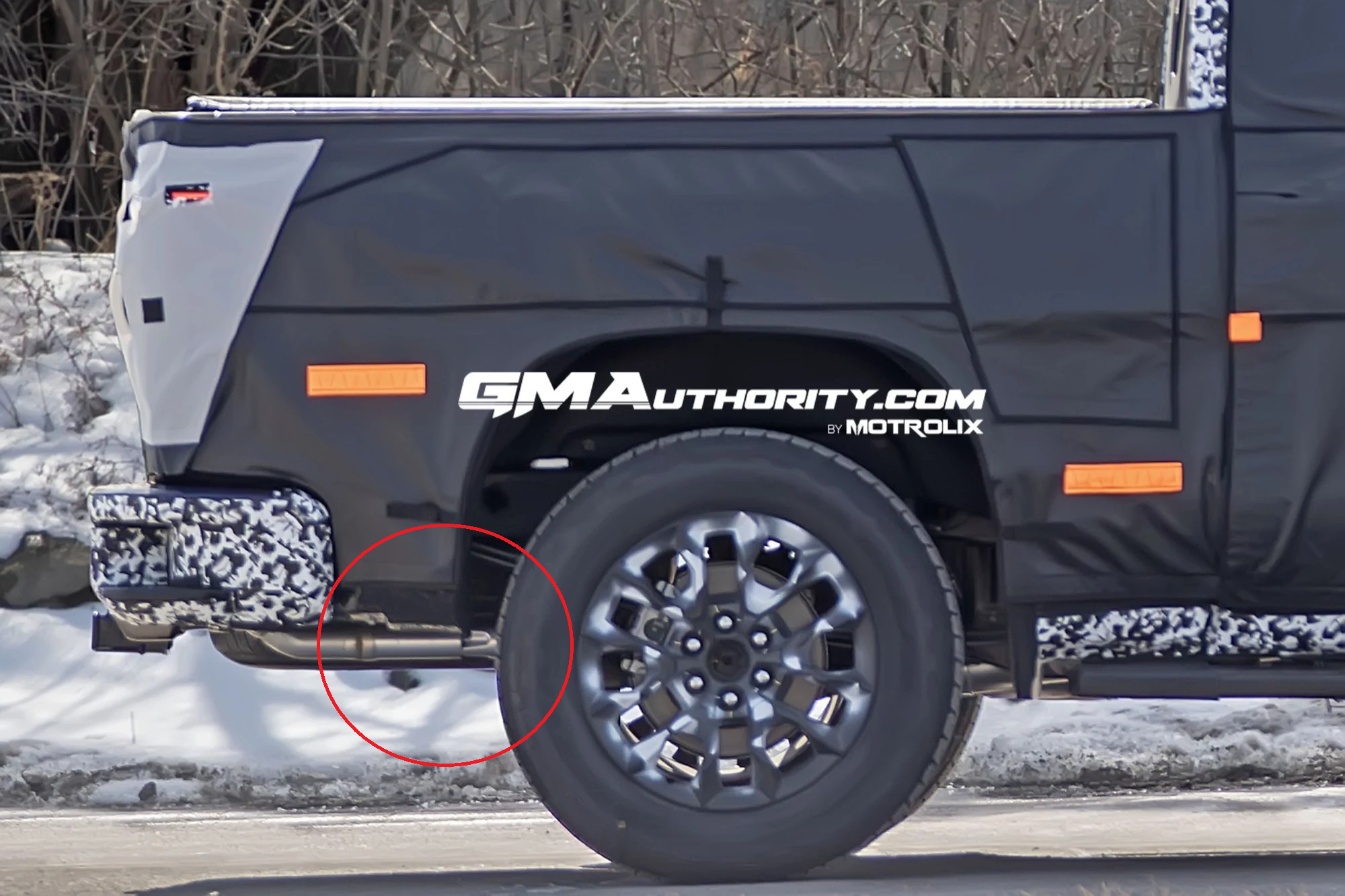
Well, the diesel lives *unless* those cooling inlets in the exhaust tips are on a gas truck which means we get gas particulate filters on the V8s. You can see the cooling cuff/venturis on the pass. pipe that is visible where I circled in the picture below. Same style that the 3.0 Duramax currently uses. Looks like all the sheet metal is new. Rear bumper is similar in general appearance but its clearly different. So lots of new on the existing or slightly modified T1 frame (T1-2 or T1.2).
1 point
-
The dealer's price was high and a little vague so, I called around on yesterday and got some quotes from local shops (not chains). It basically worked out that Shop-A was going to source a transmission from "whoknowswhere" as the $4500 option with a 1y/30k warranty and a vague "upgraded" unit for $5500 with a 3y/100k warranty. He said it had a billet converter, but that was all he knew. I didn't like that he couldn't really tell me anything about it. I didn't have warm and fuzzies from that call. Shop-B and Shop-C were going to source the transmission remaned from GM and install it for the standard option and also offered "heavy duty" options. Shop-C's a local shop run by a guy related to my dad's old boss and has been around for 20+ years. He offered a Jasper transmission with a billet converter at "7200-ish" and was also a little vague on the pricing. That's a little higher than I was hoping. Shop-C does nothing but domestic transmission rebuilds in-house and offered me a billet converter and shift kit as his heavy duty option for $5500 3y/100k. My neighbor is a heavy-duty diesel mech and vouched for the guy's shop. Warranty was on par with the rest. I'm pretty much leaning towards Shop-C at this point. I like that he's going to use a billet converter and a shift kit as part of the heavy-duty rebuild. I've thought this thing shifted too slow and mushy since I bought it. He said to bring it by next Tuesday, so I guess I'll sport'n the MIL's Sienna for a couple weeks. I already have the thermostat delete kit and I'm planning to add a mishimoto cooler kit or maybe get a cheaper one and fab up mounts and just bypass the nearly useless factory cooler altogether. Sunday I was out looking at things and noticed that I'm way down on coolant too. The coolant in the tank, the underside of the oil cap, the oil itself, and the exhaust pipe all look normal. I'm assuming I have a leak at the radiator or somewhere else that I can't readily see. I've caught faint whiffs of it for a while, but never seen evidence and figured I was imagining it. ...Good times1 point
-
I think i know what the issue is. my dad and i both have matching 2011 tahoes and we have had throttle body issues on both. the module for traction control is inside the throttle body as it’s an electronic throttle, can’t speak for stabilitrak. the rough idle, long crank, and TC all sound like they can be fixed with a new throttle body. the one on my tahoe right now is a knockoff and now i have all the same 3 codes, lights, and issues. i will be replacing throttle body tonight. will provide an update to see if it works1 point
-
I have a 2009 chevy suburban ltz with z55 suspesion pack, engine vin 3, same issues as all of the other posts. Bad starts, lose tach, service stabilitrack, rough driving. WE NEED TO SOLVE THIS.1 point
-
You cannot disable AFM with a Tech-2, you would need something like EFI Live or HP Tuners for that. It seems to me that when Vetronix moved on from the Tech-2, the Chicom factory kept making them and started selling them. Anyway, I've had one for about 4 years now and it has seen almost daily use since.1 point

















This leaderboard is set to New York/GMT-04:00