Jump to content

2009 GMC Sierra 5.3 LH6 alum block


Dnt

Recommended Posts

Posted

I looked through some threads and could not find the answer I apologize if this has already been resolved and please send me to that thread. I have a 2009 GMC crew cab 4x4 with the Gen IV 5.3 LH6 aluminum block and heads. I bought the truck in 2011 with approx 27k on the odometer. Soon after I bought it I started noticing that I was having to add oil between changes. I am using mobile1 5w 30 I now have 86k on the truck and it is a awesome ride and I really do like it but apparently the oil usage has started fouling out the spark plugs. I am guessing here but I think it might be around 1 quart per 2k miles could be more but defintley not less. Last week the Truck started missing pretty badly and then the check engine light was blinking and the truck went into what I call Limp Mode plus the traction control and stabiltrac system light on the dash came on. When I got home I checked the codes and it was P0301 which indicates cyl 1 misfire. I pulled the #1 cyl plug and it was covered in black gunk and completely fouled. I bought a new one (the irridium tipped plugs are over 7 bucks a piece) and replaced it and it is running OK but now that I am really listening and paying attention to it and it seems to have a fairly rough idle and a ticking noise especially on cold startups. Now after doing some research I see a lot of owners from 2007 to 2011 of the 5.3 engine are complaining about oil usage and some mention fouled spark plugs. I see a TSB for changing out the drivers side valve cover and adding a AFM discharge shield and doing a cylinder cleaning plus some have had their pistons and rings replaced? Apparently the work has only been partially successful and I would really like to know WHAT IS THE REAL ISSUE WITH THESE ENGINES in these year models. I do not like the idea of having my engine torn down especially if they are only guessing!! Could it be a AFM problem or maybe lifters or camshaft or something as simple as the PCV baffle in the valve cover? What has been your experience with this. I am all ears.

Posted

I read something on here, can't remember where, but it has to do with the AFM and the cylinders that shut down while its in V4 mode and the rings getting gummed up, but I'm not a mechanic but I'll talk to a friend of mine and see if he knows for sure

Posted

Take a look at the intake runner for cylinder one. Are there any vacuum lines on the intake runner, or close to that runner? Oil is getting into cylinder somehow. Some have put a oil trap on the pcv line. This trap will trap the oil that is suspended in the crankcase fumes being pulled into the intake via pcv line and valve. You may want to try adding that device into the pcv system.

I would try pulling all the plugs and check their condition. GM recommends changing plugs at 100,000km don't they?

Posted

Thanks for the replys I have an appointment at my local GMC dealership service department Saturday morning at 7:00 a.m. so we will see what they say. I am not sure if the warranty will cover repairs or not. I think it may have a 5yr 100k Powertrain Warranty. Did some more research today and it is really hard to say how common the problem is but it is obviously a problem at some level. I know it is FOR ME!!! And yes the Irridium tipped spark plugs are recommended to be changed at 100k miles. I might just sneak a peek at some 2014 Sierras while I am there. Hopefully they have all these problems behind them now (probably have some new ones haha)

Posted

OK dealer says intake has oil in it and they will change out the drivers side valve cover apparently it is a PCV free system it uses a interior baffle inside the valve cover instead of a valve. The new cover is redesigned to prevent the line to the intake picking up excessive oil . Also have a rear main seal leak so they are going to replace that. Will take 2 or 3 days so I told them i would be back next Saturday to pick it up. Got a nice Buick Enclave to drive as a loaner so I am not complaining. Also found a awesome 2014 SLT crew cab in my favorite color so may have to trade up once they get the old truck fixed up. These new trucks are awesome but I did hear that they tend to catch on fire and they are having to do a software update or something Hmmm

Posted

Dealer likely meant it is a PCV valve free system, not PCV free system. PCV is Positive Crankcase Ventilation, and is still part of just about every engine produced. It simply passes crankcase fumes to the intake so they will be burnt up in combustion. The reasons for an actual valve on earlier engines was to prevent backfires from entering crankcase, and to also control the amount of fume being drawn back into intake. Think of the valve as being variable vacuum leak as well.


They have been using baffles since they first switched PCV type system from the old road draft tube design. I tend to get about 3/4 of a pop can of oil from the PCV oil trap I am using on my 2010 4.8 after about 3,000km. There is a thread here on the subject of the oil trap. Look for the group buy thread, it has good information in it.


I do wonder though, what happens when you add a supercharger to the engine. Cannot really have the engine pressurising the crankcase when under boost. A PCV valve would handle that issue by design (not on purpose).

Posted

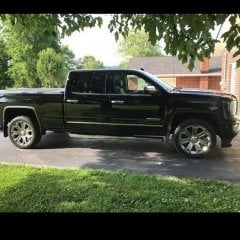
Yes my bad I typed it in wrong. A PVC valve is not used on this 2009 5.3 LH6 engine they replaced it with a baffle inside the valve cover and the new design valve cover has a redesigned baffle to prevent or at least slow down the oil going into the intake. sorry about that. I will for sure check on that oil trap but will not make any mods until the GM warranty has run out. Gotta let Mr Goodwrench do all that he can do.... Looked at some FORDs this morning I like the look and feel of a GMC (professional grade) much better. What is up with the ford door panels they shake and flex when you shut and open the door like they are made out of tinfoil??? the Raptor looks pretty cool though. I may have to go look at some Dodge products now. Man that Blue 2014 GMC sure is pretty. I hope it does not catch fire and burn up on the lot before they get the fix in it. Here is a pic of my existing 2009 SLT really like it but if the problems are not resolved I will trade that puppy off.


Posted

update from my dealer they say they have the valve cover change done and fixed the rear main seal leak but say they do not know anything about a AFM deflector shield and cleaning the carbon from the cylinders. Hmmm I guess I will have to send them a copy of the #100601008G:

Engine Oil Consumption on Aluminum
Block/Iron Block Engines with Active Fuel Management
(AFM) (Install AFM Oil Deflector and Clean Carbon from
Cylinder and/or Install Updated Valve Cover) (
Jan 3,

2013)

Fascinating that they could not find that themselves? I do not think since the spark plug fouled that it should be left with the carbon buildup in the cylinders that will create a short life span engine and I want to get at least 300k out of this truck.

Posted

Not trying to make excuses for the dealer, but, some people just have no luck trying to search for something on a computer. If you have the proper name and number of the TSB, give it to them before they attempt to show you how smart they are.


I really do not understand why managment does not see that their employees are not capable of doing a proper search for speciic terms. I have no idea what they use to locate TSB data, but, it must have some user input form they can enter data into. My best guess at what to search for would be "afm, oil, and consumption", maybe toss in "2009". I know some people for whatever reason like to use complete sentences for search terms, and then wonder why that sentence never returns anything.

Posted

OK the latest is that they know about the full TSB but are saying they do not feel it is necessary to do the AFM deflector and the cylinders cleaning. They said that if I want that done I will have to go through the oil consumption test????. They have the valve cover done and the rear main seal leak done and also replaced a O2 sensor which ended up being a cat converter changeout since they stripped the threads out on the O2 sensor fitting when changing it out. They had to replace the entire Y joint piece with the cat. I think I will drive it a awhile and see how it does. I am for sure going to pull ALL the plugs out and inspect them and replace them since I am at 86k and they recommend replacement at 100k anyway. Truck is home in the driveway and all my work stuff is loaded back in What a hassle jeez.


What do you guys think should I push the issue on the AFM deflector and cylinder cleaning??

2014 GMC is too expensive for me. Old truck is not worth a dime and new one is worth more than MSRP LOL not going to be able to deal with them.

Posted

If you have the full TSB on hand, read it and see if dealer is required to do oil consumption test before following the suggested repair. Can't really blame dealership if the TSB has that test as a requirement before replacing parts and cleaning cylinders (not sure what they mean by clean cylinders).


O2 sensor's will likely take the threads with the sensor if they were not installed properly initially. Wonder if they make repair kits for O2 sensors. All it really needs is the bung removed and replaced, if they cannot find a way to replace threads with an insert. They could also make O2 sensors use a flat plate to attach to the pipe. That way if one of the bolts holding the plate on broke coming out, you could just drill it out and re-tap the threads. Be a lot cheaper to repair. Would also be cheaper to repair under warranty.


2014 Sierra's at my dealer all have a $3500 credit on them.

Posted

Here is the full TSB it seems to indicate and/or on the AFM deflector 1/4/13 Document ID: 3242444 and it seems to state that NO oil consumption test would be required. I may be interpreting it all wrong. Let me know what you guys think. So far I am pretty happy with the dealer but I want to make sure my truck is 100% repaired not just patched up till the 100k warranty runs out!!!!


gsi.xw.gm.com/newsi/showDoc.do?docSyskey=3242444&from=nb 1/8

Document ID: 3242444
#100601008G:
Engine Oil Consumption on Aluminum
Block/Iron Block Engines with Active Fuel Management
(AFM) (Install AFM Oil Deflector and Clean Carbon from
Cylinder and/or Install Updated Valve Cover) (
Jan 3,
2013)
Subject: Engine Oil Consumption on Aluminum Block/Iron Block Engines with
Active Fuel Management (AFM) (Install AFM Oil Deflector and Clean
Carbon from Cylinder and/or Install Updated Valve Cover)
Models: 20072011
Cadillac Escalade Models
20072011
Chevrolet Avalanche, Silverado 1500, Suburban, Tahoe
20102011
Chevrolet Camaro
20072011
GMC Sierra 1500, Sierra Denali, Yukon Models
20082009
Pontiac G8 GT
Built Prior to February 1, 2011 (Updated Valve Cover) and October 2010 (AFM
Shield)
Equipped with Any of the Following Engines:
– Aluminum Block V8 Engine with Active Fuel Management (AFM) (RPOs L94, LZ1,
L99, LC9, LH6, L76, LFA, L92)
– Iron Block V8 Engine with Active Fuel Management (AFM) (RPOs LMG, LY5)
– Hybrid Engine (RPO LFA – Only Applies to Hybrid Models Built July 7, 2009 February
1, 2011 – Prior Builds Not Cast For AFM Valve)
Attention: This bulletin does not apply to the Buick Rainier, Chevrolet TrailBlazer and
GMC Envoy equipped with LH6 due to a different design oil pan and AFM
pressure relief valve.
This bulletin is being revised to update the Warranty Information. Please discard Corporate
Bulletin Number 100601008F
(Section 06 – Engine/Propulsion System).
Condition
Some customers may comment about engine oil consumption of vehicles with higher mileage
(approximately 48,000 to 64,000 km (30,000 to 40,000 mi) and a service engine soon light being on
and/or rough running engine. Verify that the PCV system is functioning properly. If the customer
understands that some oil consumption is normal and still feels the consumption level is excessive,
more than 1 quart per 2000 to 3000 miles of driving, perform the service indicated in this bulletin. It
is no longer necessary to have the customer return multiple times to have the usage verified.
Cause
This condition may be caused by two conditions. Oil pulled through the PCV system or oil spray that
is discharged from the AFM pressure relief valve within the crankcase. Under most driving
© 2013 General Motors. All rights reserved.
1/4/13 Document ID: 3242444
gsi.xw.gm.com/newsi/showDoc.do?docSyskey=3242444&from=nb 2/8
is discharged from the AFM pressure relief valve within the crankcase. Under most driving
conditions and drive cycles, the discharged oil does not cause a problem. Under certain drive cycles
(extended high engine speed operation), in combination with parts at the high end of their tolerance
specification, the oil spray quantity may be more than usual, resulting in excessive deposit
formation in the piston ring grooves, causing increased oil consumption and cracked or fouled spark
plugs (#1 and/or #7). Refer to the latest version of Corporate Bulletin Number 120601001.
Correction
Aluminum or Cast Iron Block Oil
in Intake Manifold Install
Updated Valve Cover on All
Models Built Prior to February 1, 2011
Note: If vehicle is built after this breakpoint, it should already be equipped with this updated valve
cover.
1) Old Design
2) New Design
PCV pullover or an overactive lifter can cause oil to be pulled through the PCV system even at low
vehicle mileage. A correctly functioning PCV system will only leave a film of oil in the intake
manifold. Inspect the intake manifold to see if there is any oil puddling in the bottom. If there is you
will need to replace the left valve cover. Two new left rocker arm covers have been released for
trucks and vans. Technicians should replace the left rocker arm cover with GM P/N 12570427 for
20072008
or GM P/N 12642655 for 20092011.
Refer to the Parts Information below for the Camaro.
This rocker arm cover has a relocated PCV drain hole that prevents oil from entering the intake
manifold. Refer to Valve Rocker Arm Cover Replacement Left
Side in SI.
Note: These rocker covers are for specific years. The PCV orifice is different for each. The correct
1/4/13 Document ID: 3242444
gsi.xw.gm.com/newsi/showDoc.do?docSyskey=3242444&from=nb 3/8
cover must be used or an SES light may set.
Aluminum Block Oil
Getting Past Piston Rings Free
Up Piston Rings and Install AFM Shield
on All NonHybrid
Models Built Prior to October 1, 2010 or all Hybrid Models Built July 7, 2009 October
1, 2010
Note: If vehicle is built outside of this breakpoint, it should already be equipped with this AFM shield
or the pan does not have an AFM valve (LFA before July 7, 2009).
To correct this condition, install an AFM shield, perform the piston cleaning procedure as described
in this document and install a new oil pan gasket per the procedure outlined in this document.
Monitor oil consumption after this repair to ensure oil consumption has improved to acceptable
levels.
If this repair does not correct the condition, it may be necessary to replace all of the piston
assemblies (piston and rings) with new parts. Refer to SI for repair procedure.
Important: It is critical in this cleaning process that the engine/fuel injector cleaner remain in the
cylinders for a minimum of 2.5 hours to fully clean the components. The cleaner solution must be
removed before a maximum of three hours.
1. Remove the spark plugs and ensure that none of the pistons are at top dead center (TDC).
2. Clean the pistons by putting 118147
ml (45
oz) of Upper Engine and Fuel Injector Cleaner,
GM P/N 88861803 (in Canada, use 88861804), in each cylinder. Allow the material to soak
for at least 2.53.0
hours, but no more than three hours and then remove the cleaner. A
suggested method of removing the cleaner is cranking the engine over. Make sure to
unplug the ignition coils and fuel injector before cranking the engine over. Also make sure
that the painted surfaces are covered so no damage is done.
3. Remove the oil pan. Refer to Oil Pan Replacement in SI.
4. Remove the AFM valve (1).
1/4/13 Document ID: 3242444
gsi.xw.gm.com/newsi/showDoc.do?docSyskey=3242444&from=nb 4/8
5. Install the new shield (1), GM P/N 12639759, and tighten the AFM valve to the oil pan to 28
N·m (20 lb ft).
Important: Ensure that the engine cleaner is thoroughly removed before reinstalling the
spark plugs. Failure to do so may result in a hydrolock
condition.
6. Reinstall the spark plugs. Replace the spark plugs if necessary due to full of carbon. Refer
to the parts catalog.
7. Reinstall the oil pan. Refer to the Oil Pan Installation procedure in SI. Replace the oil pan
gasket if necessary. Refer to the parts catalog. Replace the engine oil.
8. Reevaluate
the oil consumption. Document on the repair order. If the oil consumption is
still greater than 0.946 L (1 qt) in 3,200 km (2000 mi), replacement of the pistons and rings
will be required.
Important: Some minor scratches may be noticed on the cylinder walls during piston and ring
replacement. If the scratch cannot be felt when running your finger nail over it, the scratch is
considered normal wear and the block or engine should not be replaced.
Note: It is not necessary to hone or deglaze the cylinder walls. Honing may induce unnecessary
cylinder wall and / or piston ring damage if it is done incorrectly and/or not cleaned thoroughly.
Cylinder walls should cleaned thoroughly with brake cleaner before installation of the new pistons
and rings. Numerous engines replaced for oil consumption have been inspected. The cross hatch has
been consistently good and is in specification. As a result, is should not be necessary to measure the
cylinders if they pass the visual inspection.
Note: After the piston/ring replacement it will take 20003000
mi. for the new rings to seat.
Adequate break time is necessary prior to rechecking the oil consumption level.
Note: Do not overlook the valve seals at higher mileage. Look in the head ports for evidence of
excessive amounts of oil getting past the seals.
1/4/13 Document ID: 3242444
gsi.xw.gm.com/newsi/showDoc.do?docSyskey=3242444&from=nb 5/8
Note: It is recommended to install an AFM shield any time that the oil pan is removed for any
reason and an AFM shield is not found.
CastIron
Block Oil
Getting Past Piston Rings Free
Up Piston Rings on All Models Built Prior
to October 1, 2010
1. Remove the spark plugs and ensure that none of the pistons are at top dead center (TDC).
2. Clean the pistons by putting 118147
ml (45
oz) of Upper Engine and Fuel Injector Cleaner,
GM P/N 88861803 (in Canada, use 88861804), in each cylinder. Allow the material to soak
for at least 2.53.0
hours, but no more than three hours and then remove the cleaner. A
suggested method of removing the cleaner is cranking the engine over. Make sure to
unplug the ignition coils and fuel injector before cranking the engine over. Also make sure
that the painted surfaces are covered so no damage is done.
Important: Ensure that the engine cleaner is thoroughly removed before reinstalling the
spark plugs. Failure to do so may result in a hydrolock
condition.
3. Reinstall the spark plugs. Replace the spark plugs if necessary due to full of carbon. Refer
to the parts catalog.
4. Reevaluate
the oil consumption. Document on the repair order. If the oil consumption is
still greater than 0.946 L (1 qt) in 3,200 km (2000 mi), replacement of the pistons and rings
will be required.
Note: It is not necessary to install the shield when doing the piston cleaning on a cast iron
block engine since the cast iron block engine uses a different oil pump than an aluminum
block engine, which results in a higher engine speed before the AFM pressure relief valve
opens (cast iron block engines are less prone to the AFM oil spray condition described
earlier). If you find it necessary to replace the pistons and/or remove the oil pan for any
other reason, only then should you add the shield.
1/4/13 Document ID: 3242444
gsi.xw.gm.com/newsi/showDoc.do?docSyskey=3242444&from=nb 6/8
Important: Some minor scratches may be noticed on the cylinder walls during piston and ring
replacement. If the scratch cannot be felt when running your finger nail over it, the scratch is
considered normal wear and the block or engine should not be replaced.
Note: It is not necessary to hone or deglaze the cylinder walls. Honing may induce unnecessary
cylinder wall and / or piston ring damage if it is done incorrectly and/or not cleaned thoroughly.
Cylinder walls should cleaned thoroughly with brake cleaner before installation of the new pistons
and rings. Numerous engines replaced for oil consumption have been inspected. The cross hatch has
been consistently good and is in specification. As a result, is should not be necessary to measure the
cylinders if they pass the visual inspection.
Note: After the piston/ring replacement, it will take 20003000
miles for the new rings to seat.
Adequate break time is necessary prior to rechecking the oil consumption level.
Note: Do not overlook the valve seals at higher mileage. Look in the head ports for evidence of
excessive amounts of oil getting past the seals.
Note: It is recommended to install an AFM shield any time that the oil pan is removed for any
reason and an AFM shield is not found.
Parts Information
Part Number Description Qty
12639759 1
1/4/13 Document ID: 3242444
gsi.xw.gm.com/newsi/showDoc.do?docSyskey=3242444&from=nb 7/8
DEFLECTOROIL
PRESS RLF VLV (quantity of 3 per order)
88861803 (in Canada, use
88861804)
CLEANER, F/INJR 16 OZ LIQUID POUR (Upper Engine and
Fuel Injector Cleaner) 3
12612350 GASKET, OIL PAN 1
12642655 COVER ASMVLV
RKR ARM (20092011
Truck Models Only) 1
12570427 COVER ASMVLV
RKR ARM (20072008
Truck Model Only) 1
12642655 COVER ASMVLV
RKR ARM (20102011
Camaro) 1
12570427 COVER ASMVLV
RKR ARM (2008–2009 G8 WITHOUT RPO
BSI Only) 1
12642655 COVER ASMVLV
RKR ARM ( 2009 G8 WITH RPO BSI Only) 1
12610768 PCV Tube (20102011
Camaro) 1
Warranty Information
For vehicles repaired under the U.S. (5 years/100,000 miles) or Canadian (5 years/160,000 km)
Powertrain Warranty, use:
Labor
Operation Description
Labor
Time
Install AFM Oil Deflector, Rocker Arm CoverLeft
Bank and Clean Carbon
from Cylinder (Camaro Only) 6.5 hrs
Install AFM Oil Deflector, Rocker Arm CoverLeft
Bank and Clean Carbon
from Cylinder (Aluminum Block V8)
(RPOs L94, LZ1, L99, LC9, LH6, L76, LFA, L92)
4.1 hrs
1/4/13 Document ID: 3242444
gsi.xw.gm.com/newsi/showDoc.do?docSyskey=3242444&from=nb 8/8
J7555* Clean Carbon from Cylinder and Install Rocker Arm Cover Left
Bank
(Cast Iron Block V8)
(RPOs LMG, LY5)
2.6 hrs
Install AFM Oil Deflector, Rocker Arm CoverLeft
Bank and Clean Carbon
from Cylinder (4WD) 5.2 hrs
Install AFM Oil Deflector, Rocker Arm CoverLeft
Bank and Clean Carbon
from Cylinder (G8 Only) 5.7 hrs
*This is a unique labor operation for bulletin use only. It will not be published in the Labor
Time Guide.
GM bulletins are intended for use by professional technicians, NOT a "doityourselfer".
They are written to inform
these technicians of conditions that may occur on some vehicles, or to provide information that could assist in the
proper service of a vehicle. Properly trained technicians have the equipment, tools, safety instructions, and knowhow
to do a job properly and safely. If a condition is described, DO NOT assume that the bulletin applies to your vehicle, or
that your vehicle will have that condition. See your GM dealer for information on whether your vehicle may benefit
from the information.
WE SUPPORT
VOLUNTARY
TECHNICIAN
CERTIFICATION
O2 sensor apparently had seized and the pipe deformed when they were trying to get the old sensor out. They seem to be forthright and honest with me so I am not second guessing them at this time. I will drive her for a while.
My buddy at GM got me a supplier number that is good for 6 months I am going to hit up a few other dealers and see what I can work out I would really enjoy one of the 2014 models I think. Still like the old truck but now concerned that I will be doing some major powertrain repairs in the future I would rather drive confident and happy and without all the drama and hassle. After all it is only money and you cannot take it with you right? Can someone spot me 25k????????
Posted

TSB actuallty says they do not need to do the oil consumption test, and actually even adds that there is no reason to make customer make multiple trips to dealer in regards to oil consumption. Not sure why they would go against the TSB. Try calling GM directly and see what they suggest. Is the dealership you use busy in the service department? They have a green light to do the cylinder cleaning and other work described in the TSB, but, they seem to not be convinced your engine needs it. From my own personal experience as a mechanic in a Chrysler dealership many moons ago, if the dealership was having problems with warranty claims, they would have to tighten the rules they were following in regards to deciding what was warranty, and what was not. For the dealer to refuse to do the work, using the reason that they did not think it was required, that would nomrally mean one of the following:


1. Dealership honestly believes the work is not required

2. Dealership feels they need to prove warranty work is required, to avoid warranty claim issues with GM

3. Dealership is on full parts return for warranty repairs,

4. Dealership is fearful of the work causing more issues that it repairs, and the new work it creates is not covered by GM warranty.


Maybe someone reading this that currently works in GM service department can chime in on any additional reasons why service department would refuse the work. Or, if they would challenge any of the 4 possible reasons I gave. I am basing my opinion on experiences from the late 70's to early 90's working at Chrysler dealership.


I did not mean that the dealer caused the O2 sensor issue. O2 sensors used to either have an anti-sieze compound on the threads, or there was a spec given for what anti-sieze to use. You most definetely got lucky having this sensor changed under warranty. If it was not under warrenty, you would be paying for the pipe in addition to the sensor.

Posted

Yes I agree I think up to this point I have been lucky to get everything taken care of under warranty (not much warranty left) I got a couple of pretty good offers today on a 2014 that actually has more features than what I have now and of course 5 years newer and the great new body style. Now are the lights under the bed rails cool or what lol. They took a good bit off the MSRP with the GM discount code so I may just go ahead and GIT ME ONE.

Posted

Done got a 2014 GMC crew cab 4x4 SLT last night. Not messing with an old worn out truck good riddance life is to short to fool with that type of thing.

Archived

This topic is now archived and is closed to further replies.

  • Recently Browsing   0 members

    • No registered users viewing this page.
  • Forum Statistics

    250.4k
    Total Topics
    2.7m
    Total Posts
  • Member Statistics

    342,758
    Total Members
    8,960
    Most Online
    Randy Ginoza
    Newest Member
    Randy Ginoza
    Joined
  • Who's Online   5 Members, 0 Anonymous, 1,769 Guests (See full list)

  • Latest Articles

  • Posts

    • Monday looks like a good day for the dealer to test an ac issue. Hopefully it all turns out good.
    • Paid $2.72 for E85 today.
    • Welcome back! No, it definitely doesn't pass the sniff test. Even "ceasefire" needs an alternative definition these days.    $5.29 at Kroger today
    • That makes sense, and I think you are describing the real product problem. Capturing data is the easy part. If the owner or technician has to manually dig through five minutes of millisecond-level logs, the product has already failed. The device would be at the ECM harness, not at the OBD port, so I agree that data retrieval and event marking need to be thought through carefully. The way I am thinking about the architecture is: The recorder itself should not depend on a phone, app, Bluetooth, Wi-Fi, or cloud connection to capture the event. It should always keep a local rolling buffer and lock the event locally. A button, phone app, or small cabin device would only act as an event marker. If the driver feels a stumble and presses the button 10–30 seconds later, the pre-buffer has to already contain the useful data. For data retrieval, the practical options would be a sealed service USB lead, Wi-Fi download, or a phone/cabin companion device. I would not expect the owner to remove the ECM-side module or work with raw files directly. The cloud or AI side would be for interpretation, not for capturing the event. The truck may have no connection when the issue happens, so the evidence has to be saved locally first. After that, cloud processing could help decode the data, compare it against baselines, and generate a readable report. For the first version, I would keep the automatic triggers conservative and objective: driver event marker bus-off error passive voltage drop / brownout device reset FIFO or queue overflow a normally periodic message disappearing side-to-side communication mismatch, if the topology supports that For “learning normal,” I agree with your point, but I would not want to overclaim it as automatic root-cause diagnosis at first. A realistic first step would be learned baseline comparison for that specific vehicle and operating condition. For example, a value would only be compared against similar conditions: RPM range load / MAP throttle position gear / vehicle speed coolant and oil temperature battery voltage AFM/DFM state, if decoded and validated Then the report could flag things like: this periodic message disappeared compared with its normal timing this value deviated from this vehicle’s normal range under similar conditions the same abnormal pattern repeated after the same type of event the anomaly occurred together with voltage, oil-pressure, misfire, or communication changes But I would still call that “abnormal pattern detected,” not “replace this part,” unless there is enough validated repair data behind it. So the intended product would not be “here is a huge log.” It would need to be an event package: what triggered the capture how much pre/post data was preserved what changed before and after the event whether the device itself reset, overflowed, or saw a bus error selected graphs around the event raw data only as supporting evidence From your perspective, what would make this kind of report useful instead of just another datalog? For example: What are the top 5 parameters or events you would want highlighted first? Would you trust a learned baseline for that specific vehicle, or would you prefer fixed thresholds? How much false-positive flagging would be acceptable before you stopped looking at the reports? What would a one-page report need to show for an independent shop to take it seriously? For misfire, AFM/DFM, oil pressure, or U-code complaints, what would you want the tool to flag automatically?
    • 2024 Silverado 2500 HD LTZ grille no camera Parts list   84603331 84913656 84913657 84913654 84913655 84911567 84911568 85646092 85646093 85797921 85797922   11570637  x10-15   grille/bumper bolts 11546500  x10      grille clips 11571006  x10      push/retainer clips 11546454  x6       nut retainers 11611609  x6       M5 bolts 11610700  x6       molding/trim retainers
  • GM-Trucks.com Clubs

  • Popular Contributors

×
×
  • Create New...