
Leaderboard
.thumb.JPG.2c573de60d3a3a4407c7d92298db46dd.JPG)



Popular Content
Showing content with the highest reputation since 07/20/2026 in Posts
-
Most thermostatically controlled ATF systems use a 'wax' pill just like the one in your water thermostat. They work on the expansion volume of the wax and the pill is constructed in such a way as to limit the travel to remain within that range. This means it has an opening temperature often called the 'cracking temperature' and a fully open temperature. For whatever reason oil is designated by it's fully open temperature and water by it's cracking temperature. Between the two it the "Regulating Temperature" The entire range is about 20 F from closed to open. In your example the lower limit, opening point of 145 F then has a fully open temp of 165 F and a throttling temperature of 155 F. Thing is, the throttling temperature needs two things to work properly. Enough system load high enough to reach the minimum and a heat sink (cooler/exchanger) large enough to prevent any load applied from exceeding the fully open temperature. If your system exceeds the fully open temperature it is screaming MORE COOLER. Here is the silly part of the whole thermostat system where the oil is cooled/heated by the radiator. Nothing is flowing to that system until the oil temperature reaches the cracking temperature unless it is equipped with a minimum flow bypass orifice or a bypass built into the seating surface of the plunger. That system meant to get it up to temp quicker isn't doing a thing until WORK drives if from ambient to cracking temp. One a cold winter day, like zero F, it may never get hotter than about 110 F. Sometimes not even that. People forget or are young enough to not know that until this millennia transmissions were cooled by the radiator cold tank alone and without a thermostat at all. In the 50's they weren't even cooled. OEMs learn everything the hard way. When an OEM tells you the trans "Works best" between 175 F and 220 F it means works best for THEM. The transmission thermostat is fuel play. If you watch you trans temps like I do you will learn that it may take a hundred miles if you are not towing and not driving more than say 55-60 mph on a zero F day to even reach 120 F and it might sit there all day if it's colder. Yet if functions perfectly over about 100 F. It may need to get a bit warmer for the fuel and spark maps to go without an multiplier. Worry more about too hot. Use a cooler large enough to put that thermostat in range.3 points
-
For 2 years doing repairs or maintenance has not easy with my physical issues. Something simple isn't simple any more. Sept. 6 2024 left shoulder 2 rotator cuff tears, bicep torn from bone. Still having issues, pain and dexterity problems left hand. Go to have EMG test on the 27th, second test. I'm left handed. Oct. 3rd 2025 right hand carpal tunnel surgery and ulnar nerve, end of 3 fingers still lack good feeling. Makes it difficult to do things. March 3rd 2026, Cervical fusion, 4 vertebrae. Still have pain in neck and upper back. I put upgraded shocks on our side by side, not hard but it took me over 2 hours. Oil changes are frustrating because nothing works like it used to.3 points
-
Yesterday we brought home a 6yr old Havanese dog from a nearby SPCA. We've had her for 24 hours and we are delighted with how well she is adjusting to her new home. It was a huge decision to adopt a dog at this stage in our lives but we believe we made the right choice! it was reported that her first 6 years were ones of neglect. I think she's already realizing her life is going to get a whole lot better... so is ours!3 points
-
2024 2500 gasser with 47,000 miles. Driving on interstate Friday when my truck shudders, downshifts, and I get the above message with check engine light. Transmission would not upshift. I had to drive home 2 hours at 65 mph at 3600 RPM with transmission temps 190-200 degrees. Got it to the dealer Monday. They ran the code and said the #1 valve body was malfunctioning in the transmission. Miraculously, they had the part in stock and I had a new valve body installed that day with new transmission fluid/filter. Thankfully, all under warranty. Shout out to Everett Chevrolet in Hickory, NC.3 points
-
Dear diary, Not much to report, but the re-assembly started. New intake is smooshed down and torqued, ready for CPI leak testing again. 24hrs cure for the RTV will be completed this evening, so I'll fill it with fluids tomorrow and try to fire it off after getting all the little bits bolted back on. I hope this little truck thinks of me late at night and in the early morning after rising, too. (LOL) The greasy trench: The front crossmember is a gravitational force/black hole for dropped bolts, sockets, souls. It also retains leaked oil and coolant. It's awful when something actually falls inside of it. There's a thick greasy goo in there. I need to clean it out somehow because, fingers crossed, the engine shouldn't leak anymore. Douse it with brake cleaner? Get a pressure washer on it? It's freaking nasty.3 points
-
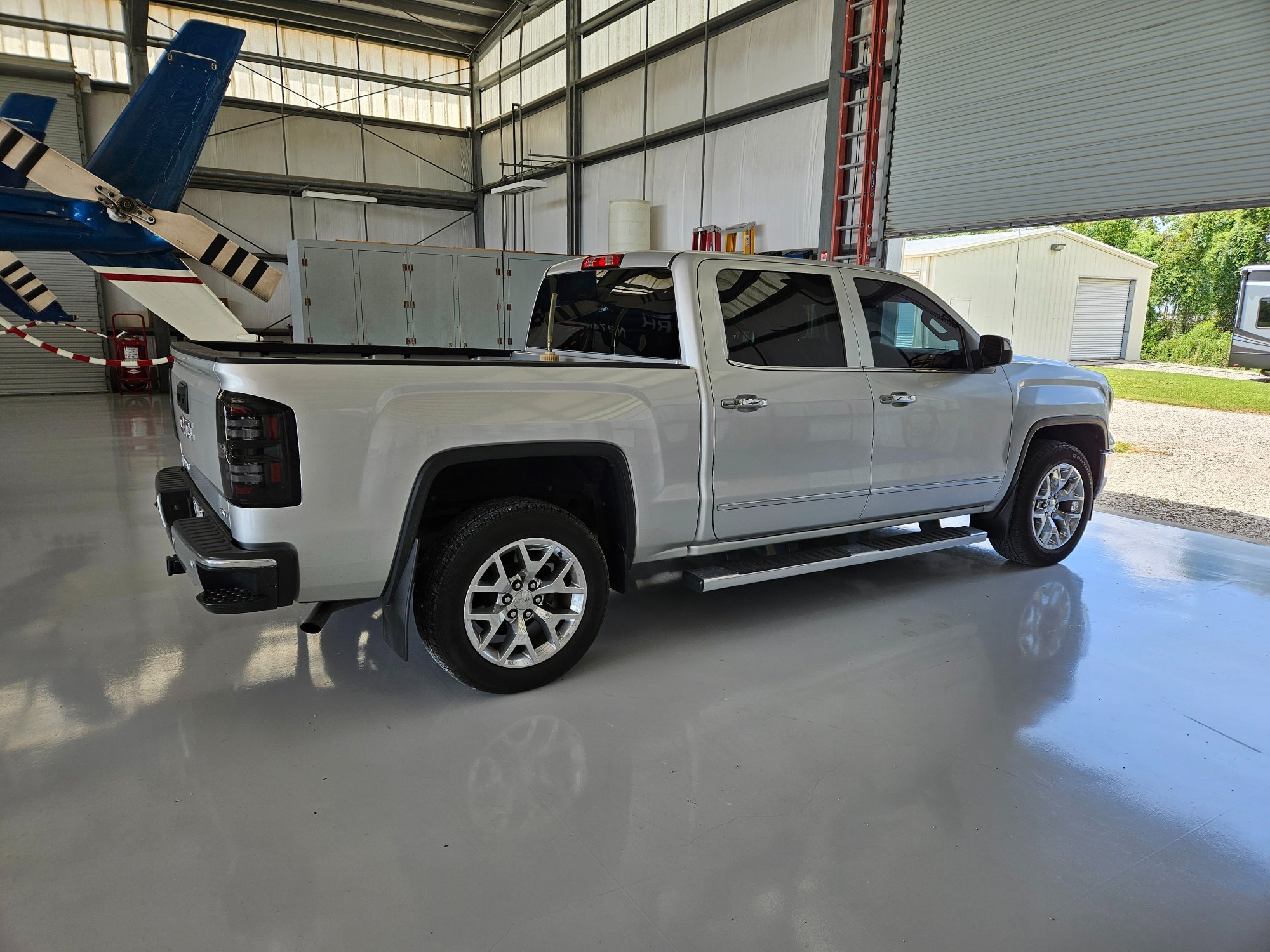
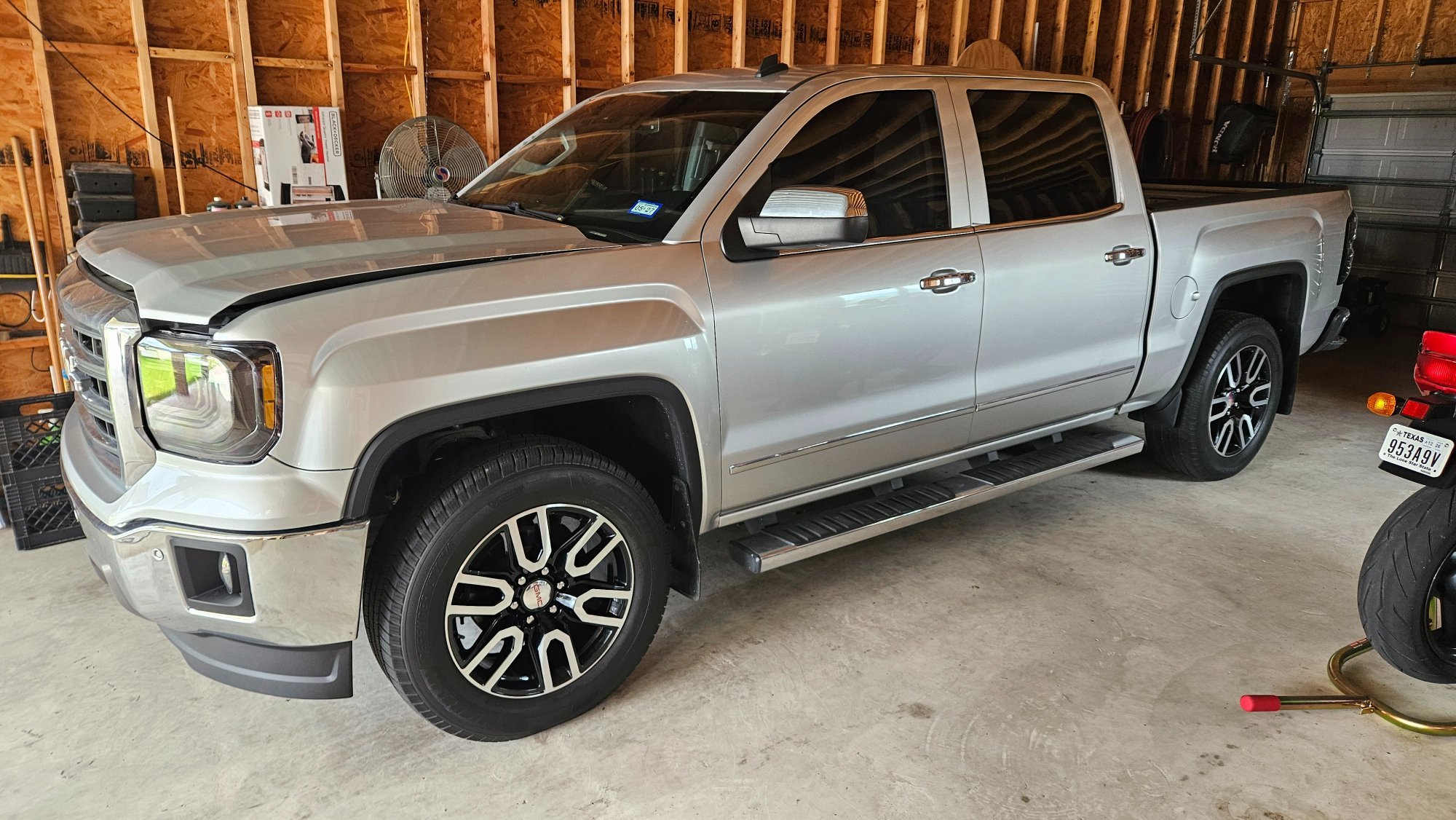
After nearly 3 years of waiting I finally got rid of the chrome wheels. They were just too much. Next are the factory running boards. Very functional and sturdy but too bulky and they stick way out. Just my opinion anyway.
 3 points
 -
New member here, very long time occasional guest. Saw this thread, thought it would be a good time to contribute someting. It is only my experience and not a claim that everyone will have the same. I bought my '20 3500 L5P new and have put 99.9% (literally) of it's current ~400k miles on it myself, with over 50% of that towing loads between 4k to 15k, and to me this truck has been nothing short of amazing. For the first 235k I had zero issues, and from there until 321k I replaced a NOx sensor, two failing glow plugs, and three of the notorious injector connectors. I believe this truck is in part, a testament to good luck, but also good care and following a decent maintenance schedule (I also keep meticulous records.) As a result, it looks as good as a well cared for 70k rig, up and down, inside and out. At some point before that 321k mile mark I began to get a little spooked about the 10L1000, especially the valve body. Word of mouth about potential issues prompted me to jump on the net to sift through all the noise and determine what all the fuss was about. I routinely take long trips, coast-to-coast and points in between, so roadside breakdowns can be '...a thousand miles from nowhere' and a bit of a challenge, and though I had no issues, my guard was up and activated. And then I stumbled across a chance to salvage some parts off a new 2025 that had been wrecked in transport. I grabbed a few wear items (alternator, pulleys, etc.) and on a whim asked what the ten speeder would cost me. It was cheap...really cheap. I knew some changes had been made in the '24+ version 10L and were supposedly not compatible, but I called service/parts at my local Chevy dealer and asked why and they didn't know. A call to a well known aftermarket transmission outfit revealed it was very likely it would be fine, but to them not 100% sure. Because it was cheap (really cheap) and I was spooked, I took the chance. Had it installed by a local shop and it worked like a champ, shifted just like the original. At it's first service at 37k, I had the shop put in a Next Gen valve body kit, which after some initial hiccups and rough shifts, smoothed out though with somewhat firmer shifting. All that said, I have a very serious concern about my newer transmission as just two weeks ago it suddenly began to exhibit a strong reluctance to engage forward or reverse. It was a bit past due anyway so I took it in for service. The reason it was sticking was due to 'glitter' in the fluid clogging the filter...not good folks, often indicates a converter giving out. We ended up going ahead with the new filter and fluid, first to see if it would move and shift, and then if so buy me a little time. It did, and I've driven it over a thousand miles and it is shifting smooth, no noises or slipping. Regardless, it looks like a third gearbox is in my future so I can resume taking long trips with some confidence. In the very short term, my curiosity will have me examining the fluid to check how much glitter has reappeared. An earlier poster had alleged, in the context of 10L100 failures, that it is another example of how we seasoned citizens somehow descend into hysteria, lose control of our senses, and react irrationally after brief encounters with the idiocy of the internet infosphere. Let me say (and I have used and abused said internet since it's infancy) there is no segment of the populace that has a corner on over-reaction to digital garbage. Just as my offering of experience in this arena is purely anecdotal and should not be considered gospel or all-encompassing, I believe it is still worthwhile information to consider, along with other relevant anecdotal experiences about things like complex transmissions, especially when balanced with other sources. So to answer the original question, yes I got high miles out of my first 10L, trouble free for 321,000. Now I really wonder how much longer it would have went. Did I 'overreact' to the internet ghouls by replacing a 'good' one with a 'bad' one? Maybe. Who knows, the thing might have taken a puke a 100 miles later. So I'll just fix it again, then move on and start thinking about all the other stuff that will eventually wear out. It still has the original brakes (they're at ~60%), original injectors/pump, turbo, water pump, etc....pretty much original everything. Knock on wood.3 points
-
// Thank you, also for your response. More information is always good. This 2013 GMC is most likely my 'forever truck"-I'm 77 and retired...and truck only has 42K on it-very clean-so I try to keep it that way. Tks again for your response- glenn3 points
-
This is a 1/2 ton thing ONLY. All HDs 2020-2026 have the two speed transfer case, with Autotrac as an option (still a 2 speed transfer case but gains Auto mode). 1/2 tons 2019-2026, regular 4x4s come with a single speed case (no 4LO!), and trucks with Z71 ordered, or all Trail Boss trucks come with the 2 speed case. 2 speed case is also an option on WT, and is also standard on High Country.3 points
-
2 points
-
Next Friday will be my 6 week point from my right knee replacement. The surgeon says it will be fine if I choose to drive after this checkup. I know I could drive now but best to do as my surgeon (and my wife) tell me. Richard compared being 62 to 72. I remember when I was in my early 60's I was experiencing slow but regular decline in my mobility. Thanks to good medical support, i continued to fight the speed and spread of this decline. During my 60's I worked on non-surgical methods and just when I turned 70, my orthopedic surgeon recommended joint replacements. In a little over a year, I had one shoulder and both knees replaced. This hasn't been a terribly fun experience, but worth the discomfort as my future mobility health trajectory has reversed. It is a treat to now be watching my mobility. balance and confidence steadily improve!2 points
-
Blazer is all put back together. Another hard-won battle. The 4.3 is not easy to work on in such an archaic and narrow chassis originally designed for an inline 4. My baffle issue is solved. I returned to the OG junkyard but was ready for a fight. The Blazer I had picked from was stacked on another vehicle so I had no idea how the heck I was going to get myself to working height to pull the front end apart. I had seen an S10 pickup on the ground so I was hoping the part would be the same, AND, I couldn't remember if the S10 still had a front end or not. But I didn't need to worry because it turned out to be my lucky day. The yard had just taken in a '98 Blazer, sitting right up front, on the ground, with room to work around it, and the front end hadn't been hit. The baffle and all the clips were factory perfect. I also scored another good handful of odds/ends and the whole shebang only cost me $20. Got everything back together and it fired right off, sounds good, runs good. I've got a little coolant drip from a lower water pump bolt (D'OH!!). I did the right thing and snugged it down a little bit, and of course that didn't fix it. Yet again, I will have to soak everything in coolant to drain it down to the water pump, remove the bolt, and attempt to re-seal it. Nothing is easy on this truck. Nothing. But now all the radiator plastics are correct, snug, and fully functional. No more rubbing on the cooling fan. It runs, drives (took it for a 30 mile drive last night), no Check Engine lights, EGR is working, no vacuum leaks. We're getting closer... The replacement wiper motor arrived yesterday. The tailgate was already disassembled and waiting, so I threw that in. It works! Sort of. Two new issues on the list. While the motor is strong enough and the gears aren't stripped, the wiper is hanging up on the bottom of the rear glass. This is the old style where the lower half folds down like a truck tailgate, and the glass swings up, and they meet in the middle when closed. The glass isn't sitting flush with the tailgate, now that I look at it. No rubber bumpers that I can see for adjusting, so I'll have to look at the hinge adjustment to see if I can correct it. Also, the washer/squirter just dumps fluid underneath the truck. The lines actually run inside on the floor so I'm guessing the tailgate is soaked at the rear trim and the line is disconnected. There's also a drain there....probably for this reason. The leaky water pump bolt was really disappointing. JUST STOP LEAKING...OMG!! Replacing the window motor and a rear door speaker are still to do, and then everything will work. I want this to feel like a "good" vehicle worthy of dropping $600 for new tires before I do. That means no leaking first. I hurt, and I'm kind of cranky, so I'll probably take a day of rest and do the water pump again tomorrow.2 points
-
We have got a lot of rain lately, we needed it. Storms/lightning took out a floor fan. Dirt roads badly rutted from run off. Power here is sketchy, whole house surge protector in the service panel and all electronics plugged into surge protectors. My biggest concern is my stereo, I've been an audio nut for years. $25 k in equipment. Stereo is on it's own special surge protector.2 points
-
I can relate. 3 years ago I did that on my Avalanche. I was sore for a week. The only maintenance I do myself now is drop and fill on the transmission on my Honda’s. It’s just too easy. My yard work with my walks in the morning will be enough now I passed 70. The contributing factor is the heat in Texas. You just have to pace yourself.2 points
-
I turned 72 today. My day began with a trip to the pharmacy to pickup meds for me and the dog and then a stop at my chiropractor before heading home. Once home I started the job of replacing the rear brake pads and one rotor on our 2018 Silverado which will probably end up taking me 3 days to finish, gotta pace myself you know. Sometimes I question myself on why I still do most of my own repairs but if I wasn't then it's more than likely I would be sitting in front of the TV all day. It seems like the list of things I need to do gets longer no matter what I accomplish. I'm not complaining but being retired was so much easier when I was 62. Peace2 points
-
Most say the oil temperature needs to above the boiling point of water to rid it of moisture and long enough to dry it. Many think that is about a hour at 212 F or more. Those people have never line dried cloths in a Midwest winter. Leave a pan of water sitting on the counter and eventually it all evaporates. So heat drives the time it takes. Water in oil under 175 F, the Nitration initiation temperature, is a minimum then for temperature and samples I've done that use Karl Fisher method say about a hour (in a healthy well tuned motor) over 175 F will dry it to under 800 ppm. Low enough to not be much of a factor. Motors with weak rings will take longer and the colder the air temperature the longer it takes. On a cold motor there is also the condensation temperature. Blowby gases that contain moisture are subject to that cold cylinder wall, like sweat on a glass of ice tea. But also subject to the Law of Partial Pressures. Wear studies by GM and the DOD indicate wear is a real issue below 85 F and a concern to 140 F but doesn't become a minimal factor until about 160 F. You know this intuitively when you see water vapor exit the exhaust pipe until the system gets above the dew point. It isn't magic, it's physics and it fascinates me. I know you didn't ask but....I over share sometimes. You keep the Camaro's high and tight.2 points
-
I'm glad you have 14,000 trouble free miles. Frankly though, that's a really low bar. A bare minimum of 80,000 trouble free miles as the norm (rare exceptions always exist) across the whole model year should be a starting point. Good maintenance habits should push these past the 100,000 mile mark with only the most minor of issues. Let's hope GM truly leveled up the quality game with these new engines and exploding engines under 50,000 miles are gone.2 points
-
This is exactly the reason our EV has consumed so much of my driving. I don't want to fire up a cold diesel or gas engine just to drive 2 miles up to the store. It's arguably terrible for an engine. If I'm not driving at least 10 miles and don't need to do truck things, the truck stays parked. Enter the EV. It's immediately heating or cooling the cabin as needed (heat pump). An engine doesn't need to warm up or be driven gently. I can tear off in it with ZERO guilt. Move the car 1/4 mile from store to store and not think "gee, I'm short-cycling a lukewarm engine". It doesn't idle in a drive-through. Doesn't idle at stop lights. (OK, neither would the diesel, if I let stop-start have its way, but I don't). Even moving it out of the garage to wash it... HA! It doesn't need to be started just to move 40 feet. I have cars that I will actually put in neutral and push (no start) in/out of the garage or shop if they absolutely HAVE to be moved. My nice Camaros.2 points
-
I took my truck in ro Lawrence Hall Chevrolet in Abilene TX and and they replaced the Reluctant (DEF) Tank under the CPO warranty so I'm back on the road again!2 points
-
Dawn also works well. I also use Simple Green.2 points
-
Installed mine today. Wasn't bad at all, took about 15-20mins or so, had to get up off the ground and get a socket or two so that took some time. But yeah, not bad.2 points
-
They are more than decent and about to go out of production I'm hearing as they are in direct competition to some of the other 'names' within the Goodyear brand. They only annoying trait they have is not uncommon to many brands. If let to sit for weeks they take a set and feel out of balance for a few miles until they return to normal. My mega-dollar Pirelli Scorpions did the same thing. Driven every day you never notice. Starfire Solarus HT is what is on the Pickup. Speed rating T. Dizzy is at the shop and I don't remember which is on that one.2 points
-
Long story short I ended up with a set of Ironman tires because of a wheel size change on our Yukon Denali - I intended for them to be temporary (no more than 12 months) until I put the tires I wanted to on it, a premium A/T. However, they've been great, quiet, no traction issues, wearing even and very cheap here. They could use a better balance job from a slight vibration at 85 or higher. But so far, I've completely abandoned my original intention to not keep them. I won't go so far as to say I'd immediately buy them again for a permanent long-term solution but if my experience continues like it has with them, I could come to that conclusion. I was also told they are made by Cooper, don't know for sure though. For your purposes on the little truck you're working with, I'd highly recommend them.2 points
-
I think the key point to longevity that may be being missed is the way the vehicle is being used. Long operating times with limited cold starts is one. Sustained speeds is another. Vehicles get better fuel mileage on highways for that reason.2 points
-
Engine failure requires radiator replacement per GM if it contains an engine oil cooler. They do NOT want them flushed. Radiator replacement is also required for the 6.2 recall if the engine fails. Here is the TSB the dealer is referring to - 22-NA-074 1..2 Its a slightly older version, but the current version of it covers all model years 2000-2026. So if enough failure debris was present, it gets an oil cooler. If that is part of the radiator, it gets a radiator. Also, same for oil cooler lines. Those get replaced. Now something like a 2.7 Turbo which uses an oil to water heat exchanger for the oil cooler, the radiator would be left alone but the oil cooler would be replaced, as well as any lines.2 points
-
Getting greedy... The AC pump has been replaced at least once per service records, and it's been recharged twice since 2018 or so, in approximately 2 year intervals between those charges. It was done at the same shop...clearly they were enjoying the revenue of recharging the system periodically versus actually tracking down and fixing the leak. I learned that the owner was 88 years old when she passed in 2023, so maybe they assumed only a temporary fix was needed anyway. The system is basically empty now, the compressor spins freely, so I'm guessing it "just needs a recharge". I vacuumed it down, and it has basically held overnight. Doesn't appear to leak under vacuum, check! So it must leak under pressure. I don't have a way to pressurize the system and pressurizing it with shop air wouldn't be great for the air dryer (which is probably toast anyway?) The dryer (accumulator? I'm not an AC expert) has a Schrader valve, but the high side has an old ball-type valve, which are notorious for leaking. It's clearly had schmutz blown out of it at one point because the line/area next to the valve is coated old black crud, which I assume is AC refrigerant residue/oil, or maybe even dirty dye. I think I'll roll the dice and replace the valves. I have a black light around here somewhere so I'll find it and shine it around the engine bay in the dark to see if there's any dye. I can't think of another way to track down the leak other than injecting some dye (if it doesn't have any) and having it charged up. We can't buy R134a off the shelf here anymore, so I'll run it up to Jiffy Lube and have them do it. I think I have a coupon. At the very least, the charge should last long enough for a year or two, according to history. I think this truck will be long gone by then. But cold AC is a selling point.2 points
-
My truck is probably one of the most babied and best maintained out of all the individual trucks discussed here. Premium fluids used, very short fluid change intervals, indoor storage, waxed regularly, low amount of towing with easy loads, minimal off-road use, and most driving done empty or with an 1800 lbs (40% of payload rating) popup Four Wheel Camper in the bed. It’s driven to full warmup every week during non-use periods. All maintenance was performed by a roughly 60 year old mechanical engineer specializing in aircraft propulsion systems that has all the correct tools. You will not find a single maintenance record on Carfax for my truck other than the first oil change done at 300 miles due to my discovery of a dented filter from the factory or shipping. I have full personal records with receipts for fluids and filters. Anyone would be lucky to buy my truck used. Someone refusing to look at my truck due to lack of Carfax records would be missing out on a great truck. I’m not selling, though. My son will get it whenever I am done with it.2 points
-
To me it honestly makes zero difference what filter you run. It's not a race engine, just a truck engine that's mostly bumming highways and it just needs a filter that filters oil. The filter used to be a 7060 and the long version was a 7045. Now it's the newer updated filter that the K2XX trucks and newer run, the 100255 I believe if we are using napa numbers. Any of those filters is going to do the job. I wouldn't overthink it, to me it makes no difference because those first filter numbers worked for 18+ years before the spec suddenly changed.2 points
-
Did the first oil change at 850 miles on my 6 week old 2026 2500HD TB 4x4 V8. Used Mobil 1 5W30 which I have been using for years in my trucks and late model GM cars, and a PF63 AC Delco filter. Took exactly 8 QT and right to the top of the dipstick. Debating if I will let the dealer do the next one. It's $60 worth of supplies and 30min of my time to DIY and probably would end up wasting a lot of time if I brought it to the dealer, not to mention the risk of them doing something stupid. I mean it happens. first longer road trip this weekend so I wanted to get this done first. Saw very minor metal flake in bottom of drain pan - nothing significant, as you would expect.2 points
-
Carfax is at best a joke and more appropriately called a scam. I've seen clean car fax cars that were wrecked and commanded a premium price because of the clean car fax, do a little digging and you find that it was likely repaired (botched) in someone's backyard and worth 1/2 what was paid. Flip side, we had a new Explorer Sport Trac way back in 2003, someone hit and messed up the rear door and running board. Not a bad crash - a fender bender in all rights except it was't the fender it was the door. I made sure that it was professionally repaired, with genuine Ford parts, no Bondo, perfect paint match etc. No one would have ever know it was hit - except for car fax. Instant 1500.00 to 2000.00 hit at time to get rid of it. A 'regular' appearance at the dealer oil change line means what exactly? What oil was put in it, how was it driven, environment, other maintenance, etc... Meanwhile, Grumpys truck, the worlds best maintained, (probably) comes with extensive documentation that never makes it past the next buyer. Absolutely nothing on Carfax... suddenly it's the worst maintained. Carfax is a cheap way for Big Data to sell a product to make lazy consumers feel better about their used car purchase. 'Buy Back Guarantee', good luck. Carfax = the automotive version of Experian, Transunion and Equifax - junk big data, that no one is responsible for and only useful for extracting money out of the weakest player in the game, the lone consumer.2 points
-
The 6L90 in the 2020+ trucks has several improvements over the 6L90 in other trucks, so the comments made about issues with previous versions may not apply. I have been totally happy with the 6L90 in my 2021 3500 HD. The L8T has plenty of torque over a wide speed range and does not need to be held in a narrow rpm range unless you are towing near the maximum weight. Even then, six gears works just fine. Personally I don’t like what i consider the excessive shifting of most ten speeds, but i have not towed with one of these trucks with a ten speed. If you are buying used I would prioritize condition, miles, maintenance records, absence of stupid unreversible modifications, and towing history as more important than ten speed versus six speed. Make sure you try the seats out before choosing a trim level. I can drive my SLT with the leather bucket seat (premium pkg) option for 8 hours and get out feeling fine. I was uncomfortable in the SLE cloth seats with fold down center seat by the end of a 20 minute test drive. My wife loves the SLT leather bucket seats, too.2 points
-
Thanks for the detailed explanation. I'm old enough to remember the old vehicles with transmissions that were either not cooled at all, or run through the bottom of the radiator. Sometimes it appears that much like my latter days in my job as a computer analyst in a fortune 500 company, insofar as our vehicles are concerned testing has moved over into the production environment. And we are the testers1 point
-
How many years have I pointed out every point in that link to the folks here and been avalanched with criticisms and outright hostilities at times? I ran counter to even the great CUSTOMBOSS and Lake Speed Jr and the half dozen experts on YouTube and in the final.....GM, Physics (Stribeck) backs that Grumpy old Bear. Honestly, I never said a thing engineering hadn't studied silly and laid in concrete during WWII. But I'm old, the information is old and yet, the Laws of Physics are eternal. Okay there is one exception. I vehemently disagree with their use of the word 'tolerances' when what it meant is "clearance". The clearance is the distance between two objects. The tolerance is the degree of acceptable variation permitted in that clearance. I.E., piston to bore clearance is 0.004" with a tolerance of +/- .0002" so the clearance is in specification if it lies between 0.0038" and 0.0042". Cutting that 'tolerance in half has ZERO impact on lubrication requirements. Makes for more difficulty in manufacturing. But a tighter clearance 'MAY'. Depends on finish. Anyway.... It's one of those statements made by people to make themselves look smarter than they are to convince people who are as un-enlighten as they seem to manipulate their behaviors. But hey, the blind leading the blind puts them both in the pit.1 point
-
Rise more slowly? Debatable. It would run slightly cooler, yes if anything after adding the thermostat delete kit from PPE. PPE makes a larger front aux cooler which they "claim" will lower temps 45 degrees but I have not used it. IMO, especially in cold states, I would not want to mess with the first cooler, the oil to water one. Cold states, you want heat in the transmission for it to shift properly, and you don't want moisture in the ATF. Ideal temps for automatic transmissions to do their job the best is 175-220F. Hotter than 220F you start heading towards fluid degradation and shortened fluid life/service intervals. 240F can start varnishing things like the fluid, clutches, etc.1 point
-
I do most of my yard work before 10. My summer walks are usually at Kroger’s. Inside and yes I’ll do light shopping. Usually by noon you don’t want to be outside from June to September. The mail box is a good walk. I’ll walk there about 3 times before the mail comes. My house has two floors if I feel I need to move I’ll do the stairs. I’ll walk down the lane to our rent house with clippers trimming branches along the driveway. There’s always something to do.1 point
-
Good for you and her! Lots of brushing and grooming to be done1 point
-
I thought I was building a HD 3500 srw, maybe I was lost.1 point
-
It did on mine. Completed 3 jobs front and back with no issues whatsoever. First time I put it in service mode without my scan tool, did fine. Next 2 were with the aid of my scan tool to put it in service mode, same result. So I would definitely say it doesn’t hurt at all being that most are equipped with electronic braking/calipers.1 point
-
We appreciate you bringing your concerns with your Silverado to our attention. As safety is our top priority, please fill out the form at https://s.chevy.com/support-request with all pertinent details to ensure your concerns are routed properly and we can assist further.1 point
-
I'll bet your truck lost the bearings on a roller on 1 of the lifters, and now is wiping out a cam lobe.1 point
-
We'd like to get your USB ports up and running again. For further assistance, please fill out the form at https://s.chevy.com/support-request with all pertinent details including your username.1 point
-
2013 5.3 still to this day calls for the PF48 filter. Which as a 15psi bypass pressure. There is a TSB, 17-NA-157 that talks about the PF-63 and PF-64 filters which have a higher bypass rating of 22psi. TSB HERE - temp.xml "Beginning in 2012, the oil pumps began to regulate main gallery feedback instead of pump out pressure. This means that the oil pump now does not begin to regulate until pressure is built up to the main gallery. This change reduces the amount of time it takes to provide oil to the engine bearing and lifters during extreme cold start conditions. Main gallery feedback oil pump control systems are present on the following engine families which use Spin-on oil filters: Small Gas Engine (SGE), Large Gas Engine (LGE), High Feature (HFV6) Gen2 and Small Block Gen5 gasoline engines. These engines with the main gallery feedback oil pump control systems are factory built with an ACDelco® oil filters" It also calls out what engines use those filters. The gen 4 small blocks were not on that list (LMG, LC9, L9H, L92, L94, L20, L96). Gen 5 small blocks use the higher pressure filter. That all said... Your 7045 Napa filter is the PF63 equivalent, with 22psi bypass. You are already using the higher bypass pressure filter. You CAN keep using it, you don't technically have to use it though.1 point
-
Sunroof on Dizzy was like that. Fix it, break, fix it again, break.. Fix it again RTV it shut. Plastic gears. Love yards like that and they are few these days. Going to the mall before there were malls.1 point
-
Yes back when all the stuff started in Iran. Had a small price increase, then another one. Supposedly temporary. But who really knows for sure as long as there is turmoil in the middle east.1 point
-
Thrust bearing is a very small window. But nice try. Turbo oil filter? Haven't seen any failures. Change your oil more frequently. Use a better oil than the factory oil.1 point
-
Facebook groups hate VSE, poor customer service; their responses to criticisms are pretty poor for a reputable company. I'm not a customer, haven't bought anything from them, but how they handle themselves on social media is a definite "No" for me.1 point
-
Had brakes put on a 1999 Sierra once at local small town GMC shop. The new pads were squealing a lot so I went back and complained. Found out parts guy (slip of the tongue) they installed local parts store junk. Never told me that and when I checked my bill it listed GM part numbers and what I assumed was GM prices. I think they realized it was a problem because they had order the GM rotors and pads and never changed me a dime. New brakes did no squeal. btw-That dealer is out of business today.1 point
-
I think you'll be happier with the 10spd. Real world issues are actually pretty rare dispite the hype Nate puts out.1 point
-
I changed the fluid in the rear axle of my 2021 gas 3500 hd last Fall at 15k miles. I used Amsoil Severe Gear 75w-90 in the squeeze packs. GM specifies slightly different oil viscosity ratings for the front and rear differentials for fuel mileage reasons, but 75w-90 is acceptable for both. Amsoil wasn’t any more expensive than other products on the store shelves. I did the short term membership deal and ordered 6 quarts to get free shipping. I don’t plan to change the front fluid until 30k. I removed the cover and wiped the inside of the cover and the differential housing as well as I could. It took 3.5 quarts to fill it to 0.4 inches below the bottom of the fill port. No additive is needed with the proper fluid type. I have 5000 miles since the change including some off pavement driving and the G80 locker behaves normally.1 point
-
I would like to see them bring back the E-85 option.1 point







.thumb.jpg.86f02fd2fd105ce655092cd32bf47f16.jpg)










This leaderboard is set to New York/GMT-04:00