


asilverblazer
-
Posts
4,830 -
Joined
-
Last visited
-
Days Won
10
Content Type
Profiles
Forums
Gallery
Events
Articles
RPO
Store
Blogs
Everything posted by asilverblazer
-
Abnormally rough ride
asilverblazer replied to reb0957's topic in Troubleshooting, Warranty & Recalls
I don't know, but probably some. I might be getting more used to my truck too - it doesn't seem as harsh at it used to. The Bilstein 5100s are almost a year old now, maybe they are breaking in - though I never noticed this on any of my other trucks... Not sure if I posted this earlier either but I'm now at 60 PSI all way around unloaded. -
Check the wiring to the sensors.
-
Suspension Maxx, there I said it... I was looking in to this too recently and came to the same conclusion as you did. I hadn't decided on the shock to use for the stabilizer because I want it to match my other shocks... Bilstein.
-
I get it... Makes me wonder what would be worse, build a vehicle you can't sell or pay the fines. We really need(ed) hybrids to bridge the transition from ICE to EV. I recall GMs reasoning - why spend effort on the baby step (hybrids), if the end game is EVs, go there. Except that - the public isn't ready/buying the EVs, so you alienate all your customers in the meantime. X years down the road when EVs ARE the norm you have to win back all your customers you alienated years ago - if you survive that long. Now as we are beginning to see - the focus on the EV's was too premature, the sales aren't there and hopefully GM can backtrack fast enough. Ironically, Ram or Stellantis (on the bigger scale) that didn't have the resources to develop the EVs is in a better position for not doing it. Same for Toyota except their delay to EVs was intentional. GMs biggest EV problem was focusing on the Hummer, Silverado and Sierra first. To even suggest towing with an EV is a disaster considering that the recharge time is so long and the impact it has on range. Why would I buy an EV truck if I can't tow with it more than 100-150 miles - even if I only do it once a year - thats a major problem that everyone picked up on and highlighted. The skeptics concerns are now justified and turned off EVs. As a daily driver the trucks (EVs) are fine. The EV Blazer, Equinox, etc... should have come first, the towing range issue goes away and the skeptics could become buyers if not proponents.
-
The 'regular' 5.3 and 6.2 are getting left behind. The 5.3 especially and the 6.2 is just competitive. The premium engine (6.2) in GM truck lineup isn't any better than the competitions bread and butter engines. Not really talking about the 2.7 turbo four (I think of this as an experiment still) or the inline diesel. Seems like the new Tundra only has the one engine option that goes in every trim level and is for talking points equivalent to GM's premium 6.2. Ford and Ram both have an engine that GM can't even get close too. Crash test ratings aren't class leading either. My crystal ball says the future isn't looking bright for the traditional GM truck line. It seems their all in bet on electric is going to come back to haunt them. They have obviously been directing R&D funds to the electrics. I expect that the traditional truck line future is looking a lot like the Express/Savana van line; just enough to stay some what relevant and make use of other part bin updated resources. The only exception is that there was reporting of investment and updates to the small block engines coming...
-
Abnormally rough ride
asilverblazer replied to reb0957's topic in Troubleshooting, Warranty & Recalls
Mine has a sun roof... -
Cv joint noise with bilstein 5100 adjustable shocks
asilverblazer replied to Alabama's topic in Modifications, Wheels & Tires
I wonder if it went away because of the return to factory height or by inadvertently fixing something from the original installation (sticking, bound up, improperly torqued, mis aligned, etc.). -
Portable Air Compressor
asilverblazer replied to marpel's topic in 2020-2026 Silverado HD & Sierra HD
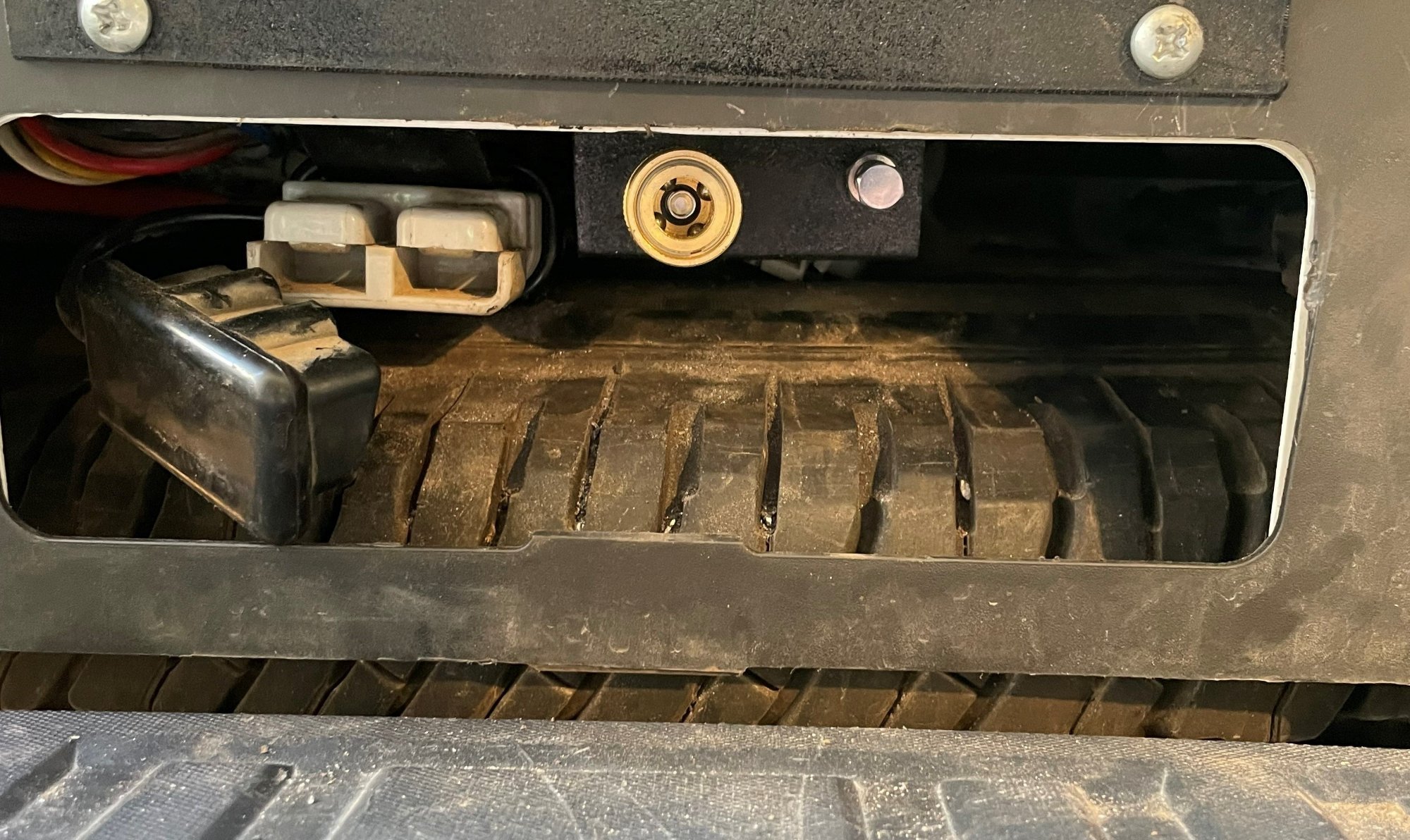
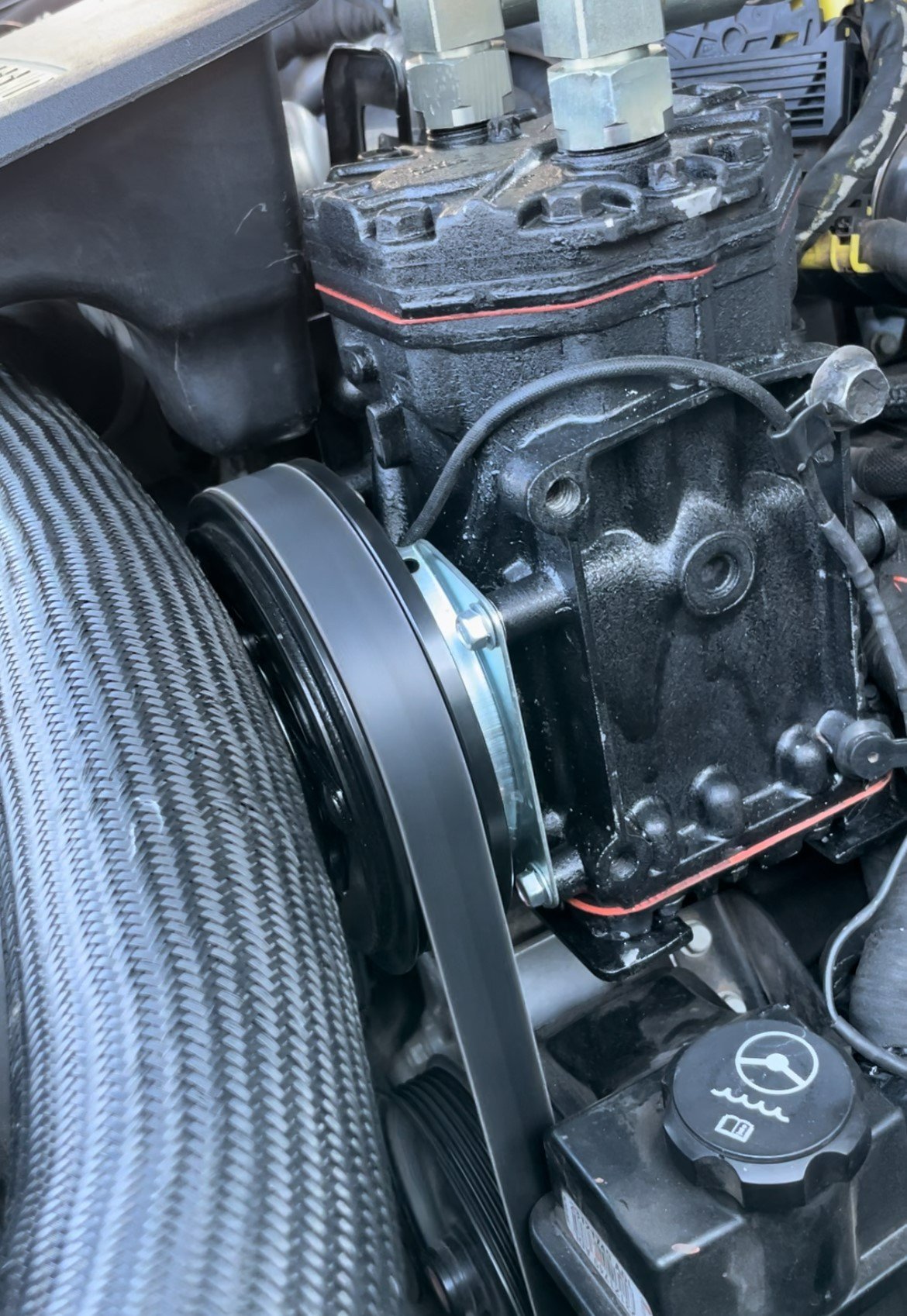
I installed a York 210 junk yard compressor where the 2nd alternator would go on my truck. Uses a serpentine compressor clutch that is powered from the pressure switch with a custom bracket and longer belt. Mounted a tank under the bed in front of the passenger rear tire. Quick connects at the front and rear bumpers. Manifold on the firewall for pressure switch, safety blow off. Line in the cab to a gauge, with a master on off switch. Pressure switch is set to 100-120 PSI, can't remember exactly. Easily inflates tires on the truck from 60 to 80 PSI, in way less than 3 minutes. -
Abnormally rough ride
asilverblazer replied to reb0957's topic in Troubleshooting, Warranty & Recalls
I'm 6'-0", but I do like to sit high... -
the new competitor, 2025 ram charger
asilverblazer replied to the wanderer's topic in 2019-2026 Silverado 1500 & Sierra 1500
www.gm-trucks.com Can't imagine why? Perhaps you'd be more welcome at www.truckforums.com -
Arm Indentations on Top of Door Panel
asilverblazer replied to MrLeadFoot's topic in 2019-2026 Silverado 1500 & Sierra 1500
I don't put my elbow there as much as I would like to... I've had a slightly different issue. On my 2015 Sierra that I bought new, my wifes 2016 Yukon Denali we bought used and on my used 2018 Silverado, they all have had the finish on the top of the door panel where my elbow would go become compromised. It stays kind of sticky all the time, just in the one little area. I would have thought I got something on the door panel, but it has happened to three different trucks. I also don't wear any products or lotions on my arm either that would cause it. Also have the water spotting issue on them too. In addition to sticky gummy steering wheel control buttons... -
Aftermarket torsion keys, ride question
asilverblazer replied to reb0957's topic in Modifications & Accessories
Its a tricky task to describe it with words that aren't ambiguous... Adjusting the torsion bars whether by turning the adjuster bolts or swapping for new keys or and combination of the two does not change the "torsional stiffness" of the bars (see last two paragraphs). In theory this means the ride does not get stiffer or softer by doing the same. What it does change is the location of the same "torsional stiffness". The difference in ride quality is mostly due to less or no down travel in the suspension from the upper A-Arms hitting the droop stops. Torsion keys only re-index the bars so that the adjuster bolts can rotate the bars more. The point is that no amount of 'keys' or 'bolt cranking' will increase the spring rate of the torsion bar. Similarly, strut spacers do not increase the spring rate of a coil spring either. (Exception: you add so much that the torsion bar or spring is extended so far that it is pushing against the droop stops. In this case it would be the same as pre-loading the springs.) The torsion bar in action is not being bent along its length, it is being twisted where one end is held fixed, the 'key' end, and the other is being turned. As the lower control arm travels in an arc it twists the bar (only a few degrees) against the fixed end. Another fun factoid... a coil spring and torsion bar create the 'springiness' in the same fashion, by a steel rod resisting being twisted. A coil spring is in effect a torsion bar wound into a coil, as it compresses it is being twisted, just like a torsion bar. -
best way to pay off credit card debt
asilverblazer replied to steveo2155's topic in The Off-Topic Bar
Well... I wonder if he got it paid off? -
Excessive Oil Consumption Problem
asilverblazer replied to 2020AT4's topic in 2019-2026 Silverado 1500 & Sierra 1500
Your 'best' line is that it is a new symptom of your engine. It didn't use this amount earlier. It probably still is an 'acceptable' amount of usage to fall within acceptable operating parameters to avoid having to warranty it. Grumpy explained it all pretty well. Your options aren't great, fight GM, sell it, fix it, add a quart between oil changes. For what its worth, EVERY vehicle I've ever done an oil change on has had less oil come out in the drain pan than what gets dumped back in. Usually about a quart. Regardless of make, age, mileage, use, etc. Not calling anyone out, arguing/fighting anyone, but if you tell me yours doesn't use a drop, my first response is BS until I see you measure out the drain pan. -
the new competitor, 2025 ram charger
asilverblazer replied to the wanderer's topic in 2019-2026 Silverado 1500 & Sierra 1500
I think with our technology diesel (settle for gas) electric is the way to go (just like modern locomotives), especially if you plan to tow anything. 500-750 miles towing "range" per day. The recharge time to do that in a full electric makes it unattainable. Using the diesel generator to provide continual electricity makes the most sense. You can take advantage of all the EV benefits (plug in grid recharging, regenerative braking, bi-directional charging, electric only driving on short trips) without the major downside of being down for hours waiting to recharge. The ICE generator can supply heat as a by product. It would only run at a fixed RPM regardless of any external factors so it can be tuned to be extremely efficient. The steady stream of electricity recharging the batteries during coasting braking and other low power demands. It could even run when the truck isn't driving for use as a stand by generator. The ICE generator doesn't need to be a 450 HP, 1000 LB FT engine either... -
Stick something back on to cover it up, probably cheapest and easiest. That low, you may be able to do some touch up and it now show too bad - and if it does - stick something on over it to cover it up.
-
No.
-
Try a rotate and balance first, I had what I swore was a wheel bearing going bad... a rotate and balance fixed it.
-
Make sure the engine and battery are well grounded. Quick check: When it won't start use jumper cables (one) connected to the engine and negative battery terminal.
-
What kind of acceleration? What kind of pull? What kind of conditions? Hard acceleration might cause torque steer. Tire pressure should be the same regardless. Typically, you won't notice a significant amount of pull one way or the other. A "hard" pull to the left may indicate that the drivers side isn't getting power, this would probably manifest with other symptoms too. Since its only noticeable when 4WD is engaged I'm inclined to say it normal torque steer.
-
WOW... So much has been done most shops (as you've found) aren't going to want to touch this mess (no offense). Without access to a good scan-tool and tuner that knows what they are looking at and what to adjust you're going to have to check thing manually. Does the truck still start, run, drive? The original tuner that removed the AFM, may have adjusted other things so that the tuned PCM doesn't know that something isn't right (thus no codes). Does the new PCM detect any codes? I would start with putting critical stuff back as close to factory as possible, particularly PCM (you have a tuned factory, and a replacement with who knows what programmed in it - my confidence in an aftermarket PCM being correctly programmed is zero), and install a set of AC-Delco up stream O2 sensors. You've already noticed that despite everything you've done the only thing to make any difference was O2 sensors... start there. Presuming there are still no codes... a vacuum gauge, fuel pressure gauge, timing light, and compression check are in order. Interested why you chose to put a new engine in it, what indication (other than miss fire) was there that it was bad?
-
Engine dies out
asilverblazer replied to ForrestMelissa's topic in 1999-2013 Silverado 1500 & Sierra 1500
Sounds like it runs in 'open loop', but when it switches over to 'closed loop' where it is reading all the sensors to determine best operating parameters it stalls. This indicates one of two things. 1. A sensor(s) is reading incorrectly and providing bad information to the PCM, which in turn makes incorrect adjustments and stalls the engine. 2. The PCM is getting good information from the sensor(s), components are not properly executing adjustments. Best option is to find a good mechanic that can read all the operating parameters and results based on PCM adjustments. I would not expect a replacement PCM to be plug and play, and recommend returning to the original until a thorough diagnosis points to an actual PCM failure. Second best, check for any stored codes and report back. Third, start physical trouble shooting. Once engine enters closed loop, try manually spraying fuel into the intake stream after the MAF sensor. Engine may try to continue running (probably poorly) pointing to a fueling issue. Confirm spark at the plugs. Confirm action of the throttle body and clean as needed. Since the engine runs in open loop, I'm ruling out any significant mechanical issues, but to be sure a compression check wouldn't be a bad idea. Other ideas to play with, throw a timing light on it, a vacuum gauge, and fuel pressure gauge. -
Tire PSI Question
asilverblazer replied to drewensley's topic in 2019-2026 Silverado 1500 & Sierra 1500
The door sticker indicates the "original equipment tires" and has a specified minimum PSI to carry the vehicles maximum load capacity. You'll note that the sticker does not indicate a brand or model of tire. Interestingly, the only deviation from the specified PSI addressed in the owners manual is for sustained high speed driving over 100 mph, where the PSI should be raised by 3 over cold. The tire has a maximum PSI for the tire. -
Air bag inflation valve location
asilverblazer replied to ItsDooomz's topic in 2014-2018 Silverado 1500 & Sierra 1500
My set up...
-
Abnormally rough ride
asilverblazer replied to reb0957's topic in Troubleshooting, Warranty & Recalls
Not really comparing, just offering a data point. My 3500 truck, with springs similar to the pictured ones, with air bags, tires at 60 PSI, rides VERY stiff. More than others? Don't know. Am I going to do anything about it? Not sure. If I DO do anything, I would start by taking the main spring pack apart and take the bottom overload out. This isn't my thread so I'm only offering my insights for others to opine over.



-
Forum Statistics
250.5k
Total Topics2.7m
Total Posts -
Member Statistics
342,873
Total Members8,960
Most Online
-
Who's Online 2 Members, 0 Anonymous, 559 Guests (See full list)