

HondaHawkGT
-
Posts
1,546 -
Joined
-
Last visited
-
Days Won
2
Content Type
Profiles
Forums
Gallery
Events
Articles
RPO
Store
Blogs
Everything posted by HondaHawkGT
-
Yeah same thing with the new 2019 Ram's. Lots of water leaks and other issues.
-
It's good that it did in a way. They probably would have tried to tell the engine is fine and sent you on your way other wise. It's annoying that they use these crimped external oil lines. Toyota and GM need to find an oil line supplier that doesn't suck at crimping hoses.
-
 Neither can Toyota. And supposedly they're the best engineered vehicle out there. Or so I'm told. https://sites.google.com/site/toyotav6oillinescandal/
 -
Think of it this way: The 2019 Camaro's 6.2 specs 0W40. There's nothing different about that engine compared to the truck engines aside from a few minor things that have nothing to do with the internals of the engine. I've ran 5W30 in the past without a problem. There's nothing wrong with 0W20. Gone Fishing has tons of used oil analysis with 0W20 and they looked great. It won't be any different for a DFM engine.
-
So this kit is only available on an LT trim if it has the 2.7T? wtf?

-
2.7 Turbo 4 Fan Club
HondaHawkGT replied to ShamrockShooter's topic in 2019-2026 Silverado 1500 & Sierra 1500
Car and Driver's result seems to be the outlier. TFL isn't the only reviewer that's gotten better than EPA results with a 2.7 Turbo Silverado so far. -
2019 TRAIL BOSS PROBLEMS
HondaHawkGT replied to BLUE TRAIL BOSS's topic in 2019-2026 Silverado 1500 & Sierra 1500
First year of production of a totally new truck riding on a totally new platform. Issues like this come with the territory. It's the same thing affecting Ram right now with the 2019 1500's. New truck platform, first major design change in roughly a decade. Lots and lots of issues. Ford changed all the engines in 2018 plus replaced the 6-speed with a 10-speed. Lot of engine problems, lots of transmission problems. -
What did you pay for your truck?
HondaHawkGT replied to fishingtruck's topic in 2019-2026 Silverado 1500 & Sierra 1500
Good question. I would be concerned about agreeing on a price if the truck was delivered and there were issues with it that you found to be a problem but the dealer didn't agree were a problem. You can always walk away from a vehicle you ordered. -
Ford's have typically been taller because the cab is mounted slightly higher relative to the frame to give it a flatter floor in the cab. The cab also has slightly more headroom vs the GM k2's.
-
2019 5.3L ECM Tuning
HondaHawkGT replied to yankeedoodle86's topic in Engines & Drivetrain (V8, Duramax, TurboMax)
https://www.corvetteforum.com/forums/c7-zr1-discussion/4235521-zr1-e99-pcm-unlocked-what-is-tuning-worth-to-you.html -
Haha yeah the new Ram 1500's have had great quality control so far: https://5thgenrams.com/community/threads/water-leaking-in-cab.4877/ "I had a leak in my rear window. took 5 weeks to get a new window replaced. Factory window was missing approx. 8 inches of sealant." "What's the build date of your truck? I've seen the same issue in reading a few threads, nearly identical 'missing x inches of sealant around the rear window'." https://5thgenrams.com/community/threads/how-prevalent-are-these-problems.1804/#post-25811 "My leak issues are in the rear and front and involve volumes of of water that totally saturate large areas of carpet. It kinda like buying a flood damaged vehicle. I am embarrassed to show anyone my $60k truck. Its a great truck otherwise but there is no excuse for these issues.....maybe rushed to market TOO soon. I sent FCA my first "Lemon Law" certified letter today requesting satisfaction within 30 days or by-back. "
-
L83 Engine Buzzing with Tick
HondaHawkGT replied to 300 Blackout's topic in Troubleshooting & Recalls
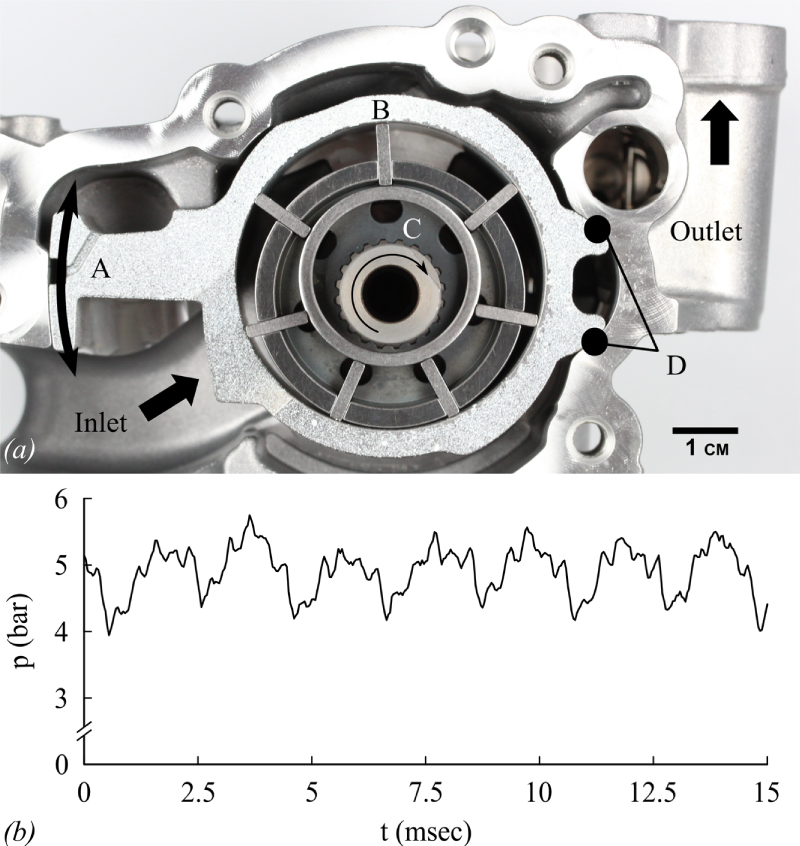
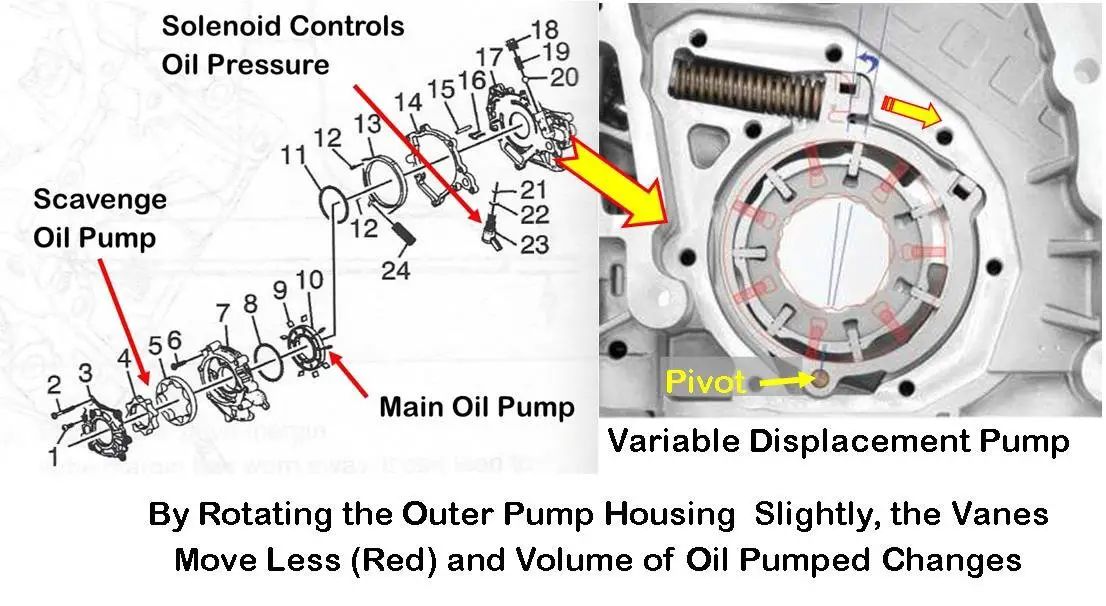
The oil pump on these engines is naturally more noisy than a gerotor oil pump. Our engines use a vane-style oil pump and the earlier version of the pump made noise no matter what. Probably due to the spacing between vanes, which can create pulsation noises (harmonics) that are heard but doesn't mean there's anything wrong it. It's similar to the noise you'll typically hear from a big hydraulic pump. It's up to you though. I don't blame you for wanting to do something about it. It's hard to judge what's normal and what's not. My pump is noisy but the noise is similar to what it was like when it was new.
-
Should GM Maintain the Column Shifter on Next Gen?
HondaHawkGT replied to mookdoc6's topic in Future GM News & Rumors
The console shifter in the 15-present Colorado looks like a leftover part from a 2005 Malibu. -
Your dad should consider himself lucky because the Tundra has several very common issues that costs far more than replacing a couple injectors. Just a basic "Air Injection Pump" for a Tundra typically costs $750-1000. The pump itself at one time was costing around $400, wasnt covered outside of the bumper to bumper warranty, and they failed often some guys have had to replace them 2 or 3 times (cold weather regions). Starters on 2nd gens are extremely common problems, usually fail at 60-80k miles, and it's usually an 8 hour job to change it. The rear axles are a major problem on these trucks. The Hino axles they use leave a lot to be desired in terms of durability and quality control. Many earlier 2nd gen Tundras had wheel bearing failures in the first 40k miles in some model years. Even now there are a surprising number of pinion bearing failures and even problems with the carrier being made of steel that was too soft, requiring a lot of money to totally rebuild. Their 2-piece driveshaft design also sucks.
-
Are there any heat shields rubbing? I seem to remember some kind of bulletin for a shield by the starter or bellhousing that could rub and make a noise.
-
2019 Transmission and Axle Ratios
HondaHawkGT replied to HondaHawkGT's topic in 2019-2026 Silverado 1500 & Sierra 1500
That wasn't the way its worked in my experience. -
Ford and Ram aren't having any more luck with stuff like engines, transmissions, or overall build quality. GM, Ford, and Ram are all changing platforms and major components often enough that all 3 have issues to address. Ford's 2.7 Ecoboost had a few major design issues and instead of fixing them, they just moved on to the 2nd gen 2.7 where they changed a ton of stuff and added a lot of new tech. None of the changes were directly targeted to fix 1st gen issues. Ram's 8-speed trans was redesigned for 2019 and as a result of those changes, the trans now has all kinds of new issues that FCA needs to fix. You're experiencing the downside of buying the first model year of a new truck that's based on a new platform, with a new fuel system and a 10-speed transmission that GM is using in a truck for the first time. Some guys will have problems.
-
Anyone lost brakes besides me.
HondaHawkGT replied to midriv's topic in Troubleshooting, Warranty & Recalls
It's a very new braking system developed by ZF. They have a lot of very smart engineers that I'm sure will fix these early problems. Have you reported the problem to the dealer or GM yet? -
2019 Transmission and Axle Ratios
HondaHawkGT replied to HondaHawkGT's topic in 2019-2026 Silverado 1500 & Sierra 1500
Sure, if you ORDER it. It's very rare to find one with 3.73's on the dealer's lot equipped the way you want it. And some of their engine options will not allow you to combine it with certain gear ratios including 3.73's. The point being, sure you can get factory 3.73's, but in most cases you won't be getting anywhere near as much in incentives for a truck you order. So where you could get a whopping $15k off an XLT F-150 with whatever gear ratio it came with on a dealer lot, you might end up losing thousands in incentives just by custom ordering that XLT with 3.73's in place of the typical 3.31's or 3.55's. -
Service Brake Assist - 148 miles into driving
HondaHawkGT replied to Sfahey87's topic in Troubleshooting, Warranty & Recalls
This is the first year GM is using ZF's new Integrated Brake Control unit. The brakes in your truck aren't boosted by a mechanical vacuum pump like the previous K2 trucks were. There will be a bug or two related to the new ZF IBC setup I'm sure. It sucks man. Automakers are rushing a lot of new tech into their vehicles every year and we all pay the price for wanting the latest and greatest stuff. https://www.wardsauto.com/technology/gm-plans-vacuum-free-braking-next-gen-trucks-sources-say -
Silverado Rough Ride
HondaHawkGT replied to cbpagent72's topic in 2019-2026 Silverado 1500 & Sierra 1500
GM's full-size trucks tend to have a firm ride. The 2019 ride slightly better than the previous K2 trucks, but they still have a suspension tuning meant to give the truck enough capability. Generally speaker the softer the ride, the less payload/towing capacity. Z71's will have a firmer, rougher ride due to the twin-tube shocks. -
I use a set of Channellock 209's for the filters. Best money I ever spent. Good for plumbing jobs too.
-
Haha these oil consumption limits for warranty coverage are rarely arbitrary limits. More often than not, they're set based on complaints and projected warranty costs. Toyota and Subaru dropped their acceptable oil consumption limit in order to avoid warranty work on many of their newer engines (Toyota 2AZ-FE and Subaru EZ36D and 4 cylinder FB engine line). They issue TSB's and Limited-Service Campaigns with very narrow time windows (less than 1 year) for owners to learn about and have their vehicles checked for consumption. If they missed the deadline (less than 1 year) or the car didn't develop the issue before the deadline, they're stuck dealing with the problem on their own. Who would think it's normal for a company like Toyota to tell customers it's normal for their 2-3 year old Camry to burn anywhere near 1 quart every 1,200 miles? Yet it's a fairly common issue, especially in Toyota vehicles with the 2AZ-FE. http://www.toyotaproblems.com/trends/excessive-oil-consumption/ https://www.carcomplaints.com/Toyota/Camry/2007/engine/excessive_oil_consumption.shtml "Subaru considers one quart burned for every 1,000–1,200 miles to be within “normal specifications.” That means if you follow their recommended changing schedule, which is usually 5,000 miles, you’ll probably need to top of your oil reservoir 4 times or so." - http://www.subarucomplaints.com/trends/oil-consumption/ https://www.carcomplaints.com/news/2014/subaru-class-action-lawsuit-excessive-oil-consumption.shtml "The majority of complaints say that they were told from Honda and dealership mechanics that it was normal for a powertrain to burn a quart of oil every 1,000 miles. The class-action suit claims Honda refused to honor its warranties and instead told people to check their oil every time they stop for gas." http://www.hondaproblems.com/trends/excessive-oil-consumption/ https://www.carcomplaints.com/Honda/Accord/2013/engine/excessive_oil_consumption.shtml Ford added the 500 miles per quart limit to the Mustang GT350 supplemental owners manual starting in 2016 in response to the number of 2015 GT350 owners complaining of massive oil consumption. Many had engines blow up because they didn't expect their brand new hand-built 5.2 Voodoo to burn 2 quarts in 1,000 miles. Car and Driver's long term GT350 burned 8.5 quarts of oil over the course of 11,800 miles - most of which were freeway miles according to them. "Since our last update, the 5.2-liter Voodoo V-8 has developed a thirst for 5W-50 synthetic oil. Over the past 11,800 miles, the high-revving engine has consumed 8.5 quarts. There are no leaks, so we can only assume that it’s exiting the quad tailpipes. If this were the ’80s, this might be acceptable, but it’s 2018 and oil depletion has become a rarity. Ford has released a supplement to the owner’s manual regarding oil consumption, stating that the engine could drink up to one quart every 500 miles under “extended time at high engine speeds, high loads, engine braking, hard cornering maneuvers, and track use.” Our car, however—excepting the odd mountain run and back-road blast, of course—has spent most of its life on freeways." https://www.caranddriver.com/reviews/2017-ford-mustang-shelby-gt350-long-term-test-update-2-review I'm just putting this discussion in the right context. 1 quart of oil every 2,000 miles is very low compared to what many manufacturers consider the "normal" level of oil consumption. Most of the GM Gen V V8's don't burn anywhere near 1qt per 2,000 miles. Some oil loss is normal simply due to the fact that modern engine oils have viscosity modifiers that vaporize under normal conditions inside the engine. A typical 0W-20 has some of the highest volatility ratings (NOACK Volatility aka ASTM D5800). The NOACK test heats oil to 250C and measures how much oil by volume is lost due to evaporation. Most 0W20's are in the range of 10-13%. In a Gen V 5.3 or 6.2, I wouldn't be surprised if you lose close to 1/2 quart due to vaporization in the summer, especially if you do any towing or aggressive driving. It's still a very minor amount of oil consumption.
-
LMAO Toyota and Subaru says it's normal for their vehicles to burn up to 1 quart every 1,200 miles. Honda has a similarly low standard for oil consumption. The new Mustang GT350's 5.2 Voodoo will "normally" burn up to 1 quart every 500 miles and that engine runs on 5W50. GM holds a fairly high standard by comparison. Especially if you take into account that most of their engines run on 0W20, which will lose 10 to 13% of its volume due to vaporization.
-
Frame issues? Anyone else hearing this rumor?
HondaHawkGT replied to Zane's topic in 2019-2026 Silverado 1500 & Sierra 1500
Yep I was about the mention this. I can always tell when a 4th gen has been lifted wrong. It can be ugly if the guy doesn't notice what he's done and the door binds against the fender.




-
Forum Statistics
250.4k
Total Topics2.7m
Total Posts -
Member Statistics
342,830
Total Members8,960
Most Online
-
Who's Online 9 Members, 0 Anonymous, 442 Guests (See full list)