Jump to content

Tranmission Fluid Change On A 1500


gmyeah

Recommended Posts

Posted

So, I've done some homework, but not sure I like the result. There seems to be a few camps out there. One says don't worry about it, your truck's tranny is good until 100K, and the other camp says change it at 50K and there won't be that buildup that might break free and cause problems after the tranny fluid is changed. Any thoughts on this? I've worked my truck, but I don't want to make it much worse or short lived.


Also, I got some quotes on the tranny fluid change. The cheapest I could find was $140. And that didn't drop the pan or change the filter. The dealer wants $190.....$350 if I drop the pan and get the full service (filter, gasket, etc.). I did some more homework and a reptubale tranmission shop will do it all for $250.

I've heard bad things about the whole "flush only" service too....that I would be getting for $140. What's best to do? Should I drop the pan?


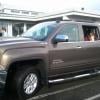
Keep in mind....it's a 2008 z71 4x4 ext cab 1500....for reference.

Posted

Those prices are high for a full service. Why not do it yourself and save the $$$?


I would do it at 50k. 100k is way to long. I have tested several transmissions with used oil analysis and they showed a need to be changed out at the 50k mark. For the money that you would spend every what 3yrs to have the transmission serviced is well worth it in the long run. That is if you plan on keeping it for a long time.

Posted

I wouldn't trust anyone to service my trans. Too many people take too many short cuts.


50K might be about right if your truck has seen any towing or hauling. Otherwise, you can wait until 75K. If you do a LOT of towing (like I do) 40K may be more appropriate. Remember, synthetic ATF does not burn like petrol based ATF. You are mainly concerned about contaminates from wear parts. Most of that will get caught by the filter. If you use your truck for a daily driver and don't do any heavy work with it, you could get away with changing the fluid in the pan and a new filter every 50K.


A proper trans service includes dropping (and cleaning) the pan, changing the filter. Replace the pan then fill the trans with the proper amount of fluid (check your owners manual).


To drain the converter (which holds more fluid than the pan)..........Pull off the upper trans cooler line from the radiator and put on a clear 3/8" plastic hose (about 3') with a mini-clamp. Mark a 2L clear plastic jug (or similar) at the 1qt line. Start the engine and let 1qt of fluid pour into the container (about 10 seconds). Pour 1qt of new fluid in the trans and dump the fluid from the container. Repeat this about 8-10 times until the fluid coming out of the cooler line looks like the new fluid. You can also find the qty in your owners manual.

Posted
I wouldn't trust anyone to service my trans. Too many people take too many short cuts.


50K might be about right if your truck has seen any towing or hauling. Otherwise, you can wait until 75K. If you do a LOT of towing (like I do) 40K may be more appropriate. Remember, synthetic ATF does not burn like petrol based ATF. You are mainly concerned about contaminates from wear parts. Most of that will get caught by the filter. If you use your truck for a daily driver and don't do any heavy work with it, you could get away with changing the fluid in the pan and a new filter every 50K.


A proper trans service includes dropping (and cleaning) the pan, changing the filter. Replace the pan then fill the trans with the proper amount of fluid (check your owners manual).


To drain the converter (which holds more fluid than the pan)..........Pull off the upper trans cooler line from the radiator and put on a clear 3/8" plastic hose (about 3') with a mini-clamp. Mark a 2L clear plastic jug (or similar) at the 1qt line. Start the engine and let 1qt of fluid pour into the container (about 10 seconds). Pour 1qt of new fluid in the trans and dump the fluid from the container. Repeat this about 8-10 times until the fluid coming out of the cooler line looks like the new fluid. You can also find the qty in your owners manual.


Amen brother... And I can tell you from experience that replacing the ATF with full synthetic ATF will yield you a full/solid 1-2 mpg difference in the 4-speed trans. It also lowers operating temps while towing. I was AMAZED at the difference.

Posted

Ive heard that GM transmissions dont like synthetic fluid. Would it be a bad idea to switch to synthetic on a transmission with 97K miles on it?

Posted
Ive heard that GM transmissions dont like synthetic fluid. Would it be a bad idea to switch to synthetic on a transmission with 97K miles on it?


as i recall, at least on my 2008, ATF sythetic is what's specified in the owner's manual.

Posted

I switched mine to synthetic. I use my truck 99% for towing. The synthetic works fine and the trans runs cooler.


Who said that GM transmissions don't like synthetic? Doesn't make any sense. It cools better, lubricates better, doesn't break down at high temps and can't burn like petrol ATF.


The one issue that you may have with a high mileage vehicle is that, if the trans has not been properly maintained, the synthetic may break down deposits that may cause internal oil leaking in the pump or valve body.


I have had no leaking issues externally and my shifting has been fine which leads me to believe that the internal pressures are OK.

Ive heard that GM transmissions dont like synthetic fluid. Would it be a bad idea to switch to synthetic on a transmission with 97K miles on it?
Posted

No issues other than what Wavery stated. I swapped mine at 50,000 miles and wish I would have done it sooner. It was a HUGE improvement on my 03 4L60e trans. What you could do is drop the pan, change the filter and refill with approx 6 quarts of synthetic. That way you get some of the benefit. If all goes well, then say in a few thousand miles do it again with a new filter. :rolleyes:


Immediately, pulling away from the dealer the transmission was "behaving" better, smoother. First week, I noticed my mileage was up... AND IT WAS... and while towing 6500 lbs in 95 degree temps, with the air conditioning on, the transmission temp never went above 185. That was my experience with full synthetic in my 2003 Silverado. I felt it was worth every penny for the swap.

Posted

Well, all the guys on the S10 forums were saying it caused slippage in the 4L60E. But, if wavery is using his for towing and its still in good shape it may be worth trying. Mine is almost at 100K and I dont when or if it was changed previously. I bought the truck with 87K on it. Im gonna change the fluid in the pan, replace the filter, and install a new Autometer trans temp gauge when I get around to it. I may also add a deep aluminum pan with fins while Im at it. Is there a specific brand of fluid you guys recomend?

Posted

I wouldn't bother changing to synthetic if all you're going to do is change the fluid in the pan. That's less than 1/2 of your total ATF. More than 1/2 is contained in the converter.


If the ATF is brownish or smells burnt....... don't waste your $. Just change the fluid, filter and hope for the best. The problem that some people have is that they do the conversion in a worn out trans and expect the synthetic to solve an existing problem....... IT WON'T!!!!!!!! It may even make and existing problem worse.


You may want to look at the "Scan Gauge"

http://cgi.ebay.com/ebaymotors/SCANGAUGE-I...=item3a5e9ec66f


It plugs right into your OBD port under the dash and gives you a lot more valuable info.

Posted

1. The scan gauge is way more than I want to spend.


2. My transmission isnt doing anything bad, but it probably needs a change. The fluid on the dip stick is a nice redish pink so I know its not burnt. I was thinking of trying what Stevens11 said, and replace the fluid a little at a time to make sure it wont cause any problems. Then if it does OK, Ill replace all the fluid later. Would that hurt anything?


Again, is there a brand of fluid to look for, or more importantly, to stay away from?

Posted
1. The scan gauge is way more than I want to spend.


2. My transmission isnt doing anything bad, but it probably needs a change. The fluid on the dip stick is a nice redish pink so I know its not burnt. I was thinking of trying what Stevens11 said, and replace the fluid a little at a time to make sure it wont cause any problems. Then if it does OK, Ill replace all the fluid later. Would that hurt anything?


Again, is there a brand of fluid to look for, or more importantly, to stay away from?


You can go with any major brand, Pennzoil, Mobil for ATF fluid you can pick it up at Walmart. You don't have to use dexron VI fluid but can if you want to. It is backward compatible. Sounds like your transmission is in good shape if the fluid is still nice and pinkish red. Changing it out would be fine.

Posted

Amsoil is the best there is, & it's backed up by testing. For that reason every system in my truck has Amsoil in it, except the brake, cooling, power steering, & A/C because none required service yet.


I did a full trans flush by pulling the upper line & putting a 6 gallon bucket under it, while simultaneously dumping Amsoil down the filler. Once the fluid was clean, I let it run until I heard the first hint of bubbles. Then I dropped the now empty pan - mess free - replaced the filter, cleaned / greased the magnet, then cleaned & re-installed the pan. Then I drained & refilled the transfer case with the same ATF. Also put 75W-110 Amsoil Severe Gear in the front & rear diffs. Truck had about 43,000 on it at the time. Unlike most, I won't be selling this anytime soon. I won't be buying another, so this ones gotta last come hell or high water.


I towed a '72 El Camino (about 3,800 lbs give or take) on a 2,000 lb flatbed car-hauler 880 miles one-way to Columbia, SC in 95° heat averaging about 75 mph this past July, on the year old Amsoil, & my trans temp never exceeded 190° - even on long grades. On the stock fluid it hit 210° towing an S10 Blazer at much lower speeds on a steep grade with the same outside temps. Never any hint of slip, even when getting heavy on the throttle.


The diff cover was almost too hot to touch with the speed, load, & weather, yet it's still as quiet as the day I bought it. I don't baby this truck - ever. My foot is on the floor at every green light, & on every highway on-ramp. I've had it over 115 mph on several occasions (99 mph limiter disabled). This is why I chose Amsoil. That .... and I'm a dealer. :rolleyes:

Posted
Amsoil is the best there is, & it's backed up by testing. For that reason every system in my truck has Amsoil in it, except the brake, cooling, power steering, & A/C because none required service yet.


I did a full trans flush by pulling the upper line & putting a 6 gallon bucket under it, while simultaneously dumping Amsoil down the filler. Once the fluid was clean, I let it run until I heard the first hint of bubbles. Then I dropped the now empty pan - mess free - replaced the filter, cleaned / greased the magnet, then cleaned & re-installed the pan. Then I drained & refilled the transfer case with the same ATF. Also put 75W-110 Amsoil Severe Gear in the front & rear diffs. Truck had about 43,000 on it at the time. Unlike most, I won't be selling this anytime soon. I won't be buying another, so this ones gotta last come hell or high water.


I towed a '72 El Camino (about 3,800 lbs give or take) on a 2,000 lb flatbed car-hauler 880 miles one-way to Columbia, SC in 95° heat averaging about 75 mph this past July, on the year old Amsoil, & my trans temp never exceeded 190° - even on long grades. On the stock fluid it hit 210° towing an S10 Blazer at much lower speeds on a steep grade with the same outside temps. Never any hint of slip, even when getting heavy on the throttle.


The diff cover was almost too hot to touch with the speed, load, & weather, yet it's still as quiet as the day I bought it. I don't baby this truck - ever. My foot is on the floor at every green light, & on every highway on-ramp. I've had it over 115 mph on several occasions (99 mph limiter disabled). This is why I chose Amsoil. That .... and I'm a dealer. :)


Got another quote from someone on performing a tranmission flush. The more I ask around, the reputable ones are starting to stand alone. I talked with AAMCO and they said $140. But, it's for just a flush. They disconnect the lines from the cooler as well...and the converter is drained as well. I guess my thought is to do this flush at 50K and then drop the pan and do it all at 100K. I've been doing some more homework and I wonder (espeicially if there's no serious issue now) if this is a good way to go. I wouldn't think anything is going to get by the screen (filter)...you know? Maybe changing the tranny fluid regularly is the way to go and droping the pan, filter change, etc is the way to every other time? Any thoughts on my thoughts?

you wonder how long a untouched/unserviced domestic tranny will go. I want to push the mileage on this truck since i like it so much....so, I'd like to care of the insides a bit, early on.......even though i'm a little hard on it.

Posted

i just pulled my trans line put a hose on it and ran the truck till i started to get bubbles. I ended up getting all but a few quarts out of it. filled it up with mobile 1 synthetic (dex 3 btw) and put a wix filter kit on. It was nice to not get trans fluid spilled all over myself when i dropped the pan. no way i would pay someone to do do it for me.

Archived

This topic is now archived and is closed to further replies.

  • Latest Articles

  • Posts

    • I have ordered the car link adapter and registered for the google dev, will need to finish verification process later this evening when I get ahold of our kiddos android tablet. I will be using windows vs mac so hopefully it goes smoothly. I have zero tech background but I feel I can manage this with your write up.    Do you think it will be different for me? My truck is a 2023 GMC 1500, I have looked heavily into the AI boxes but I consistently find common complaints with lag.    Does carplay auto open now that you have it set up when you get in truck and turn it on? Or do you have to do open the app everytime? 
    • I figured you would know about it.
    • It added a cost layer to an already limited production supply. True that. 
    • Swap costs and supply/demand balance. When a barrel comes out of the ground the entire range of products are present but not all at the same percentage.    Breakdown of Refined Products The following table summarizes the approximate output from a standard 42-gallon barrel of crude oil: Product Type Gallons per Barrel Percentage of Total Gasoline 20 gallons 45% Diesel Fuel 9 gallons 21% Other Products 13 gallons 31%   Most of that diesel figure is 'straight run' or cut from the barrel. Gasoline 'cut from the barrel runs 0 to 20% at the crude. So in the crude unit there is more diesel the gasoline, usually.  The full refining experience however gives the tabled values. Ego there is half the diesel than gasoline after the 'first crack' That could be an FCC unit, or Isomax or....   Those units take heavy products and break the big ones into little ones. Those numbers are harder to get hold of but directionally it ends up the same.    Really light products are very profitable. Ethylene and Propylene to name two. Those are cracked from slightly heavier feeds like NG and Propane and Ethane. The cracker harshness determines the feed for distillation. Those feeds come from less profitable products like diesel and gasoline.    So...there is a swap cost. How much market is there TODAY and what crude am I running TODAY..... what is my process capable of always.    There is this as well. The USA uses allot more gasoline than it does diesel so in the cracker the process is tilted to gasoline production which....limits supply of diesel. OTR uses the most and it has different requirements than automotive and agricultural.  Limiting auto products.    You are correct however. It is less refined, just less of it. Allot less. 
    • Most thermostatically controlled ATF systems use a 'wax' pill just like the one in your water thermostat. They work on the expansion volume of the wax and the pill is constructed in such a way as to limit the travel to remain within that range. This means it has an opening temperature often called the 'cracking temperature' and a fully open temperature. For whatever reason oil is designated by it's fully open temperature and water by it's cracking temperature.    Between the two it the "Regulating Temperature" The entire range is about 20 F from closed to open. In your example the lower limit, opening point of 145 F then has a fully open temp of 165 F and a throttling temperature of 155 F.    Thing is, the throttling temperature needs two things to work properly. Enough system load high enough to reach the minimum and a heat sink (cooler/exchanger) large enough to prevent any load applied from exceeding the fully open temperature.    If your system exceeds the fully open temperature it is screaming MORE COOLER.    Here is the silly part of the whole thermostat system where the oil is cooled/heated by the radiator. Nothing is flowing to that system until the oil temperature reaches the cracking temperature unless it is equipped with a minimum flow bypass orifice or a bypass built into the seating surface of the plunger. That system meant to get it up to temp quicker isn't doing a thing until WORK drives if from ambient to cracking temp. One a cold winter day, like zero F, it may never get hotter than about 110 F. Sometimes not even that.    People forget or are young enough to not know that until this millennia transmissions were cooled by the radiator cold tank alone and without a thermostat at all.  In the 50's they weren't even cooled. OEMs learn everything the hard way.    When an OEM tells you the trans "Works best" between 175 F and 220 F it means works best for THEM. The transmission thermostat is fuel play. If you watch you trans temps like I do you will learn that it may take a hundred miles if you are not towing and not driving more than say 55-60 mph on a zero F day to even reach 120 F and it might sit there all day if it's colder. Yet if functions perfectly over about 100 F. It may need to get a bit warmer for the fuel and spark maps to go without an multiplier.    Worry more about too hot. Use a cooler large enough to put that thermostat in range.         
  • GM-Trucks.com Clubs

  • Popular Contributors

×
×
  • Create New...