
-
Recently Browsing 0 members
- No registered users viewing this page.
-
Forum Statistics
250.4k
Total Topics2.7m
Total Posts -
Member Statistics
342,784
Total Members8,960
Most Online
-
Who's Online 4 Members, 0 Anonymous, 5,980 Guests (See full list)
-
Latest Articles
-
Posts
-
 davester, Thanks for the response, how ever, I think I am now a bit more confused than I was before I posted - - After I posted, I actually found a YT video of a guy who replaced his Module (above tire) and he only disconnected the ground cable of the battery, but you describe rubbing the two cables together after disconnecting. I presume that is to do as you describe and eliminate any residual energy? - When I picked up the Module (between my posting and reading your response) from the dealer, I specifically asked about any re-programming and he stated it was not necessary as it was simply plug and play. Don't know how knowledgeable he is, though. - The video I watched also showed the Module plug to be difficult to "unlock" and remove, but there was no mention of silicone, although the video did show a bunch of dust/dirt in and around the plug (old truck) during removal. Are you talking about silicone that was applied by the factory, or silicone that you applied prior to plugging in? Thanks again, Marv
 -

By mandrautomotive · Posted
Looking for a clean, factory-style lighting upgrade for your 2022+ GMC Hummer EV? M&R Automotive's 40" Bumper Light Bar PRO features a vehicle-specific, bolt-on design with no drilling or cutting required. Choose a bright white or yellow main beam, both paired with an amber DRL backlight for a sleek OEM-inspired look. The kit includes a curved LED light bar, powder-coated brackets, and all necessary mounting hardware. Learn more or order yours See how it installs and looks on the vehicle: -
By mandrautomotive · Posted
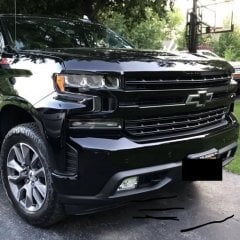
Looking for a clean way to add serious lighting to your 2019+ GMC Sierra 1500? Our M&R Automotive 40" SLIM Light Bar Kit was engineered to deliver maximum performance while maintaining a factory-inspired appearance. Features: • Designed specifically for 2019+ GMC Sierra 1500 models • High-output 40" SLIM LED light bar • Clean, integrated grille-mounted design • No cutting or drilling required • Bolt-on installation using vehicle-specific brackets • OEM-style fit and finish Whether you're hitting the trails, exploring backroads, or need additional visibility off-road, this kit provides powerful illumination without compromising the look of your truck. For product videos, light output demonstrations, and installation content, check out our YouTube channel: https://www.youtube.com/channel/UC3lutWP54fkXBl3iFLDJR-A Have questions about fitment or installation? We'd be happy to help. -
.thumb.JPG.2c573de60d3a3a4407c7d92298db46dd.JPG)
-
 So, GM will sell this thing for 60% higher than it's actually worth, and those blinded by shiny things and comfy seats will buy them up in droves only to be disappointed that either the engine failure modes haven't been corrected, or, that new failure modes were introduced. After 5 years the sheer complexity and cost of repairs to the various systems will render the truck "unfixable", and thousands will head to the crusher while some people will be left owing THOUSANDS on the note. Happy now? There is no room to put, "SOLD", in my signature ... and if I edit it I lose all the other vehicles I have listed, so the Silverado will stay there until the forum changes the way that posts. I also have a few other vehicles that I can't fit there, so it's not accurate anyway. Besides that, I don't much give a ****.
-
-
GM-Trucks.com Clubs
-

Black Truck Club
Open Club · 612 members
-

White Truck Club
Open Club · 380 members
-

Canadian Owners Club
Open Club · 282 members
-

Red Truck Club
Open Club · 156 members
-

diesel 3.0
Open Club · 279 members
-

Texas Owner's Group
Open Club · 371 members
-

NorthSky Blue Club
Open Club · 118 members
-

Midwest Owner's Group
Open Club · 212 members
-

2015 Custom Sport Club
Open Club · 5 members
-

GM Snow Plowing Club HD
Closed Club · 14 members
-
-
Popular Contributors
-



Recommended Posts
Archived
This topic is now archived and is closed to further replies.